
Kombucha is a beloved fermented tea praised for its tangy flavor and potential health benefits. But nothing ruins the joy of homemade brew faster than a bottle that erupts like a shaken soda can—splattering sticky liquid across your kitchen or worse, causing injury. This phenomenon, known as a \"bottle bomb,\" occurs more often than many home brewers admit. While carbonation is part of what makes kombucha refreshing, excessive pressure buildup can turn your beverage into a hazardous projectile. Understanding the science behind over-carbonation and implementing proper fermentation techniques are essential to enjoying your brew safely.
Bottle bombs happen when too much carbon dioxide (CO₂) accumulates inside sealed bottles during secondary fermentation. Unlike commercial kombucha, which is carefully monitored and often pasteurized or filtered to halt fermentation, homemade batches continue fermenting unless controlled. When sugar and yeast remain active in a closed container, CO₂ has nowhere to escape—pressure builds, and eventually, something gives. The result? A messy—and potentially dangerous—explosion.
The Science Behind Kombucha Carbonation
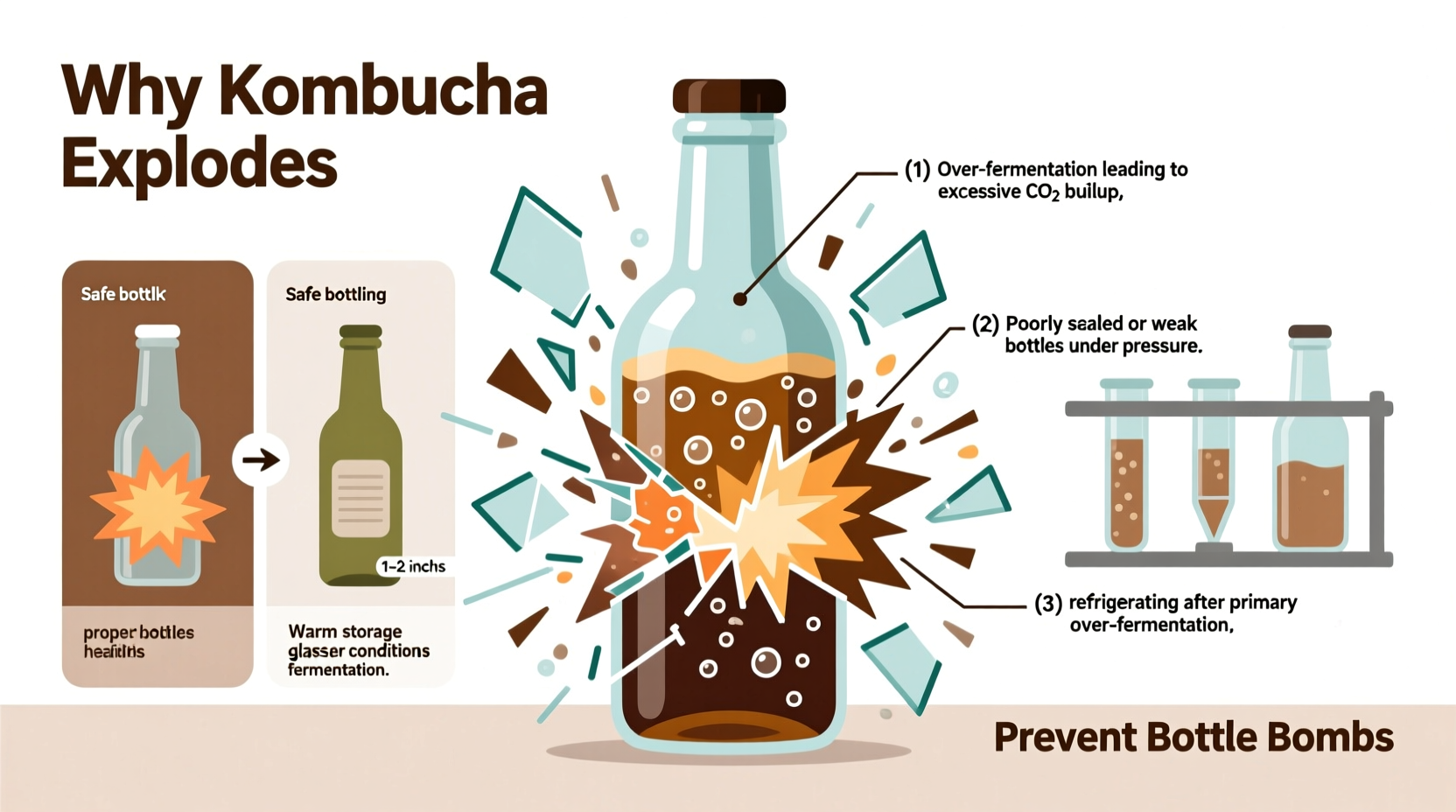
Carbonation in kombucha is a natural byproduct of fermentation. During the second fermentation stage—when flavorings like fruit or juice are added—yeast consumes residual sugars and produces alcohol and CO₂. In an airtight bottle, this gas dissolves into the liquid, creating bubbles. The amount of carbonation depends on three key factors: sugar content, temperature, and time.
Yeast thrives in warm environments. At temperatures above 75°F (24°C), fermentation accelerates dramatically, increasing CO₂ production. Similarly, adding high-sugar ingredients such as honey, mango, or apple juice provides more fuel for yeast, leading to rapid gas buildup. Even small variations in these conditions can push a stable batch into over-pressurization within days.
The SCOBY (Symbiotic Culture Of Bacteria and Yeast) plays a role, but it's primarily the free-floating yeast cells in the liquid that drive secondary fermentation. Once bottled, the culture continues working until either the sugar runs out, the alcohol level becomes toxic to the yeast, or the environment turns too acidic. Without intervention, this process doesn’t stop on its own.
Common Causes of Bottle Bombs
- Overfilling bottles: Leaving insufficient headspace prevents gas expansion and increases rupture risk.
- Using incorrect containers: Glass bottles without pressure ratings or plastic bottles not meant for carbonation may fail under stress.
- Fermenting too long: Extended second fermentation beyond 3–7 days significantly raises pressure levels.
- High ambient temperature: Warm rooms speed up fermentation, especially near appliances or in direct sunlight.
- Excessive sugar addition: More than 1/4 cup of sugar or fruit per gallon fuels aggressive CO₂ production.
- Lack of refrigeration: Failing to cold-crash the brew halts fermentation incompletely, allowing slow buildup even in the fridge.
Real Example: A Summer Brewing Incident
Sarah, a home brewer in Texas, prepared a batch of ginger-lemon kombucha during a heatwave. She used flip-top glass bottles, added fresh juice for flavor, and left them on her countertop for nine days, assuming longer fermentation would mean better fizz. On day ten, she opened one bottle while standing over the sink. The cap flew off with a loud pop, spraying kombucha across the ceiling. One of the bottles had already cracked silently in the cabinet, soaking nearby towels. After measuring the pressure with a gauge (borrowed from a homebrewing friend), she found levels exceeding 60 psi—nearly twice the safe limit for standard glass bottles.
This case highlights how easily conditions can spiral out of control. Heat, extended time, and natural sugars combined to create a volatile situation. Fortunately, Sarah wasn’t injured, but the experience prompted her to adopt safer protocols, including daily burping and shorter fermentation cycles.
How to Prevent Kombucha Bottle Bombs
Preventing explosions isn’t about eliminating carbonation—it’s about managing it intelligently. With careful planning and consistent habits, you can enjoy fizzy, flavorful kombucha without risk.
Step-by-Step Guide to Safe Secondary Fermentation
- Choose the right bottles: Use thick-walled glass bottles rated for pressure (e.g., German beer swing-tops) or food-grade PET plastic bottles designed for brewing.
- Leave adequate headspace: Fill bottles only to 1–2 inches below the rim to allow room for gas expansion.
- Add measured flavorings: Limit fruit juice or sugar to 10–15% of total volume. For example, add no more than 1/3 cup of juice per quart of kombucha.
- Control fermentation time: Begin checking carbonation after 3 days at room temperature. Most batches reach ideal fizz between days 4 and 7.
- Monitor daily: Gently squeeze PET bottles each day. When they feel firm like a soccer ball, fermentation is complete.
- Refrigerate promptly: Move bottles to the fridge to slow yeast activity once desired carbonation is reached.
- Cold-crash for safety: After refrigerating for 48 hours, open one bottle carefully to test. If it sprays, all remaining bottles need immediate chilling and consumption.
| Factor | Safe Practice | Risky Practice |
|---|---|---|
| Container Type | Pressure-rated glass or PET bottles | Regular mason jars or thin glass |
| Fermentation Time | 3–7 days at 70–75°F (21–24°C) | More than 10 days unattended |
| Sugar/Fruit Addition | 1–2 tablespoons per 16 oz bottle | Full fruit pieces or large juice pours |
| Temperature | Consistent, moderate room temp | Near stoves, ovens, or sunny windowsills |
| Headspace | 1–2 inches of air at top | Filled to the brim |
“Over-carbonation is the most common accident in home fermentation. Monitoring time, temperature, and sugar input reduces risks by over 90%.” — Dr. Lena Patel, Microbiologist & Fermentation Safety Researcher, Oregon State University
Essential Safety Checklist
- ✅ Use only pressure-safe bottles
- ✅ Leave 1–2 inches of headspace
- ✅ Add no more than 1–2 tbsp sugar-equivalent per bottle
- ✅ Store at 70–75°F (21–24°C), away from heat sources
- ✅ Check bottles daily starting on day 3
- ✅ Refrigerate after 7 days maximum
- ✅ Open bottles slowly over a sink, with a towel ready
Expert Tips for Long-Term Bottle Safety
Even experienced brewers occasionally face surprises. To minimize risk further, consider adopting advanced practices that provide greater control.
One effective method is “burping” bottles—briefly opening them every 1–2 days to release excess pressure. While this interrupts carbonation slightly, it prevents dangerous buildup. Alternatively, use airlock lids during secondary fermentation; these allow CO₂ to escape while keeping oxygen and contaminants out, giving you more time to monitor without risk.
Another strategy is cold packing: after primary fermentation, chill the entire batch for 24–48 hours before bottling. This slows yeast activity so that secondary fermentation starts more gradually. You gain better predictability and reduce the chance of runaway carbonation.
For those who brew frequently, investing in a pressure-testing kit used in home brewing (like those for beer) can provide precise data. Bottles should ideally stay under 40 psi at room temperature. Anything above 50 psi enters the danger zone, especially with imperfect glass or microscopic cracks.
Frequently Asked Questions
Can I still drink kombucha if a bottle exploded?
If one bottle bursts but others remain intact, the rest may be over-carbonated but likely safe to consume—if refrigerated immediately. However, inspect all bottles closely for cracks or swelling. Discard any that appear compromised. Taste-test cautiously after opening slowly over a sink.
Why did my kombucha explode even after only 4 days?
Four days can be enough for over-fermentation under warm conditions or with high-sugar additives. If your kitchen exceeds 78°F (26°C) or you used very sweet fruit (like grapes or pineapple), fermentation accelerates. Always adjust timing based on environment and ingredients.
Is there a way to carbonate kombucha without sealing bottles?
Yes—using an airlock system during secondary fermentation allows CO₂ to build mild carbonation safely. Or, force-carbonate with a keg and CO₂ tank, similar to draft beer systems. These methods eliminate explosion risks entirely and offer superior control.
Conclusion: Brew Smart, Stay Safe
Homemade kombucha offers satisfaction, flavor, and wellness—but only when handled responsibly. Bottle bombs are preventable with knowledge, attention, and consistent practice. By respecting the power of fermentation, choosing appropriate equipment, and monitoring your brew closely, you transform a risky process into a reliable ritual.
Every batch teaches you something new about balance: between sweetness and acidity, time and temperature, fizz and safety. Apply these insights consistently, and you’ll enjoy vibrant, effervescent kombucha without fear of mess or injury. Share your experiences, refine your methods, and keep the culture alive—safely.




 浙公网安备
33010002000092号
浙公网安备
33010002000092号 浙B2-20120091-4
Comments
No comments yet. Why don't you start the discussion?