
As the holiday season approaches, few things are more frustrating than a string of LED Christmas lights that won’t stay steady. Instead of a warm, inviting glow, you’re left with an erratic flicker that disrupts your display and raises safety concerns. While LED lights are energy-efficient and long-lasting, they are not immune to electrical issues—especially when wired in series or connected across multiple strands.
Flickering isn't just annoying; it can signal deeper wiring problems such as loose connections, voltage fluctuations, or incompatible power sources. Left unaddressed, these issues may shorten the lifespan of your lights or even pose fire risks. Understanding the root causes behind flickering LEDs empowers you to diagnose problems quickly and restore reliable performance to your holiday décor.
How LED Christmas Lights Work: A Brief Overview
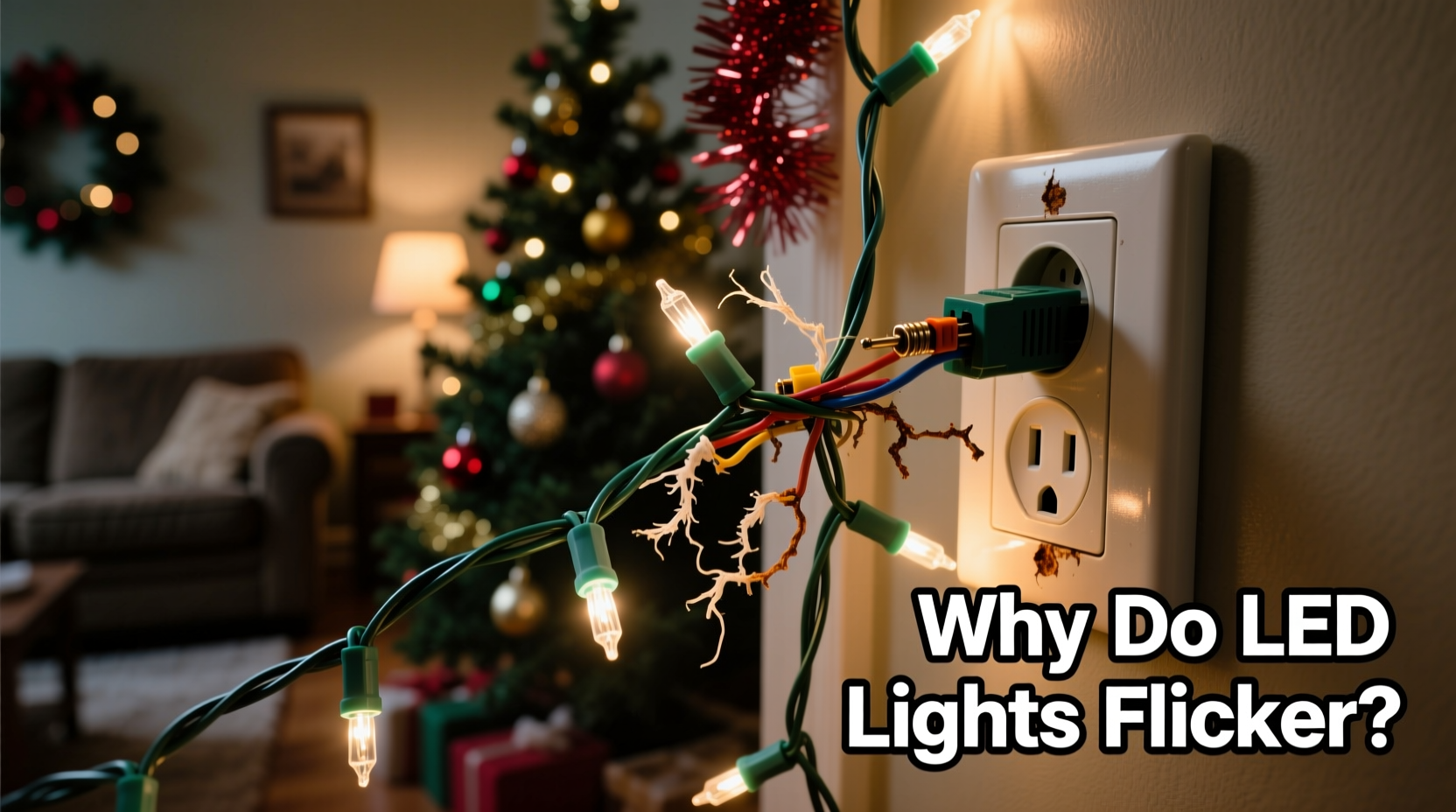
Unlike traditional incandescent bulbs, LED (light-emitting diode) Christmas lights operate on low voltage and require precise current regulation. Most household LED strings are designed to run on 120V AC but contain internal circuitry—often including rectifiers and current-limiting resistors—that convert and regulate power for the individual diodes.
Many modern LED strands use a **series-wired configuration**, meaning each bulb is connected in a single electrical path. If one bulb fails or a connection becomes loose, the entire circuit can be disrupted, leading to partial or full flickering. Some newer models incorporate **parallel wiring** or shunted sockets to prevent total failure when one bulb goes out, but even these aren’t foolproof.
The sensitivity of LEDs to minor voltage changes makes them prone to flickering under conditions that wouldn’t affect older bulb types. Even slight resistance from corroded contacts or undersized extension cords can introduce instability in current flow.
“LEDs respond instantly to voltage changes. What might cause a dimming effect in incandescent bulbs shows up as visible flicker in LEDs.” — David Lin, Electrical Systems Engineer at Holiday Lighting Institute
Common Wiring Problems That Cause Flickering
Flickering LED Christmas lights are rarely random. They typically stem from identifiable wiring and connectivity issues. Below are the most frequent culprits:
1. Loose or Corroded Bulb Connections
Even a slightly loose LED bulb can break continuity in a series circuit. Over time, repeated expansion and contraction due to heating and cooling can loosen bulbs in their sockets. Outdoor lights are especially vulnerable to corrosion from moisture, which increases resistance and interrupts current flow.
2. Faulty or Damaged Wiring
Pinched, frayed, or cracked insulation along the strand exposes wires to environmental damage and short circuits. Rodents, foot traffic, or improper storage can compromise wire integrity. Internal breaks may intermittently reconnect, causing flickering rather than complete failure.
3. Overloaded Circuits or Daisy-Chained Strands
Manufacturers specify a maximum number of strands that can be safely linked together (typically 3–5 for LEDs). Exceeding this limit draws excessive current, leading to voltage drop and unstable operation. This often results in flickering at the end of long chains where power delivery is weakest.
4. Incompatible or Low-Quality Power Sources
Using non-recommended dimmer switches, timers, or surge protectors with electronic components can interfere with the stable DC-like current LEDs need. Older dimmers designed for incandescent loads may misinterpret LED load levels, causing rapid on-off cycling.
5. Voltage Fluctuations in Household Supply
If multiple high-draw appliances (like refrigerators or space heaters) share the same circuit, they can cause brief voltage sags when activated. LEDs, being highly responsive, react visibly to these dips—even if other lights don’t appear affected.
Step-by-Step Guide to Diagnose and Fix Flickering Lights
Follow this systematic approach to identify and resolve the source of flickering in your LED Christmas light strands.
- Unplug the strand before beginning any inspection. Safety first—never work on energized holiday lights.
- Inspect for visible damage: Run your fingers gently along the wire length, checking for cuts, kinks, or melted sections. Look closely at plug prongs for scorch marks.
- Check each bulb seating: Remove and reinsert every LED bulb firmly into its socket. Pay special attention to end caps and connectors between strands.
- Test with a known-good outlet: Plug the strand into a different circuit—preferably one without other large appliances running.
- Eliminate daisy-chained overload: Disconnect all but one strand. If flickering stops, gradually reconnect others until the issue returns. This identifies whether overloading is the cause.
- Bypass suspect accessories: Remove any third-party timers, dimmers, or smart plugs. Use a direct wall outlet temporarily to test stability.
- Use a multimeter (optional): For advanced users, measure voltage at both ends of the strand. A significant drop (>5%) suggests resistance buildup from corrosion or undersized wiring.
- Replace faulty components: Swap out damaged bulbs, connectors, or entire sections using manufacturer-approved replacements.
Do’s and Don’ts When Handling LED Light Wiring
| Do | Don’t |
|---|---|
| Use only UL-listed extension cords rated for outdoor use | Daisy-chain more than the manufacturer’s recommended number of strands |
| Store lights coiled loosely with tissue paper to prevent wire stress | Force bulbs into sockets—if it doesn’t fit easily, it may be the wrong type |
| Clean bulb bases with isopropyl alcohol if corrosion is suspected | Use household cleaners or water directly on electrical components |
| Label indoor vs. outdoor-rated strands to avoid misuse | Leave lights unattended for long periods, especially during peak usage |
Real-World Example: Solving a Persistent Flicker Issue
Consider Sarah from Portland, Oregon, who installed a new set of 100-count LED icicle lights along her roofline each winter. In December 2023, she noticed persistent flickering after the first snowfall. She tried replacing bulbs and plugging into a different outlet, but the problem persisted.
After consulting a local electrician, she discovered two key issues: First, the extension cord she used was indoor-rated and had begun degrading due to moisture exposure. Second, she had linked four strands together—exceeding the product’s “max 3” limit. By switching to a heavy-gauge outdoor-rated cord and reducing the chain to three strands, the flickering stopped immediately.
This case highlights how environmental factors and subtle violations of manufacturer guidelines can combine to create frustrating electrical behavior—even with modern, durable LED systems.
Expert Tips for Long-Term Reliability
- Invest in commercial-grade strands for outdoor displays. These often feature thicker insulation, sealed connectors, and better internal regulation.
- Use a dedicated circuit for major light displays. Running holiday lights on the same breaker as kitchen appliances invites voltage competition.
- Install a whole-house surge protector to guard against voltage spikes during storms—a leading cause of premature LED driver failure.
- Label and organize storage by strand type and length. Reusing mismatched or aged components increases the risk of inconsistent performance.
FAQ: Common Questions About Flickering LED Christmas Lights
Can a bad outlet cause LED lights to flicker?
Yes. A worn or loose receptacle may provide intermittent contact, especially when vibrations occur. Test your lights in a different outlet—if the flickering stops, the original outlet may need replacement.
Why do my LED lights flicker only when I turn on another appliance?
This usually indicates circuit overload or shared neutral issues. High-power devices like heaters draw surges that momentarily reduce voltage. LEDs detect this faster than incandescent bulbs, resulting in visible flicker. Consider moving either the lights or the appliance to a separate circuit.
Are flickering LED lights dangerous?
Persistent flickering can indicate overheating connections, damaged insulation, or arcing—potential fire hazards. While occasional flicker may be harmless, consistent or worsening behavior warrants immediate investigation.
Final Checklist: Stop the Flicker for Good
- ✔ Unplug and visually inspect the entire strand for damage
- ✔ Re-seat all bulbs, starting from the plug-end
- ✔ Verify you're not exceeding max connectable length
- ✔ Use only outdoor-rated, properly gauge extension cords
- ✔ Eliminate third-party controllers (timers/dimmers) during testing
- ✔ Test on a different, dedicated circuit
- ✔ Replace any corroded or broken components
- ✔ Perform end-of-season testing and proper storage
Conclusion: Shine Bright Without the Flicker
A flickering LED Christmas light strand doesn’t have to ruin your holiday mood. With a clear understanding of how these lights function and what wiring issues commonly trigger instability, you can troubleshoot effectively and enjoy a steady, sparkling display. From ensuring secure bulb placement to respecting electrical limits, small adjustments make a big difference in performance and safety.
Take action now—test your strands, upgrade your cords, and follow best practices for connection and storage. Your future self will thank you when next holiday season arrives with hassle-free setup and brilliant, unwavering lights.




 浙公网安备
33010002000092号
浙公网安备
33010002000092号 浙B2-20120091-4
Comments
No comments yet. Why don't you start the discussion?