
Lipstick feathering—when color creeps beyond the natural lip line into fine lines around the mouth—is a common frustration, especially when you’ve taken the extra step of applying lip liner. Despite meticulous preparation, smudging, blurring, and migration into vertical lip lines can still occur, undermining hours of effort. The belief that “liner equals perfection” is widespread, but reality often proves otherwise. Feathering isn’t just about product failure; it’s a complex interplay of skin condition, technique, product chemistry, and facial movement. Understanding the root causes empowers you to take targeted action and finally achieve clean, defined lips that last.
The Science Behind Lipstick Migration
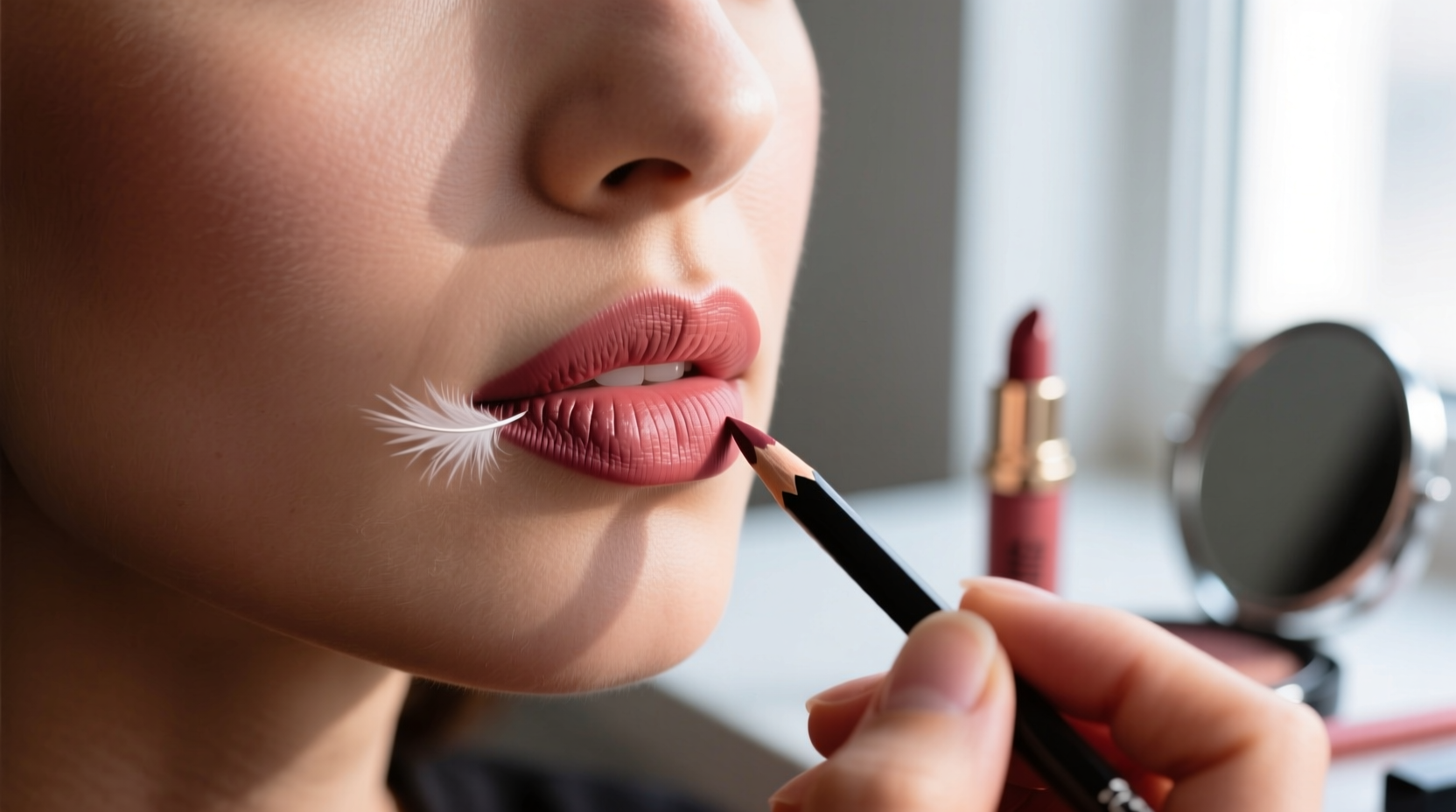
Lipstick doesn’t simply “slip” on its own. It migrates due to a combination of physical and biological factors. The perioral area—the skin surrounding the lips—is delicate and rich in sebaceous (oil-producing) glands. As these glands release natural oils throughout the day, they interact with lipstick and liner formulas, softening them over time. Even matte or long-wear products are not immune. Additionally, the constant movement of facial muscles during speaking, eating, and expressions creates micro-shifts that break down the bond between pigment and skin.
Another critical factor is the pH and moisture level of your skin. Dry, flaky lips create uneven surfaces where liner may not adhere properly, leaving gaps for lipstick to escape. Conversely, overly moist lips prevent full absorption of pigments, causing slippage. The structure of your lip border also plays a role: thinner lip borders or naturally blurred vermillion edges provide less of a natural barrier, making containment more difficult.
“Lipstick feathering is rarely a user error—it’s usually a mismatch between product formulation and individual skin behavior.” — Dr. Lena Moreau, Cosmetic Dermatologist
Why Liner Alone Isn’t Enough
Lip liner serves as a foundational tool, but treating it as a standalone fix is a misconception. While it helps define shape and extend wear, modern liners vary significantly in composition. Some are waxy and prone to melting, while others are too firm and fail to blend seamlessly with lipstick. If the liner doesn’t match the texture or finish of your lipstick, it can create a visible demarcation rather than a unified barrier.
Moreover, many people apply liner only along the outer edge without filling in the entire lip surface. This leaves the inner lip vulnerable to shifting and bleeding, especially if the lipstick is creamy or emollient. A perimeter-only approach treats symptoms, not causes. True longevity comes from creating a cohesive base that locks pigment in place across the entire lip field.
Key Factors That Cause Feathering Despite Liner Use
Several often-overlooked elements contribute to lipstick breakdown, even after proper lining. Addressing these can dramatically improve results.
1. Dehydrated or Aging Skin
As we age, collagen production declines, leading to thinner skin and deeper vertical lip lines (often called “smoker’s lines,” though they affect non-smokers too). These grooves act as channels for pigment to travel into. Even mild dehydration can cause flaking, which disrupts smooth application and adhesion.
2. Incompatible Product Formulations
Mixing oil-based lipsticks with water-based liners—or vice versa—can cause repulsion or separation. For example, applying a silicone-heavy liquid lipstick over a wax-based pencil may result in poor bonding, increasing the chance of lifting and feathering.
3. Overlining Without Reinforcement
Overlining enhances fullness but extends color onto facial skin, which has different texture and oil levels than lips. Without additional setting, this extended area is highly susceptible to blurring. Many forget to set overlined sections with powder or setting spray, leaving them vulnerable.
4. Facial Oils and Skincare Interference
Moisturizers, SPF, or facial oils applied too close to the lips can seep into the lip line and break down makeup. Even hydrating serums used earlier in your routine can resurface hours later through natural sebum activity, destabilizing your lip look.
5. Environmental and Behavioral Triggers
Temperature changes, humidity, and frequent touching of the lips accelerate transfer and fading. Drinking from straws, wearing masks, or resting your face on your hand introduces friction that wears down the precision of your application.
Step-by-Step Guide to Prevent Feathering After Lining
Follow this professional-grade routine to lock in your lip color and eliminate feathering—even in humid climates or during long wear.
- Exfoliate gently: Use a soft toothbrush or damp washcloth to remove dead skin. Avoid harsh scrubs that cause micro-tears.
- Hydrate and wait: Apply a thin layer of non-greasy balm. Wait 3–5 minutes, then blot thoroughly to remove excess oil.
- Prime the lip zone: Dab a tiny amount of concealer or dedicated lip primer along the outer edge to create an oil-free barrier.
- Line and fill completely: Use a sharp liner that matches your lipstick. Outline precisely, then shade in the entire lip like coloring a page.
- Apply lipstick with a brush: Instead of direct tube application, use a lip brush for control and even distribution.
- Blot and set: Press a tissue between your lips, then dust translucent powder lightly over the top using a small brush. <7> Optional sealant: For extreme longevity, spritz setting spray onto a brush and glide it over lips, or use a clear sealing gel sparingly at the edges.
“Setting your lips with powder after blotting is the single most effective step most people skip.” — Simone Tran, Celebrity Makeup Artist
Product Selection: Do’s and Don’ts
Choosing the right products is as important as technique. The following table outlines key considerations when selecting liners and lipsticks to minimize feathering.
| Factor | Do | Don’t |
|---|---|---|
| Texture Match | Pair creamy liners with creamy lipsticks; use waxy pencils with satin finishes | Mix silicone liquids with chalky pencils |
| Longevity | Choose liners labeled \"long-wear\" or \"anti-feather\" | Use old, dried-out pencils that tug and skip |
| Color Matching | Pick a liner one shade deeper than your lipstick for dimension | Use starkly contrasting liner colors unless going for a deliberate effect |
| Finish | Opt for matte or satin over high-shine glosses near the edges | Layer glossy topcoats directly on bare skin outside the lip line |
Mini Case Study: Sarah’s All-Day Meeting Fix
Sarah, a 38-year-old marketing executive, struggled with her bold red lipstick feathering within an hour of application—despite using liner. Her day involved back-to-back video calls, coffee breaks, and mask-wearing, all contributing to breakdown. After consulting a makeup artist, she revised her routine: she began exfoliating nightly, switched to a matching long-wear liner-lipstick duo, filled in her entire lips with liner, and set with translucent powder. She also stopped applying facial oil within half an inch of her mouth.
The change was immediate. Her lipstick stayed intact for over eight hours, even after lunch. By addressing both technique and product compatibility, Sarah achieved the polished look her role demanded without constant touch-ups.
Checklist: Feather-Proof Your Lips in 5 Minutes
- ✅ Gently exfoliate lips once daily (preferably at night)
- ✅ Use a lip liner that matches your lipstick in texture and tone
- ✅ Fill in entire lip area with liner, not just the border
- ✅ Blot lipstick once, then set with a light dusting of translucent powder
- ✅ Avoid oily skincare products near the mouthline
- ✅ Carry a mini powder and brush for quick midday refresh
- ✅ Reapply lip color over a fresh layer of liner instead of layering directly
Frequently Asked Questions
Does lip liner really prevent feathering?
Yes, but only when used correctly. Liner works best when it's fresh, well-matched to your lipstick, and applied over a clean, dry, exfoliated lip. Outdated or poorly formulated liners can actually worsen feathering by creating cracks or failing to adhere.
Can I use concealer to stop lipstick from feathering?
Absolutely. Applying a small amount of matte, long-wear concealer just outside your natural lip line creates a protective barrier. Let it set for a few seconds, then line and fill your lips as usual. This technique is widely used in editorial and bridal makeup for flawless definition.
Are there specific ingredients to avoid in lip products?
Yes. Lipsticks high in volatile silicones (like cyclopentasiloxane) or plant oils (such as castor or avocado oil) tend to migrate more easily. Look for formulas with waxes (beeswax, carnauba), film-formers (acrylates), and pigments designed for longevity. Matte liquid lipsticks with transfer-resistant claims often perform better in preventing feathering.
Conclusion: Precision Starts With Prevention
Lipstick feathering isn’t inevitable, even if you’ve tried everything. The solution lies not in applying more product, but in smarter preparation, compatible formulations, and disciplined technique. From filling in your entire lip with liner to setting with powder and avoiding interfering skincare, each step builds a defense against migration. Recognize that your skin’s needs evolve with age, environment, and routine—so your lip strategy should too.
Stop reapplying and start preventing. With these proven methods, you can trust your lipstick to stay exactly where you put it, delivering confidence with every word you speak and every smile you share.




 浙公网安备
33010002000092号
浙公网安备
33010002000092号 浙B2-20120091-4
Comments
No comments yet. Why don't you start the discussion?