
Lower back pain after running is more common than many runners realize—but it’s not something you should ignore. Unlike muscle soreness in the legs or feet, lower back discomfort often signals deeper biomechanical issues. While occasional stiffness might be manageable, recurring pain can lead to long-term injury if left unaddressed. The root cause isn’t always obvious: it may stem from poor running form, weak core muscles, tight hips, or even inappropriate footwear. The good news? Most causes are correctable with targeted adjustments to technique, strength training, and movement awareness.
This article breaks down the most frequent reasons for post-run lower back pain, explains how improper form contributes to strain, and provides actionable strategies to correct it—so you can run farther, stronger, and pain-free.
Common Causes of Lower Back Pain After Running
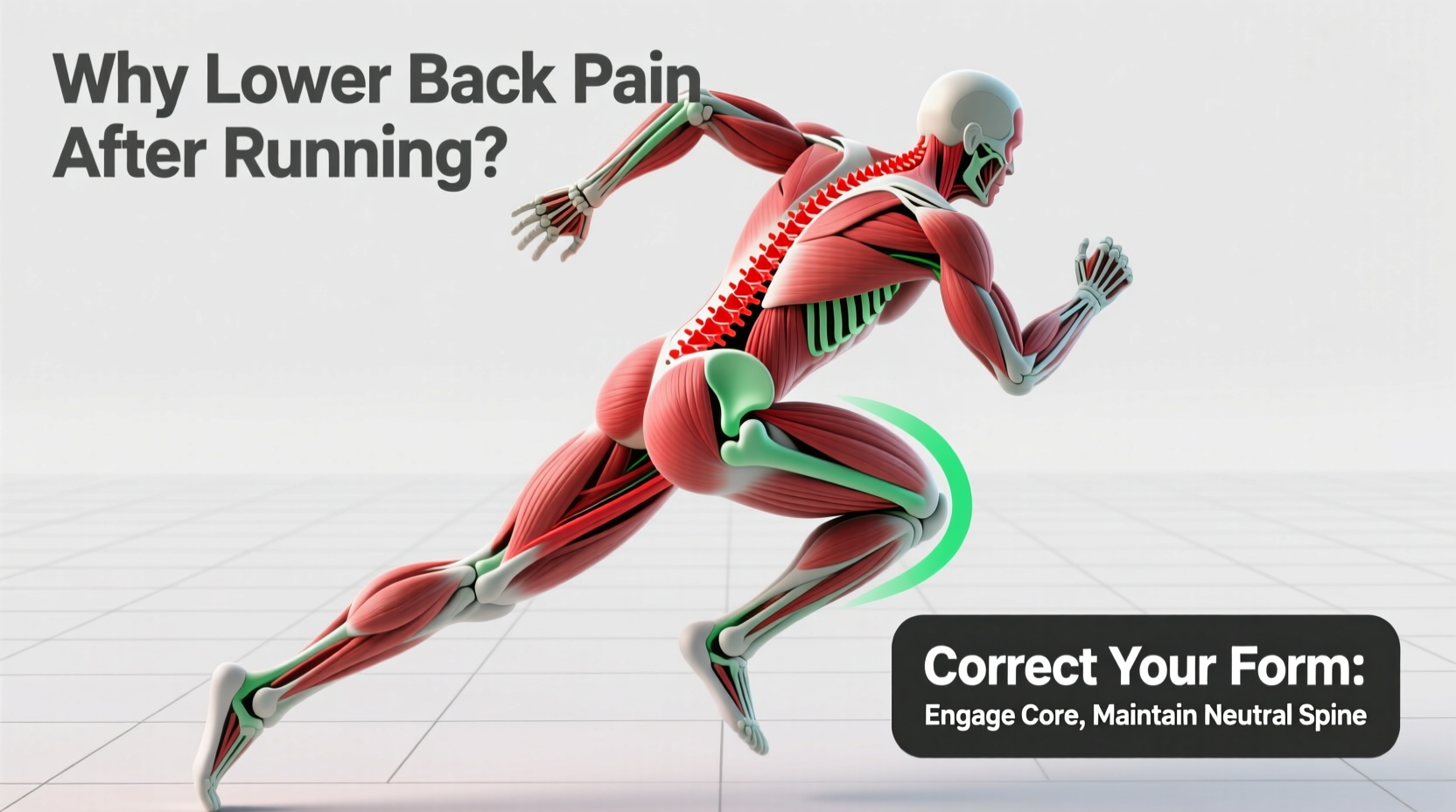
Running places repetitive stress on the entire kinetic chain—from feet to spine. When one link becomes inefficient, others compensate. The lower back, specifically the lumbar region, bears significant load during forward motion. If mechanics are off, that load increases dramatically.
Here are the primary contributors to lower back pain in runners:
- Anterior pelvic tilt: A forward tilt of the pelvis increases lumbar lordosis (the inward curve of the lower spine), compressing vertebrae and straining surrounding muscles.
- Weak core stability: Underactive transverse abdominis and obliques fail to support the spine during impact, transferring stress to the lower back.
- Tight hip flexors: Prolonged sitting shortens hip flexors (like the psoas), pulling the pelvis forward and exaggerating spinal curvature.
- Overstriding: Landing with the foot too far ahead of the body creates braking forces and increases torque on the lumbar spine.
- Poor posture during runs: Slouching or overarching the back reduces shock absorption and fatigues stabilizing muscles prematurely.
- Muscle imbalances: Gluteal weakness shifts workload to erector spinae and quadratus lumborum, which aren't designed for sustained effort.
These factors don’t act in isolation. Often, multiple issues compound over time until pain emerges—not necessarily during the run, but hours later or the next morning when inflammation peaks.
How Running Form Contributes to Lower Back Strain
Your running gait is a complex sequence of coordinated movements. Subtle deviations—even millimeters in foot placement or degrees in trunk angle—can amplify stress across joints. The lower back is particularly vulnerable because it serves as the central transfer point between upper and lower body motion.
One of the most overlooked form flaws is excessive vertical oscillation—bouncing up and down too much with each stride. This increases ground reaction forces transmitted through the spine. Another is lateral sway, where the torso shifts side-to-side, forcing the lumbar muscles to work overtime to stabilize.
Consider this: when you overstride, your foot lands ahead of your center of mass. That position turns your leg into a rigid lever, sending shockwaves up the kinetic chain. Without adequate hip extension or knee flexion to absorb impact, the spine takes the brunt. Over thousands of steps, microtrauma accumulates.
“Many runners blame their shoes or mileage, but the real culprit is often inefficient movement patterns. Fix the mechanics, and the pain often resolves.” — Dr. Lena Torres, Sports Physiotherapist and Gait Analyst
The Role of Pelvic Alignment
The pelvis acts as the foundation for spinal alignment. During running, it should remain relatively neutral—neither tilted forward nor tucked under. Anterior pelvic tilt, commonly seen in desk workers, tilts the top of the pelvis forward, increasing pressure on the lumbar discs. This position also inhibits glute activation, making hamstrings and lower back muscles overwork.
To test your pelvic alignment, stand sideways in front of a mirror. Draw an imaginary line from the front of your hip bone (ASIS) to the top of your pubic bone. In neutral alignment, these points should be horizontally level. If the ASIS drops downward, you likely have anterior tilt.
Step-by-Step Guide to Correct Running Form
Improving form isn’t about overhauling your entire stride overnight. It’s about incremental changes supported by drills, feedback, and consistency. Follow this six-week progression to reduce lower back strain and enhance efficiency.
- Week 1–2: Build Body Awareness
- Perform daily posture checks: stand against a wall with heels, hips, shoulders touching.
- Practice “pelvic tucks” lying on your back: flatten your lower back into the floor by gently tightening abs.
- Run 1–2 times per week with focus on upright posture—avoid leaning forward from the waist.
- Week 3–4: Integrate Drills
- Add high knees and butt kicks before every run (2x20 meters each).
- Incorporate skipping drills to reinforce coordination and light foot contact.
- Use a metronome app to increase cadence by 5–10%—this naturally shortens stride and reduces overstriding.
- Week 5–6: Refine and Reinforce
- Record yourself running from the side (phone on tripod). Analyze foot strike and trunk lean.
- Run short intervals (e.g., 30 seconds) focusing on landing with feet under hips.
- End each run with 5 minutes of mindful walking, maintaining neutral spine.
Consistency matters more than perfection. Even dedicating five focused minutes per run to form cues can rewire neuromuscular patterns within weeks.
Essential Strength and Mobility Exercises
No amount of form correction will stick without foundational strength. The core’s job isn’t just aesthetics—it’s dynamic stabilization. Similarly, mobile hips allow proper pelvic control, reducing compensatory arching in the back.
Key Exercises to Prevent Lower Back Pain
| Exercise | Purpose | Frequency | Reps/Sets |
|---|---|---|---|
| Dead Bug | Trains core stability without spinal compression | 4x/week | 3 sets of 10/side |
| Glute Bridge (Single-Leg) | Activates glutes, improves hip extension | 3x/week | 3 sets of 8/side |
| Standing Hip Flexor Stretch | Reduces pull of tight psoas on pelvis | Daily | Hold 30 sec/side, 2 rounds |
| Plank with Shoulder Taps | Challenges anti-rotation stability | 3x/week | 3 sets of 10 taps/side |
| Child’s Pose with Lateral Reach | Releases paraspinal tension and lat involvement | Daily post-run | Hold 20 sec/side |
Perform these exercises in a circuit format 3–4 times per week. Focus on quality of movement—slow, controlled motions build better motor control than fast, sloppy reps.
Real Runner Case Study: From Pain to Performance
Mark, a 34-year-old recreational runner, began experiencing sharp lower back pain after every 5K run. He had no history of injury but worked a desk job and trained three times weekly. Initially, he assumed it was normal fatigue. But after two months, the pain persisted into the next day, limiting his mobility.
He consulted a physiotherapist who assessed his gait and found two major issues: severe anterior pelvic tilt and weak glute medius. Video analysis revealed overstriding and minimal knee lift. His core disengaged within the first mile, leading to excessive arching.
The treatment plan included daily pelvic tilts, glute bridges, and cadence training using a metronome. He reduced mileage by 40% temporarily and added two strength sessions per week. Within four weeks, pain decreased significantly. By week eight, he completed a 10K with zero back discomfort—and reported feeling lighter and more efficient.
Mark’s case illustrates how non-traumatic pain often stems from cumulative dysfunction rather than acute injury. Addressing root causes—not just symptoms—was key.
Checklist: Prevent Lower Back Pain While Running
Use this checklist before and after your runs to stay aligned and pain-free:
- ✅ Assess posture: Stand tall, ears over shoulders, shoulders over hips
- ✅ Engage core lightly: Imagine zipping up a tight pair of jeans
- ✅ Check cadence: Aim for 170–180 steps per minute
- ✅ Land softly: Feet under hips, not reaching forward
- ✅ Stretch hip flexors and hamstrings post-run
- ✅ Foam roll glutes and thoracic spine (avoid rolling lower back)
- ✅ Include at least two core/glute strength sessions weekly
Frequently Asked Questions
Can wearing the wrong shoes cause lower back pain?
Yes. Shoes with inadequate support or excessive cushioning can alter foot mechanics, affecting alignment all the way up to the spine. Runners with overpronation or flat feet may need stability shoes to maintain proper pelvic alignment. Get professionally fitted at a specialty running store if pain persists.
Should I stop running if my lower back hurts?
Not necessarily—but modify intensity. Complete rest rarely fixes mechanical issues. Instead, switch to shorter, easier runs with strict form focus. Cross-train with swimming or cycling to maintain fitness while reducing spinal load. If pain is sharp or radiates down the leg, consult a healthcare provider to rule out disc issues.
Is stretching enough to fix lower back pain?
Stretching alone is insufficient. While tight muscles contribute to pain, weakness and poor motor control are usually bigger factors. Combine stretching with strengthening—especially for deep core and gluteal muscles—for lasting results.
Final Thoughts: Run Smarter, Not Just Harder
Lower back pain after running isn’t inevitable. It’s a signal—one that shouldn’t be silenced with painkillers or ignored through gritted teeth. By tuning into your body’s mechanics, correcting subtle flaws in form, and building resilient supporting musculature, you reclaim not only comfort but also performance.
The best runners aren’t always the fastest; they’re the ones who listen. They adjust. They recover well and return stronger. Your spine plays a critical role in every stride—treat it with the attention it deserves. Start today: film your gait, do a pelvic tilt, add one strength exercise. Small actions compound into lasting change.




 浙公网安备
33010002000092号
浙公网安备
33010002000092号 浙B2-20120091-4
Comments
No comments yet. Why don't you start the discussion?