
Nosebleeds after blowing the nose too hard are more common than many people realize. While they can be alarming, especially if blood appears suddenly or in large amounts, most cases are not serious and stem from mechanical irritation of delicate nasal tissues. The human nose is lined with a fragile network of blood vessels close to the surface, particularly in the front part known as Little’s area. When excessive pressure is applied—such as during forceful nose-blowing—these vessels can rupture, leading to epistaxis, the medical term for nosebleed.
Understanding the anatomy behind this response helps demystify the issue. The nasal mucosa serves as a protective barrier that warms, humidifies, and filters incoming air. It's richly supplied with blood to maintain temperature regulation, but this also makes it vulnerable to injury. Repeated or aggressive blowing can dry out, inflame, or tear this lining, especially in dry environments or during cold and allergy seasons. Addressing both the cause and proper response techniques can significantly reduce the frequency and severity of these episodes.
The Science Behind Nosebleeds from Forceful Blowing
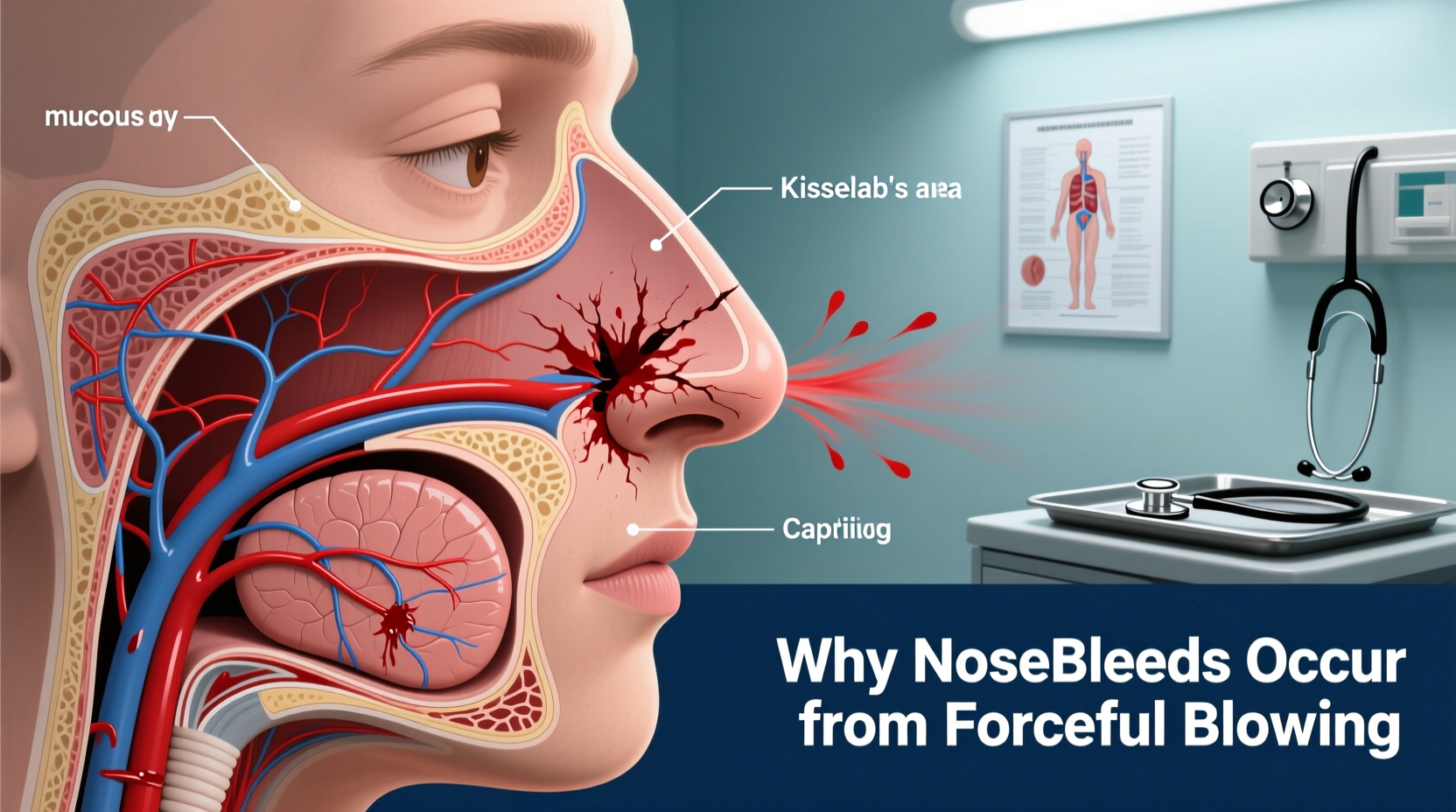
The nasal cavity contains two primary types of nosebleeds: anterior and posterior. Anterior nosebleeds, which account for over 90% of cases, originate in the front of the nose, usually from Kiesselbach’s plexus (also called Little’s area). This spot, located on the nasal septum, has a high concentration of capillaries and is particularly prone to trauma. Posterior nosebleeds, though less common, occur deeper inside the nose and may require medical attention due to heavier bleeding and difficulty controlling it.
When you blow your nose forcefully, several physiological events take place:
- Increased intranasal pressure: Air forced through the nostrils rapidly raises pressure within the nasal passages.
- Mucosal stress: Delicate blood vessels stretch and may burst under sudden strain.
- Drying and cracking: Aggressive blowing removes natural mucus, reducing moisture and increasing tissue fragility.
- Microtrauma: Repetitive friction from tissues rubbing against each other or dried crusts leads to small tears.
A study published in the *American Journal of Rhinology & Allergy* found that individuals who frequently blew their noses with high pressure were 3.2 times more likely to report recurrent anterior nosebleeds compared to those using gentle techniques.
“Forceful nose-blowing creates transient spikes in nasal pressure that exceed the structural tolerance of superficial capillaries, especially in already compromised mucosa.” — Dr. Lena Patel, Otolaryngologist at Boston Sinus Center
Step-by-Step Guide to Stop a Nosebleed After Blowing Your Nose
If you experience a nosebleed after blowing your nose, immediate action can help stop the bleeding quickly and safely. Follow this evidence-based timeline to manage the episode effectively:
- Sit upright and lean forward slightly (0–1 minute): Do not tilt your head back, as this can cause blood to drain into the throat, potentially leading to nausea or aspiration. Sitting upright reduces venous pressure in the nasal region.
- Pinch the soft part of your nose (1–10 minutes): Use your thumb and index finger to compress the fleshy portion just below the bony bridge. Maintain steady pressure for at least 10 minutes without checking intermittently, as this disrupts clot formation.
- Breathe through your mouth: Avoid speaking, swallowing, or sniffing during compression to prevent dislodging the forming clot.
- Apply a cold compress (optional, during pinching): Place an ice pack wrapped in a cloth over the bridge of the nose. Cold constricts blood vessels and may aid in reducing flow.
- Release gently after 10 minutes: If bleeding continues, repeat the process for another 10 minutes. Most minor bleeds resolve within 20 minutes using this method.
- After bleeding stops: Avoid nose-blowing, bending over, or strenuous activity for at least 12 hours. Keep the head elevated even while sleeping.
Common Triggers That Make You More Susceptible
While forceful blowing is the direct cause, several underlying factors increase vulnerability to nosebleeds. Recognizing these contributors allows for better prevention strategies.
| Factor | How It Contributes | Prevention Strategy |
|---|---|---|
| Dry Air (Winter/Heated Rooms) | Dries nasal mucosa, making it brittle and crack-prone | Use a humidifier; apply nasal gel at night |
| Allergies or Sinus Infections | Inflammation weakens vessel walls; frequent blowing increases risk | Treat congestion early; use antihistamines or decongestants as directed |
| Nasal Sprays (Steroid or Decongestant) | Long-term use can thin mucosal lining | Follow dosage instructions; limit decongestant sprays to 3 days |
| High Blood Pressure | Elevated pressure can impair clotting and increase bleeding duration | Monitor BP regularly; consult physician if recurrent bleeds occur |
| Blood-Thinning Medications | Aspirin, warfarin, or NSAIDs reduce platelet function | Discuss risks with doctor; never stop medication without medical advice |
Real Example: A Teacher’s Recurrent Nosebleeds
Sarah M., a 42-year-old elementary school teacher, began experiencing frequent nosebleeds every winter. She attributed them to seasonal allergies but noticed they always followed intense nose-blowing after prolonged exposure to classroom dust and chalk particles. During one incident, she leaned back instinctively, only to feel blood trickling down her throat, causing gagging and mild panic.
After visiting an ENT specialist, she learned her habit of forceful blowing—combined with low indoor humidity from heating systems—was the main culprit. Her doctor recommended switching to a gentler two-nostril exhalation technique, using a bedside humidifier, and applying a water-based nasal emollient nightly. Within three weeks, her nosebleeds ceased entirely. “I didn’t realize how much pressure I was creating,” Sarah said. “Changing one habit made all the difference.”
Do’s and Don’ts When Managing Nasal Health
To prevent future episodes, follow this clear guide to safe nasal care:
| Do’s | Don’ts |
|---|---|
| Blow one nostril at a time gently | Blow both nostrils forcefully at once |
| Use saline sprays daily in dry climates | Use alcohol-based nasal products regularly |
| Keep fingernails short to avoid scratching | Pick or rub the inside of your nose |
| Stay hydrated to support mucosal health | Smoke or expose yourself to secondhand smoke |
| Use a cool-mist humidifier in bedrooms | Sleep with heaters blowing directly on your face |
Checklist: Preventing Nosebleeds from Blowing Too Hard
Use this actionable checklist to protect your nasal health and avoid unnecessary bleeding:
- ✅ Blow your nose gently—one side at a time
- ✅ Use soft tissues or disposable cloths to minimize friction
- ✅ Apply a thin layer of petroleum jelly or nasal ointment inside nostrils before bed
- ✅ Run a humidifier in your bedroom during dry months
- ✅ Treat nasal congestion promptly with saline rinses or prescribed medications
- ✅ Avoid straining, heavy lifting, or bending over immediately after a bleed
- ✅ Stay hydrated by drinking at least 6–8 glasses of water daily
- ✅ Replace old nasal sprays past their expiration date
Frequently Asked Questions
Is it dangerous if my nose bleeds every time I blow it?
Occasional nosebleeds after blowing are usually harmless. However, if it happens frequently—more than once a week—or involves heavy bleeding lasting over 20 minutes, consult a healthcare provider. Chronic bleeding could indicate an underlying condition such as deviated septum, chronic rhinitis, or clotting disorders.
Can children get nosebleeds from blowing too hard?
Yes, children are actually more prone to anterior nosebleeds due to thinner nasal membranes and habits like nose-picking. Teach kids to blow gently and use saline mist to keep nasal passages moist, especially during cold season. Reassure them calmly if a bleed occurs—it’s important not to panic, as stress can elevate blood pressure and prolong bleeding.
Should I go to the ER for a nosebleed caused by blowing?
Most cases don’t require emergency care. Seek immediate medical attention if: the bleeding lasts longer than 30 minutes despite correct first aid, blood flows heavily down the back of the throat, you feel dizzy or faint, or the bleed follows a head injury. Posterior nosebleeds often require professional cauterization or packing.
Conclusion: Take Control of Your Nasal Health
Nosebleeds triggered by blowing too hard are largely preventable with mindful habits and proper nasal care. The key lies in respecting the sensitivity of the nasal lining and avoiding actions that compromise its integrity. By adopting gentler blowing techniques, maintaining moisture, and addressing contributing factors like dry air or allergies, you can drastically reduce the likelihood of recurrence.
Your nose plays a vital role in respiratory defense, and treating it with care pays dividends in comfort and health. Small changes today—like switching to one-sided blowing or adding a humidifier—can prevent discomfort tomorrow. Don’t wait until a bleed happens to act. Start implementing these practices now and empower yourself with knowledge that keeps you in control.




 浙公网安备
33010002000092号
浙公网安备
33010002000092号 浙B2-20120091-4
Comments
No comments yet. Why don't you start the discussion?