
Oven temperature fluctuations are more common than many home cooks realize. You follow a recipe to the letter—precise measurements, correct timing, even preheating—but the cake still sinks, the roast comes out unevenly cooked, or cookies spread too much. The culprit? An oven that’s not maintaining a consistent temperature. Understanding why this happens and how to fix it can transform your cooking from frustrating to flawless.
Modern ovens are designed to regulate heat with precision, but over time, wear and environmental factors can compromise their accuracy. Whether you're baking delicate pastries or slow-roasting meats, an off-kilter oven undermines your efforts. The good news is that most temperature issues can be diagnosed and corrected—often without professional help.
Why Oven Temperatures Fluctuate
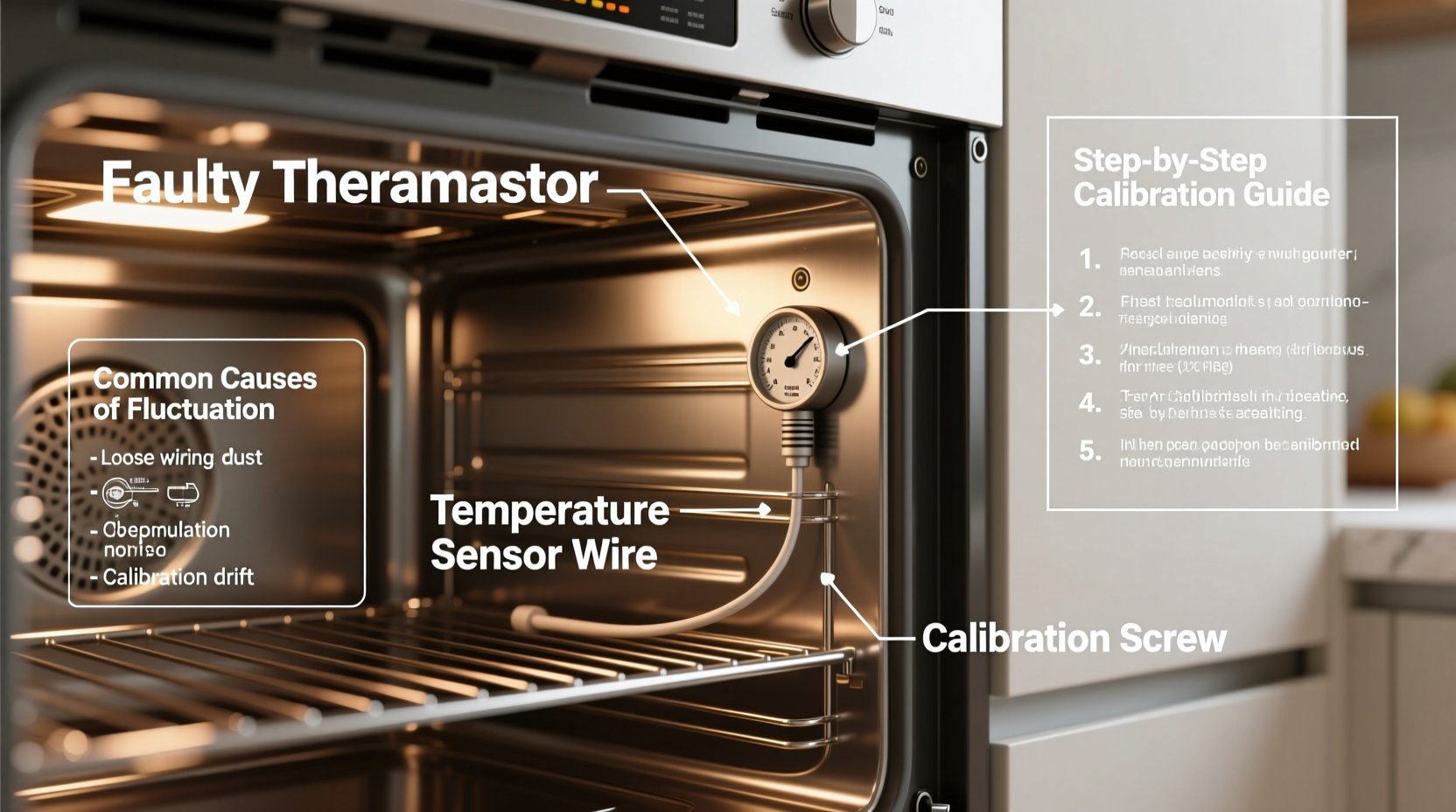
All ovens cycle between heating and cooling to maintain a set temperature. This cycling is normal, but excessive variation—more than 25–50°F (14–28°C) above or below the target—indicates a problem. Several factors contribute to inconsistent oven performance.
- Thermostat calibration drift: Over time, the thermostat sensor can lose accuracy due to age, repeated heating cycles, or minor manufacturing inconsistencies.
- Faulty temperature sensor: In electric ovens, a damaged or mispositioned sensor may send incorrect readings to the control board.
- Worn heating elements: Burnt-out or degraded heating elements in electric ovens fail to deliver consistent heat.
- Gas burner issues: For gas ovens, clogged ports, faulty igniters, or weak gas flow disrupt steady combustion.
- Door seal degradation: A cracked, warped, or dirty gasket allows heat to escape, forcing the oven to work harder and overshoot temperatures.
- Improper placement of oven racks: Blocking airflow by placing pans too close to walls or using oversized cookware affects heat distribution.
- Ambient kitchen conditions: Drafts, open windows, or nearby appliances can influence internal oven climate.
How to Test Your Oven’s Actual Temperature
Before attempting calibration, confirm whether your oven is truly inaccurate. Relying on the display or dial setting alone isn’t enough. Use a reliable oven thermometer to measure real-time internal temperature.
- Place an oven-safe thermometer in the center of the middle rack.
- Close the door and set the oven to 350°F (177°C).
- Allow the oven to preheat fully—wait at least 20 minutes after the initial \"preheat complete\" signal.
- Record the temperature shown on the thermometer once it stabilizes (usually after 10–15 minutes).
- Repeat the test at 400°F and 425°F if you frequently bake at high heat.
If the reading differs by more than ±25°F from the set temperature, your oven needs calibration. For example, if you set 350°F but the thermometer reads 380°F, your oven runs hot. Conversely, 320°F means it runs cold.
“Even a 20-degree variance can alter baking chemistry—especially in cakes, breads, and custards where precise thermal activation matters.” — Dr. Linda Ruiz, Food Science Researcher, Culinary Institute of America
Step-by-Step Guide to Calibrating Your Oven
Calibration methods vary slightly depending on your oven model, but most modern ranges allow adjustment through the control panel or a manual calibration screw. Follow these steps carefully to restore accuracy.
For Digital Ovens (Most Modern Electric Models)
- Access the calibration mode—this often involves pressing and holding specific buttons (e.g., “Bake” and “Broil” simultaneously) until a code appears.
- Refer to your user manual for exact instructions; brands like GE, Whirlpool, and Samsung have unique entry sequences.
- Once in calibration mode, use the keypad to adjust the temperature offset. If your oven runs 30°F hot, enter -30. If it's 20°F low, enter +20.
- Exit the mode—the oven will save the new setting automatically.
- Re-test with the oven thermometer to verify correction.
For Analog Ovens (Older Models with Knobs)
- Remove the temperature knob from the control panel.
- Look for a small calibration screw behind the knob shaft—often marked with a flathead slot.
- Set the oven to 350°F and let it stabilize.
- Compare the actual temperature (via thermometer) to the dial setting.
- Adjust the screw slightly clockwise (to increase displayed temp) or counterclockwise (to decrease) based on the discrepancy.
- Recheck with the thermometer and fine-tune as needed.
Do’s and Don’ts of Oven Calibration and Maintenance
| Do’s | Don’ts |
|---|---|
| Use an independent oven thermometer for verification | Trust the oven’s display without testing |
| Check calibration every 6–12 months | Ignore signs like uneven browning or long preheat times |
| Clean spills and grease buildup regularly | Use abrasive cleaners on sensors or control panels |
| Inspect the door gasket monthly for damage | Attempt internal repairs without disconnecting power |
| Allow full preheat time before inserting food | Open the oven door frequently during baking |
Real Example: Fixing a Problematic Family Oven
Sarah, a home baker in Portland, noticed her sourdough loaves were burning on the bottom while remaining gummy inside. She followed the same recipe and technique that had worked for years, yet results deteriorated. After ruling out flour and hydration variables, she suspected her 8-year-old electric oven.
Using a $12 oven thermometer, she discovered the oven was running 45°F above the set temperature at 425°F—peaking at 470°F during cycling. Further inspection revealed a loose temperature sensor near the rear wall, partially touching the metal casing. After reseating the sensor and performing a digital calibration (-45°F offset), her next loaf rose evenly and developed a perfect crust.
This case illustrates how subtle mechanical issues compound over time. Sarah saved over $200 by avoiding unnecessary appliance replacement—all through proper diagnosis and calibration.
Maintenance Checklist for Long-Term Oven Accuracy
To keep your oven operating reliably, perform these checks regularly:
- ✅ Test oven temperature accuracy every 6 months
- ✅ Inspect and clean the door gasket for debris or cracks
- ✅ Wipe down interior walls to prevent carbonized grease from affecting heat reflection
- ✅ Ensure racks are positioned correctly and not obstructing airflow
- ✅ Listen for unusual sounds (clicking, buzzing) during heating cycles
- ✅ Verify heating elements glow evenly (electric) or burn with steady blue flame (gas)
- ✅ Replace worn knobs or control dials that don’t align with settings
- ✅ Keep vents around the oven unobstructed for proper convection models
Frequently Asked Questions
Can I calibrate a gas oven the same way as an electric one?
Yes, many modern gas ovens have digital controls that support temperature offset adjustments just like electric models. However, older gas ovens without electronic controls may require professional servicing to adjust the thermostat mechanism. Always consult your manual first.
Is it safe to calibrate my oven myself?
Yes, calibration is generally safe as long as you’re adjusting software settings or accessible screws—not disassembling internal components. Never attempt to repair wiring, gas lines, or sealed sensors unless you’re a qualified technician. Disconnect power (or shut off gas) before any physical inspection.
How often should I recalibrate my oven?
At minimum, test and recalibrate annually. If you bake frequently (5+ times per week), check every six months. Also recalibrate after moving the oven, major cleaning, or noticeable cooking inconsistencies.
Conclusion: Take Control of Your Cooking Environment
An oven that fluctuates beyond acceptable limits doesn’t just ruin meals—it erodes confidence in your skills. Yet the solution is often simple: a few minutes of testing and a minor adjustment can restore precision. Temperature calibration is not a one-time fix but part of ongoing kitchen maintenance, like sharpening knives or seasoning cast iron.
By understanding how your oven behaves and taking proactive steps to correct inaccuracies, you ensure every dish—from flaky croissants to slow-cooked brisket—turns out as intended. Don’t let hidden heat variations sabotage your efforts. Grab an oven thermometer today, run the test, and reclaim control over your most essential kitchen appliance.




 浙公网安备
33010002000092号
浙公网安备
33010002000092号 浙B2-20120091-4
Comments
No comments yet. Why don't you start the discussion?