
There’s nothing more disappointing than spritzing on your favorite fragrance in the morning, only to realize by midday that no trace of it remains. You’re not imagining things—your perfume really did vanish. While some scents naturally have shorter lifespans, frequent fading often points to overlooked factors in how you apply, store, or even choose your fragrances. The good news? With a few strategic adjustments, you can significantly extend your scent's longevity and enjoy its presence from dawn until dusk.
Fragrance longevity isn’t just about brand prestige or price tags. It’s influenced by skin chemistry, application technique, environmental conditions, and product formulation. Understanding these variables empowers you to get the most out of every bottle. Let’s explore why perfumes fade prematurely and what you can do to keep them lingering.
The Science Behind Scent Fading
Perfume is composed of volatile aromatic compounds suspended in alcohol (and sometimes oil). These compounds evaporate at different rates, creating the top, middle (heart), and base notes we experience over time. Top notes are light and fleeting, lasting 5–15 minutes; heart notes emerge next and last 20 minutes to an hour; base notes are deep and long-lasting, potentially lingering for hours.
When a fragrance seems to disappear quickly, it usually means the base notes either aren’t developing properly or aren’t strong enough to sustain the scent. Several biological and environmental factors influence this process:
- Skin pH and moisture levels: Dry skin absorbs fragrance faster and lacks the natural oils needed to hold scent molecules.
- Body temperature: Higher heat increases evaporation, causing faster dissipation.
- Hormonal fluctuations: Changes during menstruation, pregnancy, or stress can alter how your skin interacts with fragrance.
- Diet and hydration: Spicy foods, caffeine, and dehydration may affect skin chemistry and scent retention.
Additionally, external elements like humidity, wind, and air conditioning play roles. In dry climates, alcohol-based perfumes evaporate more rapidly. Conversely, high humidity can amplify scent projection but also distort how it’s perceived.
Choosing the Right Fragrance Concentration
Not all perfumes are created equal. The concentration of aromatic oils determines both intensity and staying power. Here’s a breakdown of common types:
| Type | Oil Concentration | Average Longevity | Best For |
|---|---|---|---|
| Eau de Cologne (EDC) | 2–4% | 1–2 hours | Refreshing daytime use |
| Eau de Toilette (EDT) | 5–10% | 3–5 hours | Casual wear, warmer months |
| Eau de Parfum (EDP) | 10–15% | 5–8 hours | Daily signature scents |
| Parfum / Extrait | 15–30% | 6–12+ hours | Evening events, cold weather |
If your current fragrance fades within hours, check its concentration. Many people unknowingly buy EDTs expecting parfum-level endurance. Upgrading to EDP or pure parfum versions of your favorite scents can dramatically improve staying power—even if they cost more upfront.
“Sillage and longevity begin with concentration. A true parfum contains nearly double the oil of an EDT, which directly translates to longer wear.” — Clara Moreau, Perfume Chemist & Olfactory Consultant
Proper Application Techniques That Work
Where and how you apply perfume matters as much as the product itself. Common mistakes—like spraying onto clothing or hair—can reduce effectiveness and damage fabrics.
For optimal results, follow these evidence-based techniques:
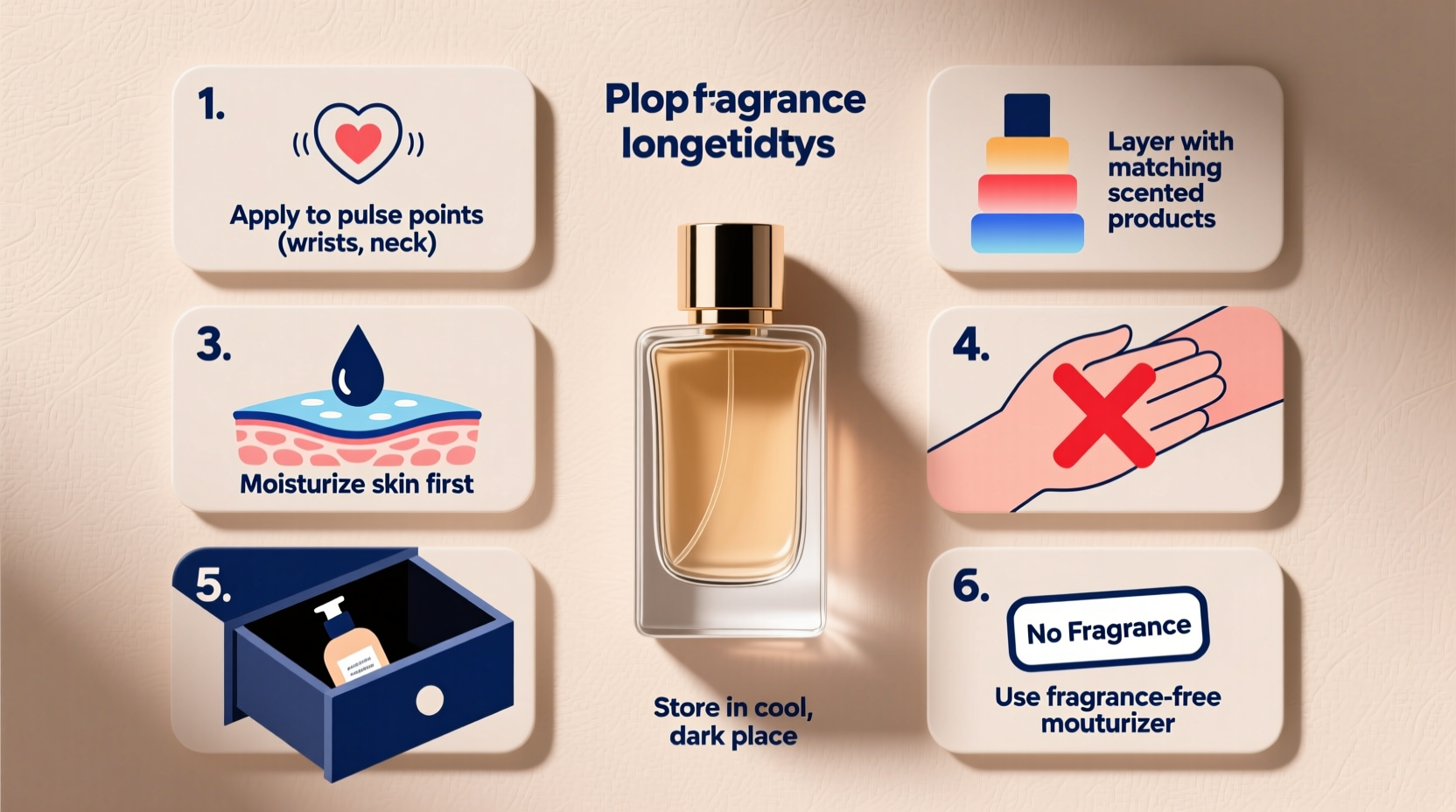
- Target pulse points: Areas like wrists, neck, behind ears, and inner elbows emit heat, helping diffuse the scent gradually.
- Moisturize first: Apply unscented lotion or petroleum jelly before spraying. Oily surfaces bind better with fragrance molecules.
- Spray, don’t rub: Rubbing wrists together breaks down delicate top notes and accelerates evaporation.
- Layer your products: Use matching body wash, lotion, or oil from the same fragrance line to build a scent foundation.
- Consider hair and fabric sprays: Use dedicated, alcohol-free mists designed for textiles or hair to avoid damage.
Avoid overspraying—two to three well-placed bursts are usually sufficient. Over-application doesn’t extend longevity; it overwhelms the nose and causes olfactory fatigue, making you think the scent has faded when it hasn’t.
Mini Case Study: From Fading to All-Day Wear
Sophie, a 34-year-old teacher in Denver, complained that her favorite floral EDT vanished within two hours. She applied it daily to her wrists and clothes but saw no improvement. After consulting a fragrance specialist, she made three changes: switched to the EDP version of the same scent, began applying unscented body butter before spraying, and started targeting her collarbone instead of wrists (which were frequently washed due to hand sanitizer use).
Within days, she noticed the fragrance lasted past school dismissal and even earned compliments during evening errands. “I didn’t realize how much my routine was working against me,” she said. “Now I smell great without reapplying.”
Storage and Handling: Preserving Your Perfume’s Integrity
Even the highest-quality perfume degrades if stored improperly. Exposure to light, heat, and oxygen breaks down aromatic compounds, weakening both scent profile and longevity.
To preserve your investment:
- Keep bottles in their original boxes when not in use—they shield against UV rays.
- Store in a cool, dark place like a drawer or closet. Avoid bathrooms, where humidity and temperature swings accelerate degradation.
- Keep caps tightly sealed to minimize oxidation.
- Don’t keep a backup bottle in your car—the interior can exceed 140°F (60°C) in summer, ruining fragrance in weeks.
Perfumes typically last 3–5 years unopened and 1–3 years once opened, depending on formula. If your scent smells sour, sharp, or flat compared to when you bought it, it may be expired.
Step-by-Step Guide to Maximizing Fragrance Longevity
Follow this simple daily routine to ensure your perfume lasts as long as possible:
- Morning Shower: Use a gentle, fragrance-free or matching-scent body wash to prep skin.
- Hydrate Skin: Immediately after drying off, apply an unscented body lotion or oil—focus on pulse points.
- Choose Your Fragrance: Select a higher-concentration option (EDP or parfum) for longer wear.
- Apply Correctly: Spray 1–3 times on warm pulse points—neck, chest, inner elbows. Do not rub.
- Reinforce Midday (Optional): Carry a rollerball decant for touch-ups on wrists or behind knees.
- Nighttime Reset: Cleanse skin gently to remove residue and prevent buildup.
This six-step system builds a sustainable scent environment on your skin, allowing base notes to unfold naturally and persist throughout the day.
Checklist: How to Make Your Perfume Last Longer
Use this quick-reference checklist to evaluate and improve your fragrance routine:
- ☑ I use Eau de Parfum or Parfum, not just Eau de Toilette
- ☑ I moisturize my skin before applying perfume
- ☑ I spray on pulse points, not clothing or hair
- ☑ I avoid rubbing my wrists after application
- ☑ My perfume is stored in a cool, dark place away from sunlight
- ☑ I haven’t noticed changes in scent quality (no discoloration or odd smell)
- ☑ I layer with matching scented products when available
- ☑ I reapply subtly if needed, using a rollerball or mini spray
Checking fewer than five items? That could explain why your scent disappears so fast. Addressing even two or three of these can yield noticeable improvements.
Frequently Asked Questions
Why does my perfume last longer on someone else?
Skin chemistry varies greatly between individuals. Differences in pH, oil production, diet, and even medications affect how fragrance molecules interact with the skin. What fades quickly on one person might linger beautifully on another. This is normal and not a reflection of product quality.
Can drinking more water help my perfume last longer?
Indirectly, yes. Hydrated skin retains moisture better and provides a more stable surface for fragrance adherence. Dehydrated skin tends to be dry and flaky, absorbing scent too quickly and releasing it unevenly. Drinking adequate water supports overall skin health, which benefits fragrance performance.
Is it better to spray or dab perfume?
Spraying is generally preferred because it ensures even distribution and minimizes contamination. Dabbing with fingers transfers bacteria and oils that can degrade the fragrance over time. However, rollerball applicators are excellent for controlled, hygienic reapplication during the day.
Final Thoughts: Elevate Your Scent Experience
Perfume fading within hours isn’t inevitable—it’s often the result of mismatched concentrations, poor application habits, or environmental neglect. By understanding the science behind scent longevity and adopting smarter routines, you can transform a fleeting aroma into an enduring personal signature.
Start small: swap your EDT for an EDP, apply to moisturized skin, and store your bottle correctly. These subtle shifts compound into dramatic improvements. Remember, fragrance is an intimate expression of identity. When it lasts, it doesn’t just smell better—it feels more confident, more complete.




 浙公网安备
33010002000092号
浙公网安备
33010002000092号 浙B2-20120091-4
Comments
No comments yet. Why don't you start the discussion?