
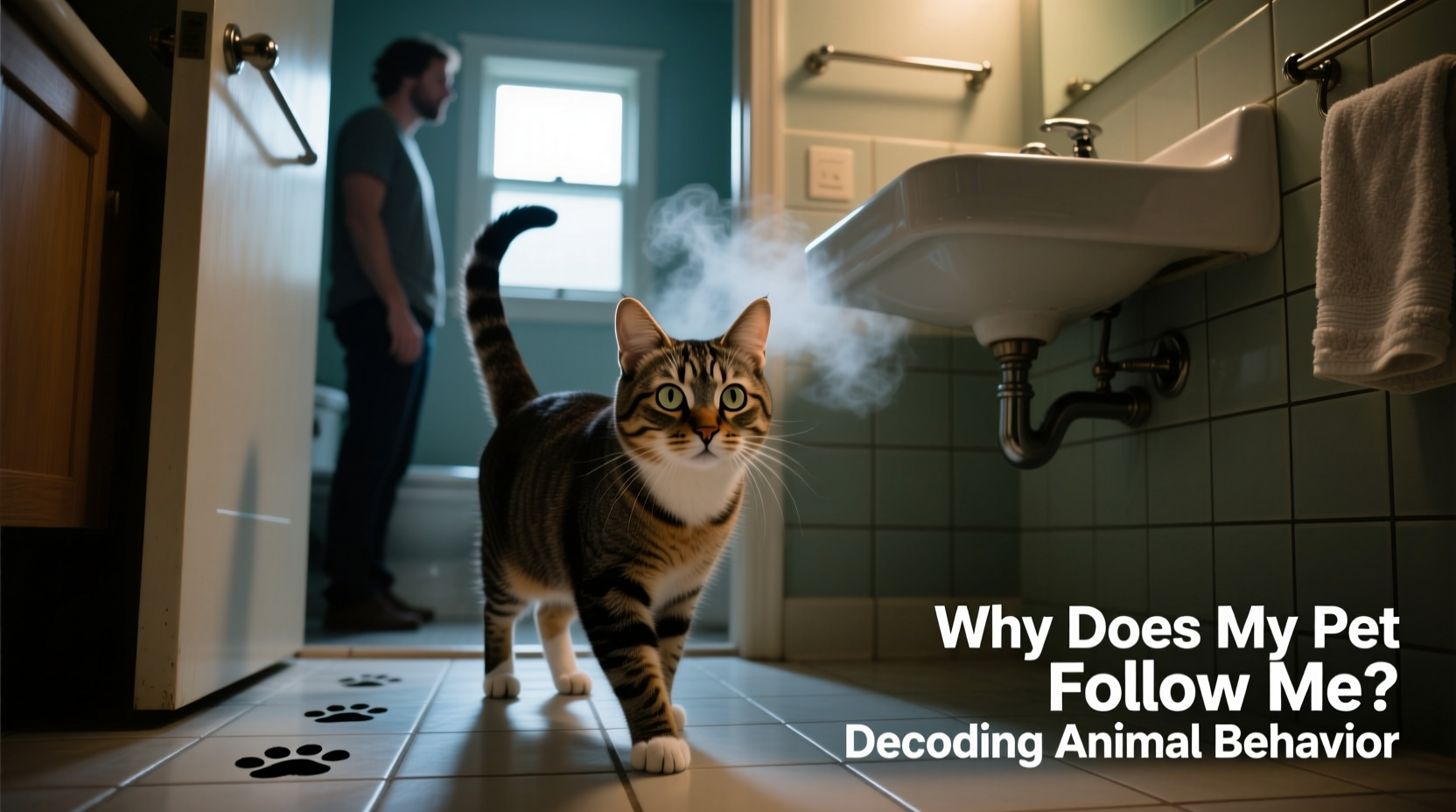
If you’ve ever tried to close the bathroom door only to hear persistent scratching or a plaintive meow on the other side, you’re not alone. Millions of pet owners experience this curious ritual: their dog waits outside the shower, their cat perches on the sink, or their rabbit nudges the door open mid-handwashing. While it may seem odd—or even inconvenient—this behavior is deeply rooted in animal psychology, social instincts, and the unique bond between pets and humans.
Understanding why your pet insists on accompanying you into the bathroom isn’t just about solving a minor household quirk—it’s a window into how animals perceive safety, attachment, and hierarchy. By decoding this seemingly trivial habit, we gain insight into broader aspects of pet behavior, emotional health, and relationship dynamics.
The Social Pack Instinct in Dogs
Dogs are inherently social creatures whose ancestors lived in tightly knit packs. In the wild, separation from the group increases vulnerability to predators and reduces access to resources. This evolutionary background shapes modern canine behavior, including their reluctance to let their human out of sight.
When a dog follows its owner into the bathroom, it’s often not about the bathroom itself but about maintaining proximity. The moment you step away—even briefly—your dog may interpret it as potential separation. The confined space of a bathroom, where sounds are muffled and visibility is limited, can heighten their anxiety. They don’t understand that you’ll return in two minutes; they only know you’ve disappeared behind a closed door.
Studies have shown that dogs form attachment bonds with their owners similar to those between infants and caregivers. A 2019 study published in *PLOS ONE* found that dogs exhibit distress behaviors when separated from their owners, even for short durations. This “secure base effect” means pets rely on their humans for emotional stability, making the bathroom one of the few places they’re temporarily excluded from.
Cats: Curiosity, Territory, and Subtle Dominance
Cats may appear aloof, but their bathroom attendance is no accident. Unlike dogs, cats aren’t pack animals in the traditional sense, yet they still form strong social bonds—with territory playing an equally important role.
For a cat, your bathroom represents a high-interest zone. It contains novel scents (toothpaste, soap, shampoo), running water, warm surfaces (after a shower), and most importantly, your scent. When you occupy the bathroom, you’re actively marking the space with your presence, which draws territorial interest from your feline companion.
Additionally, cats are natural observers. Their survival in the wild depended on monitoring environmental changes. Your routine movements—brushing teeth, washing hands, flushing the toilet—are all stimuli worth investigating. Some experts believe cats follow you into the bathroom simply because it’s one of the few times you’re stationary and accessible for interaction.
“Cats don’t follow you because they need something—they follow because they want to be part of your world. Even passive observation satisfies their social curiosity.” — Dr. Sarah Thompson, Feline Behavior Specialist
Common Triggers That Draw Cats to Bathrooms
- Running water from sinks or showers (stimulates hunting instinct)
- Fresh human scent after bathing
- Warm floors or radiators post-shower
- Containment (closed rooms create a sense of enclosure they find secure)
- Attention-seeking during otherwise busy household times
Small Mammals and Birds: Less Obvious, But Equally Motivated
While dogs and cats dominate the conversation, smaller pets like rabbits, guinea pigs, and parrots also display bathroom-following tendencies—especially if they’re free-roaming or highly socialized.
A rabbit might nudge open a half-closed door not out of mischief, but because it views you as part of its social unit. Like prey animals in the wild, rabbits feel safest when the group is together. Sudden isolation triggers stress responses, so they seek reassurance through proximity.
Birds, particularly parrots, are among the most socially dependent pets. In the wild, flock members vocalize constantly to maintain contact. When you enter the bathroom and the sound dynamics change (echoes, running water), your bird may call out or attempt to follow you to reestablish auditory connection.
| Pet Type | Primary Motivation | Signs of Distress if Excluded |
|---|---|---|
| Dog | Attachment & fear of separation | Whining, pacing, scratching at door |
| Cat | Curiosity & scent-marking interest | Vocalizing, lingering near door |
| Rabbit | Social cohesion & safety | Thumping, restlessness, reduced appetite |
| Bird | Vocal bonding & flock continuity | Loud calls, feather fluffing, head tilting |
Decoding the Emotional Undercurrents
Beyond instinct and curiosity, bathroom-following behavior often reflects deeper emotional needs. Pets thrive on predictability, and disruptions in routine—even minor ones—can cause subtle stress.
Consider this real-life example:
💬 Mini Case Study: Max the Rescue Dog
Max, a three-year-old mixed breed adopted from a shelter, began following his owner everywhere—including into the bathroom. Initially seen as clingy, the behavior escalated to panic attacks when doors were closed. A veterinary behaviorist diagnosed mild separation anxiety rooted in early abandonment trauma. Through gradual exposure training and the use of a white noise machine to reduce auditory disconnection, Max learned that brief separations were safe. Within eight weeks, he stopped demanding bathroom access and could relax nearby while his owner used the restroom.
This case illustrates that while some pets follow out of habit, others do so due to unresolved anxiety. The bathroom becomes a pressure point because it represents enforced separation in an otherwise connected environment.
How to Assess Whether It’s Normal or Problematic
- Observe intensity: Is your pet calmly sitting outside, or frantically scratching and crying?
- Note duration: Does the behavior last seconds or persist long after you’ve left the room?
- Check consistency: Is it situational (e.g., only at night) or constant throughout the day?
- Evaluate impact: Does it interfere with your routine or your pet’s ability to self-soothe?
Mild interest is normal. Obsessive behavior may indicate underlying issues requiring professional intervention.
Practical Strategies to Manage Bathroom Companionship
You don’t need to stop your pet from following you entirely—nor should you, if the behavior causes no harm. However, fostering independence ensures emotional resilience and prevents dependency-related stress.
Step-by-Step Guide: Building Pet Independence
- Start with partial barriers: Use a baby gate or cracked door instead of full closure. Allow visual access while creating physical boundaries.
- Introduce distraction tools: Offer a chew toy for dogs or a puzzle feeder for cats just before entering the bathroom.
- Practice short absences: Close the door for 10 seconds, then reward calm behavior with praise or a treat. Gradually increase duration.
- Create alternative comfort zones: Place a cozy bed or perch near the bathroom so your pet can stay close without entering.
- Use positive reinforcement: Reward your pet for staying in another room voluntarily. Clicker training can help reinforce distance-based commands like “stay” or “go to mat.”
Checklist: Healthy Bathroom Boundaries
- ✅ Provide a comfortable nearby spot for your pet to wait
- ✅ Use engaging toys to shift focus away from the door
- ✅ Maintain consistent routines to reduce uncertainty
- ✅ Monitor for signs of anxiety or obsessive behavior
- ✅ Consult a veterinarian or behaviorist if distress persists
FAQ: Common Questions About Pet Bathroom Behavior
Why does my cat sit on the bathroom counter while I brush my teeth?
Cats are drawn to the combination of movement, sound, and scent. The minty smell of toothpaste, the motion of your brushing, and the reflective surface of the mirror all stimulate their senses. Additionally, your focused attention makes you momentarily less interactive, prompting them to insert themselves into your field of vision.
Is it bad if my dog won’t leave me alone, even in the bathroom?
Occasional following is normal, but if your dog shows signs of distress—panting, trembling, or destructive behavior—when separated, it may indicate separation anxiety. In such cases, behavioral training or consultation with a certified animal behaviorist is recommended.
Can I train my pet not to follow me into the bathroom?
Yes, but patience is key. Use positive reinforcement to teach your pet that being nearby—but not inside—is rewarding. Never force exclusion; instead, build confidence through gradual exposure and consistent cues.
Conclusion: Respecting the Bond, Encouraging Balance
Your pet’s insistence on joining you in the bathroom is more than a quirky habit—it’s a testament to the deep emotional connection you share. Whether driven by loyalty, curiosity, or instinct, this behavior underscores how profoundly animals attune themselves to our lives.
While it’s natural to want privacy, completely shutting pets out without preparation can erode their sense of security. The goal isn’t to eliminate closeness, but to foster healthy interdependence—where your pet feels safe even when apart, and you can enjoy a moment of solitude without guilt or disruption.
By understanding the motivations behind this behavior and applying compassionate, structured strategies, you strengthen both your pet’s confidence and your shared relationship. Small moments of mindfulness today lead to greater harmony tomorrow.




 浙公网安备
33010002000092号
浙公网安备
33010002000092号 浙B2-20120091-4
Comments
No comments yet. Why don't you start the discussion?