
Overwatering is the leading cause of houseplant death — not because gardeners care too little, but often because they care too much. A common sign of this well-intentioned mistake is soil that remains soggy for days after watering. When soil fails to dry properly, oxygen is displaced from the root zone, creating ideal conditions for root rot: a silent killer that can destroy even the hardiest plants in under a week. Understanding why your plant’s soil stays wet and learning how to prevent root decay isn’t just about saving individual plants; it’s about mastering the balance between moisture and aeration essential for long-term plant health.
Understanding Soil Saturation and Root Health
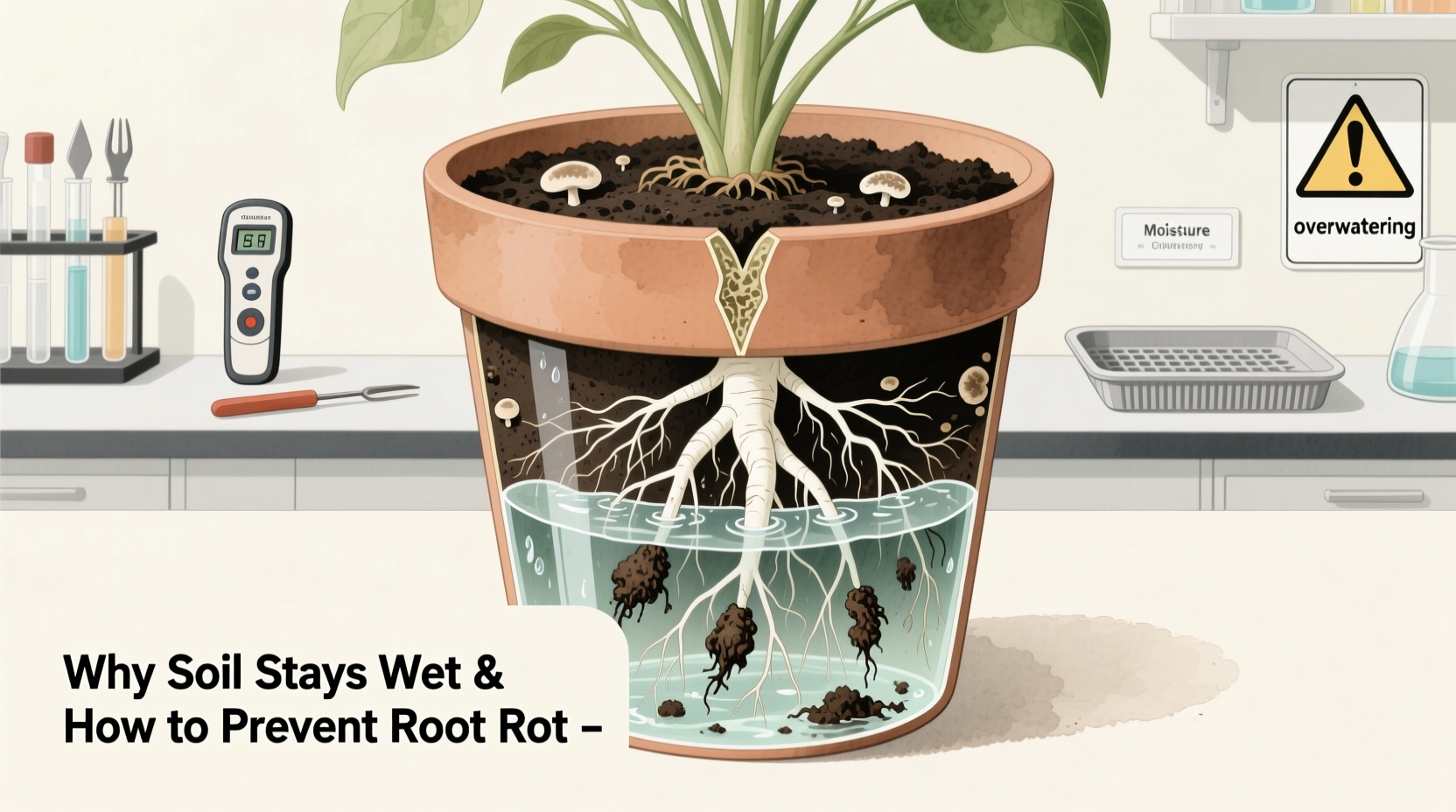
Healthy roots require both water and oxygen. While it’s natural for soil to be moist immediately after watering, it should begin drying within a few days, allowing air to re-enter the spaces between soil particles. When soil stays wet for more than 4–5 days, especially near the bottom of the pot, anaerobic conditions develop. In these environments, beneficial microbes struggle, and harmful fungi like *Pythium* and *Phytophthora* thrive — the primary culprits behind root rot.
The problem starts when excess water fills the pore spaces in the soil, pushing out oxygen. Roots suffocate without access to air, weakening their defenses. Damaged roots absorb less water, which ironically leads many plant owners to water again, thinking the plant is thirsty. This creates a vicious cycle: wet soil → root damage → poor uptake → perceived thirst → more water → worsening rot.
“Roots don’t drown — they suffocate. It’s not the water itself that kills them, but the lack of oxygen caused by waterlogged conditions.” — Dr. Linda Chalker-Scott, Urban Horticulturist, Washington State University Extension
Common Causes of Persistently Wet Soil
Several interrelated factors contribute to soil that won’t dry. Identifying the root cause (pun intended) is essential before applying corrective measures.
Poor Drainage in Pots
Even if a pot has a drainage hole, it may still retain water if the hole is blocked or too small. Some decorative pots lack holes entirely, trapping water at the base. Without proper exit points, gravity cannot pull excess moisture downward, leaving the lower third of the soil perpetually saturated.
Incorrect Soil Mix
Standard garden soil or cheap potting mixes often contain fine particles and excessive peat, which compact over time and hold water like a sponge. These dense substrates resist airflow and slow evaporation. Tropical plants like monsteras or philodendrons need a loose, chunky mix that mimics forest floor debris — not a heavy, clay-like medium.
Overwatering Habits
Many people water on a fixed schedule rather than based on actual plant needs. Environmental factors like light, temperature, and humidity fluctuate seasonally, altering how quickly soil dries. Watering every seven days regardless of conditions almost guarantees over-saturation during cooler or darker months.
Low Light and Poor Airflow
Plants in dim corners lose moisture slowly because photosynthesis and transpiration rates drop. With less biological activity, water lingers in the soil. Similarly, stagnant air prevents surface evaporation. Rooms with no fans or open windows create microclimates where dampness accumulates.
Container Size and Material
A pot significantly larger than the plant’s root ball holds more soil than needed, increasing the reservoir of unused moisture. Additionally, plastic and glazed ceramic pots are non-porous, meaning they don’t wick away moisture like unglazed terracotta, which naturally absorbs water through its walls.
How to Prevent Root Rot: A Step-by-Step Guide
Prevention is far more effective than treatment when it comes to root rot. Once symptoms appear — yellow leaves, mushy stems, foul odor — significant damage has already occurred. Follow this proactive sequence to maintain healthy root systems.
- Assess Your Pot: Confirm it has one or more functional drainage holes. If not, repot immediately into a suitable container. Elevate pots slightly using feet or tiles to ensure water escapes freely.
- Switch to a Well-Draining Mix: Replace dense soil with a blend designed for your plant type. For most tropical houseplants, use a mixture of two parts potting soil, one part perlite, and one part orchid bark. For succulents and cacti, increase perlite and add pumice.
- Adjust Watering Frequency: Instead of following a calendar, adopt the “soak and dry” method. Water thoroughly until liquid runs from the bottom, then wait until the top 1–2 inches of soil are dry before repeating. During winter, this could mean watering once every 2–3 weeks.
- Improve Environmental Conditions: Place plants in bright, indirect light and ensure gentle air circulation. A small fan nearby (not blowing directly on leaves) can dramatically improve drying time.
- Monitor Root Health Annually: Gently remove the plant from its pot once a year to inspect roots. Healthy roots are firm and white or tan. Trim any black, slimy, or brittle sections with sterilized scissors and repot in fresh mix.
Do’s and Don’ts: Managing Wet Soil
| Do | Don’t |
|---|---|
| Use pots with drainage holes | Keep plants in pots without drainage |
| Choose porous containers like terracotta | Use only plastic or glazed ceramic long-term |
| Water deeply but infrequently | Give small sips of water frequently |
| Add perlite, pumice, or bark to soil | Use garden soil or peat-heavy mixes |
| Allow topsoil to dry between waterings | Water on a rigid weekly schedule |
| Provide bright, indirect light | Place in dark, enclosed rooms |
Real Example: Saving a Soggy Peace Lily
Sarah noticed her peace lily drooping despite watering it just two days prior. The leaves were yellowing from the base upward, and the soil felt cold and wet halfway down the pot. She lifted the plant and found brown, mushy roots — clear signs of early root rot.
Instead of discarding it, she took action. She rinsed the roots under lukewarm water, trimming away all soft tissue with sterilized shears. Then she repotted it in a smaller terracotta container using a custom mix: equal parts coconut coir, perlite, and pine bark. She placed it near an east-facing window and committed to checking moisture levels weekly with a bamboo stick.
Within three weeks, new growth emerged — deep green and upright. The plant never showed drooping again. Sarah learned that droopiness doesn’t always mean thirst; sometimes, it’s a cry for breath.
Checklist: How to Keep Plant Soil Healthy
- ✅ Confirm your pot has working drainage holes
- ✅ Use a fast-draining soil mix appropriate for your plant type
- ✅ Check soil moisture depth before watering
- ✅ Allow the top 1–2 inches of soil to dry between waterings
- ✅ Provide adequate light and air movement
- ✅ Avoid saucers that hold standing water for more than 30 minutes
- ✅ Repot every 1–2 years to refresh soil and inspect roots
- ✅ Label your plants with last watering date as a reminder
Frequently Asked Questions
Can I save a plant with root rot?
Yes, if caught early. Remove the plant from its pot, wash off the soil, and cut away all black, mushy, or stringy roots using clean, sharp scissors. Repot in fresh, well-draining soil and reduce watering. Avoid fertilizing until new growth appears, as stressed roots can’t process nutrients effectively.
Why does my soil stay wet even in summer?
Even in warm weather, poor airflow, low light, or overly large pots can prevent drying. Also, some soils break down over time into fine sludge that retains water regardless of conditions. Refreshing the mix annually helps maintain structure and porosity.
Is bottom watering bad if soil stays wet?
Bottom watering can be beneficial for even moisture distribution, but only if the soil has a chance to dry afterward. If your soil is already saturated, adding more water from below will worsen the problem. Reserve bottom watering for plants in well-draining setups and skip it entirely if you suspect overwatering.
Conclusion: Balance Moisture and Aeration for Thriving Plants
Moist soil isn’t inherently problematic — it’s essential for hydration. But when wetness persists beyond a few days, it signals an imbalance that threatens the foundation of your plant’s health: its roots. By choosing the right pot, optimizing your soil mix, adjusting your watering habits, and improving environmental conditions, you create a system where water supports life instead of endangering it.
Healthy plants aren’t those that are watered often, but those that are understood. They communicate through texture, color, and posture. Learn to read these cues, and you’ll move beyond guesswork to confident, intuitive care. Start today by checking one plant’s soil depth. If it’s wet below the surface, pause. Observe. Adjust. Your plants will respond not with words, but with resilience and growth.




 浙公网安备
33010002000092号
浙公网安备
33010002000092号 浙B2-20120091-4
Comments
No comments yet. Why don't you start the discussion?