
When you unpack your pre-lit Christmas tree each holiday season, the last thing you want is to discover that one or more sections aren’t lighting up. Dark branches can ruin the festive mood and leave you scrambling for solutions. While it’s tempting to assume the entire light string is faulty, most issues stem from small, fixable problems in the wiring, bulb seating, or fuse connections. Understanding the design of pre-lit trees and knowing how to methodically diagnose electrical faults can save time, money, and frustration.
Pre-lit trees use interconnected light strings wired in series or parallel configurations. A single loose bulb, broken filament, or blown shunt can interrupt the circuit and cause an entire section to go dark. The good news? Most of these problems are within reach of a DIY fix—no electrician required. With a few tools and a systematic approach, you can restore full illumination and enjoy a brilliantly lit tree for years to come.
How Pre-Lit Trees Are Wired: Series vs. Parallel Circuits
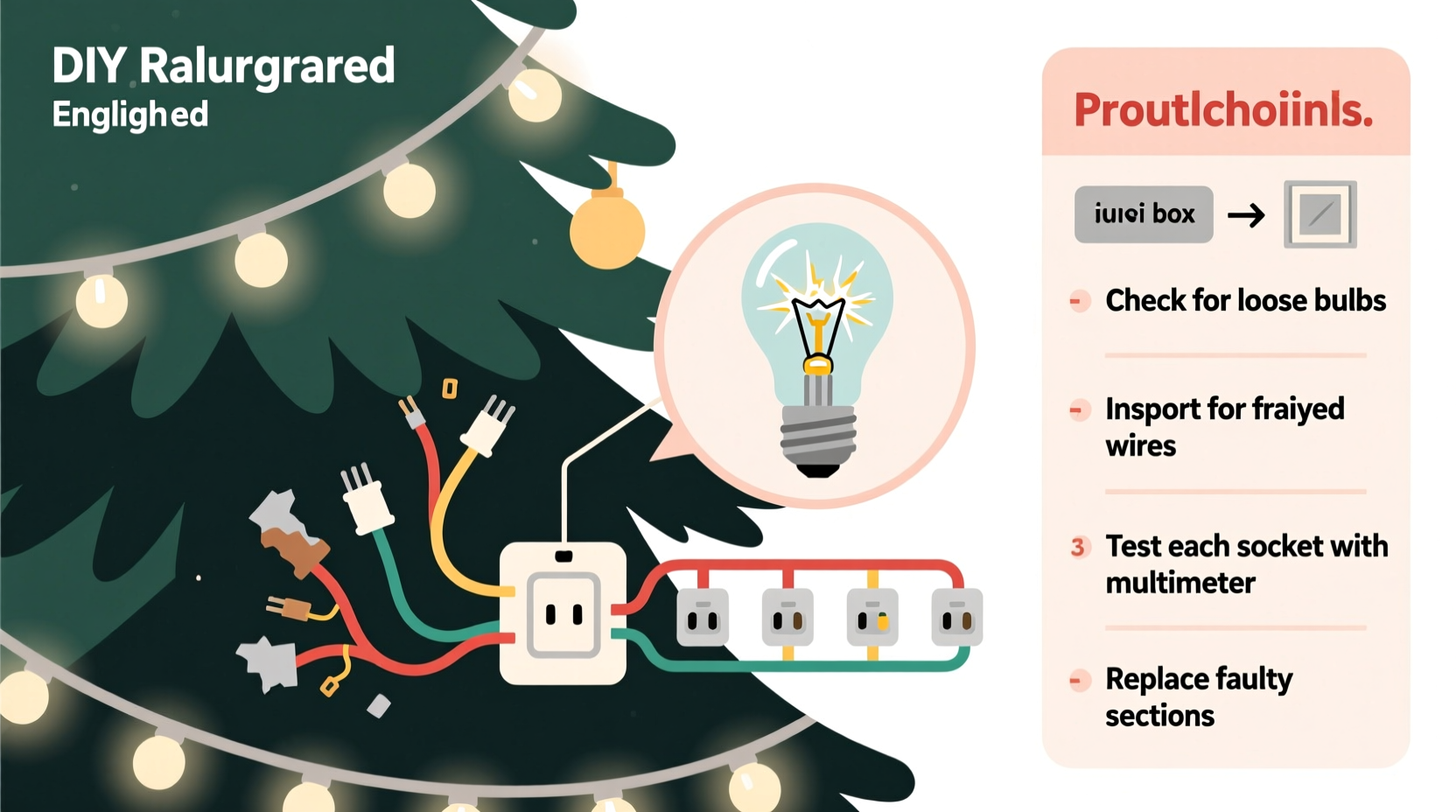
Understanding the basic electrical setup of your pre-lit tree is essential to diagnosing dark sections. Most modern pre-lit trees use a combination of series and parallel wiring, but individual light strings typically operate in series. In a series circuit, electricity flows through each bulb in sequence. If one bulb burns out or becomes dislodged, the circuit breaks, and all bulbs downstream go dark.
However, many newer models incorporate “shunted” sockets and shunt wires—tiny conductive strips inside the bulb base that activate when a filament fails. These allow current to bypass the dead bulb and keep the rest of the string lit. Despite this fail-safe, multiple failures, poor socket contact, or voltage drops can still result in dim or dark zones.
Larger trees often have several independent light strings powering different tiers (bottom, middle, top). Each section plugs into its own connector on the central pole or trunk. This modular design means a problem in one segment doesn’t necessarily affect others—unless the main power harness or control box is compromised.
“Most lighting failures in pre-lit trees aren’t due to catastrophic wiring damage—they’re caused by simple connection issues that homeowners can resolve with patience and attention to detail.” — Greg Thompson, Electrical Systems Technician with 15 years in holiday lighting maintenance
Common Causes of Dark Sections
Before diving into repairs, identify what might be causing the darkness. Here are the most frequent culprits:
- Loose or improperly seated bulbs: Even a slightly twisted bulb can break the circuit.
- Blown bulbs with failed shunts: Some bulbs don’t bypass properly when the filament breaks.
- Blown fuses in plug ends: Many light strings have two small fuses inside the male plug; one may be blown.
- Damaged wire insulation: Pinched or chewed wires (especially near hinges or storage folds) can short the circuit.
- Corroded or dirty connectors: Moisture or dust buildup on plug contacts prevents proper current flow.
- Overloaded circuits: Plugging too many strings into one outlet or daisy-chaining beyond capacity trips safety mechanisms.
- Internal wire break at the tree pole junction: Repeated bending during assembly can fracture internal wires over time.
Step-by-Step Guide to Troubleshooting Wiring Issues
Follow this logical sequence to isolate and resolve the issue efficiently.
- Unplug the tree and inspect visually. Look for obvious signs: cracked bulbs, exposed copper, kinked wires, or bent prongs on connectors. Pay close attention to where branches meet the central pole—this is a high-stress area.
- Check the power source. Plug another device into the same outlet to confirm it’s working. Try a different outlet if needed.
- Test each light section independently. Unplug all branch connectors from the central trunk harness. Plug them one at a time into a known-good outlet using extension cords if necessary. If a section lights up when powered directly, the issue lies in the trunk wiring or main harness.
- Inspect the plug fuses. Use a small screwdriver to open the sliding compartment on the male plug of each string. Look for cloudy glass or broken filaments inside the fuses. Replace both fuses with identical types (usually 3A or 5A, 125V).
- Walk the string manually. Starting from the plug end, gently press each bulb into its socket. Wiggle them slightly to ensure contact. Listen for faint clicks—some sockets make noise when reseated properly.
- Use a light tester or multimeter. Devices like the LightKeeper Pro can send pulses through the string to clear shunt failures. Alternatively, set a multimeter to continuity mode and test between adjacent sockets to locate breaks.
- Replace suspect bulbs. Remove one bulb at a time and substitute it with a known-working spare. Focus on any that appear darkened, rattling (broken filament), or misaligned.
- Examine interconnect points. Clean metal contacts on plugs and receptacles with isopropyl alcohol and a cotton swab. Corrosion blocks conductivity even if everything else is intact.
- Trace continuity along the wire run. If no bulbs or fuses are at fault, there may be a hidden break. Flex the wire gently while the string is plugged in (carefully!) to see if lights flicker—a sign of intermittent contact.
- Consider professional repair or replacement. If internal trunk wiring is damaged or multiple sections fail consistently after five+ years, it may be more cost-effective to replace the tree.
Troubleshooting Checklist
Keep this checklist handy when diagnosing your tree:
- ✅ Unplugged the tree before inspection
- ✅ Checked wall outlet with another device
- ✅ Opened plug fuse compartment and inspected/changed fuses
- ✅ Verified all bulbs are fully seated and undamaged
- ✅ Tested each light section separately off the main trunk
- ✅ Cleaned connector pins with rubbing alcohol
- ✅ Used a light tester or multimeter to check continuity
- ✅ Replaced at least three suspect bulbs per dark section
- ✅ Inspected wire paths for crushing, pinching, or rodent damage
- ✅ Confirmed manufacturer warranty status (if applicable)
Do’s and Don’ts of Pre-Lit Tree Maintenance
| Do | Don’t |
|---|---|
| Store the tree in a climate-controlled space | Leave it in a damp garage or attic long-term |
| Use provided storage bags or sturdy bins | Compress branches aggressively during storage |
| Label connectors and take photos before disassembly | Assume all plugs are interchangeable |
| Handle wires gently when assembling/disassembling | Force connectors if they don’t fit easily |
| Replace bulbs promptly when noticed missing | Use non-matching bulb types or wattages |
Real Example: Resolving a Persistent Middle-Tier Failure
Sarah from Minneapolis bought a 7.5-foot pre-lit fir tree in 2019. By 2022, the middle section consistently stayed dark despite replacing fuses and checking every bulb. She followed online forums and tried multiple testers without success. Finally, she disconnected the middle harness from the central pole and tested it independently—it lit up perfectly. That ruled out the string itself.
The clue came when she noticed slight resistance plugging the middle connector into the lower trunk block. After cleaning both sides with alcohol, she saw minor discoloration on one metal tab. Using fine sandpaper, she gently polished the contact point. Upon reconnection, the entire tier illuminated. The issue wasn’t a broken wire—it was oxidation reducing conductivity over time. A $2 fix saved her from buying a new tree.
Frequently Asked Questions
Can I replace just one section of lights on a pre-lit tree?
Yes, but only if you can source an exact replacement harness compatible with your model. Manufacturers rarely sell parts individually, though third-party suppliers sometimes offer universal kits. Mismatched voltages or pin configurations can cause malfunctions, so verify compatibility carefully.
Why do only some tips of branches stay dark?
This usually indicates a partial circuit failure—perhaps a single bulb with a failed shunt or a weak connection mid-string. Since holiday lights often wire clusters in sub-loops, one bad node can leave outer limbs unpowered while inner ones remain lit.
Is it safe to cut out a bad section and rewire it myself?
Only if you have experience with low-voltage wiring and understand the original circuit's amperage and configuration. Improper splicing can create fire hazards or void insurance coverage. For most users, replacing the entire string or consulting a professional is safer.
Extending the Life of Your Pre-Lit Tree
Prevention is far easier than repair. To minimize future wiring issues, adopt a consistent care routine. Before storing, inspect each bulb and connector. Store the tree standing upright in segments, avoiding tight compression that stresses internal wires. Keep it away from extreme temperatures, humidity, and pests like mice, which are known to chew insulation.
When assembling, connect sections slowly and avoid yanking wires. If your tree uses a controller for effects (twinkle, fade, etc.), store it in a sealed bag with a moisture absorber to prevent electronic corrosion.
Conclusion: Illuminate with Confidence
A dark section on your pre-lit tree isn’t a death sentence—it’s a solvable puzzle. Armed with knowledge of series circuits, fuse locations, and common failure points, you can restore full brightness with minimal tools. Most problems arise from overlooked details: a bulb not fully seated, a corroded plug, or a blown fuse hiding in plain sight. By following a structured troubleshooting process and practicing careful maintenance, you extend not only the life of your tree but also the joy it brings each season.
Take action tonight. Unbox your tree, run through the checklist, and reclaim that glowing centerpiece. And if you’ve solved a tricky lighting mystery, share your story—someone else might be searching for that exact solution as they stare at their own dim corner.




 浙公网安备
33010002000092号
浙公网安备
33010002000092号 浙B2-20120091-4
Comments
No comments yet. Why don't you start the discussion?