
Every holiday season, millions of households plug in their pre-lit Christmas trees expecting a flawless display of twinkling lights—only to find a few dark spots where bulbs should be glowing. Dead bulbs on a pre-lit tree are more common than most people realize, and while they’re frustrating, they aren’t always a sign that the entire tree is doomed. The good news? In many cases, you can identify the cause, fix it yourself, and even replace individual bulbs without replacing the whole string or tree.
Understanding why bulbs fail—and whether they’re replaceable—can save you time, money, and stress during the busiest time of year. This guide breaks down the technical reasons behind dead bulbs, walks you through troubleshooting steps, and explains when replacement is possible (and when it’s not).
Why Pre-Lit Tree Bulbs Burn Out or Fail
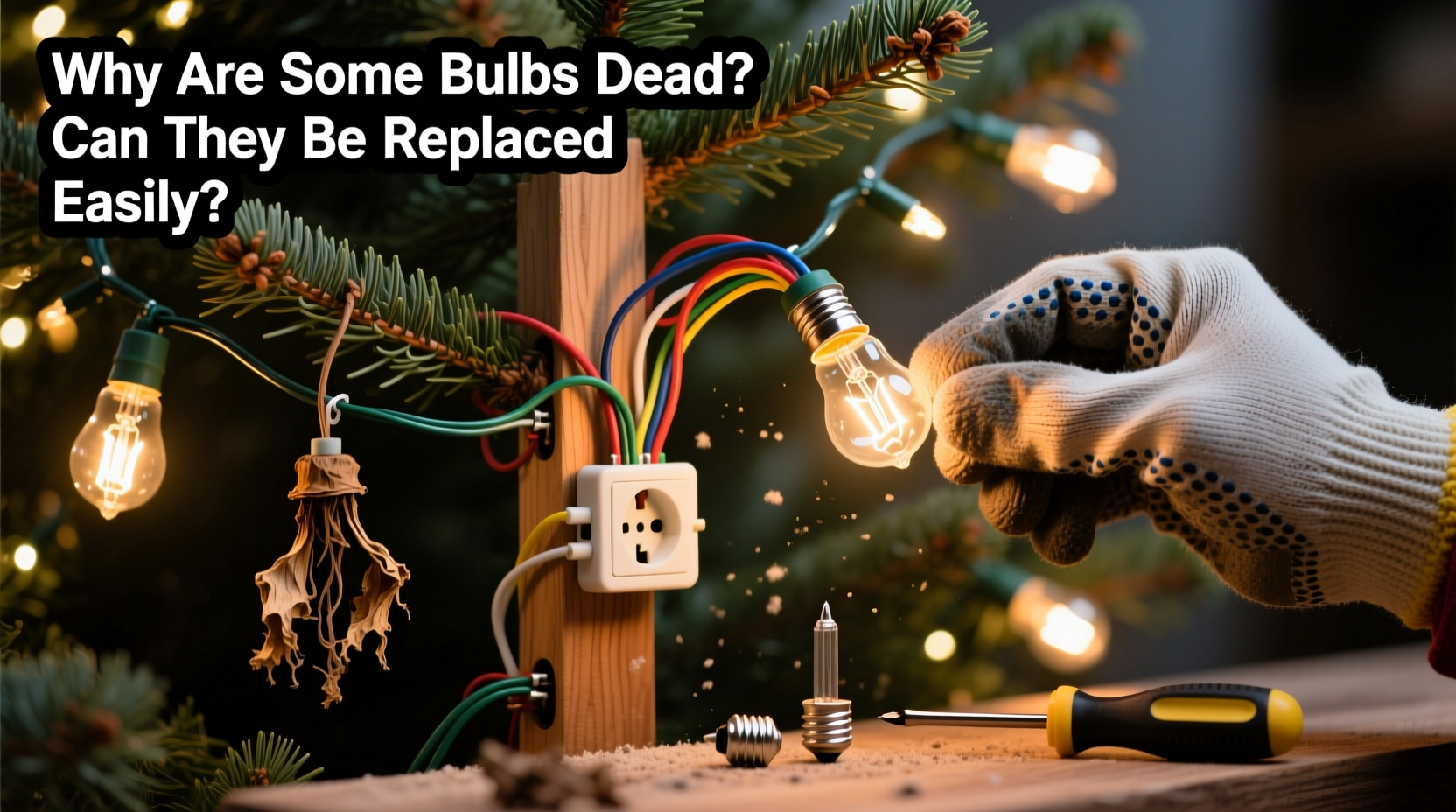
Pre-lit trees come with built-in light strings, typically wired in series or a combination of series and parallel circuits. While convenient, these systems are vulnerable to several types of failure. Unlike standalone light strands where you can simply unplug and swap them out, the lights on pre-lit trees are integrated into the branches, making repairs less straightforward.
The most common causes of dead bulbs include:
- Bulb burnout: Like any incandescent bulb, LED or traditional, repeated heating and cooling cycles can lead to filament degradation or diode failure over time.
- Loose bulb connections: Vibration during storage or assembly can loosen bulbs from their sockets, breaking the circuit.
- Shunted vs. non-shunted sockets: Some pre-lit trees use shunted sockets that allow current to bypass a dead bulb. Others don’t, meaning one failed bulb can darken an entire section.
- Power surges: Fluctuations in household voltage—especially during seasonal power demand—can damage sensitive LEDs or filaments.
- Poor manufacturing quality: Lower-cost trees may use substandard wiring, thin-gauge wires, or poorly sealed sockets that degrade faster.
- Moisture or dust buildup: Even indoor trees can accumulate dust inside sockets, leading to poor conductivity or corrosion.
One often-overlooked factor is how the lights are wired. Many pre-lit trees use \"series-parallel\" configurations: small groups of bulbs are wired in series, and those groups are connected in parallel across the main line. If one bulb in a series group fails, only that segment goes dark—but if the main parallel line is damaged, larger sections may go out.
Can You Replace Individual Bulbs on a Pre-Lit Tree?
The answer depends on two key factors: the type of lights used and the design of the tree’s lighting system.
LED vs. Incandescent: Most modern pre-lit trees use LED lights because they’re energy-efficient, cooler-running, and longer-lasting. However, many LED bulbs are soldered directly onto the wire harness, making them non-replaceable. Older incandescent models often use removable bulbs with standard E12 or mini-tab bases that can be swapped.
Socket Design: Check whether the bulb twists out like a traditional light or appears fused into the socket. Removable bulbs will usually have a small plastic base that pulls out. Soldered LEDs will look like tiny dots embedded in the wire and cannot be removed without cutting the wire.
“Many consumers don’t realize that most LED pre-lit trees are designed for longevity, not repairability. The trade-off for lower energy use and heat output is reduced serviceability.” — Mark Reynolds, Holiday Lighting Engineer
If your tree uses replaceable bulbs, replacements are generally available online or at hardware stores. Look for the exact voltage and base type (often labeled on the original bulb or instruction manual). Mismatched bulbs can overload the circuit or fail prematurely.
How to Identify Replaceable Bulbs
- Unplug the tree and inspect the dark section.
- Gently twist each bulb in the affected area. If it rotates and lifts slightly, it may be removable.
- Look for visible seams between the bulb and socket—if there’s no seam, it’s likely hardwired.
- Check the manufacturer’s website or manual for bulb specifications and replacement guidelines.
Step-by-Step Guide to Fixing Dead Bulbs
Before buying a new tree—or giving up entirely—follow this systematic approach to diagnose and potentially fix the problem.
Step 1: Unplug and Inspect
Always disconnect the tree from power before handling bulbs or wires. Visually scan the dark section for obvious issues: broken wires, cracked bulbs, or disconnected plugs between tree sections.
Step 2: Test for Loose Bulbs
Starting at one end of the dark section, gently twist each bulb clockwise. Many sockets require a quarter-turn to lock into place. Listen for a slight click. Replug the tree after testing each bulb to see if the section lights up.
Step 3: Use a Light Tester or Multimeter
A non-contact voltage tester or multimeter can help determine if power is reaching the socket. For non-shunted sockets, a single dead bulb breaks the circuit. If the first few bulbs in a series have voltage but the rest don’t, the faulty bulb is likely somewhere in between.
Step 4: Replace Faulty Bulbs (If Possible)
If bulbs are removable, purchase exact replacements. Avoid mixing LED and incandescent types. Insert the new bulb firmly until it clicks. Do not force it—over-tightening can damage the socket.
Step 5: Check Fuses in the Plug
Many pre-lit trees have fuses located in the male plug. Open the fuse compartment (usually with a small screw or sliding cover) and inspect the glass fuses. If they’re blackened or broken, replace them with identical-rated fuses (typically 3–5 amps). Always keep spares.
Step 6: Evaluate Section-Wide Failure
If an entire branch remains dark despite bulb checks, the issue may be a broken wire within the trunk or a failed circuit board (in smart trees). At this point, repair becomes complex and may not be cost-effective.
When Replacement Isn’t Feasible: Knowing When to Let Go
Not all lighting failures can be fixed. Here are signs it may be time to retire your pre-lit tree:
- Multiple dead sections: If more than 30% of the lights are out and not responding to troubleshooting, the internal wiring may be deteriorating.
- Soldered LED failure: If the LEDs are hardwired and multiple bulbs in a row are dead, rewiring requires advanced skills and risks damaging the tree further.
- Frayed or exposed wires: Safety hazard. Exposed conductors increase fire risk, especially near dry foliage.
- Inconsistent brightness: Flickering or dimming across different sections may indicate transformer or circuit board failure.
Some manufacturers offer limited warranties (typically one to three years) covering light malfunctions. Register your tree upon purchase and keep the receipt. After warranty expiration, repair costs often exceed the value of a mid-range tree.
Do’s and Don’ts of Pre-Lit Tree Maintenance
| Do | Don’t |
|---|---|
| Store the tree in a climate-controlled environment | Leave it in a damp garage or attic |
| Use a tree bag with rod support to prevent branch crushing | Compress branches under heavy objects |
| Inspect lights annually before setup | Ignore flickering or intermittent sections |
| Twist bulbs gently to ensure connection | Force bulbs or yank wires |
| Keep spare fuses and compatible bulbs on hand | Mix bulb types or voltages |
Real Example: Sarah’s Third-Year Tree Troubles
Sarah bought a 7.5-foot pre-lit fir tree in 2021. The first two Christmases were flawless. But in 2023, she noticed a 12-bulb section on the bottom tier wasn’t lighting up. She tried plugging it into a different outlet—no change. After reading online forums, she unplugged the tree and began twisting each bulb. One near the center of the dark zone felt looser than the others. She gave it a firm twist, heard a faint click, and upon replugging, the entire section lit up.
Later, she discovered the manufacturer offered a five-year “Light Lock” guarantee. She registered the tree retroactively and received two packs of replacement bulbs and fuses at no cost. Now, she inspects all bulbs during setup and keeps the extras in a labeled pouch inside her tree storage bin.
Sarah’s experience shows that simple mechanical issues are common—and often fixable—with minimal effort. It also highlights the importance of checking warranty terms, which many consumers overlook.
FAQ: Common Questions About Pre-Lit Tree Bulbs
Can I cut out a dead section and restring it myself?
Technically yes, but it’s not recommended. Cutting wires voids safety certifications and creates potential fire hazards. Matching wire gauge, insulation, and connector types is difficult for DIYers. If aesthetics are critical, consider draping supplemental string lights over the dark areas instead.
Are replacement light kits available for pre-lit trees?
Only in rare cases. Most manufacturers don’t sell full replacement strands due to proprietary designs. Third-party universal retrofit kits exist but require removing existing wires and may not match the tree’s natural look. These are best suited for older trees you’re determined to restore.
Why do only some bulbs die while others stay bright?
This often relates to circuit design. In series-wired segments, one dead bulb stops current flow to the rest in that loop. In parallel setups, each bulb operates independently. Modern hybrid systems mean partial failures are normal. Also, bulbs near the base may run hotter due to proximity to the floor or electronics, shortening their lifespan.
Final Checklist: What to Do When Bulbs Die
- Unplug the tree immediately.
- Visually inspect for loose, broken, or discolored bulbs.
- Twist each bulb gently to secure connection.
- Check and replace fuses in the plug.
- Determine if bulbs are removable or hardwired.
- Purchase exact replacement bulbs if needed.
- Test the section after each change.
- Contact the manufacturer for warranty support.
- If beyond repair, consider using decorative string lights to camouflage dark zones.
Conclusion: Keep Your Lights Bright for Years to Come
Dead bulbs on a pre-lit Christmas tree don’t automatically mean the end of its life. With careful inspection, basic troubleshooting, and a little patience, many lighting issues can be resolved quickly and inexpensively. The key is understanding your tree’s lighting system, acting promptly when problems arise, and maintaining it properly between seasons.
Even if replacement isn’t possible, knowing when and how to work around the issue lets you enjoy your favorite tree for years. And if you’re shopping for a new one, look for models with replaceable bulbs, long warranties, and shunted sockets—they’re built to last and easier to maintain.




 浙公网安备
33010002000092号
浙公网安备
33010002000092号 浙B2-20120091-4
Comments
No comments yet. Why don't you start the discussion?