
Shoulder clicking during rotation is something many people experience at some point. For most, it’s a harmless sound—like cracking knuckles—without pain or limitation. But in other cases, that pop or grind can signal an underlying issue needing attention. Understanding the difference between benign joint noise and symptoms of injury is essential for maintaining long-term shoulder health.
The shoulder is one of the most mobile joints in the body, capable of rotating, lifting, and reaching in multiple directions. This flexibility comes at a cost: stability. The complex interplay of bones, tendons, ligaments, and cartilage means there are several potential sources of noise during movement. While occasional clicking isn’t alarming, persistent or painful sounds should not be ignored.
What Causes Shoulder Clicking?
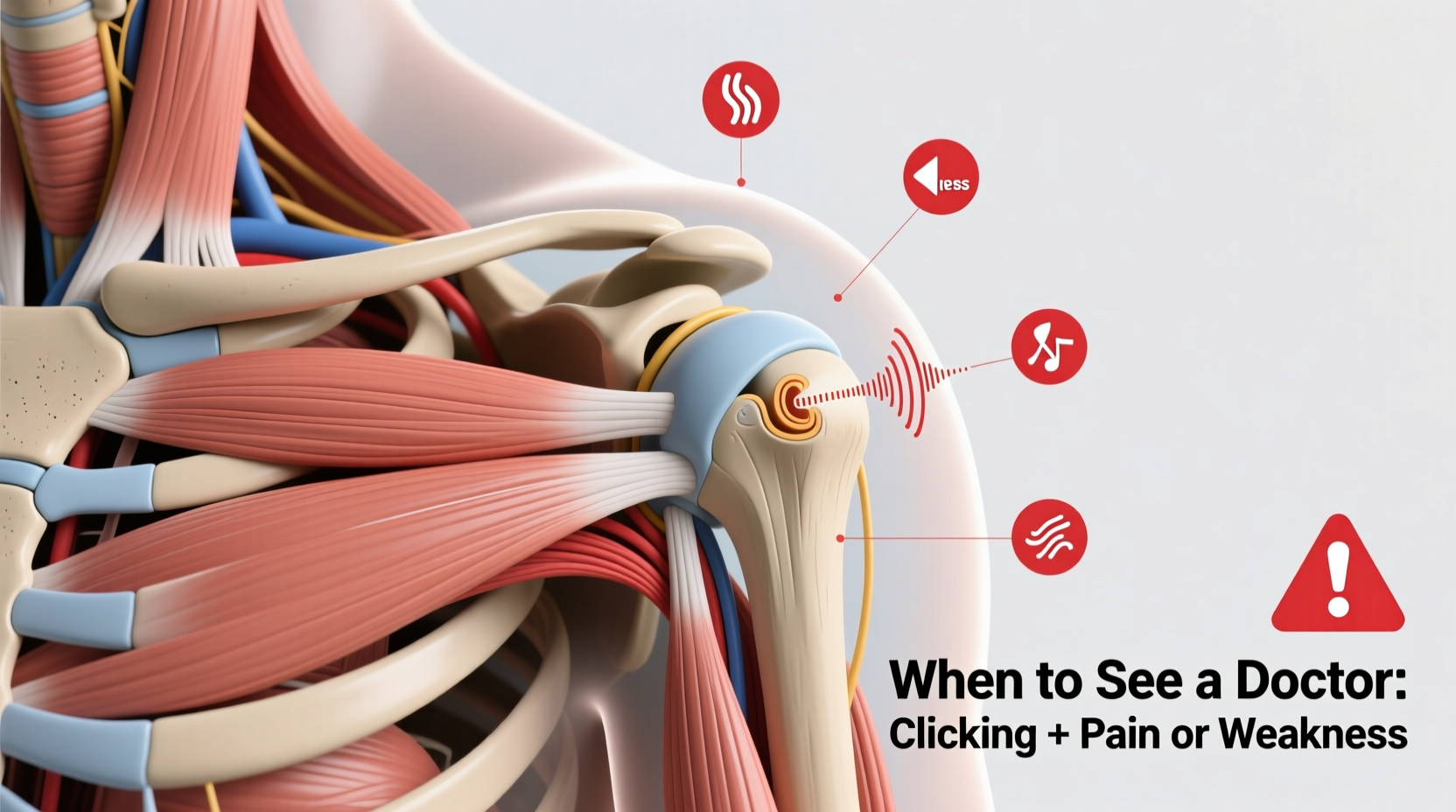
Joint noises like popping, snapping, or grinding (known medically as crepitus) occur due to physical changes within the joint space or surrounding soft tissues. Several mechanisms explain why your shoulder might click when you rotate it:
- Gas release in the synovial fluid: Tiny bubbles form and collapse in the lubricating fluid inside the joint capsule when pressure shifts during motion. This produces a quick “pop” similar to knuckle cracking.
- Tendon snapping: As tendons move over bony prominences—such as the rotator cuff tendon passing over the humeral head—they may momentarily catch and then slip back into place, creating a snapping sensation.
- Labral tears: The labrum is a ring of cartilage that stabilizes the ball-and-socket joint. If torn, often from trauma or repetitive overhead motion, it can create catching or clicking sensations.
- Cartilage wear (osteoarthritis): Degeneration of smooth cartilage leads to rough surfaces rubbing together, producing grating or grinding sounds, especially with age.
- Scapular dyskinesis: Abnormal movement patterns of the shoulder blade (scapula) against the rib cage can lead to rhythmic thumping or clicking during arm elevation.
In many cases, these processes happen silently. When they produce audible or palpable feedback, it becomes noticeable—but not necessarily dangerous.
Warning Signs That Demand Attention
While isolated clicking without discomfort is usually benign, certain accompanying symptoms suggest pathology. These red flags warrant medical evaluation to prevent progression of damage:
- Pain during or after clicking: Discomfort localized to the shoulder joint, especially if reproducible with specific movements, indicates inflammation, impingement, or structural injury.
- Loss of range of motion: Difficulty lifting your arm overhead, reaching behind your back, or performing daily tasks like combing your hair may point to frozen shoulder, rotator cuff dysfunction, or adhesive capsulitis.
- Weakness in the arm or shoulder: Inability to sustain resistance or feeling like your arm might \"give out\" could reflect nerve compression, muscle tear, or neurological involvement.
- Swelling or warmth: Visible puffiness, redness, or heat around the joint suggests active inflammation or infection.
- Catching or locking: A sensation that the joint gets stuck mid-motion often correlates with labral tears or loose bodies within the joint space.
- Noise worsening over time: Increasing frequency or intensity of clicking, especially with activity, may indicate progressive degeneration or instability.
“Repetitive clicking with pain shouldn’t be dismissed as normal wear and tear. Early diagnosis of rotator cuff or labral injuries significantly improves outcomes.” — Dr. Marcus Lin, Sports Medicine Orthopedist
Common Conditions Associated With Painful Shoulder Clicking
Beyond simple mechanical noise, several diagnosable conditions present with clicking as a primary symptom. Recognizing them helps guide appropriate care.
Rotator Cuff Tendinopathy or Tear
The rotator cuff consists of four muscles that stabilize the shoulder. Overuse, aging, or acute injury can lead to fraying or tearing of these tendons. Clicking may occur due to altered mechanics or tendon snapping across bone. Pain typically worsens at night or with overhead activities.
SLAP Tear (Superior Labrum Anterior to Posterior)
This type of labral injury affects the top portion of the cartilage ring where the biceps tendon attaches. Common in athletes who throw or lift overhead, SLAP tears often produce deep, internal clicking or catching, particularly during rotational motions.
Shoulder Instability
When the humeral head partially or fully dislocates from the socket, it can stretch ligaments and damage supporting structures. Recurrent subluxation often results in clicking, especially during abduction and external rotation.
Subacromial Impingement Syndrome
Narrowing of the space beneath the acromion causes tendons to rub against bone during arm elevation. This irritation leads to inflammation and sometimes audible grinding or popping as swollen tissues pass through the tight zone.
Arthritis (Osteoarthritis or Post-Traumatic)
Cartilage breakdown creates uneven joint surfaces. As the arm moves, these irregularities grind together, causing a coarse, continuous crackling known as crepitus. Unlike occasional pops, arthritic crepitus tends to persist throughout motion.
Snapping Scapula Syndrome
Abnormal contact between the scapula and rib cage produces a rhythmic thud or click during arm movement. Often linked to muscle imbalances, poor posture, or anatomical variations in the scapular shape.
| Condition | Typical Symptoms | Common Triggers |
|---|---|---|
| Rotator Cuff Injury | Dull ache, weakness, pain at night | Lifting, reaching, lying on affected side |
| SLAP Tear | Deep clicking, catching, decreased throwing velocity | Overhead throwing, pulling motions |
| Shoulder Instability | Sensation of slipping, fear of dislocation | Arm in abducted/externally rotated position |
| Impingement | Sharp pain midway through lifting arm | Overhead work, swimming, painting ceilings |
| Osteoarthritis | Stiffness, dull ache, persistent crepitus | Aging, prior fractures, repetitive stress |
When to See a Doctor: A Step-by-Step Guide
If you're unsure whether your shoulder clicking needs professional assessment, follow this timeline-based approach:
- Week 1 – Monitor symptoms: Note when the clicking occurs, whether it’s painful, and if any activities make it worse. Keep a simple log: date, movement, pain level (1–10), and associated symptoms.
- Week 2 – Modify activity: Avoid movements that reproduce the click or cause pain. Reduce overhead lifting, heavy pushing/pulling, or sports involving shoulder strain.
- Week 3 – Try gentle mobility exercises: Incorporate shoulder rolls, pendulum swings, and wall walks to maintain motion without loading the joint. Stop if pain increases.
- Week 4 – Reassess: If clicking persists with pain, weakness, or restricted motion, schedule a visit with a healthcare provider—preferably a physical therapist or orthopedic specialist.
- Diagnosis phase: Your provider may perform special tests (e.g., Jobe test, O’Brien test), assess scapular control, and order imaging such as MRI or ultrasound to identify structural issues.
Mini Case Study: The Weekend Athlete
James, a 38-year-old recreational tennis player, began noticing a distinct click in his right shoulder every time he served. At first, it didn’t hurt—just odd. Over six weeks, the sound became more frequent, and he started feeling a sharp twinge with each swing. He also noticed reduced power and difficulty serving consistently.
He consulted a sports physiotherapist, who identified weakness in his external rotators and signs of impingement. An MRI confirmed partial-thickness tearing in his supraspinatus tendon and mild bursitis. With targeted strengthening, posture correction, and temporary modification of his serve technique, James returned to play pain-free within three months—avoiding surgery through early intervention.
His case illustrates how seemingly minor joint noise can evolve into functional impairment if left unchecked.
Prevention and Self-Care Checklist
Maintaining shoulder health involves proactive habits. Use this checklist to minimize risk of injury and reduce abnormal joint noise:
- ✅ Perform daily shoulder mobility drills (e.g., doorway stretches, scapular squeezes)
- ✅ Strengthen rotator cuff muscles twice weekly using resistance bands
- ✅ Maintain good posture, especially during prolonged sitting
- ✅ Warm up before upper-body workouts or sports
- ✅ Avoid repetitive overhead motions without rest breaks
- ✅ Sleep in positions that don’t compress the shoulder (avoid lying directly on the affected side)
- ✅ Stay hydrated and eat anti-inflammatory foods to support tissue health
Frequently Asked Questions
Is shoulder clicking always a sign of injury?
No. Many people experience painless clicking due to gas release or tendon movement over bone. As long as there's no pain, weakness, or restriction, it's generally considered normal and doesn't require treatment.
Can poor posture cause shoulder clicking?
Yes. Forward head and rounded shoulder posture alter the alignment of the scapula and glenohumeral joint. This changes how tendons glide and increases friction, potentially leading to snapping or impingement-related clicking.
Will shoulder clicking get worse over time?
It depends. Benign clicking often remains stable. However, if caused by progressive conditions like rotator cuff degeneration or arthritis, symptoms may worsen without proper management. Early corrective action improves prognosis.
Conclusion: Listen to Your Body, Act Before It’s Too Late
Your shoulder’s ability to click harmlessly doesn’t mean all clicking is safe. The human body communicates through sensation, sound, and function. When joint noise is paired with pain, weakness, or mechanical symptoms like catching, it’s sending a message worth heeding.
Ignoring persistent shoulder issues can lead to chronic instability, accelerated joint degeneration, or irreversible soft tissue damage. On the flip side, early awareness, smart self-care, and timely medical input can preserve mobility and prevent long-term disability.
Don’t wait for pain to become debilitating. Assess your symptoms honestly, apply preventive strategies, and consult a professional if warning signs appear. Your shoulders carry you through life—one rotation at a time. Treat them with the attention they deserve.




 浙公网安备
33010002000092号
浙公网安备
33010002000092号 浙B2-20120091-4
Comments
No comments yet. Why don't you start the discussion?