
It’s a familiar morning ritual: you step into the shower, turn on the water, and within seconds, the plastic curtain begins creeping toward you like an unwelcome guest. No matter how carefully you position it, the curtain sticks to your legs, disrupts water flow, and turns a peaceful shower into a minor battle of wills. This phenomenon—commonly dismissed as a quirky bathroom inconvenience—is actually rooted in physics, material science, and environmental conditions. Understanding why your shower curtain clings is the first step to eliminating the problem for good.
The clinging isn’t magic or bad design—it’s a combination of air pressure, static electricity, and fabric behavior under heat and moisture. While many people simply accept this annoyance as inevitable, targeted solutions can significantly reduce or even eliminate curtain movement. From adjusting airflow to choosing better materials, there are effective strategies grounded in real science that can restore peace to your daily routine.
The Science Behind the Suction: Bernoulli’s Principle and Airflow
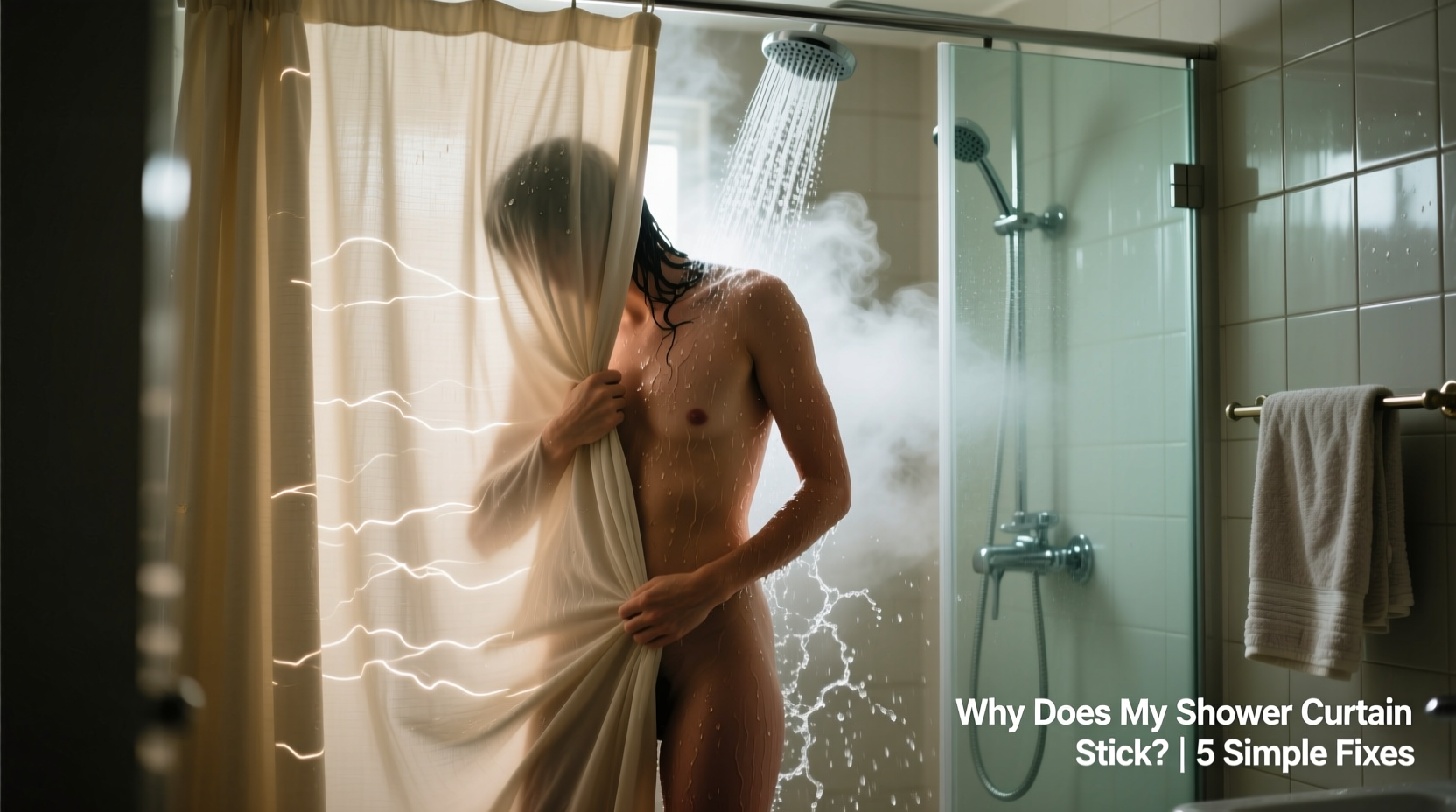
One of the primary reasons your shower curtain moves inward is due to a physical principle known as the **Bernoulli effect**. When hot water runs in the shower, it heats the surrounding air, causing warm air to rise rapidly. As this happens, cooler air from outside the shower rushes in at floor level to replace it, creating a circular airflow pattern.
This movement generates a difference in air pressure. The fast-moving air inside the shower has lower pressure compared to the still, higher-pressure air outside the curtain. As a result, the higher external pressure pushes the lightweight curtain inward—toward the lower-pressure zone created by the steam and moving air.
This effect is amplified in enclosed showers with limited ventilation. The tighter the space, the more pronounced the pressure differential becomes. It's not unlike how airplane wings generate lift—the same principle applies here, albeit on a much smaller and less graceful scale.
“Air behaves predictably under thermal gradients. In a shower, rising hot air creates a vortex that pulls flexible surfaces inward—especially when those surfaces are light and unweighted.” — Dr. Lena Patel, Fluid Dynamics Researcher, MIT
Static Electricity: The Hidden Culprit in Dry Climates
Beyond airflow, another major contributor to curtain cling is **static electricity**. This becomes especially noticeable in colder months or in homes with low humidity. Plastic shower curtains—typically made from polyvinyl chloride (PVC) or polyethylene—are excellent insulators. When they rub against themselves or your body during movement, electrons transfer between surfaces, creating a static charge.
Once charged, the curtain develops an electrostatic attraction to nearby conductive objects—like your wet skin. Water increases your body’s conductivity, making you a prime target for static cling. Even slight movements can generate enough charge to make the curtain stick firmly to your leg or back.
Low indoor humidity worsens this issue. In dry air, static charges don’t dissipate easily. Relative humidity below 40% dramatically increases the likelihood of static buildup. Homes with forced-air heating systems often fall into this range during winter, explaining why curtain cling tends to spike in colder seasons.
Factors That Increase Static Buildup
- Dry indoor air (especially below 40% RH)
- Frequent friction between curtain panels
- Synthetic curtain materials (PVC, polyester, vinyl)
- Rapid temperature changes from hot water
- Wearing synthetic fabrics (e.g., nylon bathrobes)
Material Matters: Choosing the Right Shower Curtain
Not all shower curtains behave the same way. The material plays a critical role in both airflow interaction and static generation. By selecting the right type, you can minimize both suction and cling.
| Material | Static Risk | Airflow Interaction | Best For |
|---|---|---|---|
| PVC/Vinyl | High | High (lightweight, flutters easily) | Budget use; frequent replacement |
| Polyethylene (PEVA) | Moderate | Moderate (slightly heavier) | Eco-conscious users; low chemical off-gassing |
| Cotton/Linen Blend | Low | Low (heavier drape, resists movement) | Traditional bathrooms; natural fiber lovers |
| Weighted Liners with Metal Grommets | Very Low | Minimal (anchored design) | Preventing both suction and static |
| Magnetic Bottom Curtains | Negligible | None (bottom seals to tub) | Maximizing containment and stability |
Upgrading from a standard plastic curtain to a heavier fabric or one with built-in weights can dramatically improve performance. Cotton curtains, while requiring more maintenance, absorb moisture and resist static buildup. PEVA liners (a chlorine-free alternative to PVC) offer a middle ground—lightweight but less prone to emitting volatile compounds or generating static.
Step-by-Step Guide to Eliminate Curtain Cling
Fixing the shower curtain problem doesn’t require expensive renovations. With a few strategic adjustments, you can achieve a stable, cling-free shower experience. Follow this sequence for best results:
- Assess Your Current Setup: Identify whether the issue is primarily suction (curtain billowing inward) or static (sticking to skin). Run a test shower without moving much—if the curtain drifts in steadily, airflow is the main factor.
- Improve Ventilation: Turn on the bathroom exhaust fan before and during your shower. If none exists, consider installing one or leaving the door ajar to balance pressure.
- Switch to a Weighted or Magnetic Curtain: Invest in a liner with weighted hems or magnetic bottom edges that attach to the tub. These physically resist inward motion.
- Increase Humidity: Use a small humidifier in the bathroom during winter months to keep relative humidity above 40%, reducing static potential.
- Treat the Curtain Surface: Lightly wipe the curtain with a diluted fabric softener solution (1 part softener to 5 parts water) using a microfiber cloth. This reduces surface resistance and prevents electron buildup.
- Add Anchoring Features: Attach suction-cup hooks along the bottom edge to secure the curtain to the tub wall, or use decorative curtain weights designed for this purpose.
- Replace Frequently if Needed: Plastic curtains degrade over time, becoming stiffer and more prone to static. Replace every 6–12 months for optimal performance.
Real-World Example: Solving Cling in a Historic Brooklyn Bathroom
Take the case of Maria T., a resident of a pre-war apartment in Brooklyn. Her vintage clawfoot tub featured a classic plastic curtain that constantly slapped against her legs during showers. Initially assuming it was just poor design, she experimented with various fixes. First, she installed a stronger exhaust fan, which reduced steam buildup but didn’t stop the cling. Next, she tried a cotton-lined curtain, which helped with weight but mildewed quickly due to poor drying.
Her breakthrough came when she combined a PEVA liner with magnetic hem and a separate fabric outer curtain. She also began running a small ultrasonic humidifier in the bathroom during winter. Within a week, the curtain stayed in place, and the static shock sensation disappeared. “I didn’t realize humidity played such a big role,” she said. “Now my shower feels calm instead of chaotic.”
Maria’s experience highlights the importance of addressing multiple factors—material, airflow, and environment—rather than relying on a single fix.
Checklist: Prevent Shower Curtain Cling for Good
Use this actionable checklist to assess and upgrade your shower setup:
- ☐ Test for dominant issue: suction vs. static
- ☐ Ensure bathroom ventilation is functional (fan or open window)
- ☐ Replace flimsy plastic liner with weighted or magnetic version
- ☐ Maintain indoor humidity above 40% in winter
- ☐ Clean curtain monthly to remove soap scum and film that increase static
- ☐ Apply anti-static treatment (fabric softener spray) if needed
- ☐ Use curtain weights or suction anchors for added stability
- ☐ Allow curtain to dry fully between uses
- ☐ Consider switching to fabric curtains with waterproof lining
- ☐ Replace old or cracked liners annually
Frequently Asked Questions
Can I use dryer sheets to stop my shower curtain from clinging?
Yes—with caution. Wiping the curtain lightly with a used dryer sheet can temporarily reduce static by transferring anti-static chemicals to the surface. However, avoid direct contact with skin or prolonged exposure, as some residue may irritate sensitive skin. Do not use heavily scented or coated sheets near water sources.
Why does only my plastic curtain cling, but not fabric ones?
Plastic materials are non-conductive and easily accumulate static charges through friction. Fabric curtains, especially natural fibers like cotton, are more breathable, heavier, and slightly conductive when damp—making them less likely to develop or hold static. Their weight also naturally resists airflow-induced movement.
Do shower splash guards help with curtain movement?
While splash guards primarily prevent water escape, certain designs—especially curved acrylic models—can act as physical barriers that stabilize the curtain. When combined with proper anchoring, they reduce both inward suction and lateral flutter, offering dual benefits.
Conclusion: Reclaim Control of Your Shower Experience
The persistent cling of a shower curtain isn't something you need to endure. Whether driven by physics, static, or outdated materials, the causes are identifiable—and solvable. By understanding the interplay of air pressure, humidity, and fabric choice, you can transform your bathroom from a battleground of flapping plastic into a serene, functional space.
Start with simple changes: improve airflow, upgrade your liner, and monitor humidity. Small investments in better materials pay off in comfort and convenience. Don’t underestimate the impact of a well-designed curtain system—it can elevate your entire morning routine.




 浙公网安备
33010002000092号
浙公网安备
33010002000092号 浙B2-20120091-4
Comments
No comments yet. Why don't you start the discussion?