
Washing your face or body should leave you feeling refreshed, not uncomfortable. Yet many people experience a telltale tightness on their skin shortly after cleansing—a sensation that can range from mildly annoying to deeply irritating. This tightness is not normal, nor is it a sign of “clean” skin. Instead, it’s a warning signal that your skin barrier may be compromised. Understanding the root causes and how to address them can transform your skincare routine from damaging to restorative.
Skin tightness occurs when the natural oils and moisture that keep your skin supple are stripped away. The stratum corneum—the outermost layer of your skin—relies on a delicate balance of lipids, ceramides, and natural moisturizing factors (NMFs) to maintain hydration and protect against environmental aggressors. When this balance is disrupted, your skin loses water, leading to dehydration, increased sensitivity, and that familiar \"tight\" feeling. The good news? Most causes are avoidable with the right knowledge and products.
The Science Behind Skin Tightness
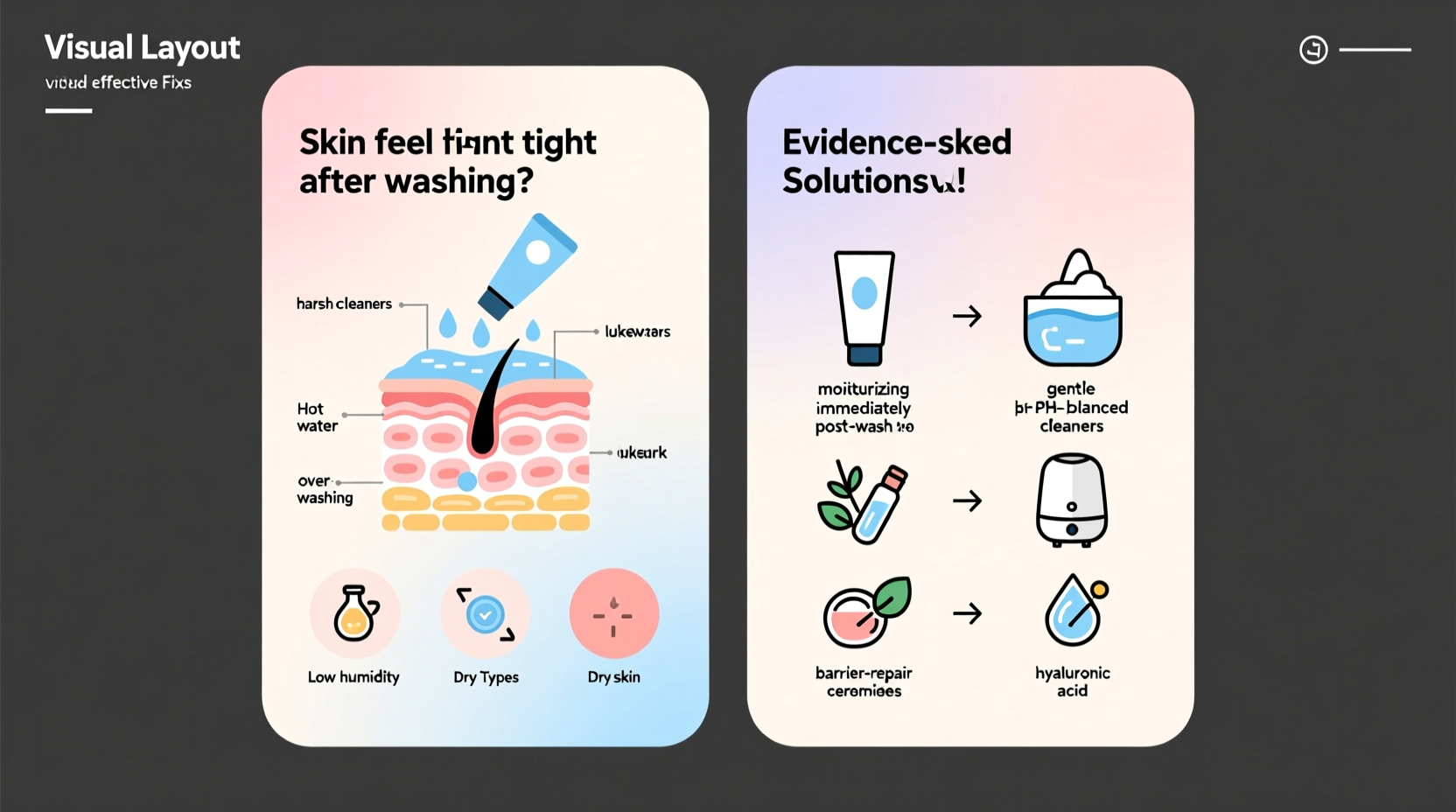
Your skin functions as a dynamic barrier, not just a surface. It actively regulates moisture loss through transepidermal water loss (TEWL). Healthy skin maintains adequate hydration by producing sebum, retaining water via NMFs like amino acids and urea, and reinforcing its lipid matrix. When you wash your skin, especially with harsh agents, you risk dissolving essential lipids and raising the skin’s pH, which impairs its ability to retain moisture.
A 2020 study published in the Journal of Clinical and Aesthetic Dermatology found that alkaline cleansers (pH above 7) disrupt the skin’s acid mantle—a protective layer with a pH of about 4.5 to 5.5. This disruption weakens the skin barrier, increases TEWL, and triggers inflammation. As moisture escapes, nerve endings become more exposed, amplifying sensations of tightness, itchiness, or discomfort.
“Skin tightness post-wash is rarely about cleanliness—it's a sign of barrier damage. The goal isn’t to strip the skin, but to cleanse without compromising its integrity.” — Dr. Lena Patel, Board-Certified Dermatologist
Common Culprits Behind Post-Wash Tightness
Several everyday habits and product choices contribute to this issue. Identifying them is the first step toward resolution.
1. Harsh Cleansers with High pH
Soaps and foaming facial washes often contain sulfates like sodium lauryl sulfate (SLS), which create a rich lather but aggressively remove oils. These cleansers tend to be alkaline, disrupting the skin’s natural acidity and weakening its defenses.
2. Over-Washing or Double Cleansing Unnecessarily
Cleansing more than twice daily—or using oil-based and water-based cleansers back-to-back without need—can over-strip the skin, especially for those with dry or sensitive types.
3. Hot Water Exposure
While warm water feels soothing, hot water dissolves sebum rapidly and dilates blood vessels, increasing redness and dehydration. Long showers or steaming facials exacerbate the problem.
4. Alcohol-Based Toners and Astringents
Products labeled “clarifying” or “deep-cleaning” often contain denatured alcohol, witch hazel, or menthol, which cause immediate tightening by evaporating moisture. This effect is temporary but damaging over time.
5. Environmental Factors
Dry climates, indoor heating, and air conditioning reduce ambient humidity, accelerating moisture loss—especially after cleansing, when skin is most vulnerable.
Do’s and Don’ts: Cleansing Habits That Matter
| Action | Do | Don’t |
|---|---|---|
| Cleanser Type | Use low-pH, sulfate-free, creamy or milky formulas | Use bar soaps or foaming washes with SLS |
| Water Temperature | Rinse with lukewarm water | Use hot water or steam your face frequently |
| Frequency | Wash face twice daily; body once daily if needed | Over-cleanse due to oily appearance |
| Towel Use | Gently pat skin dry with a soft towel | Rub vigorously, causing micro-irritation |
| Post-Wash Routine | Apply moisturizer within 60 seconds of drying | Let skin air-dry completely before applying products |
Step-by-Step Guide to Fixing Tight Skin After Washing
Rebuilding your skin barrier takes consistency, but improvements can appear within days. Follow this science-backed routine to restore comfort and resilience.
- Switch to a Gentle, Low-pH Cleanser
Replace your current cleanser with one formulated between pH 4.5 and 5.5. Look for ingredients like glycerin, ceramides, or hyaluronic acid. Avoid anything labeled “deep clean,” “oil-control,” or “exfoliating” unless specifically recommended by a dermatologist. - Limit Wash Time and Frequency
Cleanse no more than twice daily. Spend no longer than 20–30 seconds massaging the cleanser—longer exposure increases irritation risk, even with mild products. - Lower the Water Temperature
Use lukewarm water only. Test the temperature with your wrist; it should feel slightly cool to neutral, never hot. - Pat Dry Immediately
After rinsing, gently blot your skin with a clean, soft towel. Do not rub. Leaving skin slightly damp helps lock in moisture during the next step. - Apply Hydrating Products on Damp Skin
Within one minute of washing, apply a hydrating toner or essence followed by a moisturizer. This “seals in” residual water, boosting hydration. For dry areas, use the “sandwich method”: moisturizer → serum → moisturizer. - Incorporate Barrier-Supporting Ingredients
Look for products containing:- Ceramides: Rebuild the lipid matrix
- Hyaluronic Acid: Attracts and holds water
- Niacinamide: Strengthens the barrier and reduces inflammation
- Squalane: Mimics natural sebum without clogging pores
- Reassess Your Environment
Use a humidifier in dry climates or heated rooms. Keep indoor humidity between 40% and 60% to minimize moisture loss.
Real-Life Example: Sarah’s Skincare Turnaround
Sarah, a 34-year-old office worker in Colorado, struggled with tight, flaky skin every morning after washing her face. She used a popular foaming cleanser marketed for “oily skin” and followed it with an alcohol-heavy toner. Despite applying moisturizer, her skin felt tight by midday.
After consulting a dermatologist, she learned her routine was stripping her skin despite her combination type. She switched to a cream-based cleanser, eliminated the toner, and began applying a hyaluronic acid serum on damp skin each morning. Within five days, the tightness subsided. After two weeks, her skin appeared plumper and less reactive. “I thought I needed to ‘dry out’ my T-zone,” she said. “But now I realize I was just dehydrating it. My skin actually produces less oil now because it’s not overcompensating.”
When to See a Professional
Persistent tightness accompanied by redness, peeling, burning, or itching may indicate underlying conditions such as eczema, rosacea, or contact dermatitis. In such cases, self-treatment may worsen symptoms. A board-certified dermatologist can perform patch testing, evaluate your skin barrier function, and recommend medical-grade products or treatments like prescription barrier creams or anti-inflammatory serums.
Additionally, if you’ve recently introduced new products and notice sudden tightness, consider discontinuing them one at a time to identify irritants. Fragrances, essential oils, and certain preservatives (like methylisothiazolinone) are common allergens.
Frequently Asked Questions
Is tight skin a sign of aging?
Not directly. While aging skin tends to produce less sebum and has a weaker barrier, tightness after washing is more commonly linked to routine choices than age. However, mature skin may recover more slowly from barrier damage, making gentle care even more critical.
Can drinking more water fix tight skin?
Internal hydration supports overall skin health, but it won’t resolve post-wash tightness alone. Topical hydration—applying humectants and occlusives—is far more effective at restoring surface moisture. Think of drinking water as foundational support, not a topical solution.
Should I stop washing my face if it feels tight?
No—but adjust how you cleanse. Skipping cleansing can lead to buildup and breakouts. Instead, switch to a gentler product and refine your technique. Even sensitive skin needs daily cleansing, just not aggressive methods.
Essential Checklist for Comfortable, Balanced Skin
Use this checklist weekly to ensure your routine supports, rather than harms, your skin barrier:
- ✅ Replace high-pH cleansers with low-pH alternatives
- ✅ Limit face washing to morning and night only
- ✅ Use lukewarm, not hot, water
- ✅ Pat skin dry—never rub
- ✅ Apply moisturizer within 60 seconds of washing
- ✅ Incorporate ceramides, hyaluronic acid, or squalane into your routine
- ✅ Add a humidifier if you live in a dry climate
- ✅ Discontinue any product causing stinging or redness
- ✅ Schedule a dermatology visit if symptoms persist beyond 2–3 weeks
Conclusion: Treat Tightness as a Signal, Not a Norm
Tight skin after washing isn’t a badge of cleanliness—it’s a red flag. Your skin shouldn’t feel stretched, dry, or uncomfortable after a cleanse. By identifying the culprits—harsh cleansers, hot water, over-washing, and poor follow-up care—you can rebuild your skin’s natural resilience. Small changes in product selection and routine timing can yield dramatic improvements in comfort and long-term skin health.




 浙公网安备
33010002000092号
浙公网安备
33010002000092号 浙B2-20120091-4
Comments
No comments yet. Why don't you start the discussion?