
Many people notice a distinct sensation on their skin after switching between cleansers—especially when moving from a creamy formula to a foaming one. That tight, slightly dry feeling after washing with a foaming cleanser is common, but it's not always normal or harmless. Understanding the science behind this sensation can help you make smarter skincare choices tailored to your skin’s actual needs.
This difference in post-wash feel isn't just about texture or preference; it stems from fundamental differences in formulation, cleansing agents, pH levels, and how each product interacts with your skin’s natural barrier. Let’s explore what causes that tightness, why cream-based cleansers often feel more comfortable, and how to choose the right cleanser without compromising your skin health.
The Science Behind Skin Tightness
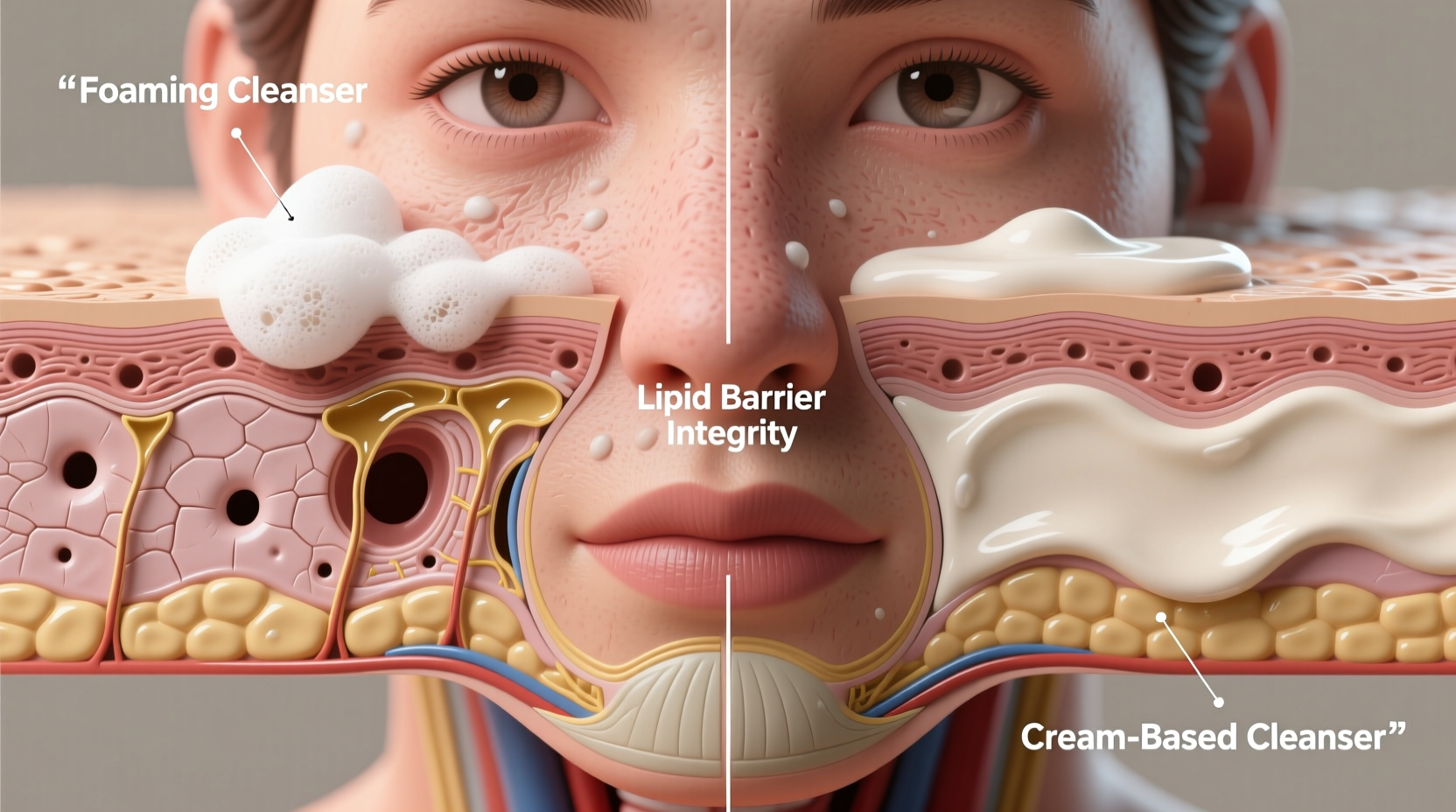
Skin tightness after cleansing is typically a sign of moisture loss and temporary disruption of the skin barrier. When you wash your face, you’re not only removing dirt and oil—you're also interacting with the stratum corneum, the outermost layer of your skin, which acts as a protective shield.
Foaming cleansers are formulated with surfactants—surface-active agents—that lift away sebum (oil), sweat, and impurities by reducing surface tension. While effective, many traditional foaming surfactants (like sodium lauryl sulfate or ammonium laureth sulfate) are highly efficient at stripping oils, including the essential lipids that keep your skin hydrated and resilient.
When these lipids are over-removed, the skin loses its ability to retain water. Transepidermal water loss (TEWL) increases, leading to dehydration. This dehydration manifests as tightness, sometimes accompanied by flaking or a dull appearance. The sensation usually peaks within minutes of drying your face and may linger until hydration is restored—either through moisturizers or natural recovery.
“Foaming cleansers can disrupt the skin’s lipid matrix, especially in those with dry or sensitive skin types. The tight feeling is essentially a red flag indicating compromised barrier function.” — Dr. Lena Park, Dermatologist & Cosmetic Scientist
How Foaming and Cream Cleansers Differ
The distinction between foaming and cream-based cleansers goes beyond lather. Their base formulations, active ingredients, and intended use vary significantly.
| Feature | Foaming Cleanser | Cream-Based Cleanser |
|---|---|---|
| Base Formula | Water-dominant, often with alcohol or lightweight emollients | Oil-in-water or rich emulsion with occlusive agents (e.g., ceramides, shea butter) |
| Surfactants Used | High-foaming anionic surfactants (e.g., SLS, SLES) | Milder non-ionic or amphoteric surfactants (e.g., cocamidopropyl betaine) |
| pH Level | Often alkaline (7.5–9.0) | Close to skin-neutral (4.5–6.0) |
| Lather | Abundant foam, satisfying to rinse | Minimal or no foam, milky texture |
| Best For | Oily, acne-prone, or combination skin | Dry, sensitive, mature, or eczema-prone skin |
| After-Feel | Tight, squeaky-clean sensation | Soft, supple, lightly conditioned |
The “squeaky clean” sensation once praised as a sign of effectiveness is now understood to be a signal of over-cleansing. Healthy skin should never feel stripped. In contrast, cream cleansers work by gently dissolving debris through emulsification rather than aggressive lifting, preserving the skin’s natural oils and pH balance.
Why Cream Cleansers Feel More Comfortable
Cream-based cleansers are designed with hydration and barrier support in mind. They often contain humectants like glycerin or hyaluronic acid, emollients such as squalane or fatty alcohols, and sometimes even ceramides to reinforce the skin’s lipid layer during cleansing.
Because they don’t rely on high-foaming surfactants, cream cleansers cleanse more passively. Instead of stripping oil, they trap impurities within their emulsion, allowing them to be rinsed or wiped away without disrupting the skin’s equilibrium. This makes them ideal for daily use, especially in dry climates or during colder months.
Additionally, cream cleansers typically maintain a pH close to that of healthy skin (around 4.5–5.5). This acidity helps preserve the skin’s microbiome and supports the activity of enzymes responsible for desquamation—the natural shedding of dead skin cells. An alkaline cleanser, on the other hand, can slow down this process, leading to clogged pores and uneven texture over time.
Real Example: A Shift in Routine
Sophia, a 32-year-old office worker with combination skin, had used foaming cleansers for years because she believed they kept her T-zone “clear and matte.” However, she began noticing persistent tightness, occasional redness on her cheeks, and increased breakouts along her jawline—despite using fewer comedogenic products.
After consulting a dermatology nurse, she switched to a cream-based cleanser with niacinamide and ceramides. Within two weeks, the tightness disappeared. Her skin felt balanced—less oily in the morning, less dry by midday. The jawline breakouts subsided, likely due to reduced irritation and improved barrier resilience.
Her experience illustrates a common misconception: that oily areas require maximum-strength cleansing. In reality, even oily skin benefits from a gentle approach that maintains barrier integrity.
Choosing the Right Cleanser for Your Skin Type
Selecting a facial cleanser shouldn’t be based solely on texture preference or marketing claims. It should align with your skin’s biological needs. Here’s how to match cleanser types to different skin profiles:
- Oily or Acne-Prone Skin: May benefit from a light foaming cleanser—but only if it uses mild surfactants and includes balancing ingredients like zinc or niacinamide. Avoid sulfates and alcohol-heavy formulas.
- Dry or Dehydrated Skin: Should avoid traditional foaming cleansers entirely. Opt for balm, milk, or cream cleansers that nourish while cleaning.
- Sensitive or Reactive Skin: Needs fragrance-free, soap-free, low-pH cleansers. Cream or micellar-based options are safest.
- Mature Skin: Often leans dry and thin. Cream cleansers with antioxidants or peptides provide gentle cleansing plus added benefits.
- Combination Skin: Can use a hybrid approach—foaming for the T-zone, cream for the cheeks—or stick with a balanced gel-cream formula.
Checklist: Is Your Cleanser Too Harsh?
- ✅ Does your skin feel tight or rough within 5 minutes of washing?
- ✅ Do you need to apply moisturizer immediately to relieve discomfort?
- ✅ Does your skin look dull or flaky by midday?
- ✅ Have you noticed increased sensitivity or reactivity to other products?
- ✅ Do you experience frequent breakouts despite “deep cleaning”?
If you answered yes to two or more, your cleanser may be too aggressive. Consider transitioning to a milder alternative.
Step-by-Step: Transitioning to a Gentler Cleanser
Moving away from foaming cleansers requires patience. Your skin may have adapted to frequent stripping, so sudden changes can cause temporary imbalances. Follow this timeline for a smooth transition:
- Week 1: Alternate Use
Use your current foaming cleanser every other night. On off nights, introduce the new cream cleanser. This allows your skin to adjust gradually. - Week 2: Evening Switch
Use the cream cleanser exclusively at night. Keep the foaming version for mornings only, if needed. - Week 3: Full Transition
Switch to the cream cleanser both morning and night. Monitor for improvements in softness and resilience. - Week 4+: Evaluate & Refine
Assess your skin’s condition. If tightness is gone and breakouts haven’t increased, you’ve likely found a better match. If congestion appears, consider adding a weekly exfoliation step instead of reverting to harsh cleansing.
During this period, avoid introducing other active ingredients (like retinoids or acids) to isolate the effects of the cleanser change.
Frequently Asked Questions
Is it bad if my skin feels tight after washing?
Yes, consistent tightness indicates dehydration and potential barrier damage. While occasional tightness might occur in dry environments, it shouldn’t be a regular post-wash experience. Healthy cleansing should leave skin neutral or slightly hydrated—not stripped.
Can I use a foaming cleanser if I have oily skin?
You can, but choose wisely. Look for foaming cleansers labeled “gentle,” “sulfate-free,” or “pH-balanced.” Ingredients like salicylic acid or tea tree oil can target oil and acne without excessive drying. Avoid daily use of strong foaming formulas, especially if you layer actives like benzoyl peroxide or retinoids.
Do cream cleansers remove sunscreen and makeup effectively?
Most do, especially if used with a double-cleansing method. Start with an oil-based first cleanse to dissolve SPF and makeup, followed by the cream cleanser to purify the skin. Some cream cleansers are formulated to emulsify thoroughly and can stand alone for light makeup days.
Expert Insight: The Role of Cleansing in Long-Term Skin Health
“The foundation of any skincare routine isn’t serums or moisturizers—it’s cleansing. A poor choice here undermines everything else. Over-cleansing leads to inflammation, accelerated aging, and impaired absorption of beneficial ingredients.” — Dr. Arjun Mehta, Board-Certified Dermatologist
Dr. Mehta emphasizes that modern dermatology prioritizes barrier preservation. The old model of “clean = stripped” has been replaced by “clean = balanced.” He recommends that patients treat their cleanser like a primer: something that prepares the skin for subsequent products without causing harm.
Conclusion: Rethink What “Clean” Means
The tight feeling after using a foaming cleanser is not a badge of thoroughness—it’s a warning sign. Your skin’s comfort level post-wash is one of the most immediate indicators of whether a product supports or stresses your barrier. Cream-based cleansers aren’t just for dry skin; they represent a more holistic, sustainable approach to facial hygiene.
By choosing a cleanser that respects your skin’s biology, you set the stage for better hydration, fewer irritations, and long-term resilience. Whether you have oily, sensitive, or aging skin, gentler cleansing often delivers superior results compared to aggressive foaming alternatives.




 浙公网安备
33010002000092号
浙公网安备
33010002000092号 浙B2-20120091-4
Comments
No comments yet. Why don't you start the discussion?