
A single, sharp chirp echoing through a quiet bedroom in the middle of the night is one of the most unsettling household sounds. It’s not loud enough to signal an emergency, but persistent enough to disrupt sleep and spark anxiety. If your smoke alarm chirps only at night, you're not alone—and more importantly, there’s usually a logical explanation and a straightforward fix.
Understanding the reasons behind nighttime chirping can help you address the issue quickly and confidently. From battery chemistry to environmental changes, several factors come into play when alarms act up after dark. This guide breaks down the science, offers actionable solutions, and helps you ensure your home remains safe—without sacrificing your peace of mind.
The Science Behind Nighttime Chirping
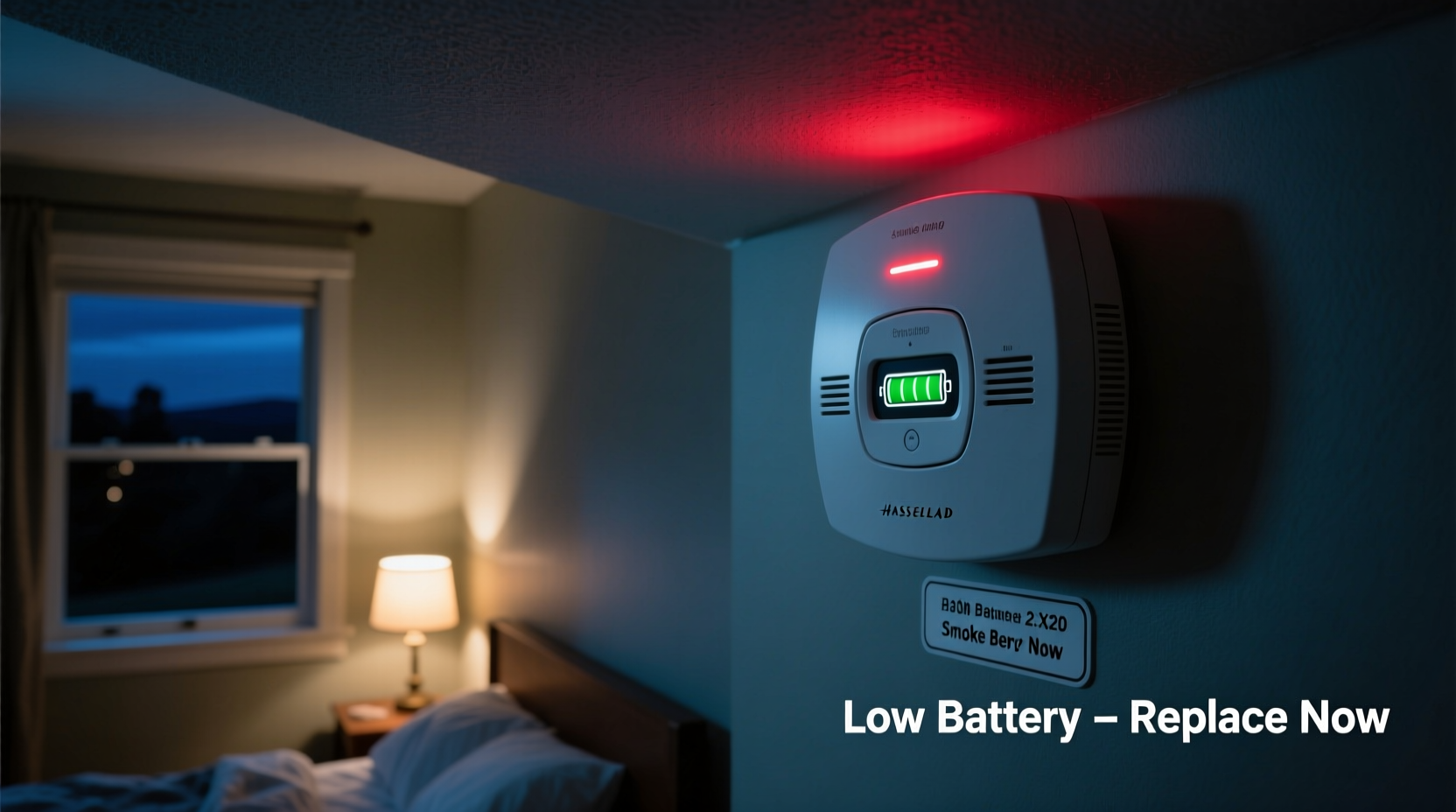
Smoke alarms are designed to be sensitive safety devices. Most modern units run on batteries or are hardwired with a battery backup. When the battery begins to weaken, the alarm communicates this by emitting a periodic chirp—typically once every 30 to 60 seconds. But why does this seem to happen more often at night?
The answer lies in temperature fluctuations. As ambient temperatures drop—commonly between 2 a.m. and 6 a.m.—battery performance decreases. Alkaline and lithium batteries used in smoke detectors are particularly sensitive to cold. A marginal battery that functions adequately during warmer daytime hours may dip below operational voltage at night, triggering the low-battery warning chirp.
Once the room warms slightly in the early morning, the battery may recover just enough to temporarily silence the alarm—only for the cycle to repeat the next night. This pattern often leads homeowners to believe the alarm is “haunted” or malfunctioning, when in reality, it's working exactly as intended: alerting you to a weakening power source before it fails completely.
“Low-battery chirps are not random—they’re a critical early warning. Ignoring them could leave you unprotected in a real fire.” — Dr. Alan Reyes, Fire Safety Engineer, National Fire Protection Association (NFPA)
Common Causes of Nighttime Chirping
While a dying battery is the most frequent culprit, several other issues can cause or contribute to nighttime chirping. Understanding each helps rule out false assumptions and ensures proper troubleshooting.
- Low battery: The primary reason. As battery charge diminishes, voltage drops, especially in cooler conditions.
- Drafts or air leaks: Cold air from windows, HVAC vents, or attics can cool the alarm unit directly, exacerbating battery sensitivity.
- End-of-life signal: Smoke alarms have a lifespan of about 10 years. After that, internal components degrade, and the unit may chirp intermittently regardless of battery condition.
- Dust or insect buildup: Accumulated debris inside the sensing chamber can interfere with electrical connections or trigger false alerts.
- Improper installation location: Units installed near bathrooms, kitchens, or garages may be exposed to humidity, steam, or temperature swings that affect performance.
Step-by-Step Guide to Stop the Chirping
Follow this systematic approach to identify and resolve the root cause of nighttime chirping. Each step builds on the previous one, ensuring no stone is left unturned.
- Replace the battery immediately. Use a fresh, high-quality alkaline or lithium battery (check manufacturer recommendations). Even if the old battery still tests “good” with a multimeter, install a new one—it’s inexpensive insurance.
- Reset the alarm. After replacing the battery, press and hold the test button for 15–20 seconds. This clears any stored error codes and resets the system.
- Check the manufacture date. Look on the back of the alarm for a label indicating the production date. If the unit is older than 10 years, replace it entirely. Sensors degrade over time and cannot be trusted beyond their service life.
- Inspect for dust or debris. Use a soft brush or vacuum nozzle to gently clean around vents and openings. Do not open the casing unless specified by the manufacturer.
- Verify placement. Ensure the alarm isn’t located within 3 feet of an HVAC vent, window, or exhaust fan. These areas experience rapid temperature shifts that can trigger false warnings.
- Monitor for recurrence. Wait 24–48 hours. If chirping returns, the unit itself may be faulty and require replacement.
Do’s and Don’ts: Smoke Alarm Maintenance Table
| Do’s | Don’ts |
|---|---|
| Replace batteries annually, even if not chirping | Ignore a chirping alarm—even if it stops on its own |
| Test alarms monthly using the test button | Use rechargeable batteries (they often don’t provide stable voltage) |
| Vacuum alarms gently every 6 months | Paint over or cover the alarm unit |
| Replace entire units every 10 years | Assume hardwired alarms don’t need battery maintenance |
| Install alarms in every bedroom and hallway | Place alarms near bathrooms or stoves where steam or cooking fumes occur |
Real Example: The Case of the Midnight Beep
Sarah Thompson, a homeowner in Minneapolis, began hearing her upstairs hallway smoke alarm chirp every night around 3 a.m. She replaced the battery twice, assuming the first was defective. The chirping stopped briefly but returned within days.
Frustrated, she contacted a local electrician who inspected the unit. He discovered two issues: the alarm was manufactured in 2011 (well past its 10-year lifespan), and cold air from an uninsulated attic was seeping through a ceiling gap, chilling the device overnight.
The solution? Replace the outdated alarm with a newer model and seal the air leak with expanding foam. Since then, the chirping stopped completely. Sarah now schedules annual smoke alarm checks like clockwork.
This case illustrates how multiple factors—age, environment, and maintenance—can combine to create recurring problems. Addressing only one piece may offer temporary relief, but lasting fixes require a holistic approach.
When Replacement Is the Only Solution
No amount of battery swapping or cleaning will fix an expired smoke alarm. After 10 years, photoelectric sensors lose sensitivity, and electronic circuits become unreliable. Some models emit a distinct “end-of-life” chirp—a longer, slower beep every 30 seconds—that differs from the standard low-battery signal.
If your alarm is over a decade old and chirping persists despite a new battery, replacement is non-negotiable. Modern alarms offer enhanced features such as sealed lithium batteries lasting 10 years, smart interconnectivity, and reduced nuisance alarms. Investing in a new unit isn't just convenient—it’s a critical upgrade for your family’s safety.
FAQ: Common Questions About Chirping Smoke Alarms
Why does my smoke alarm chirp only at night and not during the day?
Cooler nighttime temperatures reduce battery efficiency. A weak battery may operate just above threshold during the day but dip below it at night, triggering the chirp. Once the room warms, the voltage may rise enough to silence the alarm temporarily.
Can humidity cause a smoke alarm to chirp?
High humidity alone doesn’t typically cause chirping, but it can contribute to internal condensation or corrosion over time, especially in older units. Bathrooms and basements are high-risk zones. Use humidity-resistant models in these areas.
I changed the battery, but it’s still chirping. What now?
If chirping continues after a fresh battery, check the manufacture date. An expired unit (over 10 years old) may need full replacement. Also, try resetting the alarm by holding the test button for 20 seconds. For hardwired units, turn off the circuit breaker for 10 minutes to fully reset the system.
Essential Smoke Alarm Maintenance Checklist
Stay proactive with this simple checklist to prevent surprises and maintain optimal protection:
- ✅ Replace batteries once per year (e.g., daylight saving time change)
- ✅ Test each alarm monthly using the test button
- ✅ Vacuum alarm vents gently every 6 months
- ✅ Verify all alarms are within 10-year service life
- ✅ Replace expired or malfunctioning units immediately
- ✅ Install alarms on every level, inside bedrooms, and outside sleeping areas
- ✅ Interconnect alarms so all sound together during an emergency
- ✅ Avoid installing near kitchens, bathrooms, or drafty windows
Conclusion: Silence the Chirp, Secure Your Safety
A chirping smoke alarm at night isn’t just a nuisance—it’s a message. Whether it’s a cry for a new battery, a warning of impending failure, or a sign of environmental stress, the sound demands attention. By understanding the causes and taking timely action, you restore both quiet and confidence in your home’s safety system.
Don’t wait for the chirping to become unbearable or for a potential emergency to reveal a failed alarm. Take control today: check your batteries, verify unit ages, and replace what’s outdated. Your future self—and your family—will thank you when silence finally returns, not from neglect, but from peace of mind.




 浙公网安备
33010002000092号
浙公网安备
33010002000092号 浙B2-20120091-4
Comments
No comments yet. Why don't you start the discussion?