
Waking up in the middle of the night to a loud, repetitive beeping from your smoke detector is more than just annoying—it can disrupt sleep, cause anxiety, and even signal a serious safety issue. While it may seem like the device has a mind of its own, especially when it chirps only during quiet nighttime hours, there’s always a reason behind the sound. Understanding what triggers these nighttime alerts—and how to resolve them—is essential for both peace of mind and household safety.
Smoke detectors are designed to save lives by detecting smoke or combustion particles early. However, they rely on power sources and sensors that degrade over time. When environmental conditions shift at night, such as temperature drops or humidity changes, dormant issues within the unit can suddenly become apparent. This article breaks down the most common causes of nighttime beeping, provides actionable solutions, and helps you determine whether your detector needs maintenance, replacement, or simple troubleshooting.
Why Smoke Detectors Chirp at Night: The Science Behind the Timing
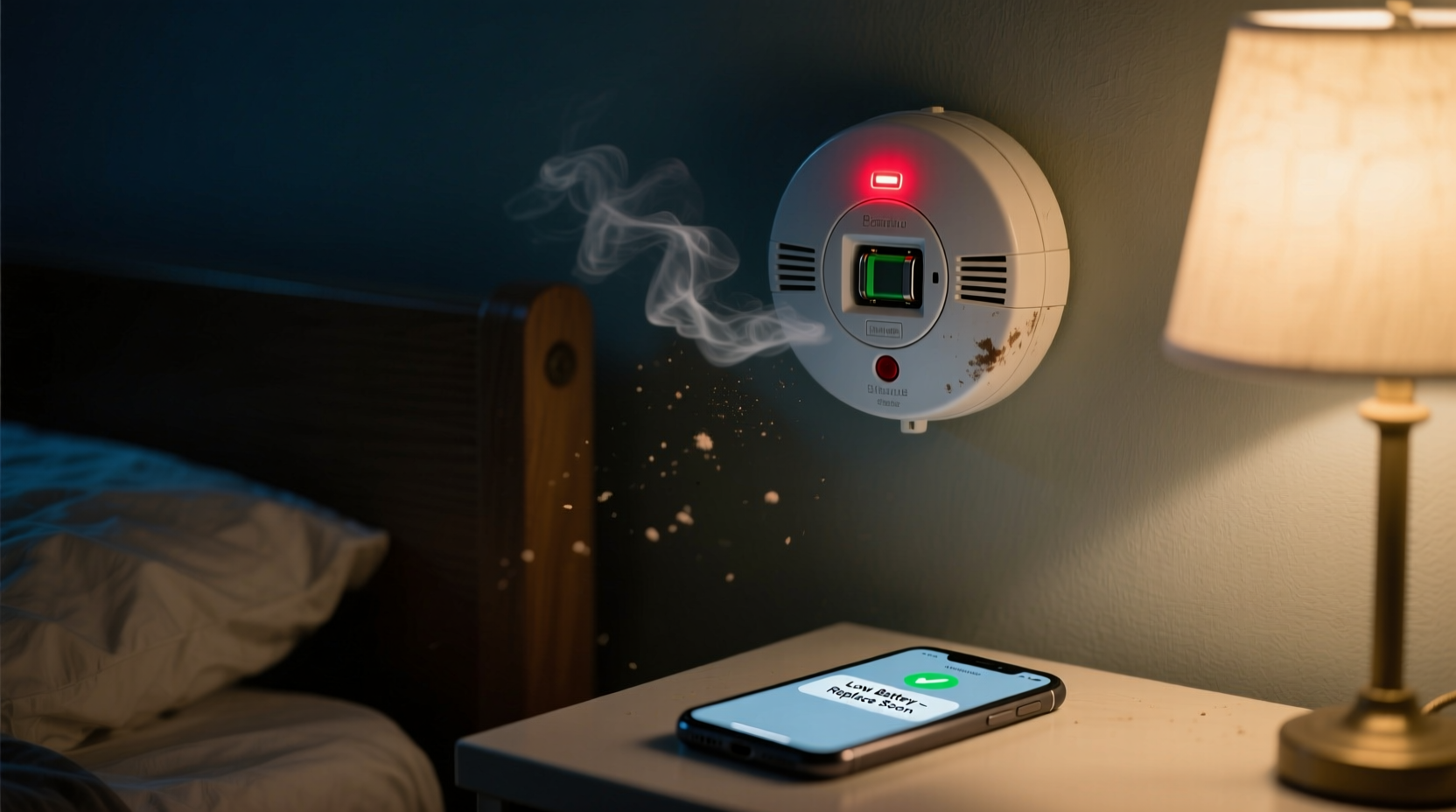
It might feel like your smoke alarm chooses the worst possible moment to beep, but there's logic to the timing. Most homes experience subtle environmental shifts after sunset. As temperatures drop—especially in bedrooms or hallways where detectors are mounted—the internal battery performance in older units can weaken temporarily. Lithium and alkaline batteries are sensitive to cold, and even a slight dip can trigger a low-battery warning chirp.
In addition, relative humidity often increases at night, particularly in bathrooms or kitchens adjacent to detection zones. Moisture buildup can interfere with circuitry or create minor electrical resistance, prompting false signals. These fluctuations are usually too small to affect newer models significantly, but aging detectors (typically over 8–10 years old) react more dramatically.
Another factor is reduced ambient noise. During the day, background sounds mask faint chirps. At night, silence amplifies every sound, making occasional beeps far more noticeable—even if they occurred earlier but went unheard.
Common Causes of Nighttime Beeping and How to Diagnose Them
Not all beeps mean the same thing. Interpreting the pattern helps identify the root cause:
- Single chirp every 30–60 seconds: Usually indicates a low battery.
- Rapid beeping (three or more times in a row): Signals active smoke detection or sensor contamination.
- Irregular chirping with no pattern: May point to wiring issues (in hardwired units) or interference from nearby electronics.
Below are the top five reasons your smoke detector beeps at night:
- Low Battery – The most frequent culprit. As batteries lose charge, voltage drops, triggering periodic warning chirps.
- End-of-Life Signal – Units older than 10 years emit chirps every 30 seconds to indicate replacement is needed.
- Dust or Insect Buildup – Particles inside the sensing chamber can scatter light in photoelectric models, mimicking smoke presence.
- Cold Temperatures – Especially in garages or poorly insulated areas, cold can reduce battery efficiency and prompt false warnings.
- Interconnected System Glitch – If multiple detectors are linked, one failing unit can cause others to chirp.
How to Test Which Cause Applies to Your Unit
Start with visual inspection: look for dust accumulation, corrosion on battery terminals, or a blinking red LED (which may indicate sensor activity). Press the test button—if it responds weakly or not at all, the battery or unit itself is likely failing. Use a digital thermometer to monitor overnight temperature near the unit; readings below 50°F (10°C) suggest thermal influence.
“Nighttime beeping is rarely random. It reflects real changes in environment or hardware condition.” — Dr. Alan Reeves, Fire Safety Engineer, National Fire Protection Association (NFPA)
Step-by-Step Fixes to Stop the Beeping
Follow this systematic approach to diagnose and resolve the issue safely and effectively.
Step 1: Silence the Alarm Temporarily
Press and hold the test/silence button for 10–15 seconds. This pauses the chirping for up to 8 hours, giving you time to investigate without constant interruption.
Step 2: Replace the Battery
Even if the battery seems functional, replace it with a fresh, high-quality alkaline or lithium model. Avoid rechargeables—they don’t deliver consistent voltage. Align polarity correctly and clean terminal contacts with a dry cloth or cotton swab.
Step 3: Clean the Detector
Use compressed air to blow out dust from vents. Hold the can upright and spray in short bursts around the perimeter. Do not open the casing unless specified by the manufacturer. For sticky residue or insect remains, gently wipe exterior grilles with a slightly damp cloth.
Step 4: Check for Expiration
Locate the manufacture date on the back of the unit. Smoke detectors expire after 10 years. If yours exceeds this age, replace it immediately regardless of current function.
Step 5: Evaluate Location and Environment
Move detectors away from bathrooms, kitchens, or AC vents where steam, grease, or drafts can trigger false alarms. Ensure units aren’t installed in unheated attics or garages unless rated for extreme temperatures.
Step 6: Reset Hardwired Systems
If your detector is connected to home wiring:
- Turn off power at the circuit breaker.
- Remove the detector from its mounting plate.
- Disconnect the backup battery.
- Wait 10 minutes to fully discharge capacitors.
- Reconnect the battery, remount the unit, and restore power.
This resets any stored error codes and clears phantom signals.
Do’s and Don’ts When Handling Smoke Detector Issues
| Action | Do | Don't |
|---|---|---|
| Battery Replacement | Use manufacturer-recommended battery type | Reuse old batteries or mix brands |
| Cleaning | Use compressed air monthly in dusty homes | Apply cleaners or water directly into sensor |
| Testing | Test monthly using the test button | Rely solely on hearing random chirps as proof of function |
| Placement | Install one per floor and inside each bedroom | Place near windows, vents, or corners with poor airflow |
| Disposal | Recycle according to local e-waste rules | Throw expired units in regular trash without removing battery |
Real-World Example: A Homeowner’s Late-Night Fix
Sarah M., a homeowner in upstate New York, began waking up weekly to a single chirp from her hallway smoke detector. She replaced the battery twice, only for the sound to return after two months. Frustrated, she contacted an electrician who discovered the unit was 12 years old—well past its service life. Despite appearing functional, the internal sensor had degraded and misread minor voltage dips as failure signals.
After replacing the unit with a modern dual-sensor (photoelectric + ionization) model, the nighttime beeping stopped completely. Sarah now sets calendar reminders every six months to test all detectors and change batteries seasonally, even if no chirping occurs.
Her experience underscores a key truth: symptoms like intermittent beeping often reflect underlying obsolescence, not just surface-level faults.
When to Replace vs. Repair: Making the Right Call
While battery swaps and cleaning help in many cases, some situations demand full replacement:
- The unit is over 10 years old.
- Chirping returns within days of battery change.
- There’s visible damage, discoloration, or odor from the device.
- Multiple detectors in an interconnected system fail simultaneously.
Modern replacements offer enhanced features: sealed long-life batteries (lasting 10 years), smartphone alerts, voice location announcements (“Fire in kitchen”), and integration with smart home systems. Investing in updated technology improves reliability and reduces false alarms.
Frequently Asked Questions
Why does my smoke detector beep only once at 3 a.m.?
A single chirp at night typically means low battery voltage. As temperatures fall, battery output decreases momentarily, triggering the alert. Once the unit warms slightly, the chirp stops until the next cycle. Replace the battery promptly.
Can I disable the nighttime sensitivity of my smoke alarm?
No—detectors do not have “sensitivity settings” based on time of day. Any perceived variation is due to environmental factors, not programmed behavior. Tampering with the unit compromises safety and violates fire codes.
Is it safe to remove the battery to stop the beeping?
No. Removing the battery disables critical protection. Instead, replace the battery immediately. If chirping persists, replace the entire unit. Leaving a detector inactive puts your household at risk.
Final Checklist: Eliminate Nighttime Beeping for Good
- ✅ Identify the beep pattern (low battery, end-of-life, etc.)
- ✅ Replace the battery with a fresh, correct-type model
- ✅ Clean the unit with compressed air
- ✅ Verify the detector’s manufacture date (replace if over 10 years)
- ✅ Test functionality monthly moving forward
- ✅ Install new units with sealed, decade-long batteries if upgrading
- ✅ Schedule biannual maintenance checks (spring and fall)
“The best smoke alarm is one you don’t notice—until it saves your life.” — NFPA Public Awareness Campaign
Conclusion: Take Control of Your Home’s Safety Today
Nighttime beeping from a smoke detector isn’t something to ignore or tolerate. It’s a communication tool—a warning sign meant to guide you toward necessary action. Whether it's a dying battery, aging hardware, or environmental interference, each cause has a clear solution. By understanding the mechanics behind the chirp and taking proactive steps, you protect not only your sleep but your family’s well-being.
Don’t wait for an emergency to validate the importance of working smoke detectors. Address the beeping now, upgrade outdated units, and establish a routine of care. Your future self will thank you when silence reigns at night—not from a broken alarm, but from a system functioning exactly as designed.




 浙公网安备
33010002000092号
浙公网安备
33010002000092号 浙B2-20120091-4
Comments
No comments yet. Why don't you start the discussion?