
A freshly blended smoothie should be thick, creamy, and satisfying—something you can sip slowly without constant stirring. Yet, many people find that within minutes, their drink splits into layers: a watery pool at the bottom, fruit pulp floating in the middle, and foam on top. This separation isn’t just annoying—it’s a sign that something’s off in your blending technique or ingredient balance. The good news? With the right approach, you can create smoothies that stay uniformly blended for 30 minutes or more. Understanding the science behind separation and applying targeted blender techniques makes all the difference.
The Science Behind Smoothie Separation
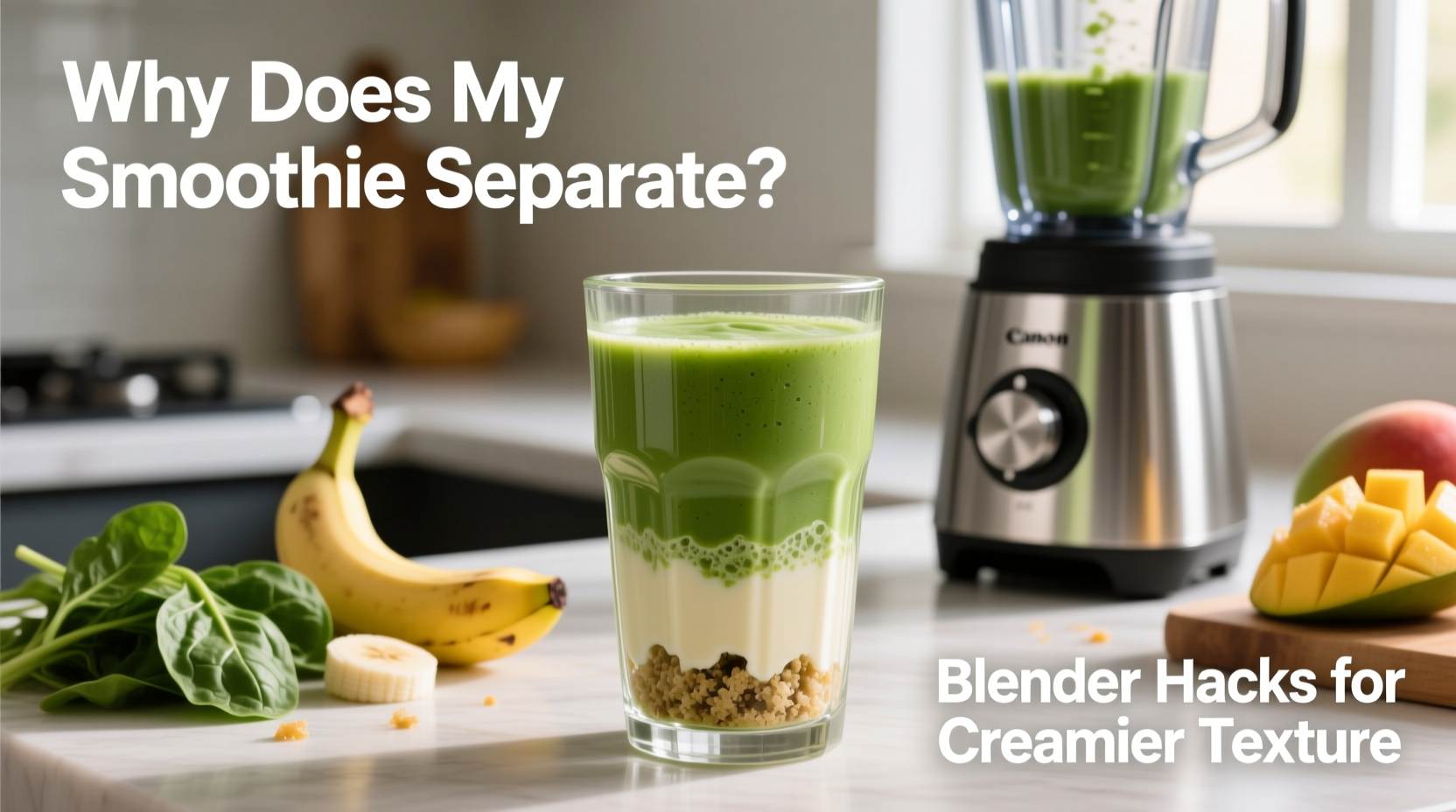
Smoothie separation occurs due to differences in density, particle size, and emulsification. When ingredients vary significantly in weight and solubility, gravity pulls heavier components downward while lighter ones rise. Water-based liquids like juice or almond milk naturally sink beneath thicker elements such as yogurt or nut butter unless properly integrated. Additionally, if solid particles aren’t finely pulverized, they settle over time instead of remaining suspended.
This process is accelerated by incomplete blending. Many home blenders lack the power or blade design to fully break down fibrous greens or frozen fruit, leaving behind coarse fragments that disrupt consistency. Without sufficient shear force—the mechanical energy that breaks apart molecules and disperses them evenly—your smoothie behaves more like a salad in liquid than a homogenous drink.
“Emulsification is key to stable smoothies. Just like salad dressing needs oil and vinegar shaken together, your smoothie needs mechanical blending to bind disparate ingredients.” — Dr. Lena Torres, Food Scientist & Nutritional Formulation Specialist
Blender Hacks for a Creamier, Stable Texture
Not all blenders are created equal, but even with modest equipment, smart techniques can dramatically improve results. Here are five essential hacks to prevent rapid separation and enhance mouthfeel.
1. Layer Ingredients Strategically
How you load your blender affects blending efficiency. Follow this order from bottom to top:
- Liquid base (e.g., milk, coconut water)
- Soft ingredients (yogurt, nut butter, avocado)
- Frozen items (fruit, ice cubes)
- Fibrous add-ins (spinach, kale, chia seeds) on top
This sequence ensures the blades encounter liquid first, creating a vortex that pulls heavier solids down into the mix. Placing leafy greens on top prevents them from getting trapped above the blades, where they might remain unblended.
2. Use the Pulse-and-Hold Technique
Instead of running your blender continuously, pulse in short bursts (2–3 seconds) followed by a 5-second pause. Repeat this cycle 6–8 times before switching to continuous blend mode. Pulsing dislodges stuck ingredients and promotes even distribution without overheating the motor.
This method is especially effective for high-fiber ingredients like flaxseed or raw kale, which tend to clump around the blade shaft. After pulsing, blend on medium-high for 30–45 seconds until completely smooth.
3. Add a Natural Thickener or Emulsifier
Incorporate one of these ingredients to increase viscosity and stabilize suspension:
- Chia seeds: Absorb up to 10 times their weight in water, forming a gel-like matrix.
- Flaxseed meal: Rich in soluble fiber that binds water and fat.
- Banana or avocado: Provide natural pectin and healthy fats for creaminess.
- Oats: Blend into a fine powder first; they act as a bulking agent.
- Lecithin (sunflower or soy): A professional-grade emulsifier available in powdered form.
Even half a tablespoon of chia or flax can transform a runny smoothie into a velvety beverage that resists layering.
4. Pre-Soak or Prep Problem Ingredients
Dry seeds like chia, flax, or hemp absorb liquid best when pre-soaked. Mix 1 tbsp seeds with 3 tbsp water and let sit for 10–15 minutes before blending. This forms a gel that integrates seamlessly and reduces grittiness.
Frozen fruit can also cause uneven blending if added straight from the freezer. Let it thaw slightly (5–10 minutes) or chop larger pieces to reduce strain on lower-powered blenders.
5. Blend in Stages for Maximum Emulsion
For optimal texture, consider a two-phase blending process:
- Blend liquids, soft thickeners (like banana), and powders first until smooth.
- Add frozen or fibrous ingredients second, blending again until fully incorporated.
This prevents cold chunks from shocking the mixture and allows gradual temperature integration, improving overall cohesion.
Choosing the Right Blender Matters
While technique plays a major role, your appliance’s capabilities set hard limits. High-performance blenders (e.g., Vitamix, Blendtec) generate enough RPMs and torque to liquefy cellulose fibers completely, producing silky textures that resist separation. Budget models often stall under dense loads, resulting in inconsistent blends.
If upgrading isn’t an option, compensate with smarter prep and patience. Run your blender longer—even up to 60 seconds—and stop occasionally to scrape down sides with a spatula.
| Blender Type | Max RPM | Separation Risk | Best For |
|---|---|---|---|
| High-Speed (Vitamix) | 30,000–45,000 | Low | Fully emulsified, restaurant-quality smoothies |
| Mid-Range (Oster, Ninja) | 18,000–25,000 | Moderate | Everyday use with pre-cut/frozen ingredients |
| Basic (Handheld, Single-Serve) | 10,000–15,000 | High | Simple recipes with minimal fiber |
Real Example: Fixing a Problematic Green Smoothie
Sarah, a busy nurse, loved starting her shift with a green smoothie made with spinach, pineapple, banana, almond milk, and a scoop of protein powder. But she noticed it separated within 10 minutes—watery on the bottom, foamy on top—making it unpleasant to drink during her break.
She tried stirring it, but the texture remained inconsistent. After learning about emulsification, she adjusted her method: she began adding 1 tsp of pre-soaked chia seeds, layered her ingredients correctly, and pulsed before blending continuously. She also switched from low-fat almond milk to oat milk, which has higher natural viscosity.
The result? Her smoothie stayed thick and uniform for over 30 minutes. No more shaking or stirring—just a consistently creamy drink that tasted as good at minute 25 as it did at minute one.
Do’s and Don’ts for Long-Lasting Smoothies
| Do’s | Don’ts |
|---|---|
| Use a 2:1 ratio of solids to liquids | Add too much water or juice |
| Include at least one thickener (banana, avocado, oats) | Overload with ice or frozen fruit without balancing liquids |
| Blend long enough to eliminate graininess | Stop blending as soon as it looks “mixed” |
| Store in a sealed container and shake before drinking | Leave it sitting uncovered on the counter |
| Prep ingredients ahead of time for faster morning blending | Use expired protein powder or rancid nut butter |
Step-by-Step Guide to a Non-Separating Smoothie
Follow this sequence every time for consistent, creamy results:
- Gather ingredients: 1 cup liquid (oat milk, kefir, or coconut water), 1 banana, 1/2 avocado, 1 cup frozen mango, 1 cup spinach, 1 tbsp chia seeds (pre-soaked), 1 scoop protein powder.
- Layer in blender: Liquid first, then soft ingredients, frozen fruit, greens on top.
- Pulse 6–8 times: 2-second bursts with 5-second pauses.
- Blend continuously: 45 seconds on high speed.
- Check texture: It should coat the back of a spoon. If too thin, add 1/4 cup oats or ice and blend 15 seconds more.
- Pour and enjoy: Drink immediately or store in a sealed jar for up to 2 hours (shake well before sipping).
FAQ
Why does my smoothie separate even when I use a powerful blender?
Even high-end blenders can’t compensate for poor ingredient ratios. Too much liquid or insufficient emulsifiers (like chia or nut butter) will still lead to separation. Also, letting the smoothie sit undisturbed for extended periods naturally causes settling—shaking or stirring before drinking resolves this.
Can I fix a separated smoothie after it happens?
Yes. Simply give it a vigorous shake in a sealed bottle or re-blend for 15–20 seconds. Adding a pinch of xanthan gum (1/8 tsp) before re-blending can help restore stability.
Is it safe to drink a separated smoothie?
Absolutely. Separation is a physical change, not a safety issue. As long as the ingredients were fresh and stored properly, it’s perfectly safe to consume. Just remix thoroughly before drinking.
Final Tips Checklist
- ✅ Balance liquids and solids (aim for 2 parts solid to 1 part liquid)
- ✅ Include a natural thickener (banana, avocado, chia, oats)
- ✅ Layer ingredients properly in the blender
- ✅ Pulse before continuous blending
- ✅ Blend for at least 45 seconds on high
- ✅ Use pre-soaked chia or flax for better binding
- ✅ Choose creamy liquids like oat milk or kefir over watery juices
- ✅ Shake or stir before drinking if storing briefly
Conclusion: Make Every Sip Smooth
A smoothie that holds its texture isn’t magic—it’s mechanics. By understanding how ingredients interact and applying precise blending strategies, you can eliminate frustrating separation and enjoy a rich, satisfying drink every time. Whether you’re rushing out the door or sipping slowly between tasks, your smoothie should perform as well as it tastes. These small adjustments yield big results, turning a daily habit into a truly enjoyable ritual.




 浙公网安备
33010002000092号
浙公网安备
33010002000092号 浙B2-20120091-4
Comments
No comments yet. Why don't you start the discussion?