
If you’ve ever found yourself hearing the same theme song for the tenth time in a single morning, you’re not alone. Toddlers across the world obsess over reruns of their favorite shows—whether it’s a cartoon about talking trains or a musical adventure with animated animals. What might feel exhausting to parents is actually a deeply rooted cognitive and emotional process. Far from being mindless entertainment, repetitive viewing plays a crucial role in early brain development. Understanding the neuroscience behind this behavior transforms frustration into appreciation for how young minds learn, predict, and grow.
The Predictability Principle: Why Familiarity Feels Safe
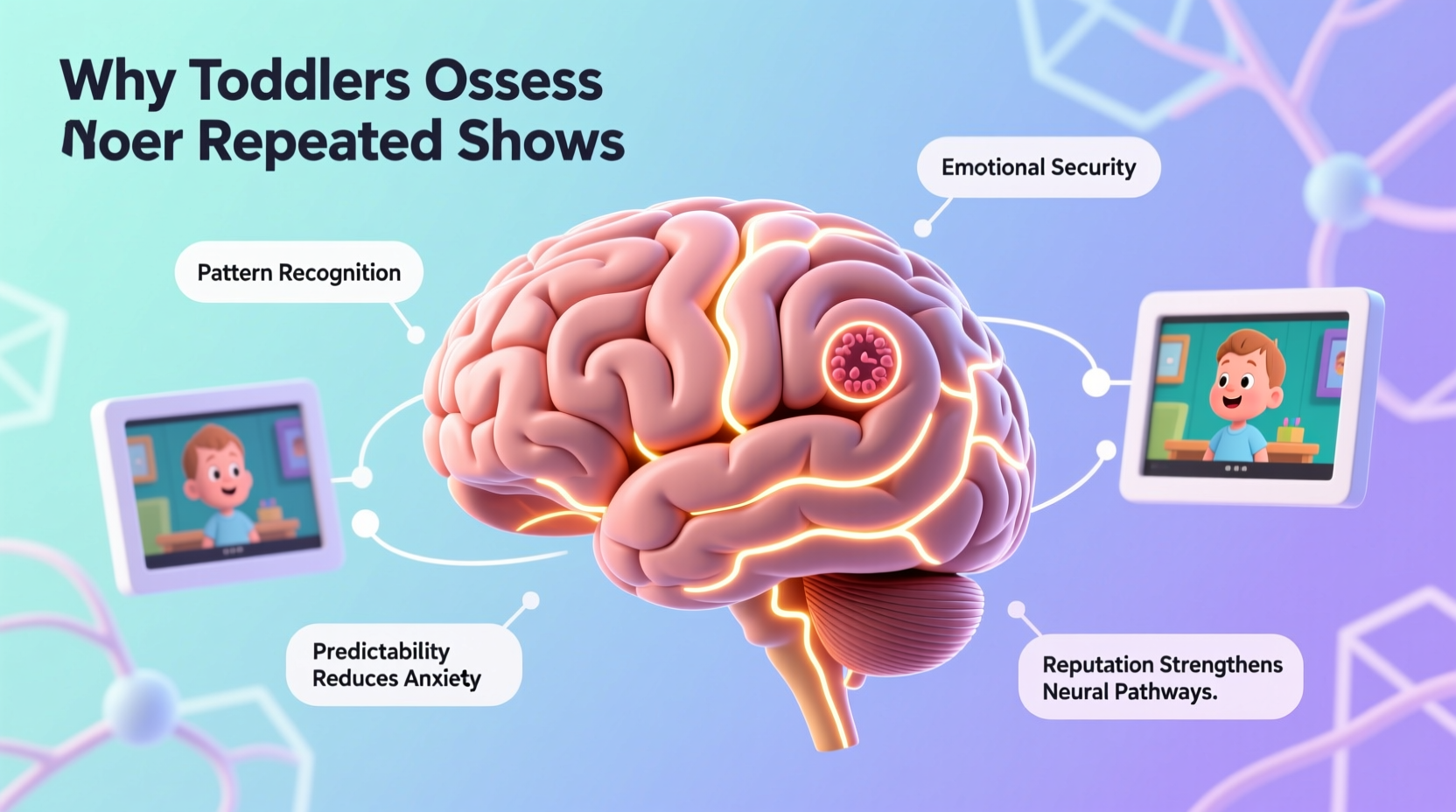
At its core, repetition provides toddlers with a sense of control in a world that often feels unpredictable. The human brain, especially during early childhood, thrives on pattern recognition. When a child watches the same episode repeatedly, they begin to anticipate what happens next—the character’s lines, the music cue, even the timing of a visual gag. This predictability activates the brain’s reward system, releasing dopamine when expectations are met.
Neuroscientists refer to this as “prediction error reduction.” Each time a toddler correctly guesses what comes next, the brain registers a small win. These micro-rewards reinforce neural pathways associated with memory, attention, and emotional security. In unfamiliar situations, such as meeting new people or trying new foods, children may become anxious. But returning to a familiar show offers a safe space where outcomes are known and comforting.
“Repetition isn’t boredom for a toddler—it’s mastery. Every replay is an opportunity to refine understanding and gain confidence in a controlled environment.” — Dr. Laura Jana, Pediatric Neurodevelopment Specialist
How Repetition Builds Cognitive Skills
The toddler brain is undergoing rapid synaptic formation—up to one million new connections per second, according to Harvard’s Center on the Developing Child. Repetitive media consumption acts as a scaffold for learning by reinforcing key cognitive functions:
- Memory consolidation: Repeated exposure strengthens neural circuits involved in short- and long-term memory.
- Language acquisition: Hearing the same words and sentence structures helps toddlers internalize grammar, pronunciation, and vocabulary.
- Sequencing ability: Recognizing the order of events (beginning, middle, end) builds foundational narrative skills critical for literacy.
- Attention span: Familiar content allows children to focus more deeply because less mental energy is spent decoding new information.
A 2020 study published in Child Development found that toddlers who rewatched educational programs demonstrated significantly better comprehension and verbal recall than those exposed only once. The researchers concluded that multiple viewings allowed children to shift focus—from grasping basic plot points on the first watch to noticing subtle details, emotions, and cause-effect relationships on subsequent ones.
From Passive Viewing to Active Learning
It’s a common misconception that repeated screen time is passive. In reality, each replay enables deeper processing. On the first viewing, a toddler may simply react to bright colors and sounds. By the third or fifth time, they’re likely mouthing along with dialogue, pointing at characters, or mimicking actions. This transition reflects a shift from sensory engagement to cognitive participation.
This layered learning mirrors how children acquire language. Just as babies hear the same words from caregivers hundreds of times before speaking them, repeated media exposure gives the brain multiple passes to decode meaning, tone, and context.
The Role of Emotional Regulation
Beyond cognition, repetitive viewing serves an emotional function. Toddlers are still developing self-regulation skills. Their amygdala—the brain region responsible for processing emotions—is highly active, while the prefrontal cortex, which governs impulse control and decision-making, is still maturing. This imbalance makes emotional outbursts common.
Familiar shows act as emotional anchors. The comfort of knowing exactly how a story unfolds can soothe anxiety, reduce stress, and help reset a child’s nervous system after a tantrum or overstimulating event. Think of it as a form of self-soothing, similar to thumb-sucking or clinging to a favorite blanket.
In fact, research from the University of California, Irvine, suggests that children under three exhibit lower cortisol levels (a stress hormone) when engaged with preferred, repeated content compared to novel stimuli. This calming effect is particularly valuable during transitions—like waking up, bedtime, or preparing for daycare—when routines are disrupted.
| Scenario | Novel Show | Familiar Repeated Show |
|---|---|---|
| Morning Routine | Possible confusion or distraction | Calming background; supports smooth transitions |
| After a Tantrum | May increase agitation | Helps regulate emotions through predictability |
| Learning New Words | Limited retention after one exposure | Improved recall and usage due to repetition |
| Social Imitation | Less likely to mimic behaviors | More likely to copy gestures, phrases, and routines |
Mini Case Study: Emma and the Red Truck Show
Emma, a two-and-a-half-year-old from Portland, became fixated on a simple animated series about a red delivery truck named Max. For three weeks straight, she watched the same 12-minute episode five times a day. Her parents grew concerned, wondering if this was unhealthy or a sign of developmental rigidity.
During a routine pediatric check-up, her doctor explained that Emma was likely using the show to process recent changes—her older brother had started preschool, and she was adjusting to spending more time with a babysitter. The predictable structure of Max’s daily route (wake up, load packages, deliver to friends, return home) mirrored the stability she craved.
Over time, her parents noticed subtle shifts. Initially, Emma just laughed at the sound effects. By week two, she began naming colors and counting packages alongside Max. By week three, she was using phrases like “All done!” and “Let’s go!” in daily play. After a month, her obsession faded naturally—only to be replaced by a new favorite, indicating healthy developmental progression.
This case illustrates how repetition isn’t stagnation; it’s a dynamic phase of cognitive and emotional scaffolding.
Practical Tips for Parents: Making the Most of Repeat Viewings
While it’s normal—and beneficial—for toddlers to rewatch shows, parents can enhance the experience by guiding engagement and setting gentle boundaries. Here are actionable strategies backed by child development experts:
- Limit duration, not frequency: It’s okay to watch the same episode multiple times, but cap total daily screen time based on age. The American Academy of Pediatrics recommends no more than one hour per day for children 18–24 months, and consistent limits for older toddlers.
- Ask open-ended questions: “Why do you think Max was sad?” or “What would you deliver in that truck?” encourages empathy and imaginative thinking.
- Bridge to real-world play: Use the show as inspiration for hands-on activities. Build a cardboard truck, sort toy packages by color, or act out scenes with stuffed animals.
- Rotate favorites gradually: Introduce a new episode or show by pairing it with the familiar one. For example, “We’ll watch Max first, then see what happens with Luna the Lunar Rover.”
- Observe for signs of over-reliance: If your child becomes distressed when unable to watch their preferred show, or withdraws from social interaction, consider consulting a developmental specialist.
Checklist: Healthy Repetitive Viewing Habits
- ☑ Total screen time aligns with AAP guidelines
- ☑ At least 50% of viewing is co-watched with a caregiver
- ☑ Child uses phrases or ideas from the show in play or conversation
- ☑ No meltdowns when show ends or is changed
- ☑ Balanced with physical play, reading, and social interaction
FAQ: Common Questions About Toddler Media Habits
Is it harmful if my toddler watches the same show over and over?
No—repetitive viewing is a normal and beneficial part of early learning. As long as screen time is age-appropriate, limited, and balanced with other activities, it supports cognitive and emotional development. Concerns arise only if it displaces sleep, play, or face-to-face interaction.
When should I worry about obsessive media use?
If your child shows extreme distress when prevented from watching, avoids eye contact, or imitates repetitive behaviors without variation, it may warrant further evaluation—especially if accompanied by delays in speech or social skills. However, isolated preference for a favorite show is typically not a red flag.
Can too much repetition stunt creativity?
On the contrary, repetition fuels creativity. Mastery of a familiar story allows children to reimagine it—changing endings, adding characters, or applying themes to new contexts. Think of it as learning the rules before breaking them.
Conclusion: Embrace the Replay Button
The next time you hear the opening jingle of your toddler’s favorite show for the umpteenth time, take a breath and remember: this isn’t regression. It’s progression. Behind those wide eyes is a brain hard at work—building memories, mastering language, regulating emotions, and making sense of the world. The science is clear: repetition is not a flaw in your child’s preferences; it’s a feature of their development.
Instead of resisting the loop, engage with it. Ask questions, play along, and appreciate the quiet moments of focus. These repeated viewings won’t last forever. One day, the magic will fade, and a new interest will take its place. Until then, let the reruns roll—and know that every replay is shaping a smarter, more secure mind.




 浙公网安备
33010002000092号
浙公网安备
33010002000092号 浙B2-20120091-4
Comments
No comments yet. Why don't you start the discussion?