
Every holiday season begins with the familiar ritual: pulling out decorations from storage, dusting them off, and transforming your home into a festive haven. But one small detail often disrupts the magic—your tree skirt, once unfolded, is covered in deep creases and stubborn wrinkles. No matter how carefully you packed it away last January, it seems to emerge worse for wear. Why does this happen? And more importantly, how can you safely remove those wrinkles without risking fabric damage?
The truth is, most tree skirts are made from delicate or blended textiles that react poorly to long-term folding. Whether crafted from velvet, satin, polyester blends, or lace-trimmed fabrics, these materials develop memory creases when compressed for months. Add fluctuating humidity, temperature shifts, or improper storage, and the problem only worsens. The good news? With the right approach, you can restore your tree skirt’s smooth, elegant appearance using simple tools and careful technique.
Understanding Why Tree Skirts Wrinkle So Easily
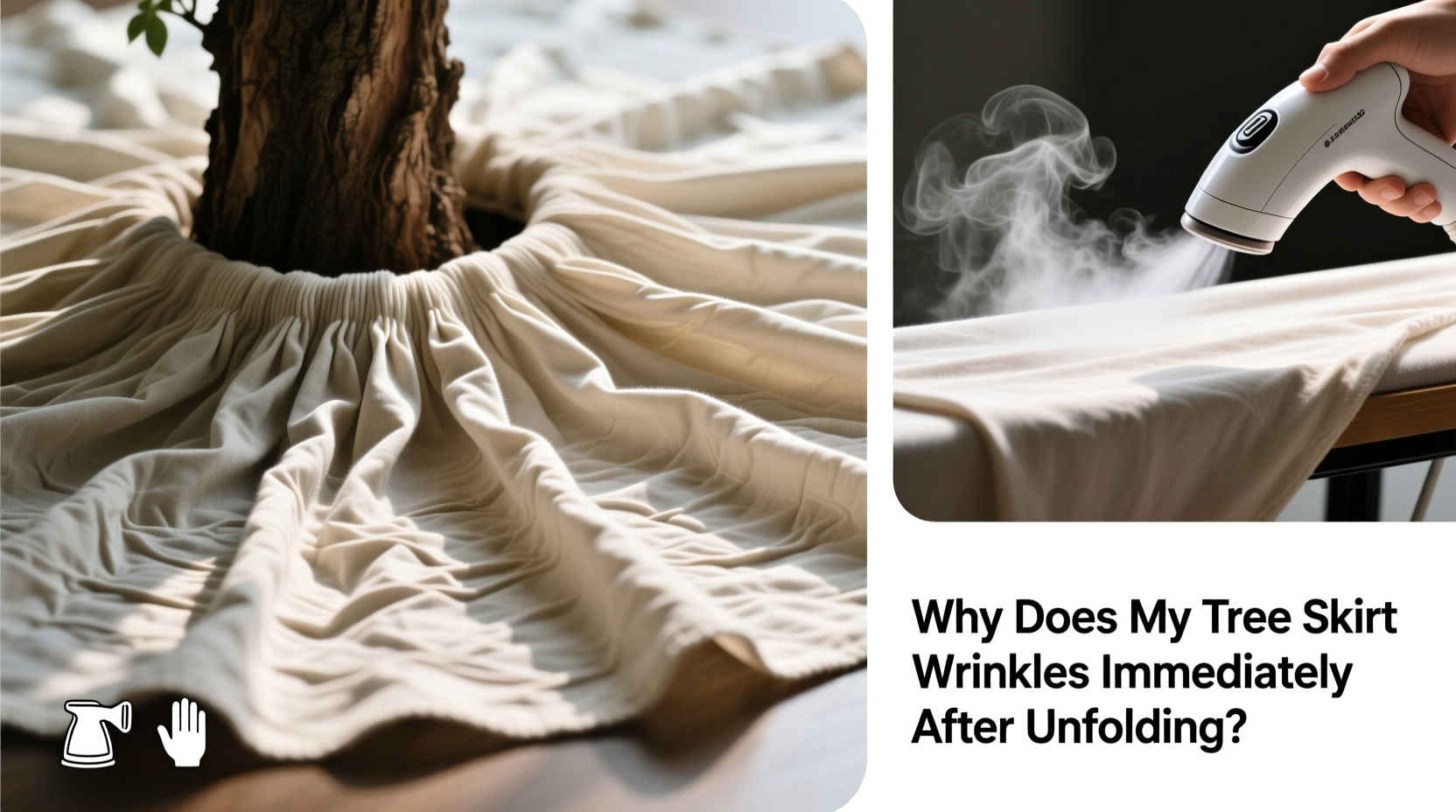
Tree skirts are typically circular or star-shaped floor coverings placed beneath Christmas trees to conceal stands and catch falling needles. Their design means they must be folded tightly for storage—often multiple times—to fit into boxes or bags. This repeated compression creates stress points along fold lines, especially at the center panel where all folds converge.
Fabrics like velvet and satin are particularly prone to wrinkling due to their nap and surface texture. Velvet, for instance, has a short pile that flattens unevenly under pressure, making creases appear darker or lighter depending on the direction of the fibers. Satin develops shiny marks when crushed because of its glossy weave. Even synthetic blends such as polyester-rayon mixes, commonly used for affordability and durability, retain fold memory if stored improperly.
Environmental factors also play a role. If your decorations were stored in an attic, basement, or garage, exposure to moisture or heat can weaken fibers over time, increasing susceptibility to permanent creasing. Additionally, acidic tissue paper or cardboard boxes may degrade fabric integrity, accelerating wrinkle formation.
“Textiles stored in folded positions for extended periods will develop what conservators call ‘set-in creases’—essentially physical memory in the fiber structure.” — Dr. Laura Bennett, Textile Preservation Specialist, National Holiday Archive
Safe Steaming Techniques by Fabric Type
Steaming is the gentlest method for removing wrinkles from delicate holiday textiles. Unlike ironing, which applies direct heat and pressure, steaming relaxes fibers with moist heat, allowing them to return to their natural state without scorching or crushing. However, not all tree skirts respond the same way to steam. Knowing your fabric type is essential to avoid irreversible damage.
| Fabric Type | Steam Safe? | Recommended Method | Avoid |
|---|---|---|---|
| Velvet | Yes (with caution) | Hold steamer 6–8 inches away; steam in direction of nap | Direct contact, rubbing, ironing without pressing cloth |
| Satin | Yes | Use low steam setting; hover evenly across surface | High heat, prolonged exposure, pressing |
| Polyester Blend | Yes | Medium steam; smooth gently with hand after steaming | Over-wetting, high heat near trims |
| Lace or Embellished | Limited | Steam only backing fabric; avoid direct contact with lace | Wetting delicate embroidery or glued elements |
| Felt (wool or synthetic) | Risky | Light steam only if absolutely necessary; air-hang first | Excessive moisture, which can cause shrinking or matting |
Step-by-Step Guide: How to Steam a Tree Skirt Safely
Follow this detailed process to remove wrinkles effectively while preserving fabric quality and decorative details.
- Unfold and Inspect: Lay the tree skirt flat on a clean, dry surface—preferably a large table or carpeted floor protected with a sheet. Gently separate folds without tugging. Check for stains, loose threads, or embellishments that might be affected by moisture.
- Vacuum Lightly (Optional): Use the upholstery attachment of your vacuum on low suction to remove dust and debris. Do not rub—hover lightly over the surface, especially on textured fabrics like velvet.
- Hang for Air Release: Drape the skirt over a plastic or wooden clothes hanger or hang it over a shower rod overnight. Gravity helps loosen minor creases naturally, reducing the need for aggressive steaming.
- Prepare Your Steamer: Fill a handheld garment steamer with distilled water to prevent mineral buildup. Let it heat fully—most units take 2–5 minutes. Never use tap water if your steamer isn’t designed for it.
- Begin Steaming from the Center: Start at the inner circle (the part that goes around the tree trunk). Hold the steamer 6–10 inches from the fabric. Move slowly in sweeping motions, following the curve of the folds. For velvet, always steam in the direction of the nap (brush gently with your hand to identify grain direction).
- Work Outward in Sections: Divide the skirt into quadrants. Steam one section at a time, smoothing the fabric with your free hand as the wrinkles release. Do not pull or stretch.
- Avoid Decorative Elements: If your skirt has sequins, beads, glued trim, or appliqués, do not apply steam directly. Hover nearby to relax surrounding fabric, but keep moisture away from non-fabric components.
- Dry Completely Before Use: Allow the skirt to air-dry for at least 1–2 hours in a well-ventilated room. Never place it under a tree while damp—moisture attracts mold and can stain hardwood floors.
What Not to Do When Dealing with Wrinkles
- Do not use a traditional iron unless the care label explicitly permits it—and even then, always use a pressing cloth and lowest heat setting.
- Never soak the tree skirt in water. Most are not machine-washable and can bleed dyes or lose shape.
- Avoid using a hairdryer or heat gun. These lack controlled steam and can scorch fibers instantly.
- Don’t fold the skirt again until fully dry. Re-folding while warm or damp sets new creases.
Real Example: Restoring a Vintage Velvet Tree Skirt
Sarah M., a vintage decorator from Portland, Oregon, inherited a 1970s red velvet tree skirt from her grandmother. Stored in a cardboard box under the bed for decades, it emerged each year with worsening creases and a flattened nap around the center. Last season, she decided to intervene before the damage became permanent.
Instead of reaching for the iron—as she had done once, accidentally leaving a shiny press mark—Sarah researched textile-safe methods. She invested in a $30 handheld steamer and followed a slow, quadrant-by-quadrant approach. She started by hanging the skirt in her guest bathroom during a hot shower, letting ambient steam loosen the worst folds. Then, using the steamer on low, she worked from the inside out, brushing the nap downward with a soft clothes brush as she went.
The result? A dramatically smoother skirt with revived luster. “It looked almost new,” she said. “And I didn’t risk melting any fibers or ruining the gold-thread embroidery.” Her success inspired her to adjust her storage method: she now rolls the skirt around a cardboard tube instead of folding it.
Preventing Future Wrinkles: A Storage Checklist
Once your tree skirt looks pristine, protect your effort with smart storage practices. Use this checklist each post-holiday season:
- ✅ Clean gently before storing—wipe with a dry microfiber cloth or use a vacuum with a brush attachment.
- ✅ Roll instead of fold: Use a cardboard tube (like a wrapping paper core) to roll the skirt loosely.
- ✅ Wrap in acid-free tissue paper to prevent chemical degradation.
- ✅ Store in a breathable cotton bag or pillowcase—never plastic, which traps moisture.
- ✅ Keep in a climate-controlled space: Avoid attics, basements, or garages with temperature swings.
- ✅ Place in a wide, flat container if rolling isn’t possible—use minimal folding and pad folds with soft fabric.
Frequently Asked Questions
Can I use a clothing steamer on a felt tree skirt?
Felt, especially wool-based varieties, can shrink or mat when exposed to moisture and heat. While light steaming may help, it’s risky. Instead, try hanging the skirt in a steamy bathroom for 15–20 minutes to relax wrinkles passively. Avoid direct steam unless the manufacturer confirms it's safe.
What if my tree skirt has a metallic finish or glitter?
Metallic-coated fabrics and glued-on glitter can dissolve or smear when wet. Do not steam directly. Instead, hang the skirt vertically and allow ambient warmth and gravity to ease creases. If absolutely necessary, use the steamer on the reverse side only, keeping a safe distance.
How often should I steam my tree skirt?
Only when needed—ideally once per season, just before decorating. Over-steaming weakens fibers over time. Proper storage reduces the need for frequent treatment.
Conclusion: Preserve Beauty, One Season at a Time
A wrinkled tree skirt doesn’t mean it’s beyond saving. Understanding the science behind fabric memory and moisture response empowers you to restore holiday decor safely and effectively. Steaming, when done correctly, revives texture and elegance without compromising longevity. More importantly, adopting smarter storage habits today ensures fewer headaches next year.
Your tree skirt is more than a functional piece—it’s part of your seasonal tradition, possibly carrying memories and heirloom value. Treating it with care honors both craftsmanship and sentiment. By investing a little time in proper maintenance, you ensure it continues to complement your tree with grace, year after year.




 浙公网安备
33010002000092号
浙公网安备
33010002000092号 浙B2-20120091-4
Comments
No comments yet. Why don't you start the discussion?