
It’s a common household frustration: you start a load of laundry, walk away, and return to find your washing machine shuddering across the floor like it’s trying to escape. A washing machine that shakes violently during the spin cycle isn’t just annoying—it can cause damage to your floors, the appliance itself, and even lead to premature failure. The good news is that most causes are diagnosable and fixable without immediate professional help. Understanding the mechanics behind the shaking allows you to address the root issue efficiently, saving time, money, and stress.
The spin cycle is designed to extract water from clothes by rotating the drum at high speeds—often between 800 and 1400 RPM. At these velocities, even minor imbalances or mechanical issues can amplify into severe vibrations. This guide walks through the most common reasons for violent shaking, how to identify them, and what steps you can take to resolve each problem safely and effectively.
Common Causes of Excessive Washing Machine Vibration
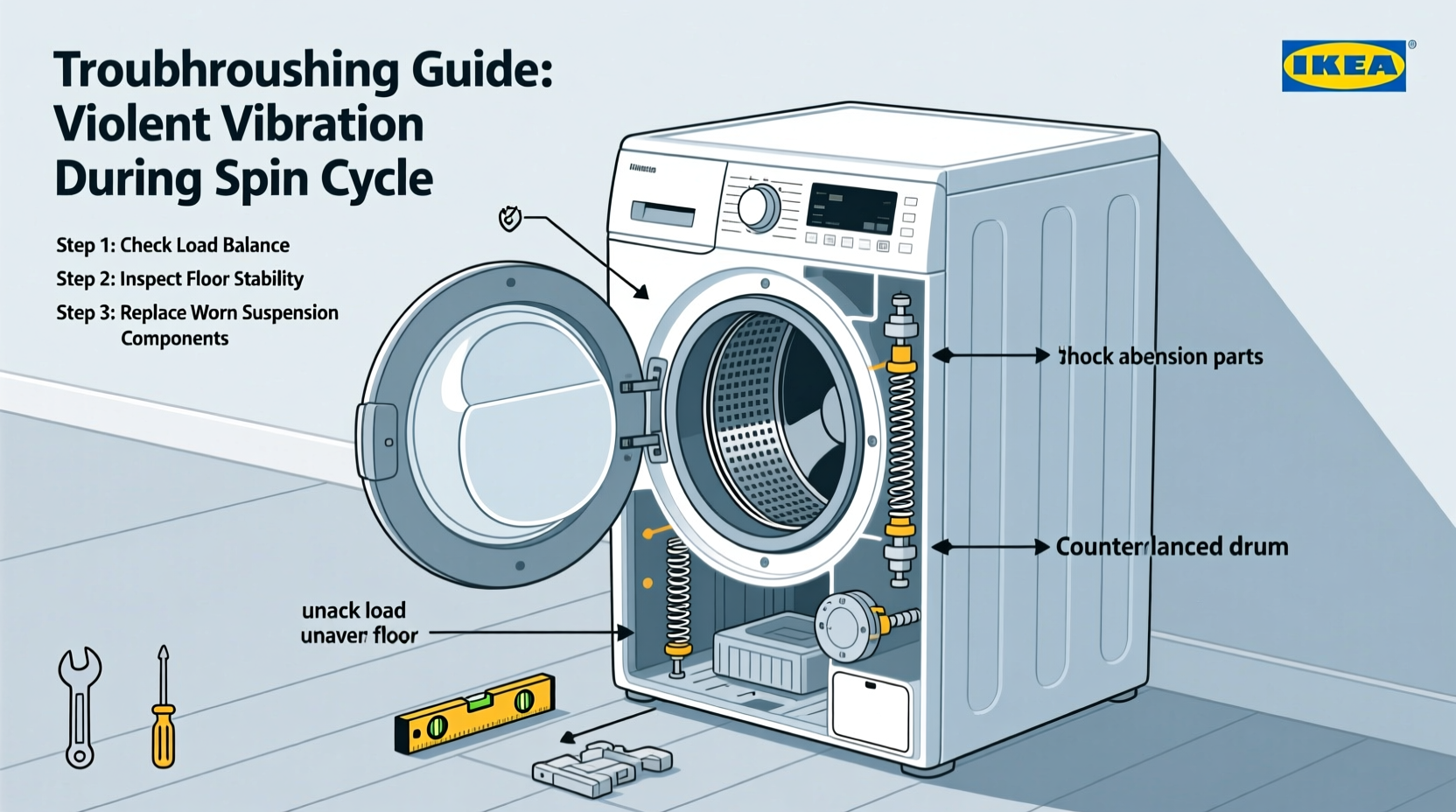
Before attempting any repairs, it's essential to understand what might be causing the shaking. Several mechanical and operational factors contribute to instability during the spin cycle:
- Uneven load distribution: When bulky or heavy items cluster on one side of the drum, they create an imbalance that forces the machine to wobble.
- Improper leveling: If the washing machine isn't sitting flat on the floor, it will rock back and forth with every rotation.
- Worn or damaged suspension system: Over time, shock absorbers, springs, or dampers can degrade, reducing stability.
- Transport bolts still installed: New machines often come with shipping bolts meant to secure internal components during transit. Forgetting to remove them leads to intense vibration.
- Floor instability: Weak, sloped, or uneven flooring magnifies movement, especially under heavy loads.
- Overloading: Exceeding the manufacturer’s recommended capacity strains both the motor and balance mechanisms.
- Drum or bearing wear: Internal mechanical failure, such as worn drum bearings, may result in irregular spinning and excessive noise.
Each of these issues requires a different approach to diagnose and correct. Let’s explore how to methodically troubleshoot them.
Step-by-Step Troubleshooting Process
Follow this logical sequence to isolate and fix the source of the shaking. Begin with the simplest checks before moving to more complex diagnostics.
- Pause the cycle and redistribute the load. Open the lid (once safe) and check if large items like comforters, jeans, or towels are clumped together. Redistribute them evenly around the drum and restart the spin cycle. Often, this simple step resolves mild shaking.
- Check for transport bolts. If your washer is new or recently moved, inspect the back panel for plastic or metal bolts securing the drum. These are typically located at the rear of the unit and must be removed after installation. Leaving them in place prevents the drum from floating properly, causing violent movement.
- Verify the machine is level. Use a carpenter’s level across the top of the washer in multiple directions. Adjust the front feet by turning them clockwise or counterclockwise until the bubble is centered. Ensure all four feet make firm contact with the floor.
- Inspect the floor surface. Place the washer on a solid, flat surface—preferably concrete or tightly secured hardwood. Avoid placing it on raised platforms, vinyl tiles, or warped subfloors. Consider installing a reinforced laundry pedestal or anti-vibration mat if floor flex is suspected.
- Test with a lighter load. Run a spin-only cycle with no clothes. If the machine remains stable, overloading or poor load distribution was likely the culprit. Gradually increase load size while monitoring performance.
- Listen for unusual noises. Grinding, knocking, or rhythmic thumping may indicate failing internal components such as shock absorbers, suspension rods, or drum bearings.
- Examine external movement. Watch whether the entire unit moves or only vibrates in place. Full displacement suggests inadequate grip or improper anchoring; localized shaking points to internal imbalance or component failure.
Do’s and Don’ts: Maintaining Stability
To prevent future issues, follow best practices for setup and operation. The table below outlines key actions to adopt—and those to avoid.
| Do’s | Don’ts |
|---|---|
| Use a level to ensure proper alignment after installation | Ignore visible rocking—even slight movement worsens over time |
| Secure loose hoses and cords to prevent tripping hazards | Install the washer on carpeted floors without reinforcement |
| Balance heavy and lightweight items in the same load | Wash single bulky items (e.g., a king-sized comforter) alone |
| Regularly clean the drum and check for foreign objects | Delay repairs when unusual sounds accompany vibration |
| Replace worn feet or add rubber anti-slip pads | Overload beyond the manufacturer’s specified limit |
Real-World Example: Sarah’s Shaking Washer
Sarah purchased a new front-loading washing machine and installed it herself. Within a week, she noticed it creeping forward during every spin cycle, leaving scratches on her hardwood floor. Initially, she assumed it was due to an unbalanced load, but the issue persisted even with smaller washes.
After consulting the manual, she discovered four bright yellow transport bolts still screwed into the back of the unit. Once removed and stored safely, the machine operated smoothly without any vibration. Her mistake was common—she hadn’t realized the bolts needed removal post-installation. This case highlights the importance of thoroughly reading installation guides, even for experienced homeowners.
Expert Insight: What Technicians Look For
Professional appliance repair technicians emphasize that early intervention prevents costly breakdowns. According to Mark Reynolds, a certified home appliance specialist with over 15 years of experience:
“Most service calls for vibrating washers stem from user-installation oversights—like missing transport bolt removal or incorrect leveling. But when those are ruled out, we look deeper: failed shock absorbers, broken counterweights, or bearing wear. Catching these early means avoiding water leaks, motor strain, or total drum replacement.”
He recommends annual visual inspections and listening for changes in sound patterns. “If your washer suddenly starts sounding like a helicopter taking off, don’t wait—it’s telling you something’s wrong.”
Troubleshooting Checklist
Use this checklist to quickly assess and resolve shaking issues:
- ✅ Redistribute laundry evenly inside the drum
- ✅ Confirm transport bolts have been removed (especially on new units)
- ✅ Check that all four feet are touching the ground and locked in place
- ✅ Use a level to verify horizontal and vertical alignment
- ✅ Ensure the floor is sturdy and non-flexible
- ✅ Test spin cycle with no load to isolate mechanical faults
- ✅ Inspect for error codes on digital displays (consult manual)
- ✅ Listen for grinding, banging, or scraping noises during operation
- ✅ Clean lint filter and drain pump area to prevent imbalance from blockages
- ✅ Schedule professional inspection if vibration persists after basic fixes
When to Call a Professional
While many causes of shaking can be resolved at home, certain symptoms require expert attention:
- Persistent loud banging even with empty drum suggests damaged shock absorbers or suspension rods.
- Visible drum wobble when manually rotated indicates possible bearing failure.
- Oily residue near the drum or base may signal leaking transmission fluid or lubricant.
- Error codes related to imbalance, motor, or sensor faults should be diagnosed with specialized tools.
- Age of the machine exceeding 7–10 years increases the likelihood of internal part degradation.
Attempting to replace internal components like shock absorbers or drum bearings without proper training can lead to further damage or safety risks. Certified technicians have the diagnostic equipment and replacement parts to restore full function safely.
Frequently Asked Questions
Can an unbalanced load damage my washing machine?
Yes. Repeated spinning with uneven loads stresses the drum, motor, and suspension system. Over time, this accelerates wear on critical components like bearings and shock absorbers, potentially leading to expensive repairs or early replacement.
Why does my washer shake only during high-speed spins?
Vibration becomes more pronounced at higher RPMs because centrifugal force amplifies any imbalance. A small offset at low speed turns into significant wobbling at maximum spin. This is normal to some degree, but violent shaking indicates a problem needing correction.
Are anti-vibration mats effective?
High-quality anti-vibration mats made from dense rubber or composite materials can significantly reduce noise and movement, especially on hard floors. They work best when combined with proper leveling and load management. However, they won’t compensate for major mechanical faults or severely uneven surfaces.
Conclusion: Take Control of Your Washing Machine’s Stability
A violently shaking washing machine doesn’t have to spell disaster. In most cases, the solution lies in careful observation, proper setup, and timely maintenance. By understanding the underlying causes—from simple load imbalance to overlooked transport bolts—you gain the power to restore smooth, quiet operation. Regular checks and mindful usage extend the life of your appliance and protect your home from unnecessary wear and tear.




 浙公网安备
33010002000092号
浙公网安备
33010002000092号 浙B2-20120091-4
Comments
No comments yet. Why don't you start the discussion?