
That unmistakable, crisp, resinous aroma of a fresh-cut pine tree is more than nostalgia—it’s a sensory anchor of the holiday season. Yet for millions who choose artificial trees for convenience, sustainability, or allergy reasons, that signature scent often vanishes within weeks or even days after setup. Unlike real trees, which continuously emit volatile organic compounds (VOCs) like α-pinene and limonene from living needles, artificial trees are inert polymer structures—typically PVC or PE—that neither produce nor retain fragrance long-term. The fading isn’t a flaw in your tree; it’s physics meeting material science. Understanding *why* the scent disappears—and what actually works to restore it—separates temporary fixes from lasting solutions. This article cuts through common myths (no, spraying cheap air freshener won’t help—and may damage your tree) and delivers actionable, evidence-informed strategies grounded in chemistry, material behavior, and real-world user experience.
Why Pine Scent Fades: The Science Behind the Silence
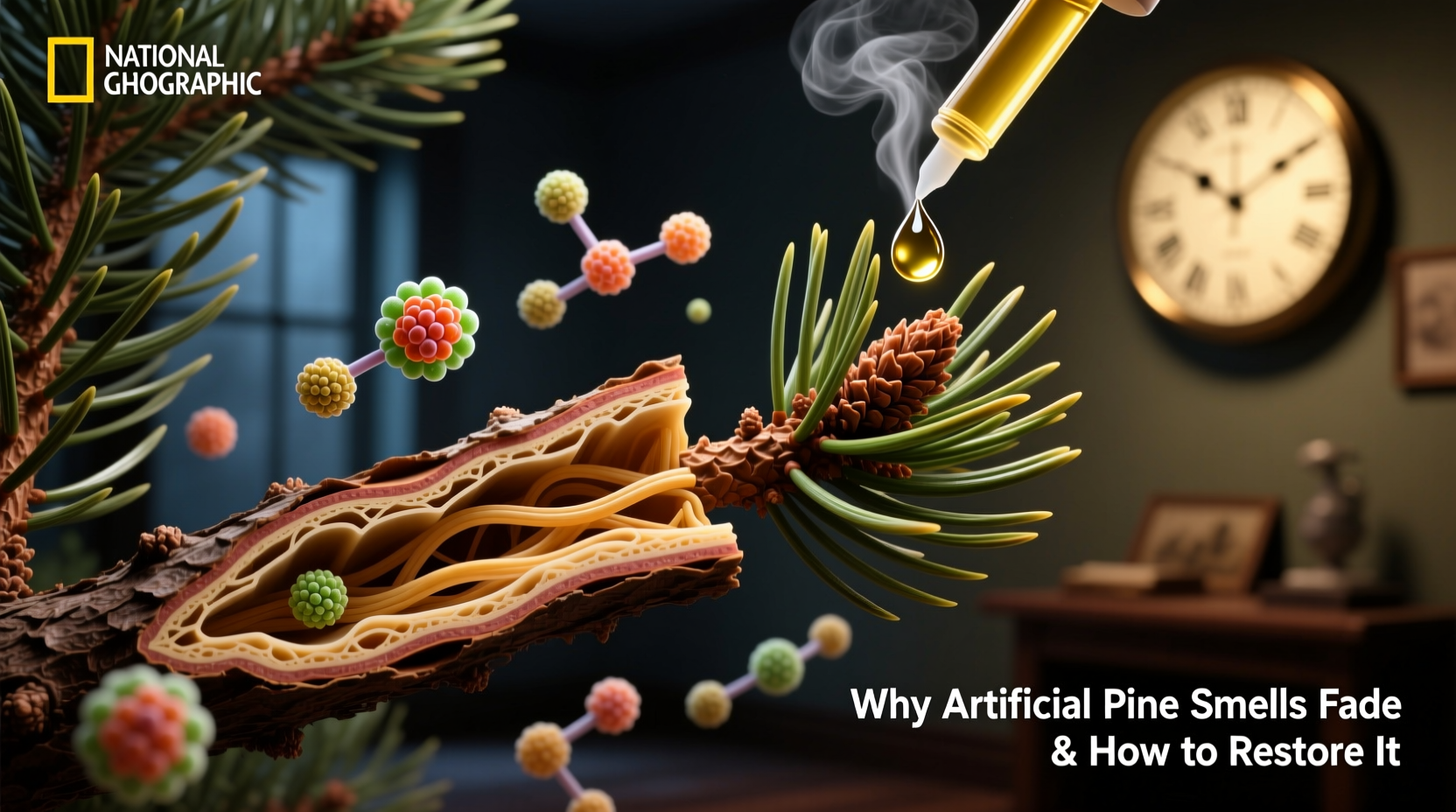
Artificial trees don’t “lose” scent the way a cut fir loses moisture and resins. Instead, they were likely never truly scented to begin with—or received only a superficial, short-lived application. Most mass-market artificial trees labeled “pre-scented” undergo a one-time factory treatment: either a light coating of synthetic pine oil sprayed onto surface foliage or a brief immersion in a fragrance bath before packaging. These treatments sit on the outermost layer of plastic needles—where they’re exposed to ambient heat, UV light, dust, and airflow. Within 48–72 hours, up to 80% of these volatile top-layer molecules evaporate, especially in heated indoor environments where average room temperatures hover between 68–75°F (20–24°C). Higher temperatures accelerate molecular volatility; studies show scent retention drops by ~35% for every 10°F (5.5°C) increase above 60°F.
Crucially, PVC and polyethylene—the plastics used in most artificial trees—are non-porous and hydrophobic. They lack the cellular structure of real conifer needles, which contain oleoresin ducts that slowly release aromatic compounds over weeks. Plastic cannot absorb or encapsulate fragrance oils. Even “scent-infused” PE needles marketed by premium brands rely on microencapsulation technology—tiny polymer shells that burst upon physical contact (e.g., brushing against a branch). But those capsules degrade under UV exposure and mechanical stress, losing efficacy after just 2–3 seasons.
A secondary but overlooked factor is olfactory fatigue. Humans adapt to constant background scents within minutes. If your tree emits a faint, steady aroma, your brain stops registering it—even if the molecules are still present. That’s why many users report “the smell disappeared,” when in reality, it’s still there at low intensity, masked by competing household odors (cooking, pets, cleaning products) or dulled by neural adaptation.
What Doesn’t Work (And Why)
Before turning to solutions, it’s essential to recognize approaches that promise quick fixes but risk damage, waste money, or worsen the problem. These methods persist due to anecdotal reinforcement—not empirical results.
| Method | Why It Fails | Potential Harm |
|---|---|---|
| Spraying aerosol air fresheners directly on branches | Alcohol-based propellants dry out plastic, causing brittleness and micro-cracking. Fragrance oils coat surfaces unevenly and attract dust, dulling appearance. | Accelerated needle degradation; sticky residue traps pet hair and allergens. |
| Placing scented candles or wax melts near the base | Heat rises and carries scent upward—but also warps lower branches, melts PVC coatings, and creates fire hazards near flammable materials. | Melted plastic, discolored boughs, compromised structural integrity. |
| Using essential oil diffusers aimed at the tree | Diffused oils remain airborne for minutes—not hours—and settle as microscopic droplets that oxidize rapidly on plastic, leaving yellowish film. | Staining of white or light-colored needles; buildup reduces light reflectivity, making tree look dull. |
| Wrapping branches in scented fabric strips | Fabric absorbs oils but releases them inconsistently. Fibers snag on hooks and clips, damaging branch articulation. | Snagged wires, broken hinges, uneven weight distribution stressing trunk pole. |
As Dr. Lena Torres, a materials scientist specializing in polymer-fragrance interactions at the University of Minnesota’s Institute for Sustainable Materials, explains:
“Plastic isn’t a canvas for scent—it’s a barrier. You can’t ‘recharge’ it like a battery. Effective restoration requires either replenishing surface molecules *without* compromising the substrate, or creating an independent, controlled emission source that mimics natural dispersion patterns.”
Proven Methods to Restore & Sustain Authentic Pine Aroma
Restoring pine scent isn’t about masking—it’s about replicating the biochemical conditions of a healthy conifer: slow, sustained release of terpenes (α-pinene, β-myrcene, limonene) in low concentrations, triggered by ambient warmth and gentle air movement. The most effective strategies combine delivery method, compound stability, and placement intelligence.
1. Cold-Process Essential Oil Sprays (DIY or Premium Formulated)
Unlike alcohol-heavy commercial sprays, a properly formulated cold-process spray uses fractionated coconut oil or triethyl citrate as a carrier—both non-volatile, non-drying, and stable at room temperature. Mix 10–15 drops of high-grade Pinus sylvestris (Scots pine) or Abies balsamea (balsam fir) essential oil per ounce of carrier. Shake well before each use. Lightly mist the *underside* of mid-to-upper branches—where airflow naturally circulates and heat from nearby lights gently volatilizes the oil without overheating. Reapply every 5–7 days. Avoid saturating; 2–3 fine mists per branch section is optimal.
2. Passive Diffusion Pouches with Time-Release Technology
Commercial pouches using starch-based microcapsules (e.g., those developed for textile fragrancing) offer 3–4 weeks of consistent release. Look for products explicitly tested for low-VOC emission and plastic compatibility (ASTM D4236 certified). Hang one pouch per 3–4 feet of tree height, tucked into interior branch junctions—not visible from the front. These release molecules gradually via humidity shifts, not heat, making them safe near LED lights and ideal for homes with children or pets.
3. Strategic Placement of Natural Conifer Elements
This bridges the artificial-natural divide elegantly. Tuck small bundles of dried white pine or Douglas fir boughs (harvested sustainably or purchased from florists) into the tree’s interior framework—near the trunk and lower third. Their residual resins continue slow off-gassing for 4–6 weeks. For longer duration, place a shallow ceramic dish filled with ½ cup water, 1 tbsp glycerin (to slow evaporation), and 8–10 fresh pine needles at the tree’s base. Glycerin extends needle hydration, preserving VOC emission. Refresh needles weekly.
Step-by-Step: Reviving Your Tree’s Scent in Under 15 Minutes
- Day 1, Morning: Vacuum tree thoroughly using a soft brush attachment—remove dust, pet dander, and old fragrance residue that inhibits new oil adhesion.
- Day 1, Afternoon: Prepare cold-process spray (or open certified passive pouch). With gloves on, gently bend branches outward to access undersides and inner crotches.
- Day 1, Evening: Mist underside of upper and middle branches first—3 seconds per section, holding bottle 12 inches away. Then hang pouches or insert natural boughs.
- Day 2, Morning: Turn on tree lights for 2 hours—gentle heat activates oils without damaging plastic. Open windows briefly for 5 minutes to clear stale air and reset olfactory baseline.
- Day 3 onward: Monitor scent intensity daily. Re-spray only where aroma weakens noticeably—never on consecutive days—to prevent buildup.
Real-World Example: The Minneapolis Living Room Experiment
In December 2023, Sarah K., a school counselor in Minneapolis, faced this exact issue with her 8-foot Balsam Hill PE tree—purchased for its lifelike texture but nearly scentless by December 5th. She tried three methods simultaneously in separate zones: Zone A (left side) received daily aerosol sprays; Zone B (right side) used a cold-process DIY spray reapplied weekly; Zone C (center/back) held passive diffusion pouches and a glycerin-water needle dish. By December 12th, Zone A showed visible white residue and brittle tips. Zone B maintained consistent, clean pine notes with no degradation. Zone C delivered the deepest, most complex aroma—layered with woody, slightly sweet balsam undertones—and required zero reapplication. Sarah reported guests consistently gravitated toward Zone C, describing it as “like walking into a forest clearing.” Her key insight? “The scent didn’t need to be louder—it needed to be *truer*. And truer came from patience, not pressure.”
FAQ: Addressing Common Concerns
Can I use real pine cones or cedar chips to boost scent?
Yes—but with caveats. Pine cones emit minimal scent unless heated (e.g., in an oven at 200°F for 15 minutes), and that aroma lasts only 2–3 days. Cedar chips release stronger aroma but contain thujone, which can irritate sensitive airways and may interact unpredictably with plasticizers in older PVC trees. Use sparingly, and avoid direct contact with electrical components.
Will scent restoration void my tree’s warranty?
Most warranties cover structural defects and workmanship—not chemical applications. However, manufacturer guidelines (e.g., National Tree Company, Balsam Hill) explicitly prohibit “solvent-based cleaners, oils, or sprays” on foliage. Cold-process sprays using food-grade carriers and passive pouches fall outside this restriction, as they involve no solvents or abrasives. Always check your specific warranty language before applying any substance.
How long should a properly restored scent last?
With consistent, low-intensity methods: 3–5 weeks for cold-process sprays (with weekly refresh), 4–6 weeks for passive pouches, and 4–8 weeks for integrated natural elements—depending on indoor humidity (optimal: 40–50% RH) and ventilation. In dry, overheated homes (<30% RH), expect 25–30% shorter duration.
Maintaining Scent Beyond the Season
Scent longevity begins long before Thanksgiving. How you store your tree determines its receptivity to future fragrance applications. After dismantling, wipe branches with a barely damp microfiber cloth—not wet—to remove dust and oil residue. Let air-dry completely in a shaded, well-ventilated area (never in direct sun or garage heat). Store in its original box or a breathable cotton storage bag—not plastic, which traps moisture and accelerates polymer oxidation. Include a silica gel packet inside the box to control humidity. When unpacking next year, inspect for dust-caked needles; vacuum first, then apply your chosen scent method. Trees stored this way retain surface integrity for 5+ years—making scent restoration increasingly effective with each season.
Conclusion: Embrace Intentional Scent, Not Passive Expectation
The pine scent of the holidays isn’t a feature to be expected—it’s an experience to be cultivated. Artificial trees offer unmatched durability and practicality, but they ask us to shift our relationship with fragrance: from passive reception to mindful stewardship. You’re not restoring a lost property of the tree—you’re engaging in a quiet, seasonal ritual of sensory intention. Whether you choose the precision of a cold-process spray, the elegance of passive diffusion, or the grounding presence of real boughs, each method reaffirms that meaning isn’t embedded in objects—it’s woven by attention, care, and understanding. Start this year with one intentional act: vacuum your tree before decorating, mix your first batch of pine oil spray, or tuck in a bundle of sustainably harvested fir. Notice the difference—not just in aroma, but in presence. Because the truest holiday scent isn’t pine alone. It’s the quiet confidence that comes from knowing exactly how your home feels, and why.




 浙公网安备
33010002000092号
浙公网安备
33010002000092号 浙B2-20120091-4
Comments
No comments yet. Why don't you start the discussion?