
String lights bring warmth and charm to homes, holidays, and outdoor spaces. Yet, anyone who’s wrestled with a flickering or dead set knows the frustration when the very first bulb burns out—again. It’s not coincidence; there’s real electrical science behind this recurring issue. Understanding why the leading bulb fails more frequently—and how to stop it—can save time, money, and holiday spirit.
The problem is common across incandescent, LED, and mixed-string holiday lights. While modern lighting technology has improved reliability, the design of series-wired circuits still leaves the first bulb vulnerable. This article breaks down the technical causes, offers expert-backed solutions, and provides actionable steps to protect your lights for seasons to come.
Why the First Bulb Bears the Brunt
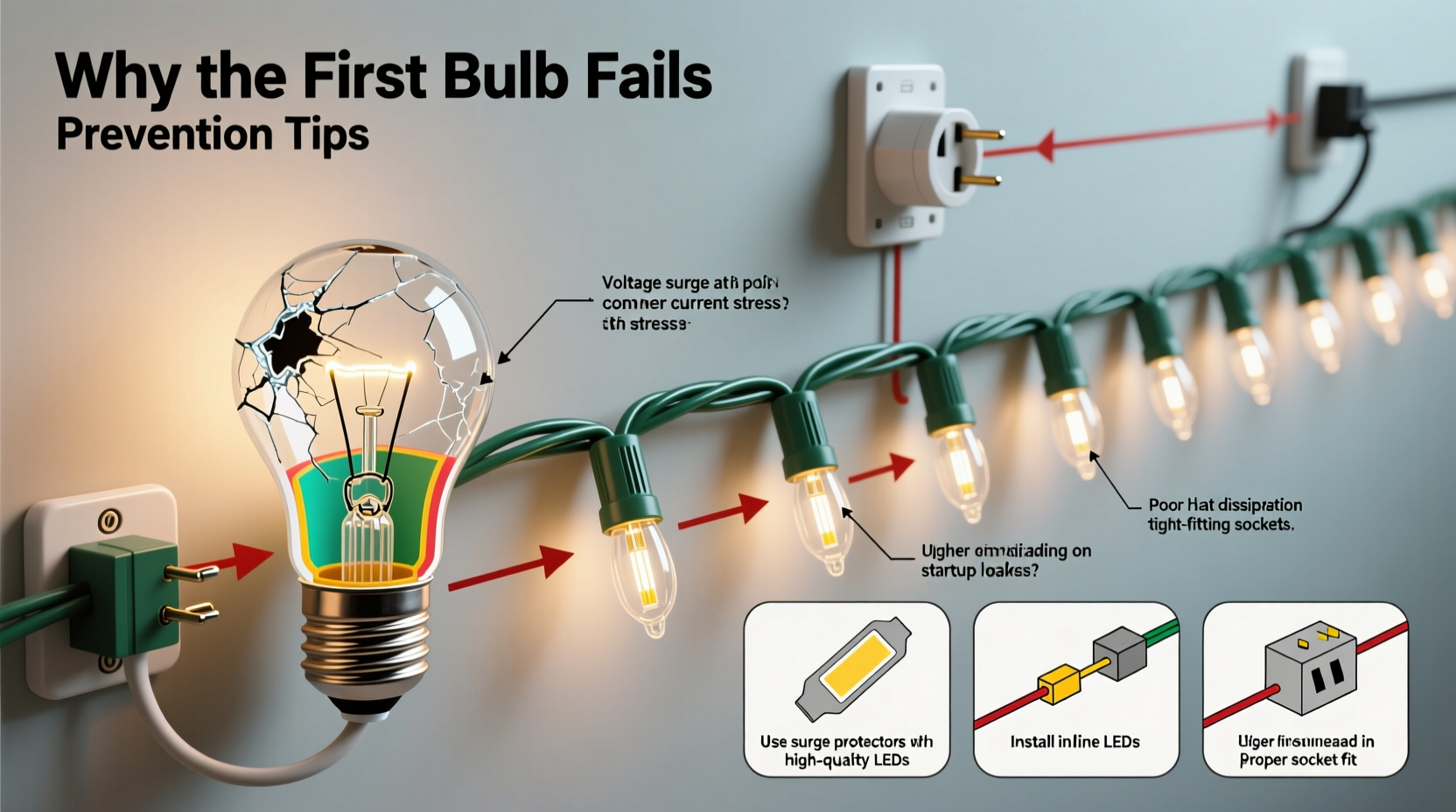
In most traditional string lights, especially older or budget-friendly models, bulbs are wired in series. That means electricity flows through each bulb one after another in a single path. If one bulb fails, the entire circuit can break—causing the whole strand to go dark.
But why does the *first* bulb fail so often? The answer lies in voltage distribution and thermal stress.
When power enters the strand, the first bulb receives the full surge of current before it's reduced by resistance from subsequent bulbs. Over time, this repeated exposure to higher initial voltage—especially during power-on transients—accelerates filament wear in incandescent bulbs or degrades internal components in LEDs. This phenomenon is known as “inrush current stress.”
Additionally, the first bulb is typically closest to the plug, which is often located near outlets, extension cords, or power strips. These areas tend to accumulate heat, dust, and moisture—especially outdoors. Poor ventilation around wall sockets can raise ambient temperature, further stressing the nearest bulb.
“Thermal cycling and voltage spikes hit the first position hardest. It’s the electrical equivalent of being on the front line.” — Dr. Alan Reeves, Electrical Engineer & Lighting Systems Consultant
How Series vs. Parallel Wiring Affects Longevity
The wiring configuration plays a critical role in how evenly power is distributed and where failure points emerge.
| Wiring Type | Voltage Distribution | Bulb Failure Impact | First-Bulb Risk Level |
|---|---|---|---|
| Series Circuit | Shared voltage; uneven load per bulb | One failure breaks entire strand | High – first bulb under highest surge |
| Parallel Circuit | Full voltage to each bulb independently | Failures isolated; rest stay lit | Low – no positional disadvantage |
| Shunted/Partial Series (Modern LED) | Hybrid: grouped series with shunts | Single bulb failure may not kill strand | Moderate – depends on group start point |
Most inexpensive decorative strands use series or partial-series wiring to reduce manufacturing costs. In these setups, even if a shunt allows current to bypass a dead bulb, the first bulb in each segment still faces disproportionate stress due to its position at the beginning of the current flow.
Common Environmental and Usage Factors That Accelerate Failure
Beyond electrical design, real-world conditions significantly influence bulb lifespan—especially for seasonal displays like Christmas lights.
- Temperature swings: Outdoor lights expand and contract with daily heating and cooling, loosening connections and weakening filaments.
- Moisture exposure: Rain, snow, or condensation near the plug end can corrode contacts, increasing resistance and heat at the first socket.
- Power surges: Plugging strings into unregulated outlets or daisy-chaining too many sets invites voltage spikes that strike the first component hardest.
- Poor storage: Crushing lights in boxes or leaving them coiled tightly stresses wires and sockets, especially at entry points.
- Dirt and debris: Dust buildup on the first bulb reduces heat dissipation, raising operating temperature.
A study by the National Institute of Standards and Technology found that bulbs exposed to frequent on/off cycles with surge-prone power sources had up to 40% shorter lifespans than those on stable circuits. The effect was most pronounced in the first two positions of a series strand.
Mini Case Study: The Front Porch Lights That Never Lasted
Mark T., a homeowner in Ohio, replaced his porch string lights every November. Despite using the same brand and storing them carefully, the first three bulbs were always dark. After consulting an electrician, he discovered the root cause: his outdoor outlet was partially blocked by foliage, trapping moisture. The damp environment corroded the plug and first socket, creating high resistance. Each time the lights turned on, excess heat built up precisely where the circuit began.
After installing a weatherproof outlet cover and switching to parallel-wired LED strands with built-in surge protection, Mark’s lights lasted four consecutive seasons without a single premature failure. His solution addressed both environmental and electrical vulnerabilities.
Step-by-Step Guide to Prevent First-Bulb Failure
Preventing early burnout isn’t about luck—it’s about smart installation, maintenance, and selection. Follow this sequence to maximize your strand’s lifespan.
- Choose the right type of lights: Opt for parallel-wired or commercial-grade LED strings with individual bulb shunts. Check packaging for terms like “constant-on,” “shunt-protected,” or “parallel circuit.”
- Inspect before installation: Examine the plug, first few inches of wire, and initial sockets for cracks, corrosion, or looseness. Replace damaged sets.
- Use a surge-protecting power strip: Plug strings into a strip with built-in surge suppression, not directly into the wall or an unprotected outlet.
- Elevate and seal outdoor connections: Keep plugs off the ground. Use waterproof outlet covers and silicone tape on connections to block moisture.
- Limit daisy-chaining: Never exceed the manufacturer’s recommended number of connected strands (usually 3–5). Overloading increases current draw and heat at the start of the chain.
- Turn on gradually: Use a timer to avoid sudden power application during peak usage hours. Soft-start timers reduce inrush current.
- Clean gently before storage: Wipe bulbs and wires with a dry microfiber cloth. Avoid chemical cleaners that can degrade plastic housings.
Store properly: Wrap lights around a cardboard reel or use a dedicated light keeper to prevent kinking. Store in a cool, dry place away from rodents.
Checklist: Protect Your String Lights Year-Round
Use this checklist each season to ensure your lights last longer and avoid repeat first-bulb failures.
- ☐ Buy shunt-protected or parallel-wired strands
- ☐ Inspect the first 3 bulbs and plug for damage
- ☐ Use a surge-protecting power strip
- ☐ Install weatherproof covers on outdoor outlets
- ☐ Limit daisy-chained strands to manufacturer limits
- ☐ Clean bulbs and wires before storing
- ☐ Store on a reel—never crumpled in a box
- ☐ Test lights indoors before final installation
- ☐ Rotate older strands to lower-stress locations
- ☐ Replace any bulb at first sign of flickering
FAQ: Common Questions About First-Bulb Failure
Can I replace just the first bulb to fix a dead strand?
Yes, but only if the bulb is truly the cause. Use a multimeter or bulb tester to confirm. However, if the socket or wire is damaged, replacing the bulb won’t help. In series circuits, a failed first bulb often breaks continuity, so replacement may restore function—if no other issues exist.
Do LED lights still suffer from first-bulb failure?
Less often, but yes. While LEDs last longer and use less power, cheaply made LED strands still use series wiring. The first LED in a segment can fail due to voltage spikes or poor heat dissipation, especially if enclosed in a tight housing. High-quality LEDs with proper shunting minimize this risk.
Is there a way to test if my strand is surge-sensitive?
You can perform a simple observation test: plug the strand into a standard outlet and turn it on. If the first bulb visibly flickers or flashes brightly before stabilizing, it’s experiencing inrush current. For a professional assessment, use a clamp meter to measure startup amperage—spikes above rated levels indicate vulnerability.
Expert Tips for Long-Term Reliability
Extending the life of your string lights goes beyond fixing the first bulb. It requires a system-wide approach to electrical hygiene and environmental control.
“Treat your string lights like sensitive electronics—not disposable decor. A $20 investment in quality strands and proper accessories pays for itself in just two seasons.” — Lena Cho, Home Automation Specialist
Consider upgrading to smart string lights with built-in current regulation and remote scheduling. These systems often include overload protection and dimming features that reduce stress on all bulbs, especially the first in line. Smart integration also allows you to monitor performance and catch issues early via app alerts.
For large displays, split long runs into multiple independent circuits instead of daisy-chaining. This reduces total load and isolates potential failure points. Use GFCI (Ground Fault Circuit Interrupter) outlets outdoors—they cut power during anomalies, protecting both users and equipment.
Conclusion: Stop Replacing the First Bulb—Start Preventing It
The first bulb in a strand fails for predictable reasons: electrical design flaws, environmental exposure, and improper handling. But none of these are inevitable. With better product choices, smarter installation practices, and consistent care, you can eliminate the cycle of annual replacements.
It starts with understanding that the first bulb isn’t failing because it’s unlucky—it’s failing because it’s overworked. By redistributing stress through better wiring, shielding it from environmental harm, and managing power delivery, you give every bulb—including the leader—a fair chance to last.




 浙公网安备
33010002000092号
浙公网安备
33010002000092号 浙B2-20120091-4
Comments
No comments yet. Why don't you start the discussion?