
It’s a familiar feeling: one moment it’s January, and before you know it, the holidays are around the corner. In 2024, more people than ever report that time seems to be slipping through their fingers faster than before. This isn’t just nostalgia or wishful thinking—it’s a real psychological phenomenon rooted in neuroscience, lifestyle changes, and the way modern life is structured. Understanding why time feels like it's accelerating can help us slow it down, regain control, and live more intentionally.
The Psychology Behind Time Perception
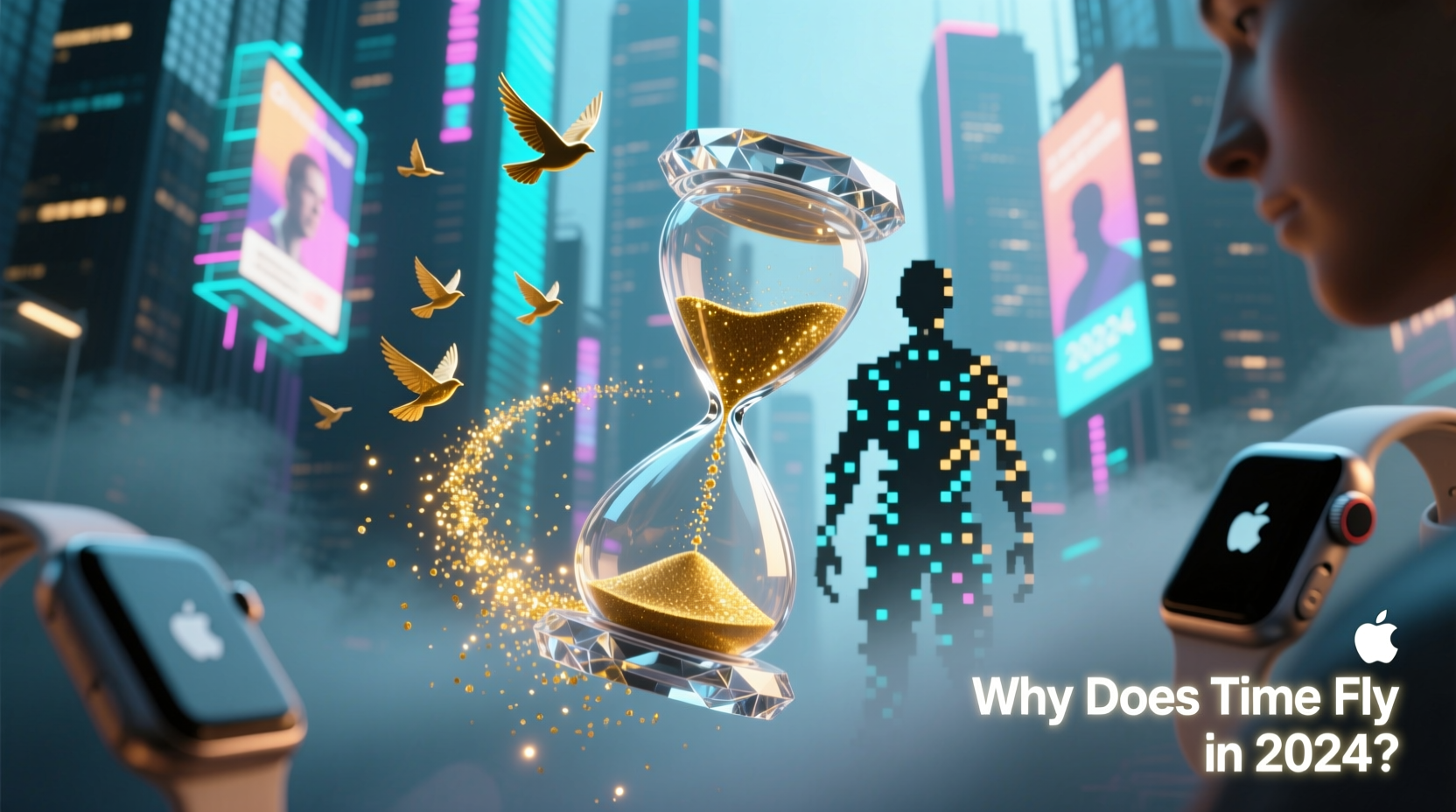
Our brains don’t measure time like clocks. Instead, they estimate duration based on memory formation, attention, and emotional engagement. When we experience new events—like traveling to a foreign country or learning a skill—our brain records more detailed memories. These dense memory clusters make the period feel longer in retrospect. Conversely, routine-filled weeks with little novelty compress into “nothing” when we look back.
In 2024, many lives are dominated by repetition: remote work routines, algorithm-driven entertainment, and predictable digital interactions. Without novel stimuli, the brain doesn’t form as many distinct memories. As a result, months blur together. Psychologists call this the \"proportionality theory\": as we age, each year becomes a smaller fraction of our total life, making it feel shorter. A year to a 10-year-old is 10% of their life; to a 50-year-old, it’s just 2%. But modern life intensifies this effect beyond biology alone.
“Time appears to speed up not because clocks move faster, but because our minds stop noticing the moments that compose it.” — Dr. Laura Simmons, Cognitive Psychologist, University of Toronto
Why 2024 Feels Different: The Acceleration Effect
Several cultural and technological forces converge in 2024 to amplify the sensation that time is flying:
- Digital Overload: Constant notifications, endless scrolling, and multitasking fragment attention. We’re rarely fully present, which reduces our ability to encode rich memories.
- Algorithmic Predictability: Platforms serve content tailored to past behavior, minimizing surprise. Without unpredictability, experiences become forgettable.
- Post-Pandemic Recovery Mode: After years of disrupted routines, many are still adjusting. The lack of clear temporal markers (like office commutes or social rituals) makes time harder to track.
- Global Urgency: Climate news, political shifts, and economic uncertainty create a background hum of stress, which distorts time perception. High cortisol levels accelerate internal clock rates.
Together, these factors create a perfect storm: we’re living in a world optimized for efficiency, not mindfulness. The cost? A growing sense that life is passing us by.
How to Regain Control: A Step-by-Step Guide to Slowing Time
You can’t change the calendar, but you can reshape your relationship with time. Here’s a practical five-step approach to make 2024 feel fuller and more meaningful:
- Break Routines Strategically: Identify repetitive patterns (e.g., same breakfast, same playlist). Swap one element weekly to introduce cognitive variety.
- Practice Time-Stamping: At day’s end, write down three unique moments you noticed—the smell of rain, a colleague’s laugh, sunlight on the wall. This reinforces memory encoding.
- Engage in Flow Activities: Pursue tasks that challenge your skills just enough to absorb full attention (e.g., playing music, coding, gardening). Flow states deepen time awareness.
- Reduce Passive Consumption: Replace 30 minutes of mindless scrolling with active creation—drawing, writing, cooking. Active engagement creates richer autobiographical memories.
- Create Temporal Landmarks: Mark transitions with small rituals: a special coffee on the first of the month, a photo every Sunday. These act as mental bookends, helping the brain segment time.
Real-Life Example: How Maria Regained Her Year
Maria, a 37-year-old project manager in Berlin, felt 2023 vanished overnight. Work-from-home fatigue left her weekends indistinct and months unremembered. In January 2024, she began scheduling one “new experience” per week: visiting a different museum, trying a language exchange, hiking a new trail. She also started a monthly reflection journal, noting sensory details from each outing.
By June, she reported a dramatic shift. “I can actually remember what May felt like,” she said. “It wasn’t just meetings and laundry. I have stories now.” Her brain had relearned how to mark time through novelty and reflection. For the first time in years, 2024 didn’t feel like it was speeding past.
Do’s and Don’ts: Managing Time Perception in Modern Life
| Do | Don’t |
|---|---|
| Schedule novelty (new places, people, hobbies) | Fill free time with passive scrolling |
| Use rituals to mark transitions (seasonal meals, monthly reviews) | Treat every day as interchangeable |
| Practice mindfulness or meditation | Multitask during conversations or meals |
| Keep a visual timeline of achievements or moments | Rely solely on digital calendars without reflection |
Frequently Asked Questions
Is time actually moving faster in 2024?
No—clock time remains constant. However, scientific studies confirm that Earth’s rotation has slightly accelerated in recent years due to geophysical factors, shortening days by milliseconds. While real, this change is imperceptible to humans. The sensation of speed comes from psychological and neurological factors, not physics.
Can slowing down time improve well-being?
Yes. Research links slower time perception with higher life satisfaction. People who feel time expands tend to report greater presence, reduced anxiety, and stronger memory coherence. Feeling “rushed” correlates with burnout and decision fatigue.
Does aging always make time feel faster?
Not necessarily. While proportionality theory suggests it should, individuals who maintain curiosity, learn new skills, and embrace change often report stable or even expanded time perception in later years. It’s less about age and more about engagement.
Conclusion: Reclaiming Your Year, One Moment at a Time
The feeling that time flies in 2024 is both widespread and understandable—but it’s not inevitable. By understanding the mechanisms behind time perception, we gain power over it. Small, intentional choices—seeking novelty, reducing autopilot behaviors, and creating meaningful pauses—can stretch the subjective length of your days. You don’t need more hours; you need more presence.
Start today. Choose one habit from the checklist above. Break a routine. Notice something you usually overlook. Let 2024 be the year you didn’t just survive time, but learned to inhabit it deeply.




 浙公网安备
33010002000092号
浙公网安备
33010002000092号 浙B2-20120091-4
Comments
No comments yet. Why don't you start the discussion?