
Drake is one of the most successful musicians of the 21st century—his records dominate charts, his tours sell out globally, and his influence on pop and hip-hop culture is undeniable. Yet, for all his acclaim, a persistent undercurrent of criticism follows him. While millions admire his versatility and commercial prowess, just as many express disdain, skepticism, or outright hostility toward his music and persona. So why don’t people like Drake? The answer isn’t simple, but it lies at the intersection of artistic integrity, genre politics, public image, and cultural shifts in hip-hop.
The Authenticity Debate: Is Drake a “Real” Rapper?
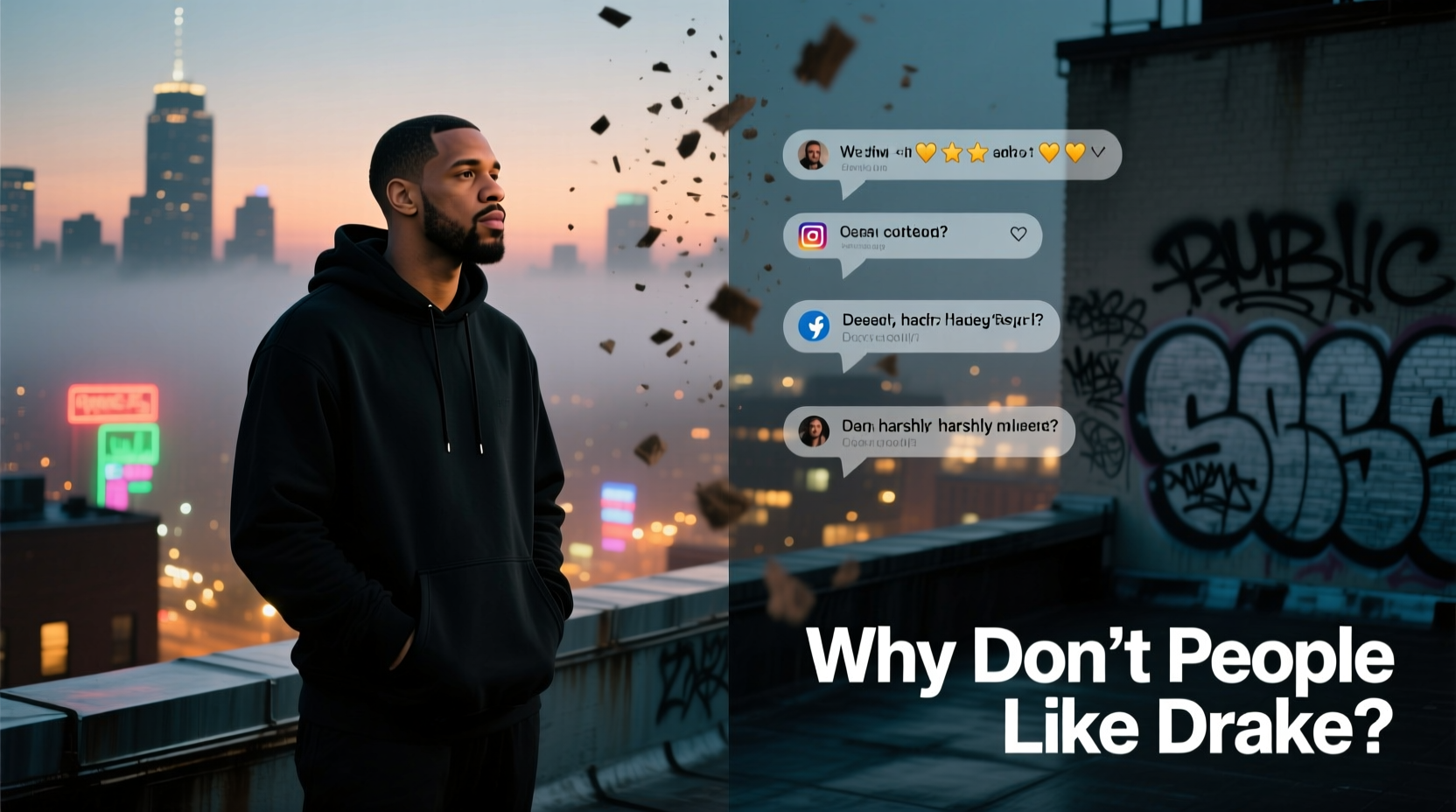
One of the most enduring criticisms leveled against Drake is whether he qualifies as a “real” rapper. Traditionalists in hip-hop often point to his background in acting (notably on *Degrassi: The Next Generation*) and his smooth, melodic delivery as evidence that he lacks the grit, struggle, and lyrical complexity associated with the genre’s pioneers.
This critique intensified as Drake rose to prominence during the early 2010s, a period when hip-hop was still deeply rooted in narratives of street life, survival, and raw lyricism. Artists like Kendrick Lamar, J. Cole, and Pusha T built their reputations on introspective storytelling and technical skill—qualities that some argue Drake prioritizes less in favor of emotional accessibility and radio-friendly hooks.
Critics often cite lines they perceive as weak or overly sentimental. For example, lyrics about heartbreak, fame, and relationships—while relatable to many—are dismissed by some as lacking depth compared to the socio-political commentary found in other contemporary rap.
“Rap has always been about truth-telling from lived experience. When the pain feels manufactured, the audience notices.” — Marcus Bell, Hip-Hop Historian and Radio Producer
Cultural Appropriation and Genre Blending
Another major point of contention is Drake’s frequent incorporation of dancehall, Afrobeat, and Southern hip-hop influences. While many praise him for popularizing global sounds, others accuse him of extracting from Black diasporic cultures without proper credit or understanding.
His use of Jamaican patois, for instance, has drawn backlash from Caribbean artists and listeners who view it as performative and exploitative. In 2018, Jamaican dancehall artist Popcaan publicly criticized Drake for using A$AP Rocky’s “Peso” accent instead of collaborating more authentically with Caribbean voices despite having access to them through his OVO Sound label.
Likewise, his ventures into Afrobeats with songs like “One Dance” and “Come to Life” sparked debate. While these tracks introduced African rhythms to mainstream audiences, critics argue that local artists received minimal recognition or financial benefit relative to Drake’s massive gains.
| Criticism | Example | Counterpoint |
|---|---|---|
| Use of Patois | “Now she love me like I’m Popcaan” – Drake, “Controlla” | Popcaan featured later, but initial release lacked collaboration |
| Afrobeats Commercialization | “One Dance” samples Nigerian artist Wizkid | Wizkid gained exposure but Drake earned primary royalties |
| Southern Rap Influence | Adoption of trap beats and slang post-2015 | Collaborated with Southern rappers but seen as trend-chasing |
Perceived Lack of Loyalty and Feuds
Drake’s relationships within the hip-hop community have long been scrutinized. Once close with artists like Meek Mill, Pusha T, and even Kanye West, he’s now embroiled in high-profile feuds that fuel public skepticism.
The 2015 ghostwriting accusation by Meek Mill was a turning point. Mill claimed Drake didn’t write his own raps, citing inconsistencies in flow and subject matter. Though Drake responded swiftly with the diss track “Back to Back,” the incident planted seeds of doubt among fans about his authenticity.
Then came Pusha T’s devastating 2018 diss, “The Story of Adidon,” which exposed Drake’s secret child and mocked his parenting and racial identity. The track wasn’t just lyrically sharp—it was seen as a moral reckoning, accusing Drake of hiding truth while crafting vulnerable personas in his music.
These conflicts contribute to a broader narrative: that Drake co-opts relationships for clout, then discards or disrespects collaborators when convenient. Whether fair or not, this perception damages his credibility in a genre where loyalty and realness are highly valued.
Mini Case Study: The Pusha T Feud
In April 2018, Drake released “Duppy Freestyle,” taunting Pusha T for relying on ghostwriters and avoiding controversy. Within days, Pusha dropped “The Story of Adidon,” a meticulously crafted rebuttal that revealed Drake had a son with artist Sophie Brussaux—a fact Drake hadn’t publicly disclosed.
The fallout was immediate. Fans questioned Drake’s transparency. Media outlets framed it as a victory for “truth” over image. Even neutral observers noted that Pusha’s attack landed because it targeted real-life actions, not just artistic flaws.
This moment crystallized a key reason behind anti-Drake sentiment: when personal ethics appear at odds with public branding, backlash follows—especially in a genre built on authenticity.
Overexposure and Market Saturation
Love him or hate him, you can’t escape Drake. His release strategy—frequent singles, surprise drops, and endless collaborations—has led to what some call “cultural fatigue.”
Between 2015 and 2023, Drake consistently occupied top spots on the Billboard charts, often holding multiple positions simultaneously. In 2021, his album *Certified Lover Boy* set a record with nine songs in the Billboard Hot 100’s top 10 in a single week. While impressive, such dominance alienates listeners who feel smaller artists are being crowded out.
Many indie rappers and underground fans argue that streaming algorithms now favor established names like Drake, making it harder for emerging talent to gain traction. This creates a sense of inequity in the industry.
- He averages over 10 billion annual streams.
- OVO Sound signees rarely achieve similar visibility.
- His presence overshadows regional movements and niche genres.
To critics, this isn’t just success—it’s monopolization.
Checklist: Understanding Anti-Drake Sentiment
If you’re trying to grasp why Drake divides opinion, consider these five factors:
- Evaluate authenticity claims: Does his storytelling align with perceived lived experience?
- Assess cultural borrowing: Are outside influences credited and respected, or extracted?
- Analyze industry impact: Does his dominance limit space for new voices?
- Review personal conduct: How do his public feuds reflect artistic integrity?
- Consider emotional resonance: Is vulnerability seen as genuine or performative?
FAQ
Is Drake disliked because he’s not technically skilled?
It’s not solely about technical ability. Many acknowledge Drake’s ear for melody and rhythm. The criticism stems more from perceived inconsistency in depth, authenticity, and genre respect than pure skill deficiency.
Do Black artists specifically criticize Drake?
Criticism comes from across racial and cultural lines. However, many of the most pointed critiques originate from Black artists and audiences—particularly those from communities whose musical styles Drake incorporates—raising concerns about equity and representation.
Can someone enjoy Drake’s music while acknowledging the criticism?
Absolutely. Artistic merit and ethical concerns aren’t mutually exclusive. Many listeners appreciate his production quality, emotional honesty, and hit-making ability while remaining critical of his cultural footprint or personal decisions.
Conclusion: Navigating Fame, Critique, and Legacy
Disliking Drake isn’t just about music—it’s about what his success represents in today’s cultural landscape. To some, he embodies adaptability and emotional openness in a genre historically defined by toughness. To others, he symbolizes commercialization, opportunism, and the erosion of hip-hop’s core values.
What’s clear is that the backlash isn’t monolithic. It’s fueled by legitimate debates about authorship, cultural ownership, and the cost of ubiquity. As listeners, we don’t have to choose between admiration and critique. We can recognize Drake’s monumental impact while questioning the systems that elevate certain voices over others.




 浙公网安备
33010002000092号
浙公网安备
33010002000092号 浙B2-20120091-4
Comments
No comments yet. Why don't you start the discussion?