
The first baseman’s glove is unlike any other in baseball—not because it’s flashy, but because its design solves a very specific problem: catching fast throws from multiple angles while maintaining control during quick transitions at first base. While outfielders need deep pockets and infielders require quick ball transfers, the first baseman operates under distinct demands that have shaped a specialized piece of equipment. Understanding these differences isn’t just trivia for gear enthusiasts—it can improve fielding efficiency, reduce errors, and enhance player confidence.
The Unique Role of the First Baseman
First basemen spend more time receiving throws than making them. Whether it’s a sharp one-hop pick, a diving scoop from a wild toss, or a snap tag on a close runner, the first baseman must catch, secure, and maintain foot contact with the bag—all within split seconds. This role places unique stress on hand positioning, reaction time, and glove functionality.
Unlike other infielders who frequently throw after catching, first basemen often keep the ball in the mitt after securing it, eliminating the need for rapid transfer. Instead, they prioritize reach, target area, and ability to snag errant throws—especially those low or off-line. These factors directly influence the glove’s construction, leading to a design that diverges significantly from standard infield models.
Key Design Features That Set First Baseman Gloves Apart
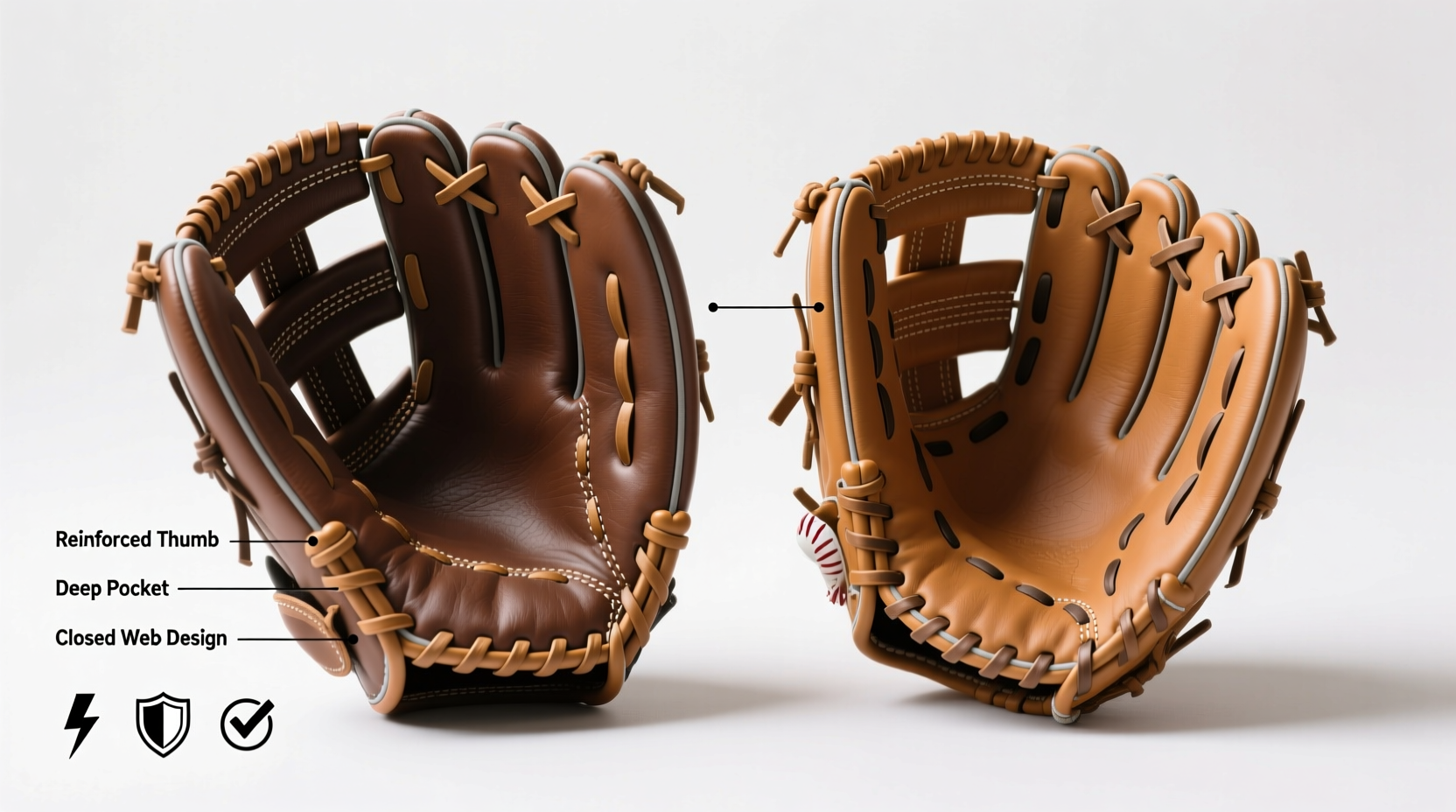
At first glance, a first baseman’s mitt looks like an oversized version of a regular glove. But its structure is engineered for function, not form. Here are the defining characteristics:
- Extended Length: Typically ranging from 12 to 13 inches, the elongated shape increases reach, enabling players to stretch further toward the bag while keeping their feet grounded.
- Single-Pocket (Mitt Style): Unlike five-finger gloves used by other infielders, first baseman mitts have a closed-back design with all fingers enclosed together. This creates a stiffer, more rigid structure ideal for scooping and blocking.
- Deep, Open Pocket: The pocket is wider and slightly curved, allowing easier capture of off-target throws. Some models feature a “spoon” or concave shape to cradle the ball upon impact.
- Hinged Webbing: Many first base mitts use a hinged or two-piece web (like the H-web or modified trapeze), which provides flexibility for closing around the ball while maintaining visibility through the web.
- Padding and Support: Extra padding along the thumb and backstop helps absorb high-speed throws, reducing sting and increasing comfort during long games.
How Design Enhances Performance
The absence of individual finger slots means less dexterity, but this trade-off is intentional. The stiffness of the mitt supports clean catches under pressure and prevents the glove from collapsing when stopping hard line drives or bouncing balls. Additionally, the open face acts as a visual target for incoming throws, helping infielders aim more accurately during double plays or rushed pickups.
“First base is all about extension and timing. Your glove becomes an extension of your body—you’re not just catching; you’re creating outs with range.” — Derek Alvarez, Former MLB Scout and Fielding Analyst
Benefits of Using a Specialized First Base Mitt
Using a position-specific glove isn’t just tradition—it delivers measurable advantages:
| Feature | Benefit | Real-World Impact |
|---|---|---|
| Extended Length | Greater reach for stretching plays | Converts more close calls into outs |
| Wide, Open Pocket | Better chance of securing off-line throws | Fewer errors on hurried feeds |
| Stiff Construction | Resists collapsing on hard throws | Improved ball control and safety |
| Hinged Web | Allows partial closure while staying open for visibility | Quicker confirmation of possession |
| Padded Palm & Back | Reduces vibration and impact fatigue | Sustained focus over full game duration |
Durability and Comfort Over Time
Because first basemen handle hundreds of throws per season, material quality matters. Premium leather models break in slowly but offer superior longevity and shape retention. Synthetic blends may be lighter and cheaper but often lack the structural integrity needed for consistent performance. Players who invest in well-crafted mitts report less hand fatigue and fewer maintenance issues over time.
Choosing the Right First Base Glove: A Step-by-Step Guide
Selecting the best mitt involves more than size preferences. Follow this process to ensure optimal fit and function:
- Assess Your Level and Playing Frequency: Recreational players may prioritize affordability and ease of break-in, while competitive athletes should focus on durability and precision engineering.
- Determine Proper Size: Youth players typically use 11.5”–12”, high school and college athletes go for 12”–12.5”, and professionals often choose 12.5”–13”. Larger isn’t always better—ensure you can close the glove comfortably.
- Evaluate Web Style: H-webs offer visibility and versatility; trapeze webs provide excellent scoop capability. Try both if possible before deciding.
- Check Wrist Closure Fit: A secure strap or lace system prevents slippage during aggressive stretches. Adjustable closures allow customization as the leather molds.
- Test Flexibility and Balance: The mitt should feel balanced in your hand—not too heavy at the tip, not too stiff to close. It should open naturally when relaxed.
Mini Case Study: Turning Errors Into Outs With the Right Glove
Jamal Thompson, a junior college infielder, struggled with consistency at first base. Despite solid footwork, he routinely missed low throws, resulting in unearned runs. After reviewing game footage, his coach noticed Jamal was using a standard infield glove instead of a dedicated first base mitt.
He switched to a 12.75” mitt with a deep spoon pocket and hinged web. Within three weeks, his error rate dropped by 60%. More importantly, his confidence improved—he began initiating longer stretches and calling for pop-ups with authority. His team credited the change as a turning point in their defensive turnaround mid-season.
This example illustrates how equipment tailored to a specific role can transform performance—not through magic, but through optimized mechanics.
Frequently Asked Questions
Can I use a regular infield glove at first base?
Yes, but it’s not ideal. Standard gloves are shorter and lack the scooping design of a first base mitt, limiting reach and increasing the risk of dropped throws. While legal under most rules, using the right tool maximizes effectiveness.
Why don’t first basemen use two separate fingers like other players?
The single-compartment design increases rigidity and surface area. Individual fingers would flex too much under high-velocity impacts, potentially causing the glove to fold or drop the ball. The mitt format prioritizes stability over fine motor control.
Are there left-handed first base mitts?
Yes—and nearly all first base gloves are made for left-hand throwers. Since the first baseman wears the glove on their right hand, they need maximum reach across the bag when stretching. Left-handed throwers dominate this position partly due to this mechanical advantage.
Checklist: Before Buying a First Base Mitt
- ☐ Confirm correct size based on age and level
- ☐ Choose between natural leather or synthetic materials
- ☐ Decide on preferred web style (H-web, trapeze, etc.)
- ☐ Ensure secure wrist adjustment mechanism
- ☐ Test grip balance and closure ease
- ☐ Verify manufacturer warranty and return policy
- ☐ Watch demo videos or consult experienced players
Conclusion: Precision Tools for a Unique Position
The first baseman’s mitt isn’t just another glove—it’s a purpose-built instrument designed to meet the physical and strategic demands of one of baseball’s most reactive positions. From enhanced reach to superior ball retention, every feature serves a clear objective: turning potential mistakes into routine outs.
Whether you're a weekend player or aspiring collegiate athlete, recognizing the value of specialized gear empowers smarter choices. Don’t settle for general-purpose tools when position-specific excellence is within reach.




 浙公网安备
33010002000092号
浙公网安备
33010002000092号 浙B2-20120091-4
Comments
No comments yet. Why don't you start the discussion?