
In today’s digital-first world, memes are more than just jokes—they’re a language. When someone says “he’s kinda decoding the meme,” it’s not just about understanding a funny image; it’s about reading between the lines of modern emotional expression. This phrase often surfaces in conversations about romantic interest, social dynamics, or generational communication gaps. To truly grasp what it means—and why it matters—we need to unpack the psychology, context, and cultural weight behind meme interpretation.
The Hidden Language of Memes in Modern Communication
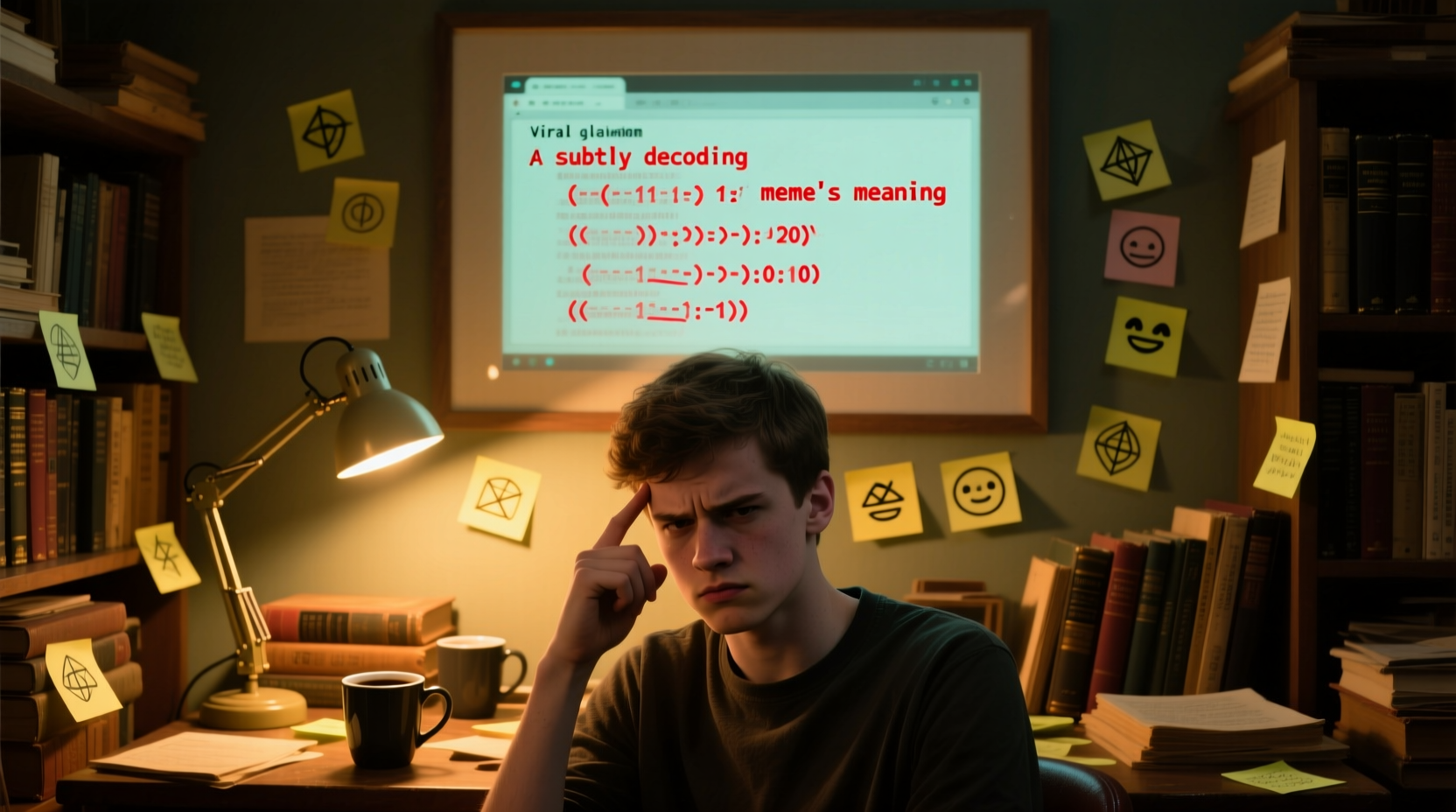
Memes function as micro-stories that convey complex emotions, opinions, or shared experiences in seconds. Unlike traditional conversation, which relies on tone, pauses, and facial cues, memes compress meaning into visuals, text overlays, and cultural references. For many, especially younger generations, sharing a meme is equivalent to saying, “This is how I feel,” or “I understand you.”
When someone—particularly a man—is described as “kinda decoding the meme,” it suggests a slow realization. He isn’t immediately getting the joke or the subtext. Instead, he’s piecing together layers: the reference, the irony, the emotional undertone. This process mirrors how people navigate indirect communication in relationships, where feelings are hinted at rather than stated outright.
“Memes are the new body language. They reveal intimacy, humor, and vulnerability without requiring direct confession.” — Dr. Lena Torres, Digital Anthropologist
Why Decoding Matters: Emotional Intelligence in the Digital Age
Decoding a meme isn’t just about pop culture literacy—it’s a sign of emotional attunement. Consider this scenario: a woman sends a meme of a cat hiding under a blanket with the caption, “Me avoiding my feelings.” If her partner responds with laughter but doesn’t acknowledge the underlying message, he may be missing an invitation to connect. But if he replies, “That cat is me every Sunday,” or “We should talk about that,” he’s not just getting the joke—he’s engaging emotionally.
This is where “kinda decoding” becomes significant. It implies progression: from surface-level amusement to deeper comprehension. The word “kinda” suggests incompleteness—not full understanding yet, but movement toward it. In relationships, this stage can be pivotal. It shows willingness to listen, learn, and adapt to a partner’s unique way of expressing themselves.
Stages of Meme Decoding: A Psychological Timeline
Understanding a meme isn’t instant. It follows a cognitive and emotional sequence, especially when embedded with relational subtext. Here’s a realistic timeline of how “he” might progress from confusion to clarity:
- Initial Reaction (Confusion): He sees the meme and laughs, but doesn’t grasp why it was sent.
- Recognition (Reference Check): He identifies the source—e.g., “Oh, this is from that show we watched.”
- Contextualization (Emotional Mapping): He connects it to a recent event—“She’s been stressed about work.”
- Personalization (Relational Insight): He realizes it’s a bid for empathy—“She wants me to notice she’s overwhelmed.”
- Response (Engagement): He replies with a related meme or a supportive message, closing the loop.
This five-step process illustrates that decoding isn’t passive. It requires attention, memory, and emotional investment. When someone is “kinda” doing it, they’re likely in stage three or four—aware something deeper is happening but still formulating their response.
Common Barriers to Full Meme Comprehension
Not everyone decodes memes easily. Several factors can delay or distort understanding:
- Generational Gaps: Older individuals may lack exposure to meme formats or internet slang.
- Communication Styles: Some people prefer direct speech and view memes as ambiguous or childish.
- Emotional Avoidance: Avoiding difficult topics may lead to superficial engagement with emotionally charged memes.
- Digital Literacy: Not all users are fluent in meme syntax—timing, irony, remix culture.
These barriers don’t indicate disinterest. Often, they reflect different modes of processing emotion. Recognizing them allows for patience and clearer communication.
Do’s and Don’ts of Meme-Based Communication
| Do’s | Don’ts |
|---|---|
| Use memes to lighten serious conversations | Assume the other person will instantly get the reference |
| Pair memes with brief explanations if needed | Overload texts with memes to avoid verbal discussion |
| Respond with empathy, even if the joke falls flat | Dismiss memes as “not real communication” |
| Learn your partner’s favorite meme styles | Use offensive or sarcastic memes during tension |
Mini Case Study: The SpongeBob Breakup Meme
Sophia, 27, sent her boyfriend Jake a meme featuring SpongeBob staring blankly with the caption: “When you realize you’ve been emotionally unavailable for three years.” She’d been trying to discuss their communication patterns for weeks. Jake initially laughed and replied, “Haha, accurate.”
Two days later, he brought it up again: “So… were you comparing me to SpongeBob?” That moment marked the start of a real conversation. He wasn’t just laughing it off anymore—he was decoding. Over the next week, he admitted he’d been avoiding tough talks and committed to being more present.
This case shows that “kinda decoding” can be a turning point. The meme wasn’t the message itself; it was the doorway. His delayed but sincere engagement signaled emotional growth.
Expert Insight: Why Indirect Communication Works
Dr. Aaron Kim, a clinical psychologist specializing in digital relationships, explains: “People use memes because they reduce risk. Saying ‘I’m hurt’ feels vulnerable. Sending a sad dog meme with ‘Same’ in the caption? That’s protection with a backdoor for connection. When someone starts decoding, they’re choosing to walk through that door.”
“Memes create safe spaces for honesty. Decoding them is an act of care.” — Dr. Aaron Kim, Relationship Psychologist
Frequently Asked Questions
Does not getting a meme mean he’s not interested?
Not necessarily. Lack of immediate understanding often reflects differences in digital fluency, not emotional detachment. Interest is shown by follow-up questions like, “Wait, what’s this about?” rather than ignoring it.
How can I tell if he’s actually decoding or just pretending?
True decoding leads to action. If he starts referencing the meme later, ties it to real-life situations, or uses similar humor himself, he’s internalizing the message. Surface-level replies without follow-up suggest disengagement.
Should I explain every meme I send?
No—but consider context. In high-stakes moments, pairing a meme with a short note (“This is how I felt yesterday”) ensures clarity. Over time, shared meme language develops naturally, like inside jokes.
Action Checklist: Improving Meme & Emotional Literacy
Whether you're the sender or the decoder, these steps build stronger digital-emotional fluency:
- Notice recurring meme themes in your partner’s messages.
- Save or screenshot ones that seem meaningful for later reflection.
- Ask open-ended questions: “Why did this one make you think of me?”
- Practice reciprocal sharing—send a meme that reflects your mood.
- Reflect on how online humor aligns with offline behavior.
Conclusion: From Decoding to Deeper Connection
“He’s kinda decoding the meme” isn’t just a quirky observation—it’s a snapshot of modern emotional evolution. In a world where feelings are filtered through screens, GIFs, and absurd humor, the effort to understand—even slowly, imperfectly—is profoundly human. It signals presence. It invites closeness. And more often than not, it’s the first step toward a conversation that really matters.




 浙公网安备
33010002000092号
浙公网安备
33010002000092号 浙B2-20120091-4
Comments
No comments yet. Why don't you start the discussion?