
The British pound sterling is one of the world’s oldest currencies still in use, but few people know why it’s often referred to as a “quid.” This informal term is deeply embedded in UK culture, used daily in conversations from London pubs to financial districts. Yet its origins are shrouded in mystery, speculation, and linguistic evolution. Understanding why a pound is called a quid reveals more than just etymology—it uncovers layers of history, trade, and national identity.
The Meaning of \"Quid\"
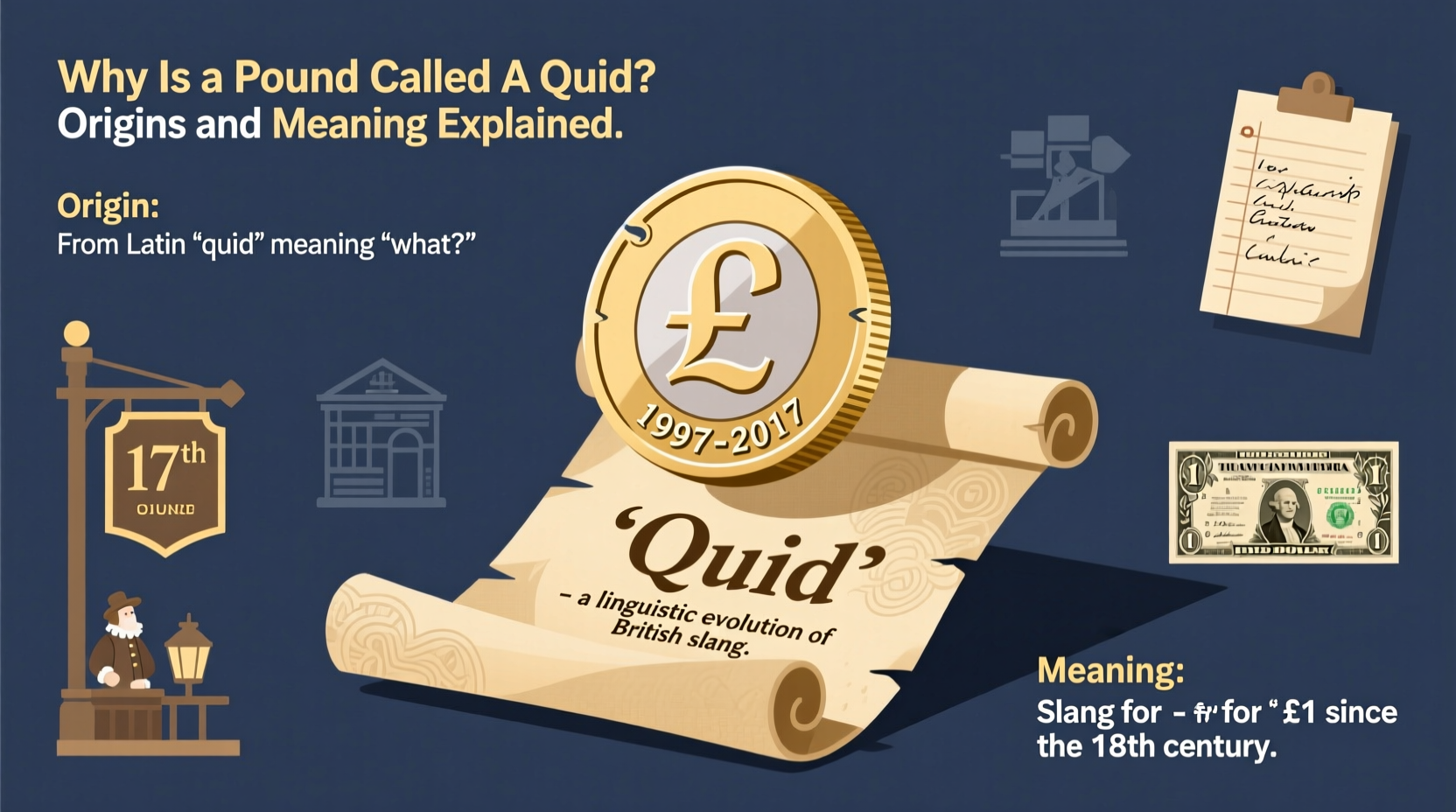
In modern British English, “quid” is singular and plural slang for the pound sterling (£1). You might hear someone say, “It cost me fifty quid,” meaning £50. Unlike “pound,” which can be pluralized (“pounds”), “quid” remains unchanged: one quid, ten quid, a hundred quid. It’s widely accepted in casual speech across the UK and Ireland, though rarely used in formal financial or legal documents.
The word carries a distinctly local flavor. While tourists may stick to “pounds,” locals embrace “quid” as part of everyday vernacular. Its persistence reflects a broader tradition of British linguistic creativity—where formal terms coexist with colorful colloquialisms like “bob” (for a shilling) or “fiver” (a £5 note).
Possible Origins of the Word \"Quid\"
No definitive source confirms the exact origin of “quid,” but several compelling theories have emerged over time. Each offers insight into how language evolves through commerce, migration, and cultural exchange.
Roman Connection: \"Quid Pro Quo\"
One popular theory links “quid” to the Latin phrase quid pro quo, meaning “something for something”—essentially, an exchange. Given that money represents value exchanged in trade, this connection seems plausible. However, linguists remain skeptical. There’s no direct historical evidence that the phrase evolved into currency slang. The similarity may be coincidental rather than causal.
Italian Influence: \"Quid\" as Tobacco Money
A more substantiated theory traces “quid” back to 17th-century Italy. At the time, Italian immigrants working in England were paid in pounds, which they referred to as “quid” — short for *quidam*, a Latin-derived term meaning “a certain amount.” Alternatively, some historians suggest workers received payment in the form of tobacco, known colloquially as “quid” (a chewable lump). Over time, the term may have transferred from the substance to the currency used to buy it.
“Slang terms often emerge at the intersection of labor, language, and necessity. ‘Quid’ likely arose among immigrant communities where money had immediate, tangible associations.” — Dr. Helen Reeves, Historical Linguist, University of Edinburgh
Waterloo Connection: Quid as Battlefield Slang
Another intriguing theory ties “quid” to the Battle of Waterloo in 1815. Soldiers allegedly used paper notes made from rags, including pulp from captured French uniforms. These notes were jokingly called “quids” due to their fibrous texture—similar to chewing tobacco. Though colorful, this story lacks documentary support and is largely dismissed by scholars.
Historical Usage Timeline
The first recorded use of “quid” in reference to money dates back to the late 1600s, though it gained widespread popularity in the 18th and 19th centuries. Below is a timeline showing key moments in the evolution of the term:
| Year | Event |
|---|---|
| c. 1680 | Earliest suspected use of “quid” in underground markets and dockside slang. |
| 1796 | First documented appearance in print: Francis Grose’s *A Classical Dictionary of the Vulgar Tongue* defines “quid” as a guinea. |
| 1850s | Becomes common in Cockney dialect and working-class speech across London. |
| 1940s–50s | Used widely during WWII rationing; appears in letters and service slang. |
| Present Day | Recognized nationwide; included in Oxford English Dictionary and Cambridge dictionaries. |
Cultural Significance and Modern Use
“Quid” isn’t just a linguistic shortcut—it reflects Britain’s relationship with class, informality, and regional identity. In working-class communities, using “quid” signals authenticity and belonging. In contrast, avoiding it in professional settings maintains decorum. This duality mirrors broader social codes around speech and status.
The term also appears frequently in media and pop culture. From sitcoms like *Only Fools and Horses* to crime dramas such as *Line of Duty*, characters toss around “quid” to ground dialogue in realism. Even politicians occasionally slip into slang during interviews to appear relatable.
Mini Case Study: The Pub Transaction
Consider Mark, a visitor from Canada, ordering drinks at a traditional London pub. The bartender says, “That’ll be twenty quid for the round.” Mark hesitates—he’s unfamiliar with the term. He double-checks his phone calculator, confirming £20. After paying, he asks the bartender, “Why do you say ‘quid’?” The bartender laughs and replies, “Dunno, mate. We just do.”
This small interaction highlights both the ubiquity and opacity of the word. Even native speakers rarely know its roots, yet they use it instinctively. For non-natives, understanding “quid” removes a subtle barrier to full cultural immersion.
Do’s and Don’ts of Using \"Quid\"
| Do | Don't |
|---|---|
| Use it in casual conversation with friends or in markets. | Use it in formal writing, contracts, or job applications. |
| Understand that it's both singular and plural (\"five quid\"). | Try to pluralize it (\"quids\")—this sounds unnatural. |
| Recognize regional variations—Scots and Northern Irish also use it widely. | Assume all English speakers understand it—Americans or Australians may not. |
Expert Insight on Currency Slang
“Every nation has its monetary slang, but Britain’s is particularly rich. Words like ‘quid,’ ‘fiver,’ and ‘tenner’ reflect a culture that values understatement and wit. They soften the transactional nature of money with humor.” — Prof. Alan Finch, Socioeconomics of Language, King’s College London
Frequently Asked Questions
Is “quid” used outside the UK?
Limited usage exists in Ireland and parts of the Commonwealth, especially among older generations or those with strong UK ties. However, it’s not standard elsewhere. Australians say “buck,” Americans say “dollar,” and Canadians mix both depending on context.
Can “quid” refer to any amount, or just one pound?
It can refer to any whole-pound amount. Whether you’re talking about £1 or £1,000, it’s all “quid.” For example: “He won five grand quid on the lottery” means £5,000.
Why hasn’t “quid” replaced “pound” entirely?
Slang thrives in informal spaces, but institutions require precision. Legal, financial, and governmental systems rely on standardized terminology. “Pound” is unambiguous; “quid” carries cultural nuance but lacks universal clarity.
How to Use \"Quid\" Like a Local: A Quick Checklist
- ✅ Use “quid” when chatting casually about prices.
- ✅ Remember: no plural form. Never say “quids.”
- ✅ Pair it with other slang like “fiver” or “tenner” for natural flow.
- ✅ Avoid it in emails, reports, or formal speech.
- ✅ Listen for regional accents—“quid” pronunciation varies slightly across Scotland, Wales, and Northern England.
Conclusion: Embrace the Quirks of Language
The word “quid” may never reveal its true origin, but that ambiguity is part of its charm. It represents the organic way language grows—not through rules, but through people, trade, and shared experience. Whether you're budgeting for a trip to London or simply curious about linguistic quirks, knowing why a pound is called a quid adds depth to your understanding of British culture.




 浙公网安备
33010002000092号
浙公网安备
33010002000092号 浙B2-20120091-4
Comments
No comments yet. Why don't you start the discussion?