
Airline food has long been the subject of jokes, memes, and resigned sighs from travelers around the world. Whether it's the lukewarm texture, the lack of flavor, or the oddly familiar smell that reminds you of a hospital cafeteria, most passengers agree: airplane meals just don’t measure up. But is it really the food—or something else? The answer lies not only in the kitchen but also in the cabin’s unique environment. At cruising altitudes, your taste buds don’t function as they do on the ground. Understanding this phenomenon explains why even gourmet airline cuisine can fall flat.
The Science Behind Taste and Altitude
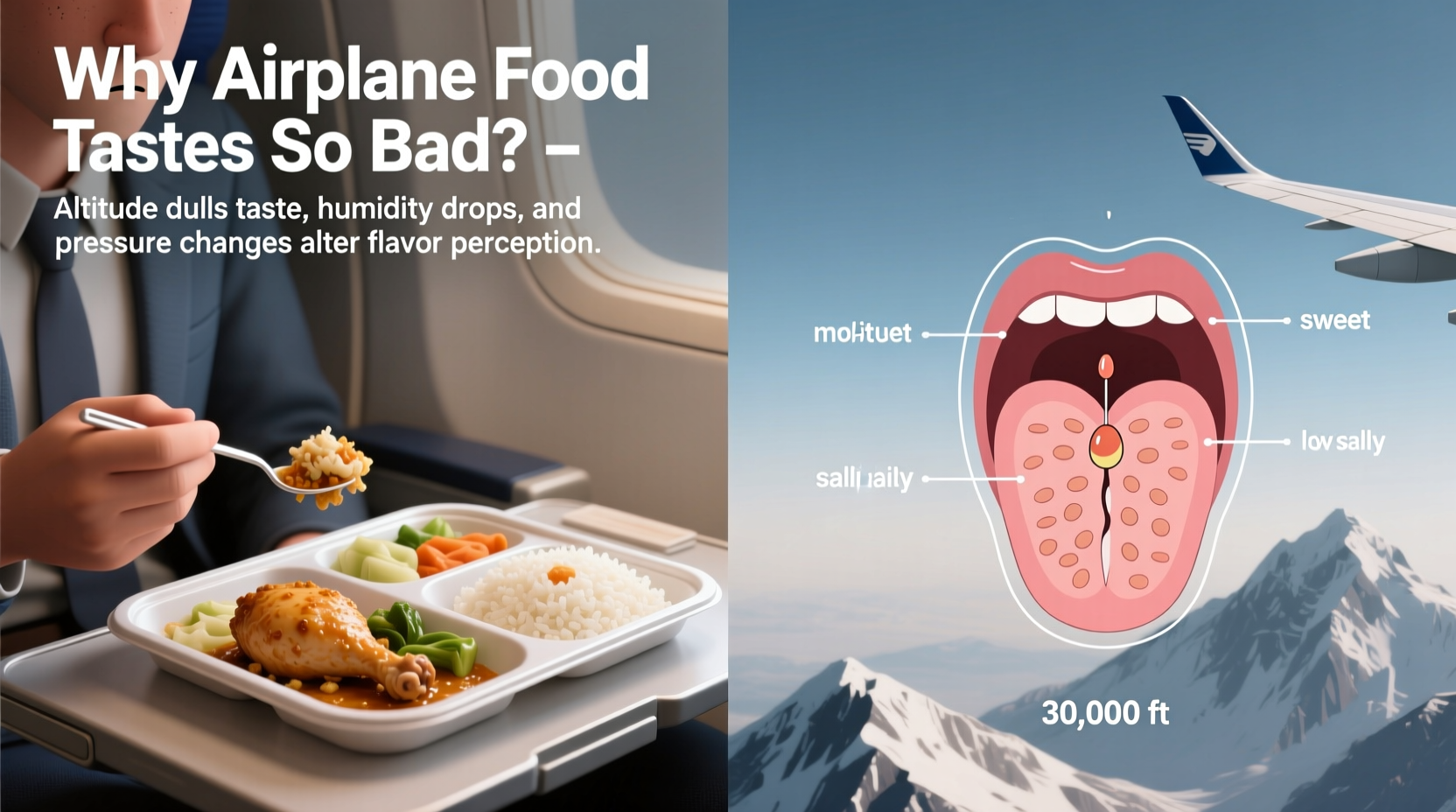
Taste isn’t just about what’s on your plate—it’s a complex interaction between your tongue, nose, brain, and environment. On the ground, we perceive flavor through five basic tastes—sweet, salty, sour, bitter, and umami—combined with aroma, texture, temperature, and even sound. But inside an aircraft at 35,000 feet, multiple environmental factors interfere with this process.
The air pressure in a commercial airplane cabin is typically equivalent to being at 6,000 to 8,000 feet above sea level. Combined with extremely low humidity (often below 20%, drier than most deserts), this environment dulls sensory perception. Studies conducted by Lufthansa and the Fraunhofer Institute have shown that under these conditions, sensitivity to sweet and salty flavors drops by as much as 30%. Meanwhile, sour, bitter, and spicy notes remain relatively unchanged, which explains why tomato juice—a drink many would never order on land—becomes a popular choice in the sky.
“Up there, your taste buds are essentially muted. It’s not that the food is bad—it’s that your ability to taste it is compromised.” — Dr. Charles Spence, Professor of Experimental Psychology, University of Oxford
How Cabin Conditions Alter Flavor Perception
Three major factors conspire against your palate during flight: reduced air pressure, dry air, and ambient noise.
- Reduced Air Pressure: Lower cabin pressure affects how odor molecules reach your olfactory receptors. Since much of what we call “taste” actually comes from smell, this impairs flavor detection significantly.
- Low Humidity: Dry cabin air dehydrates nasal passages and reduces saliva production, further weakening taste and smell. A stuffy nose doesn’t just block scents—it makes food seem blander.
- Background Noise: The constant hum of engines (around 85 decibels) has been linked to suppressed sweetness perception and heightened umami response. Research shows that loud environments make people crave saltier, more savory foods.
These combined effects create a sensory landscape where food must be engineered differently to compensate. Airlines know this, yet they face logistical constraints that limit their ability to fully adapt.
Why Airline Kitchens Operate Under Severe Constraints
Even if airlines wanted to serve restaurant-quality meals, they’re limited by space, safety regulations, and preparation logistics. Most in-flight meals are prepared hours or even days in advance, then chilled, transported, reheated, and served—all while meeting strict food safety standards.
Reheating food in convection ovens onboard prevents browning and crisping, leading to soggy textures. Sauces separate, vegetables overcook, and proteins dry out. Additionally, meals must be designed for mass production and long shelf life, often requiring preservatives and stabilizers that subtly alter taste.
Another issue is consistency. Airlines cater to hundreds of thousands of passengers daily across diverse routes and classes. Standardizing meals across continents means compromising on regional authenticity and freshness. What might be a perfectly acceptable curry in economy class on a Delhi–London flight could disappoint a discerning diner used to homemade versions.
| Factor | Impact on Food Quality |
|---|---|
| Pre-prepared meals | Limited freshness; flavor degradation over time |
| Onboard reheating | Soggy textures, uneven heating, loss of crispness |
| Cabin pressure & dry air | Reduced perception of sweetness and saltiness |
| Noise levels | Increased preference for umami and spicy flavors |
| Storage limitations | Restricted use of fresh ingredients and delicate components |
How Airlines Are Responding to the Flavor Challenge
In recent years, forward-thinking carriers have begun re-engineering their menus based on sensory science. Chefs now design dishes specifically for high-altitude consumption, adjusting seasoning and ingredient balance to counteract diminished taste.
For example, Singapore Airlines worked with renowned chef Akira Back to develop dishes with intensified aromatics and layered umami elements—such as miso, mushrooms, and aged cheeses—that hold up better in flight. Similarly, British Airways collaborated with chef Heston Blumenthal to reformulate its menu using insights from flavor psychology, including boosting herbal notes and acidity to stimulate the palate.
Some airlines are also investing in improved onboard ovens and packaging. Vacuum-sealed, multi-compartment trays allow components to be heated separately, preserving texture. Emirates, for instance, uses advanced combi-ovens that combine steam and convection heat to keep food moister and more evenly cooked.
“We don’t cook for the ground. We cook for the sky. That means more bold flavors, more acidity, more aromatic herbs.” — Jürgen Ringbeck, former Executive Chef, Lufthansa Catering
Practical Tips for Eating Better on a Plane
You don’t have to accept subpar meals as an unavoidable part of flying. With a few smart choices, you can significantly improve your in-flight dining experience.
- Hydrate Before and During Flight: Start drinking water well before boarding. Dehydration amplifies taste bud suppression.
- Avoid Alcohol and Caffeine: These are diuretics and worsen dehydration, further dulling your senses.
- Choose the Right Meal Option: Opt for dishes with strong, savory flavors—curries, stews, broths—over delicate or mildly seasoned items.
- Use Condiments Strategically: Add salt, pepper, hot sauce, or lemon juice to reactivate your taste buds.
- Chew Gum or Suck on Candy: This stimulates saliva production and opens nasal passages, enhancing flavor perception.
- Eat When the Plane Levels Off: Taste sensitivity may slightly improve once the cabin pressure stabilizes after ascent.
Checklist: How to Improve Your Airline Meal Experience
- ✅ Drink water consistently before and during the flight
- ✅ Skip alcoholic beverages, especially on long-haul flights
- ✅ Select meals with bold, spicy, or umami-heavy profiles
- ✅ Bring your own seasonings or condiments (if allowed)
- ✅ Chew mint gum to refresh your mouth and stimulate taste
- ✅ Request special meals early (vegetarian, kosher, etc.)—they’re often fresher and better prepared
Real Example: A Gourmet Dinner Gone Flat
Consider the case of Sarah, a frequent flyer traveling business class from New York to Tokyo. She selected the airline’s premium “Chef’s Signature” meal: a seared salmon dish with citrus glaze, wild rice, and seasonal vegetables. On the ground, this would be a vibrant, well-balanced plate. But onboard, she found the salmon dry, the glaze overly sweet, and the rice mushy. Nothing tasted as expected.
Unbeknownst to her, the combination of cabin dryness and engine noise had dulled her sensitivity to salt and subtle citrus notes. The reheating process had also caused the glaze to caramelize unevenly, intensifying sweetness. When she switched to the alternative option—a miso-glazed cod with ginger broth—she noticed a marked improvement. The umami richness cut through the sensory fog, and the aromatic broth stimulated her nasal passages. Her second meal wasn’t objectively better, but it was better suited to the environment.
This scenario illustrates a key principle: success in-flight isn’t about replicating ground-level dining—it’s about adapting to the conditions.
Frequently Asked Questions
Does altitude really change how food tastes?
Yes. At cruising altitude, reduced air pressure and low humidity reduce your ability to detect sweet and salty flavors by up to 30%. Aromas are also less perceptible, which impacts overall flavor since smell contributes heavily to taste.
Why do I crave tomato juice on planes?
The loud cabin environment enhances perception of umami and sour flavors. Tomato juice is rich in glutamates (umami) and acidity, making it more appealing mid-flight than on the ground. Many passengers report enjoying it only while flying.
Are first-class meals better because they’re fancier—or because they’re fresher?
Both. Premium cabins often feature higher-quality ingredients, more skilled preparation, and sometimes even fresh-cooked elements. But more importantly, they’re frequently plated with care, heated in superior ovens, and served promptly—minimizing the degradation that affects economy meals.
Conclusion: Rethinking the Airline Dining Experience
The reputation of airline food as “bad” is only partly deserved. While some meals are indeed poorly executed, many others suffer not from poor quality but from unfavorable conditions that distort our perception. The truth is that taste itself changes at altitude—your tongue isn’t broken, and the chef isn’t incompetent. The environment simply demands a different approach to flavor.
As airlines continue to apply scientific insights and culinary innovation, the gap between ground and sky dining will narrow. In the meantime, passengers hold power too. By understanding how altitude affects taste and making informed choices, you can transform a forgettable meal into a satisfying one—even at 35,000 feet.




 浙公网安备
33010002000092号
浙公网安备
33010002000092号 浙B2-20120091-4
Comments
No comments yet. Why don't you start the discussion?