
Amazon (AMZN) shares have experienced a notable decline in recent trading sessions, sparking concern among investors and analysts alike. While Amazon remains one of the most influential companies in the global economy, its stock is not immune to volatility. Understanding the specific factors behind today’s drop requires a close look at financial performance, macroeconomic conditions, competitive pressures, and investor sentiment. This article breaks down the primary causes of the current downturn and offers context for long-term investors navigating this shift.
Earnings Miss and Revenue Growth Concerns
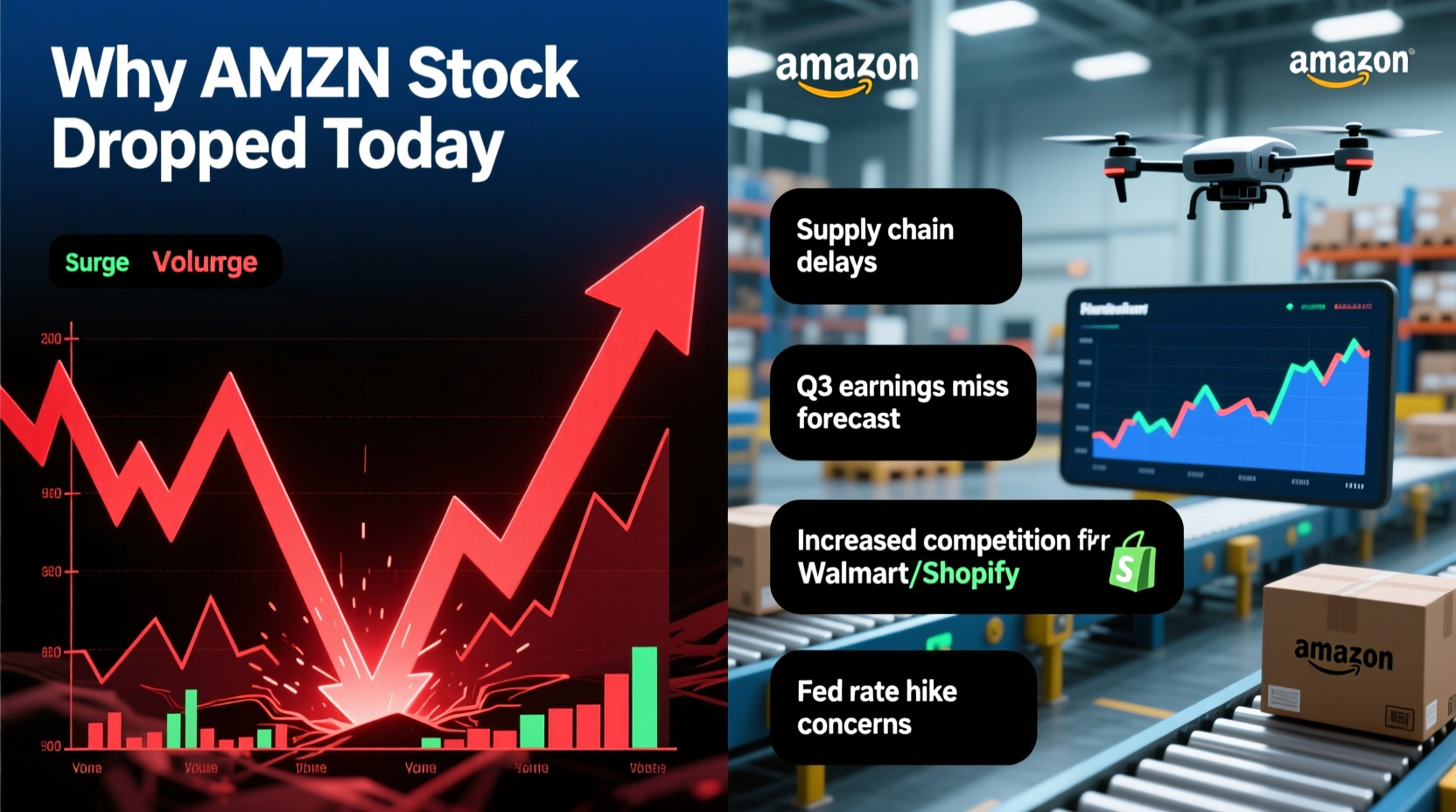
One of the most immediate triggers for Amazon's stock decline was its latest quarterly earnings report, which fell short of Wall Street expectations. Although the company reported solid revenue growth, key metrics such as operating income and profit margins underperformed. Investors had anticipated stronger results from Amazon Web Services (AWS), the company’s high-margin cloud computing division, but growth there slowed to 11% year-over-year—down from 17% in the previous quarter.
The retail segment, while showing resilience through increased advertising revenue and marketplace sales, faced margin pressure due to rising fulfillment costs and inflationary headwinds. Analysts noted that Amazon’s North American operations saw operating income shrink compared to the prior year, signaling tighter profitability despite higher sales volume.
Macroeconomic Pressures and Consumer Spending Trends
Beyond internal performance, broader economic conditions are weighing on Amazon’s valuation. Persistent inflation, elevated interest rates, and cautious consumer spending have created a challenging environment for e-commerce. As households tighten budgets, discretionary online purchases—particularly on big-ticket items—are declining. This trend directly impacts Amazon’s core retail business, where demand elasticity plays a significant role.
Recent data from the U.S. Commerce Department shows that online retail sales growth has plateaued, growing just 2.3% year-over-year—the slowest pace in over a decade. With consumers shifting spending toward services like travel and dining, digital retail platforms face increasing competition for wallet share.
“Amazon is no longer insulated from macro swings. When consumers cut back, Amazon feels it first because much of its catalog is non-essential.” — Sarah Lin, Senior Equity Analyst at Beacon Capital Research
Cloud Competition Intensifies
AWS has long been Amazon’s profit engine, subsidizing investments in logistics, AI, and new ventures. However, increasing competition from Microsoft Azure and Google Cloud is eroding AWS’s dominance. Enterprises are adopting multi-cloud strategies, reducing reliance on any single provider, while pricing pressures have limited revenue upside.
In addition, large clients—including government agencies and tech firms—are renegotiating contracts for better terms, further compressing margins. Though AWS still holds a 32% share of the global cloud infrastructure market, its growth rate now trails the overall market average, raising concerns about future scalability.
| Cloud Provider | Market Share (Q2 2024) | YoY Revenue Growth | Operating Margin |
|---|---|---|---|
| Amazon Web Services (AWS) | 32% | 11% | 28% |
| Microsoft Azure | 23% | 20% | 42% |
| Google Cloud | 11% | 25% | 8% |
The table highlights a critical challenge: while AWS remains the largest player, rivals are growing faster and, in Microsoft’s case, achieving superior profitability. This dynamic has led some investors to question whether AWS can continue fueling Amazon’s expansion at previous rates.
Regulatory and Legal Headwinds
Amazon is also grappling with mounting regulatory scrutiny across multiple jurisdictions. The Federal Trade Commission (FTC), alongside several states, filed a major antitrust lawsuit alleging Amazon engaged in anti-competitive practices by inflating prices and locking in third-party sellers. If successful, the case could force structural changes to Amazon’s marketplace model, including fee structures and search algorithms.
Additionally, the European Union continues to enforce strict Digital Markets Act (DMA) requirements, compelling Amazon to open its platform to rival services and alter default settings. These regulations increase operational complexity and may reduce monetization opportunities in key international markets.
Legal uncertainty tends to depress investor sentiment, particularly when potential outcomes include forced divestitures or profit-limiting mandates. Though Amazon denies wrongdoing and vows to fight the claims, the prolonged legal battle adds risk to the investment thesis.
Investor Sentiment and Market Repricing
Stock prices reflect expectations as much as fundamentals. Over the past year, Amazon enjoyed a strong rally fueled by optimism around AI integration, cost discipline, and improving logistics efficiency. However, today’s correction suggests that investors are recalibrating their outlook.
Several major institutions have downgraded Amazon’s stock in recent weeks, citing stretched valuations relative to near-term earnings potential. After trading at over 70x forward earnings earlier this year, AMZN now trades closer to 55x—a more realistic multiple given slower growth projections.
This repricing aligns with a broader market shift away from high-multiple tech stocks toward value-oriented assets, especially as bond yields remain elevated. In this environment, companies must demonstrate consistent cash flow generation and clear paths to sustained profitability—benchmarks Amazon is still working to meet post-pandemic expansion.
Real Example: How One Investor Responded
Jamal Carter, a portfolio manager at Horizon Wealth Advisors, held a significant position in AMZN based on long-term belief in AWS and logistics innovation. After the latest earnings miss, he trimmed his stake by 30%, reallocating part of the proceeds into utilities and healthcare stocks.
“We didn’t abandon Amazon,” Carter explained. “But we needed to rebalance after realizing that near-term headwinds—especially in cloud and regulation—are more persistent than we thought. It’s not a sell signal; it’s a pause to reassess assumptions.”
This scenario reflects a common strategy among institutional investors: maintaining conviction in a company’s long-term vision while adjusting exposure in response to changing risk-reward dynamics.
Actionable Checklist for AMZN Investors
- Review the latest earnings call transcript for management commentary on AWS and retail margins
- Monitor upcoming Fed policy decisions and inflation reports that affect consumer spending
- Track regulatory developments, especially FTC litigation timelines and EU compliance rulings
- Compare AMZN’s P/E ratio and growth forecasts against peers like Microsoft and Alphabet
- Reassess portfolio allocation to ensure tech exposure aligns with your risk tolerance
Frequently Asked Questions
Is Amazon still a good long-term investment?
Many analysts believe Amazon retains strong long-term potential due to its dominant e-commerce platform, leadership in cloud computing, and ongoing investments in AI and logistics automation. However, near-term challenges mean returns may be more volatile and less predictable than in previous years.
Could Amazon stock go lower?
Possibility exists for further downside if macroeconomic conditions worsen, AWS growth stagnates, or adverse regulatory rulings emerge. Technical analysis suggests support around $135 per share, but unforeseen events could push prices lower. Conversely, strategic initiatives like advertising expansion and AI-driven efficiency gains could spark recovery.
What should I do if I own AMZN stock now?
Assess your investment goals and risk profile. If you’re invested for the long term and believe in Amazon’s ecosystem, holding through volatility may be appropriate. For shorter-term investors, consider setting stop-loss orders or hedging positions. Consulting a financial advisor can help tailor decisions to your personal situation.
Conclusion: Navigating Volatility with Clarity
Amazon’s stock decline today isn’t the result of a single event but a convergence of earnings pressure, competitive threats, regulatory risks, and shifting investor priorities. While the company continues to innovate and generate massive revenue, the market is demanding clearer evidence of sustainable profit growth and reduced exposure to external shocks.
For investors, this moment offers an opportunity to reevaluate assumptions, strengthen understanding of Amazon’s evolving business model, and make informed decisions based on both data and long-term vision. Markets reward patience—but only when paired with vigilance.




 浙公网安备
33010002000092号
浙公网安备
33010002000092号 浙B2-20120091-4
Comments
No comments yet. Why don't you start the discussion?