
Walk into any café, subway, or office, and you’ll see a mix of smartphones—some sleek iPhones, others various shapes and brands running Android. Despite the cultural cachet and widespread admiration for Apple’s iPhone, Android powers over 70% of smartphones globally. This dominance persists even as many consumers express a preference for the iPhone’s design, ecosystem, and user experience. So why does Android continue to lead in market share when public sentiment often leans toward Apple?
The answer isn’t rooted in brand loyalty alone. It lies in deeper structural, economic, and technological forces that shape how billions access mobile technology. While iPhones are beloved by enthusiasts and professionals alike, Android’s strength comes from its flexibility, accessibility, and strategic presence across diverse markets.
Global Market Penetration and Affordability
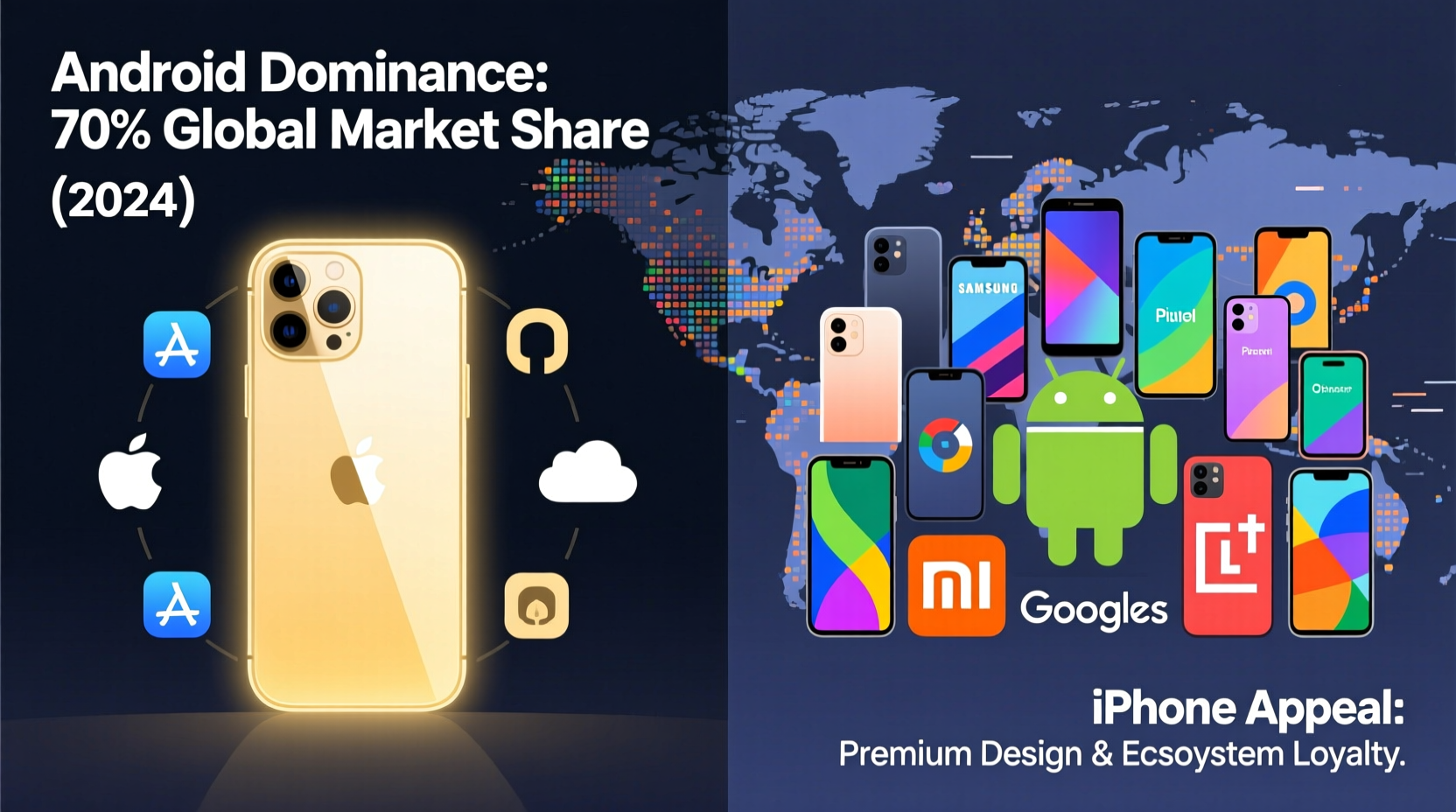
One of the most decisive factors behind Android’s dominance is price. iPhones typically start at premium price points—often $699 and up—with flagship models exceeding $1,000. In contrast, Android devices span every conceivable price tier, from sub-$50 handsets to high-end Samsung Galaxy or Google Pixel flagships.
This range allows manufacturers like Samsung, Xiaomi, Realme, and Motorola to serve emerging economies where disposable income is limited but demand for connectivity is high. In countries like India, Indonesia, Nigeria, and Brazil, affordable Android phones enable first-time internet users to come online, making digital banking, education, and communication accessible.
Apple’s strategy focuses on maximizing profit per device rather than volume. Android OEMs (original equipment manufacturers), supported by Google’s open-source operating system, compete aggressively on features and cost, driving adoption at scale.
Ecosystem Diversity and Hardware Flexibility
Android thrives because it isn’t tied to a single manufacturer. Unlike iOS, which runs exclusively on Apple hardware, Android operates across hundreds of devices—from foldable phones to ruggedized field units and entry-level handsets. This diversity fuels innovation and caters to niche needs.
Users can choose devices based on screen size, battery capacity, camera configuration, expandable storage, and even software customization. Want a phone with a stylus? Samsung offers the Note and S Ultra series. Prefer a compact device? Companies like Asus and Sony cater to that segment. Need a phone with a 10,000mAh battery for off-grid work? Brands like Ulefone and Oukitel deliver.
Moreover, Android allows deeper system-level customization. Power users can sideload apps, modify launchers, automate tasks via tools like Tasker, and even install custom ROMs. This openness appeals to developers, tinkerers, and those who want full control over their device—an option unavailable on iPhones due to Apple’s closed ecosystem.
“Android’s real power isn’t just in market share—it’s in adaptability. It scales from basic phones in rural Africa to AI-powered flagships in Seoul.” — Dr. Lena Patel, Mobile Technology Analyst at Giga Insights
Strategic Carrier and Retail Partnerships
In regions like North America and Europe, carriers play a major role in smartphone distribution. Android’s partnership model allows carriers to bundle devices with service plans, offer trade-ins, and promote specific models. Because multiple Android brands compete, carriers have more leverage to negotiate pricing and marketing support.
For example, a carrier might feature a Samsung Galaxy A-series phone as a “free with plan” option, knowing Samsung will subsidize part of the cost. Apple rarely participates in such aggressive promotions, maintaining tighter control over pricing and branding. While this protects Apple’s premium image, it limits its reach among cost-sensitive customers.
Retailers also benefit from Android’s variety. Stores can stock dozens of models across brands, giving consumers options at every price point. This creates a self-reinforcing cycle: more availability leads to higher visibility, which drives sales and further investment from manufacturers.
Market Share vs. Mindshare: The Love-Hate Reality
It’s true that many people “love” iPhones. Surveys consistently show high satisfaction rates among iPhone users. Apple excels in design, long-term software support, seamless integration across devices (Mac, iPad, Apple Watch), and privacy-focused features.
Yet love doesn’t always translate into ownership. Cultural admiration for Apple coexists with practical limitations: high repair costs, lack of expandable storage, limited accessory compatibility, and regional unavailability of certain models. Meanwhile, Android’s ubiquity normalizes its presence—even among fans of Apple.
Consider this: someone may praise the iPhone’s camera quality but opt for a Pixel or Samsung device due to better low-light performance or carrier deals. Or they may admire iOS security but need an SD card slot for fieldwork—something only Android provides.
Android vs. iPhone: Key Differences at a Glance
| Feature | Android | iPhone |
|---|---|---|
| Price Range | $30 – $2,000+ | $499 – $1,599 |
| Manufacturers | 100+ brands | Apple only |
| Customization | High (launchers, sideloading) | Low (restricted by design) |
| Global Market Share (2024) | ~71% | ~28% |
| Average OS Support | 3–5 years (varies by brand) | 6–7 years |
Mini Case Study: Tech Adoption in Rural India
In the village of Rajnagar, Bihar, a local teacher named Arjun purchased his first smartphone in 2023—a ₹8,999 ($110) Xiaomi Redmi Note model. He uses it to access government teaching portals, communicate with parents via WhatsApp, and stream educational videos on YouTube.
“An iPhone would be nice,” he says, “but I couldn’t justify spending six months’ salary on one. This phone does everything I need.”
Arjun’s story mirrors millions across South Asia, Africa, and Southeast Asia. Android isn’t just dominant—it’s transformative. It enables digital inclusion where iPhones remain aspirational but impractical. For Google and its partners, these users represent not just market share, but social impact.
Step-by-Step: How Android Maintains Its Lead
- Licensing Strategy: Google offers Android as open-source (AOSP), allowing manufacturers to use it freely while offering proprietary services (Google Play, Maps) as optional add-ons.
- Diverse Product Line: OEMs release multiple models annually, targeting different segments—from students to enterprise users.
- Localization: Android supports over 100 languages and adapts to regional needs, such as dual SIM support, FM radio, and lightweight apps for low-bandwidth areas.
- Partnership Ecosystem: Collaborations with telecom providers, governments, and NGOs help distribute devices widely.
- Innovation Rollout: Features tested on Pixel phones often trickle down to budget models, accelerating tech democratization.
FAQ
Does Android sell more phones than iPhone?
Yes. In 2024, Android holds approximately 71% of the global smartphone market, compared to iPhone’s 28%. This gap is driven largely by sales in Asia, Africa, and Latin America.
If people prefer iPhones, why don’t they buy them?
Preference doesn’t override financial reality. Many admire the iPhone but choose Android due to lower prices, carrier incentives, or specific features like expandable storage or longer battery life.
Is Android less secure than iOS?
Historically, iOS has had stronger default security due to tight hardware-software integration. However, modern Android (especially on Pixel and Samsung devices) includes robust encryption, regular updates, and advanced threat detection. Security now depends more on user behavior and update habits than platform alone.
Conclusion
Android’s dominance isn’t accidental—it’s engineered through accessibility, adaptability, and strategic scalability. While iPhones capture hearts with elegance and polish, Android wins minds and markets by meeting people where they are: financially, geographically, and functionally.
The truth is, loving the iPhone doesn’t negate the practical advantages Android offers billions worldwide. From enabling digital literacy in underserved communities to powering cutting-edge AI experiments on flagship devices, Android’s strength lies in its inclusivity.




 浙公网安备
33010002000092号
浙公网安备
33010002000092号 浙B2-20120091-4
Comments
No comments yet. Why don't you start the discussion?