
Scientific progress often hinges on complex decisions that balance innovation with ethics. One of the most debated topics in biomedical science is animal testing. While critics question its morality and relevance, researchers continue to rely on animal models to develop life-saving treatments, ensure product safety, and advance our understanding of biological systems. The reality is that, despite ongoing efforts to find alternatives, animal testing remains a necessary component of modern research. Understanding why it's still used—and how it contributes to human and animal health—requires a closer look at its scientific, regulatory, and ethical dimensions.
The Scientific Foundation of Animal Testing
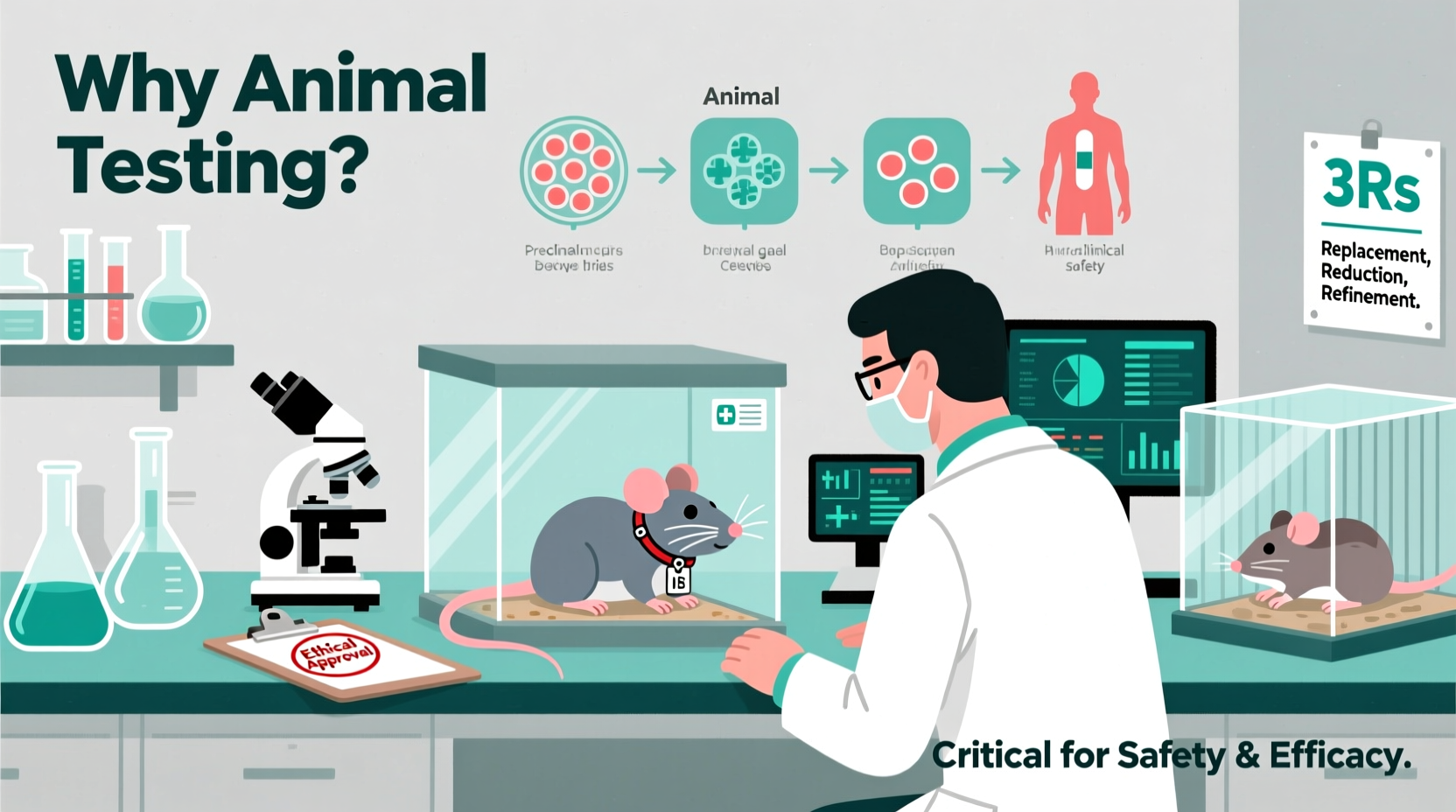
Before any new drug or medical procedure reaches human trials, scientists must understand how it interacts with living systems. Cells in a petri dish or computer simulations can provide preliminary data, but they cannot replicate the complexity of an entire organism. Animals such as mice, rats, rabbits, and non-human primates share significant genetic and physiological similarities with humans, making them valuable models for studying disease progression, immune responses, and organ function.
For example, mice share approximately 95% of their genes with humans. This genetic overlap allows researchers to study conditions like cancer, diabetes, and neurological disorders in controlled environments. By observing how diseases develop and respond to treatment in animals, scientists can identify promising therapies before testing them on people.
“Animal models have been instrumental in nearly every major medical breakthrough of the past century—from vaccines to organ transplants.” — Dr. Linda Birnbaum, Former Director, National Institute of Environmental Health Sciences
Regulatory Requirements and Public Safety
Government agencies such as the U.S. Food and Drug Administration (FDA) and the European Medicines Agency (EMA) require extensive preclinical testing before any new drug can enter human clinical trials. These regulations exist to protect public health and minimize risks. Animal testing provides critical data on toxicity, dosage levels, absorption rates, and potential side effects.
Without this stage, introducing untested compounds into humans would be dangerously unpredictable. For instance, thalidomide—a drug prescribed in the 1950s for morning sickness—caused severe birth defects because it was not adequately tested across species beforehand. Today, multi-species animal testing helps prevent such tragedies by revealing adverse effects early in development.
Medical Breakthroughs Made Possible Through Animal Research
Many of today’s standard treatments originated from studies involving animals. Consider these milestones:
- Polio vaccine: Developed using monkey kidney cells and later tested in mice and primates, leading to near-eradication of the disease.
- Insulin therapy: First isolated from dogs in the 1920s, revolutionizing diabetes care.
- Cancer immunotherapies: Tested in genetically modified mice before successful human application.
- Pacemakers and prosthetics: Refined through surgical trials in large animals to ensure biocompatibility and functionality.
A real-world example involves the development of monoclonal antibodies, now widely used in treating autoimmune diseases and cancers. Early experiments in mice allowed scientists to engineer immune cells capable of targeting specific proteins. This foundational work paved the way for drugs like rituximab and trastuzumab, which have saved countless lives.
Timeline of Key Advances Enabled by Animal Testing
- 1921: Discovery of insulin in dogs by Banting and Best.
- 1954: First successful kidney transplant performed after rejection mechanisms studied in rodents.
- 1980s: HIV/AIDS research accelerated using primate models infected with SIV (simian immunodeficiency virus).
- 2003: Completion of the Human Genome Project, aided by parallel sequencing in laboratory mice.
- 2010s–Present: CRISPR gene editing refined in mice before moving toward human therapeutic trials.
Ethical Oversight and the 3Rs Principle
While animal testing plays a vital role, ethical concerns are taken seriously within the scientific community. Most countries enforce strict guidelines to ensure humane treatment. A cornerstone of responsible research is the “3Rs” principle: Replacement, Reduction, and Refinement.
| R Principle | Definition | Example |
|---|---|---|
| Replacement | Using non-animal methods when possible | Cell cultures, computer modeling, organ-on-a-chip technology |
| Reduction | Minimizing the number of animals used | Improved experimental design and statistical analysis |
| Refinement | Enhancing animal welfare during studies | Pain management, enriched housing, humane endpoints |
Institutional Animal Care and Use Committees (IACUCs) review all proposed animal studies to ensure compliance with ethical standards. Researchers must justify the use of animals, demonstrate that alternatives have been considered, and show plans for minimizing suffering.
Current Challenges and the Future of Alternatives
Despite advances in alternative technologies—such as microfluidic chips, AI-driven simulations, and human tissue cultures—no single method yet fully replicates whole-body interactions. Organs do not operate in isolation; they communicate through hormones, nerves, and immune signals. Until synthetic systems can mimic this integration, animal models remain indispensable.
However, the scientific community actively invests in reducing reliance on animals. The National Institutes of Health (NIH) funds projects aimed at developing human-based models, while organizations like the EPA have pledged to reduce mammalian testing in chemical safety assessments.
Checklist: Evaluating the Necessity of Animal Testing in Research
- ✅ Has every non-animal alternative been explored?
- ✅ Is there a clear scientific objective that benefits human or animal health?
- ✅ Are protocols approved by an independent ethics committee?
- ✅ Will the minimum number of animals be used?
- ✅ Are pain and distress minimized with proper veterinary care?
- ✅ Is data sharing planned to avoid duplication of studies?
Frequently Asked Questions
Isn’t animal testing outdated given today’s technology?
While technology has advanced, no current alternative can fully simulate the interconnected functions of a living organism. Cell cultures and algorithms are useful tools, but they complement rather than replace animal models. Scientists use animals only when absolutely necessary and under strict oversight.
Do animals suffer during experiments?
All regulated research facilities are required to follow welfare guidelines that include anesthesia, pain relief, and humane endpoints. Severe suffering is neither permitted nor scientifically beneficial—stressed animals yield unreliable results. Continuous refinement of procedures aims to further reduce discomfort.
How do we know results from animals apply to humans?
No model is perfect, but evolutionary similarities make animals predictive enough to guide safe human trials. Results are cross-validated using multiple species and stages of testing. Discrepancies between animal and human outcomes help refine future research designs.
Conclusion: Balancing Progress and Responsibility
Animal testing remains a crucial bridge between theoretical science and real-world medicine. It has contributed to vaccines, surgical techniques, chronic disease management, and emergency treatments that define modern healthcare. Abandoning it prematurely could stall progress and endanger public health.
At the same time, the scientific community must continue striving for better alternatives, greater transparency, and stronger ethical standards. The goal is not to eliminate caution or compassion, but to advance both knowledge and humanity.




 浙公网安备
33010002000092号
浙公网安备
33010002000092号 浙B2-20120091-4
Comments
No comments yet. Why don't you start the discussion?