
Living with borderline personality disorder (BPD)—either personally or alongside someone who has it—can feel like navigating a storm without shelter. The emotional turbulence, sudden shifts in mood, and deep-seated fears of abandonment create a daily reality that is exhausting, confusing, and often isolating. While BPD affects approximately 1.4% of adults, its impact extends far beyond the individual, touching partners, family members, friends, and caregivers. To truly understand why BPD is so hard to live with, it’s essential to look beneath the surface behaviors and recognize the internal struggles driving them.
The Emotional Rollercoaster: Intensity Beyond Normal Mood Swings
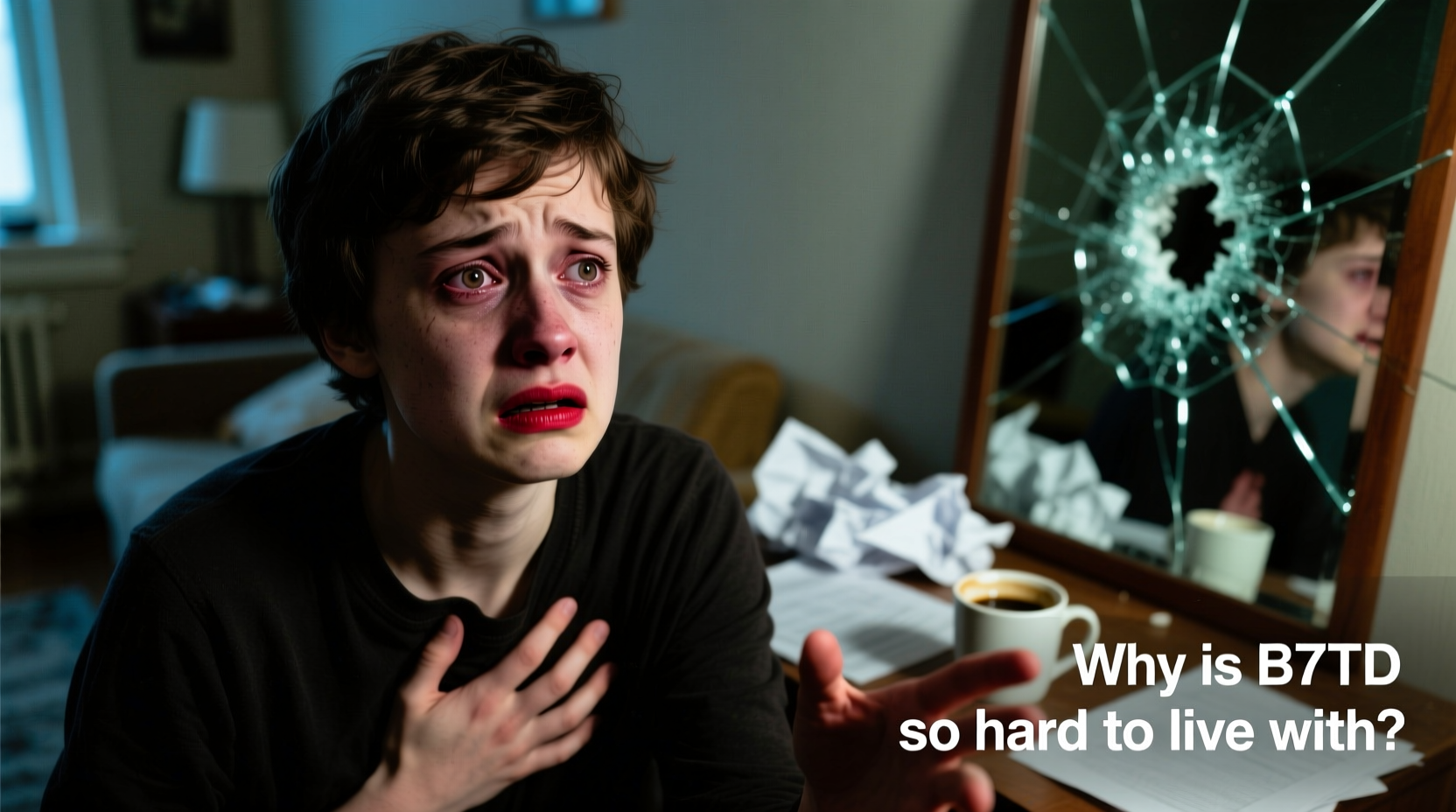
One of the defining features of BPD is emotional dysregulation—the inability to manage or modulate intense emotions effectively. Unlike typical mood fluctuations, the emotional experiences of someone with BPD can shift rapidly from euphoria to despair, often triggered by seemingly minor events. A neutral comment might be interpreted as rejection, sparking an overwhelming reaction.
This hypersensitivity stems from a neurological predisposition combined with environmental factors, often including childhood trauma or inconsistent caregiving. As a result, the brain's threat-detection system is on high alert, interpreting interpersonal cues as dangerous even when they are not.
Fear of Abandonment: The Core Wound
At the heart of BPD lies an intense, pervasive fear of abandonment. This isn’t just about being left by a partner—it can be triggered by a missed text, a change in plans, or perceived emotional distance. For individuals with BPD, these moments activate primal survival instincts, leading to desperate attempts to maintain connection, even if those efforts appear extreme or counterproductive.
Behaviors such as clinging, pleading, or suddenly withdrawing may seem contradictory, but they stem from the same core fear: “If I’m abandoned, I won’t survive.” These reactions aren't manipulative by intent; they are maladaptive coping mechanisms developed in response to early relational instability.
“People with BPD aren’t trying to push others away—they’re terrified of being pushed away first.” — Dr. Marsha Linehan, Developer of Dialectical Behavior Therapy (DBT)
Unstable Relationships: The Push-Pull Cycle
Relationships involving someone with BPD often follow a pattern known as “idealization and devaluation.” In the idealization phase, the other person is seen as perfect, all-loving, and essential to happiness. But when inevitable flaws emerge—or when the fear of abandonment is triggered—devaluation sets in. The same person is now viewed as uncaring, selfish, or rejecting.
This black-and-white thinking, also called splitting, makes stable, balanced relationships extremely difficult. The resulting cycle of intense closeness followed by sudden conflict or withdrawal leaves both parties emotionally drained.
| Phase | Characteristics | Impact on Relationship |
|---|---|---|
| Idealization | Intense admiration, dependency, love-bombing | Feels deeply fulfilling but unsustainable |
| Devaluation | Criticism, anger, emotional withdrawal | Leads to confusion and hurt |
| Rejection/Fear | Panic over separation, desperate attempts to reconnect | Creates instability and exhaustion |
Identity Disturbance and Chronic Emptiness
Many individuals with BPD struggle with a fragmented or unstable sense of self. They may frequently change goals, values, careers, or even personalities depending on who they’re with. This lack of a consistent identity contributes to chronic feelings of emptiness—a hollow, persistent ache that nothing seems to fill.
This inner void often drives impulsive behaviors: reckless spending, substance use, binge eating, or risky sexual encounters. These actions provide temporary relief but ultimately deepen shame and reinforce the belief that one is fundamentally flawed.
For loved ones, this inconsistency can be disorienting. One day the person seems confident and driven; the next, lost and directionless. Supporting someone through this requires patience and the ability to hold space for their uncertainty without trying to “fix” it.
Self-Harm and Suicidal Behavior: Signs of Deep Distress
Approximately 70–80% of people diagnosed with BPD engage in self-harming behaviors, and suicide rates are significantly higher than in the general population. These actions are not attention-seeking but rather expressions of unbearable emotional pain. Cutting, burning, or suicidal gestures often serve as a way to regain a sense of control or to externalize internal suffering.
Loved ones may feel helpless or frightened when confronted with self-harm. However, reacting with panic or judgment can worsen the person’s isolation. Instead, compassionate responses—such as calmly expressing concern and encouraging professional help—are more effective.
A Real-Life Scenario: Living With BPD in a Romantic Relationship
Sarah and James had been together for two years. At first, Sarah felt cherished—James remembered every detail she shared, planned thoughtful dates, and declared her his soulmate within weeks. But after six months, small things began to trigger intense reactions. When James worked late without texting, Sarah accused him of losing interest. She’d alternate between tearful apologies and cold silence.
Over time, James felt walking on eggshells. He loved Sarah but felt emotionally drained. Arguments escalated quickly, often ending with Sarah threatening to leave or harm herself. After a crisis incident, they sought couples counseling. Through therapy, James learned that Sarah’s reactions stemmed from childhood neglect and a deep fear of being unlovable. He began using DBT-informed communication strategies, while Sarah started individual therapy focused on emotional regulation.
The relationship remains challenging, but with education, boundaries, and ongoing support, they’ve built a more stable foundation. Their story reflects a common truth: recovery is possible, but it requires commitment from both sides.
What Helps: Treatment and Support Strategies
BPD was once considered untreatable, but modern therapies have transformed outcomes. The most effective approach is Dialectical Behavior Therapy (DBT), which teaches skills in four key areas:
- Mindfulness – staying present and aware
- Emotion regulation – managing intense feelings
- Distress tolerance – coping with crises without worsening them
- Interpersonal effectiveness – communicating needs assertively and respectfully
Other evidence-based treatments include Mentalization-Based Therapy (MBT) and Schema-Focused Therapy. Medication may help with co-occurring conditions like depression or anxiety but does not treat BPD directly.
Checklist: Supporting Someone with BPD
- Learn about BPD from reliable sources
- Practice non-judgmental listening
- Set and maintain healthy boundaries
- Avoid engaging during emotional crises
- Encourage professional treatment
- Take care of your own mental health
- Use “I” statements instead of blame (e.g., “I feel overwhelmed when…”)
- Stay consistent and reliable in your presence
Frequently Asked Questions
Can people with BPD have healthy relationships?
Yes, with proper treatment and support, individuals with BPD can build and maintain healthy, fulfilling relationships. Stability improves significantly with therapy, especially DBT, and when both partners commit to communication and boundary-setting.
Is BPD caused by bad parenting?
No single cause explains BPD. It arises from a combination of genetic vulnerability, neurobiological factors, and environmental influences—particularly early trauma, invalidation, or inconsistent caregiving. Blaming parents oversimplifies a complex condition.
Do people grow out of BPD?
Many do. Research shows that symptoms often decrease with age, especially when individuals receive consistent treatment. Long-term studies indicate that up to 88% of people with BPD experience remission within 10 years.
Conclusion: Compassion, Understanding, and Hope
Living with BPD is undeniably hard—not because of character flaws, but because of profound emotional pain and underdeveloped coping tools. The behaviors that frustrate or frighten others are often cries for connection masked as conflict. Understanding this transforms judgment into empathy.
Recovery is not linear, and setbacks will occur. But with access to effective therapy, supportive relationships, and self-compassion, people with BPD can lead meaningful lives. For loved ones, education and self-care are not optional—they are essential.




 浙公网安备
33010002000092号
浙公网安备
33010002000092号 浙B2-20120091-4
Comments
No comments yet. Why don't you start the discussion?