
In recent years, a quiet revolution has taken place in digital culture — one that trades fast fashion for flannel, urban minimalism for wildflower meadows, and influencer-driven trends for hand-stitched aprons. Cottagecore, once a niche aesthetic rooted in romanticized rural life, has reemerged as a dominant visual language on TikTok. What began as a nostalgic daydream has evolved into a full-fledged fashion movement embraced by Gen Z and millennials alike. But beyond its whimsical surface, cottagecore’s resurgence speaks to deeper cultural shifts: a yearning for simplicity, sustainability, and emotional authenticity. As this pastoral trend gains momentum, many are asking not just why it's back, but how they can incorporate it into their wardrobes without looking costumed. The answer lies in subtle styling — integrating cottagecore elements with modern minimalism to create wearable, grounded elegance.
The Cultural Roots of Cottagecore’s Resurgence
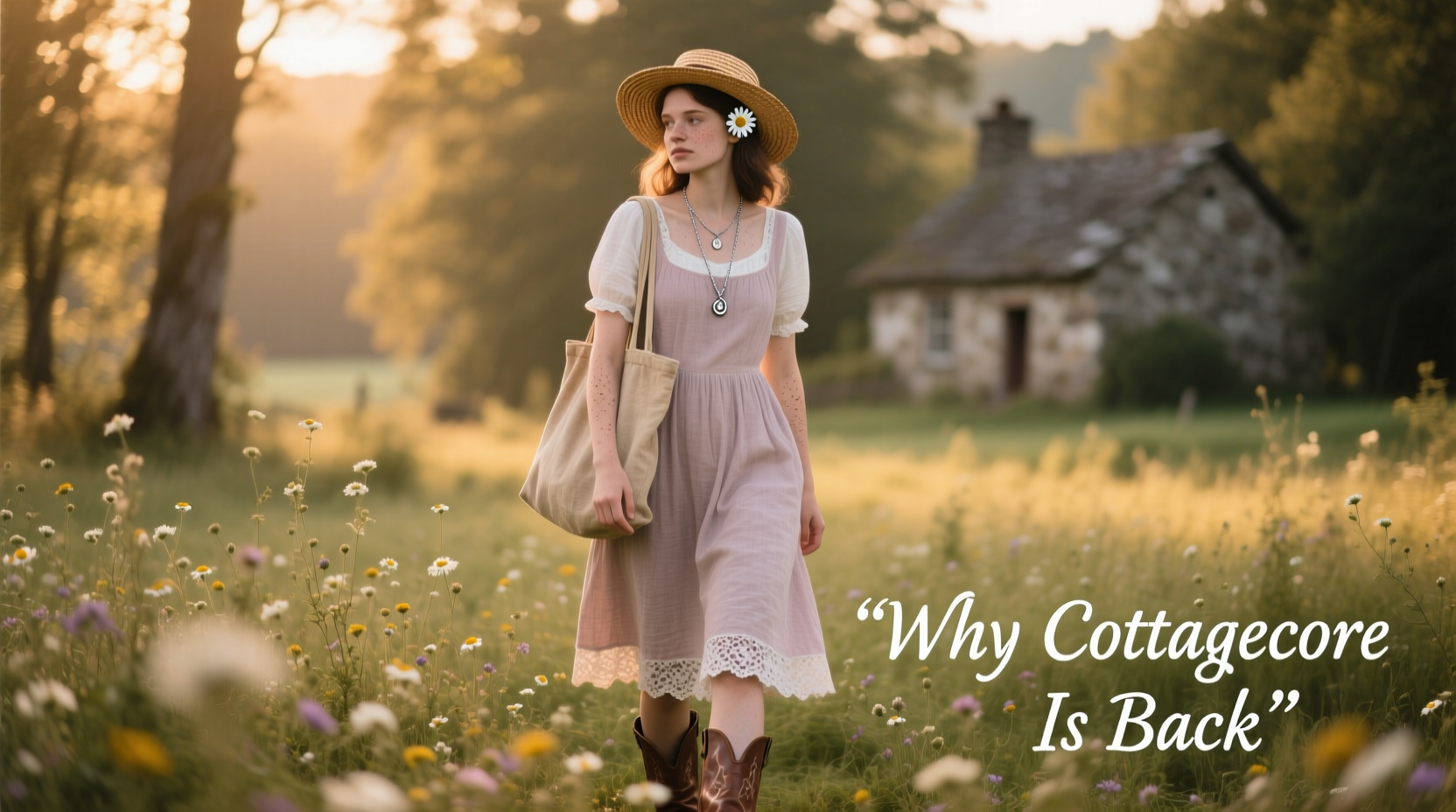
Cottagecore isn’t new. Its origins trace back to 18th-century Romanticism, when artists and writers like William Wordsworth and John Constable idealized rural life as an antidote to industrialization. In the 20th century, movements like Arts and Crafts echoed similar values, emphasizing handmade goods and natural materials. Today, cottagecore has found its most fertile ground on TikTok, where short videos of baking sourdough, foraging herbs, or walking through dew-covered fields amass millions of views.
But its popularity isn’t merely aesthetic. Psychologists point to “digital fatigue” as a key driver. After years of hyperconnectivity, curated perfection, and relentless productivity culture, users are drawn to content that feels slower, more intentional, and emotionally restorative. Cottagecore offers a visual sanctuary — soft light, linen textures, floral embroidery — all signaling safety, warmth, and retreat.
“Cottagecore isn’t about escaping reality — it’s about reclaiming agency over how we live and what we value.” — Dr. Lila Nguyen, Cultural Anthropologist, University of Edinburgh
On TikTok, hashtags like #cottagecore (over 6 billion views) and #cottagecoreaesthetic dominate search results. Creators blend fashion with lifestyle, showing how wearing a pinafore dress or lace-trimmed blouse can be part of a broader philosophy: mindful consumption, seasonal eating, slow living. Fashion becomes narrative, not just decoration.
Why TikTok Amplified the Trend
TikTok’s algorithm rewards authenticity and niche communities. Unlike Instagram, where polished grids often prioritize aesthetics over meaning, TikTok thrives on raw, relatable moments. A video of someone stitching a button onto a vintage dress while sipping chamomile tea resonates because it feels real — imperfect, tactile, human.
This platform also enables micro-trends within larger aesthetics. Cottagecore on TikTok isn’t monolithic; it splinters into substyles like “dark cottagecore,” “cottagegoblin,” and “farmcore.” Each adapts the core principles — nature, craftsmanship, nostalgia — to different moods and identities. Fashion evolves accordingly: moss-green corduroys, mushroom-print blouses, or layered cotton slips become identifiers of belonging.
Moreover, TikTok democratizes fashion. Users don’t need designer labels to participate. Thrifted finds, DIY alterations, and family heirlooms are celebrated. This accessibility makes cottagecore especially appealing during economic uncertainty, where sustainable, low-cost styling offers both ethical and financial benefits.
How to Style Cottagecore Subtly (Without Looking Themed)
One common critique of cottagecore fashion is that it can appear costume-like — too much lace, too many ruffles, too reminiscent of a Jane Austen adaptation. The key to wearing it authentically in modern life is subtlety. Instead of full head-to-toe looks, integrate signature elements in understated ways.
Start with fabric choices. Natural fibers like cotton, linen, wool, and hemp are central to the aesthetic. They breathe, drape softly, and age gracefully. A simple linen shirt in oatmeal beige instantly evokes cottagecore without screaming it. Pair it with tailored trousers instead of a prairie skirt to balance romance with structure.
Color palettes matter. Think earth tones: sage green, dusty rose, warm beige, sky blue. Avoid neon brights or high-gloss synthetics. Even a navy sweater with cable knit detailing can nod to rustic craftsmanship when styled right.
Key Elements to Incorporate Quietly
- Puff sleeves – Choose tops with slight volume at the shoulder rather than dramatic leg-of-mutton styles.
- Smocking or tucking – These details add texture without overwhelming; look for them on collars or cuffs.
- Vintage-inspired prints – Small florals, gingham, or herb motifs on scarves or blouses offer a whisper of theme.
- Apron-style overlays – Worn over a neutral dress, these add depth without theatricality.
- Handmade touches – Crochet trims, visible stitching, or patchwork seams signal artisanal care.
“Subtle cottagecore is less about what you wear and more about how it makes you feel — grounded, cared for, connected.” — Maya Tran, Sustainable Stylist & Content Creator
Do’s and Don’ts of Subtle Cottagecore Styling
| Do | Don’t |
|---|---|
| Pair a flowy blouse with straight-leg jeans for balance | Wear multiple ruffled pieces together (e.g., ruffled top + ruffled skirt) |
| Use a woven straw bag as a spring/summer accent | Over-accessorize with themed jewelry (e.g., tiny butter churns) |
| Choose earth-toned footwear like leather loafers or ankle boots | Wear knee-high lace socks with Mary Janes daily (save for special occasions) |
| Add a linen scarf tied loosely around the neck | Layer too many textures (e.g., crochet, lace, velvet, and denim at once) |
| Opt for secondhand or sustainably made pieces | Buy fast-fashion versions of cottagecore items that lack durability |
A Real-Life Example: Emma’s Office-to-Oversleep Weekend
Emma, a 28-year-old graphic designer in Portland, wanted to embrace cottagecore without alienating her coworkers or feeling out of place in the city. Her solution? A capsule wardrobe built around subtle cues.
During the week, she wears a cream-colored smocked blouse under a charcoal gray blazer. The puff sleeves peek out slightly, adding softness without compromising professionalism. Her skirt is a structured A-line in deep olive, made from organic cotton. On weekends, she swaps the blazer for a hand-knit cardigan in oatmeal, pairs it with wide-leg linen pants, and adds a crossbody bag made from upcycled feed sacks.
“I’m not trying to live in 1820,” she says. “I just want my clothes to reflect calm, care, and connection to nature. The puff sleeve is my little rebellion against corporate minimalism.”
This approach — embedding cottagecore DNA into practical pieces — allows her to honor the aesthetic while staying functional. She sources most items from local thrift stores or small eco-brands, reinforcing the movement’s anti-consumerist roots.
Step-by-Step Guide to Building a Subtle Cottagecore Wardrobe
- Assess your current wardrobe – Identify neutral basics (linen shirts, cotton dresses, wool sweaters) that already align with cottagecore values.
- Add one statement piece per season – For example, a puff-sleeve blouse in spring, a corduroy pinafore in fall.
- Focus on texture – Replace synthetic fabrics with natural ones. Swap polyester blouses for cotton voile or silk blends.
- Accessorize mindfully – Choose a wooden hair clip, a linen tote, or leather ankle boots instead of flashy logos.
- Embrace slow shopping – Wait for secondhand finds or support independent makers who prioritize craftsmanship.
- Style for context – Layer cottagecore elements into outfits based on occasion. Save the full slip dress + lace socks combo for picnics, not presentations.
Frequently Asked Questions
Is cottagecore only for women?
No. While early representations leaned feminine, cottagecore has expanded to include gender-neutral and masculine expressions. Think flannel shirts, chore coats, work boots, and canvas trousers — all rooted in rural utility. Men and non-binary individuals are increasingly redefining the aesthetic with practical, nature-connected clothing.
Can I wear cottagecore in the city?
Absolutely. The essence of cottagecore isn’t location — it’s intention. You don’t need a garden to appreciate linen or a farmhouse to love handmade ceramics. Urban cottagecore embraces balcony herb gardens, farmers’ markets, and quiet mornings with tea. Stylistically, it means choosing breathable fabrics, muted colors, and pieces that prioritize comfort and care.
Isn’t this just another trend that will fade?
While viral moments come and go, cottagecore taps into enduring human needs: belonging, safety, and meaning. Unlike fleeting micro-trends (e.g., logo-heavy streetwear), cottagecore aligns with growing movements like degrowth, climate awareness, and mental wellness. Its staying power lies in its values, not just its visuals.
Final Thoughts: Embracing Cottagecore with Intention
The return of cottagecore on TikTok is more than a fashion cycle — it’s a cultural reset. In a world that often feels chaotic and disconnected, people are reaching for clothing that feels nurturing, honest, and rooted. But adopting this aesthetic doesn’t require a wardrobe overhaul or a move to the countryside. It begins with small choices: choosing a cotton dress over polyester, repairing a seam instead of discarding, wearing a flower in your hair just because it made you smile.
Styling cottagecore subtly allows it to integrate into real life, not dominate it. It becomes less about appearance and more about alignment — with nature, with history, with self. When worn with mindfulness, even a single linen handkerchief can carry the weight of a philosophy.




 浙公网安备
33010002000092号
浙公网安备
33010002000092号 浙B2-20120091-4
Comments
No comments yet. Why don't you start the discussion?