
Perched dramatically in northeastern Wyoming, Devil’s Tower rises 1,267 feet above the surrounding landscape like a natural monument carved by time and tectonic forces. Its striking columnar basalt formations and sacred presence have drawn visitors, climbers, and spiritual seekers for generations. But one question persists: why is it called Devil’s Tower? The name evokes mystery and even controversy, especially given that many Indigenous communities consider the site deeply sacred. The truth behind the name is not rooted in ancient myth or demonic lore, but in a mistranslation—and a legacy of cultural misunderstanding.
The Geological Marvel Behind the Name
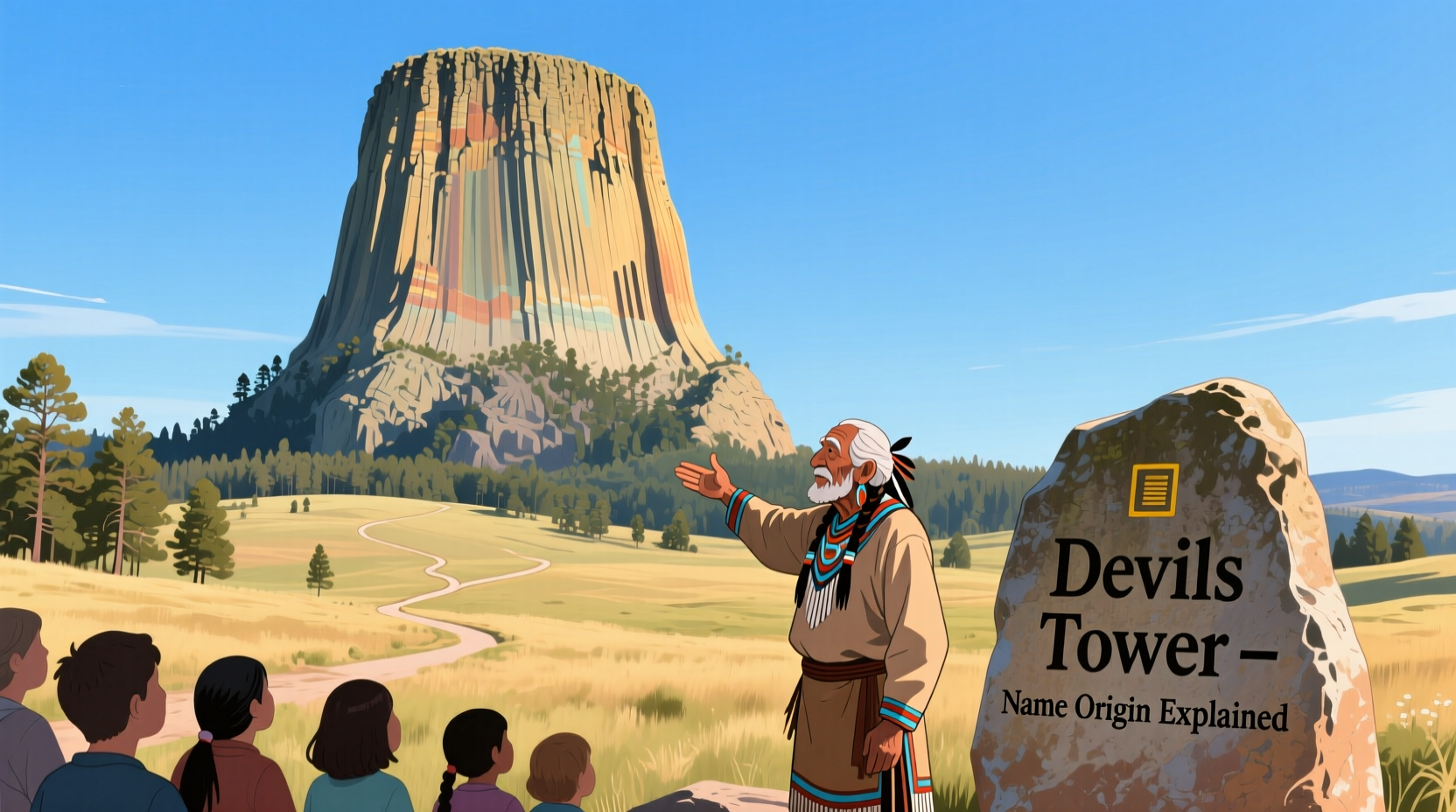
Before delving into the etymology, it helps to understand what Devil’s Tower actually is. Geologically, it is an igneous intrusion—specifically a laccolith or possibly a volcanic neck—formed approximately 50 million years ago when molten rock pushed upward through sedimentary layers without reaching the surface. Over millions of years, erosion stripped away the softer rock around it, leaving the hard, hexagonal columns of phonolite porphyry exposed.
This dramatic formation has long been a landmark. Long before European settlers arrived, numerous Native American tribes—including the Lakota, Cheyenne, Kiowa, Crow, and Shoshone—revered the site under various names such as *Mato Tipila* (Lakota for “Bear Lodge”), *Daxpitcheeaasáao* (Crow for “Home of the Bears”), and *Tȟuŋkášila Šákpe* (“Tree Rock” or “Six Grandfathers”). These names reflect rich oral traditions involving bears, spirits, and creation stories.
The Mistranslation That Stuck
The name “Devil’s Tower” did not originate from Indigenous languages or beliefs. Instead, it came from a misinterpretation during a U.S. government survey in 1875. Colonel Richard Irving Dodge led an expedition to map the region, accompanied by guide William \"Billy\" Tallent. According to Dodge’s field notes, the local name used by interpreters was something akin to “Bad God’s Tower.”
The interpreter may have been attempting to translate a phrase like *Mato Sápe* (“Bear Lodge”) or another spiritually powerful term. However, due to linguistic gaps and cultural bias, “Bad God” was recorded—and quickly morphed into “Devil’s Tower” in official reports. Dodge himself never claimed the name was accurate; he simply documented what he heard. Yet once printed on maps and adopted by railroads promoting tourism, the name gained permanence.
“The name ‘Devil’s Tower’ is a corruption, a mistake born of poor translation and cultural disconnect. To us, it has always been Bear Lodge—a place of prayer, vision, and connection.” — Dr. Beatrice Yellow Robe, Lakota educator and cultural historian
A Timeline of Naming and Recognition
The evolution of the site’s naming reflects broader patterns in American history—from exploration to appropriation, then gradual recognition of Indigenous sovereignty.
- Pre-1800s: Tribes across the Plains revere the formation under various names tied to cosmology and tradition.
- 1875: Colonel Dodge’s expedition records “Devil’s Tower,” based on a flawed translation.
- 1906: President Theodore Roosevelt designates Devil’s Tower as the first U.S. National Monument under the Antiquities Act.
- 1950s–Present: Tribal coalitions begin advocating for dual naming or renaming to reflect Indigenous heritage.
- 2005: The U.S. Board on Geographic Names officially recognizes “Bear Lodge” as a secondary name, though “Devil’s Tower” remains primary.
- Ongoing: Annual June closure to climbing honors tribal religious practices, acknowledging the site’s sacred status.
Why the Name Matters Today
The persistence of “Devil’s Tower” over more accurate, respectful alternatives underscores ongoing tensions between colonial nomenclature and Indigenous identity. For many Native peoples, the word “devil” carries Christian connotations alien to their worldview. Applying it to a holy site feels disrespectful—even blasphemous.
Efforts to rename the monument have gained momentum. In 2015, Congressman Raul Grijalva introduced legislation to change the name to “Bear Lodge National Historic Landmark,” citing both historical accuracy and cultural sensitivity. While the bill did not pass, it sparked national conversation about place names and whose voices get prioritized in public memory.
| Common Name | Origin/Tribe | Meaning |
|---|---|---|
| Devil’s Tower | Anglicized mistranslation (1875) | Misinterpreted version of “Bad God’s Tower” |
| Bear Lodge | Lakota, Cheyenne, others | Sacred site associated with bear spirits and legends |
| Mato Tipila | Lakota | “Center of the Earth” or “Bear Lodge” |
| Daxpitcheeaasáao | Crow Nation | “Home of the Bears” |
| Téntašíla | Pawnee | “Rock Tree” or “Standing House” |
Mini Case Study: The Power of Language in Cultural Preservation
In 2014, members of the Northern Cheyenne Nation organized a pilgrimage to Bear Lodge/Devil’s Tower during the annual June ceremony. Elders conducted smudging rituals, shared origin stories, and emphasized the importance of language in reclaiming identity. One participant, high school teacher Lillian Littlebird, later launched a curriculum project titled “Names Are Not Neutral,” where students researched Indigenous place names across Wyoming and compared them with current federal designations. Their findings were presented at a regional conference and contributed to a petition urging the Department of Interior to adopt dual naming at key sites. Though change was slow, the effort demonstrated how correcting names can be an act of healing and education.
Practical Steps Toward Respectful Engagement
Whether you're planning a visit, writing about the site, or simply curious about its history, there are tangible ways to engage respectfully with the legacy of this landmark.
- Use alternative names like “Bear Lodge” alongside “Devil’s Tower” when possible.
- Support tribal-led initiatives advocating for renaming or co-naming.
- Respect seasonal climbing closures, typically observed in June for ceremonial reasons.
- Learn basic phrases in Lakota or other relevant languages to deepen understanding.
- Visit interpretive centers operated by tribal coalitions or park rangers trained in cultural sensitivity.
Frequently Asked Questions
Is Devil’s Tower really associated with the devil?
No. Despite the name, no Native American tribe associates the site with evil or the devil. The term originated from a mistranslation in the 19th century and has no basis in Indigenous belief systems.
Can the name be changed officially?
Yes, technically. The U.S. Board on Geographic Names has the authority to rename federal landmarks. Proposals require tribal support, public input, and federal review. Several attempts have been made, but political and bureaucratic hurdles remain.
Why don’t we just call it Bear Lodge instead?
Many people do—and should. “Bear Lodge” is widely accepted as the culturally appropriate name. However, legal and administrative processes move slowly. Public awareness and advocacy are essential to accelerate change.
Conclusion: Reclaiming the Narrative
The story of Devil’s Tower’s name is more than a footnote in American history—it’s a reflection of how language shapes perception, erases cultures, and sometimes, begins to heal. By understanding the origins of the name, we confront uncomfortable truths about colonization, miscommunication, and the power of words. More importantly, we open space for correction, respect, and partnership.
Next time you hear “Devil’s Tower,” pause. Consider saying “Bear Lodge” instead. Share the real story. Advocate for inclusive naming. Small acts of acknowledgment can ripple outward, honoring those who have revered this sacred stone for centuries.




 浙公网安备
33010002000092号
浙公网安备
33010002000092号 浙B2-20120091-4
Comments
No comments yet. Why don't you start the discussion?