
In the pantheon of fighting game legends, few characters command as much respect and fear as Gambit in Marvel vs. Capcom 2: New Age of Heroes. Since the game’s release in 2000, Gambit has consistently been ranked among the top-tier characters, often dominating competitive play. His blend of speed, range, mix-up potential, and combo efficiency makes him a nightmare for opponents across skill levels. But what exactly elevates Gambit above so many other flashy, powerful fighters in the roster? The answer lies in a combination of design brilliance, mechanical depth, and timeless versatility.
Unmatched Mobility and Safe Pressure
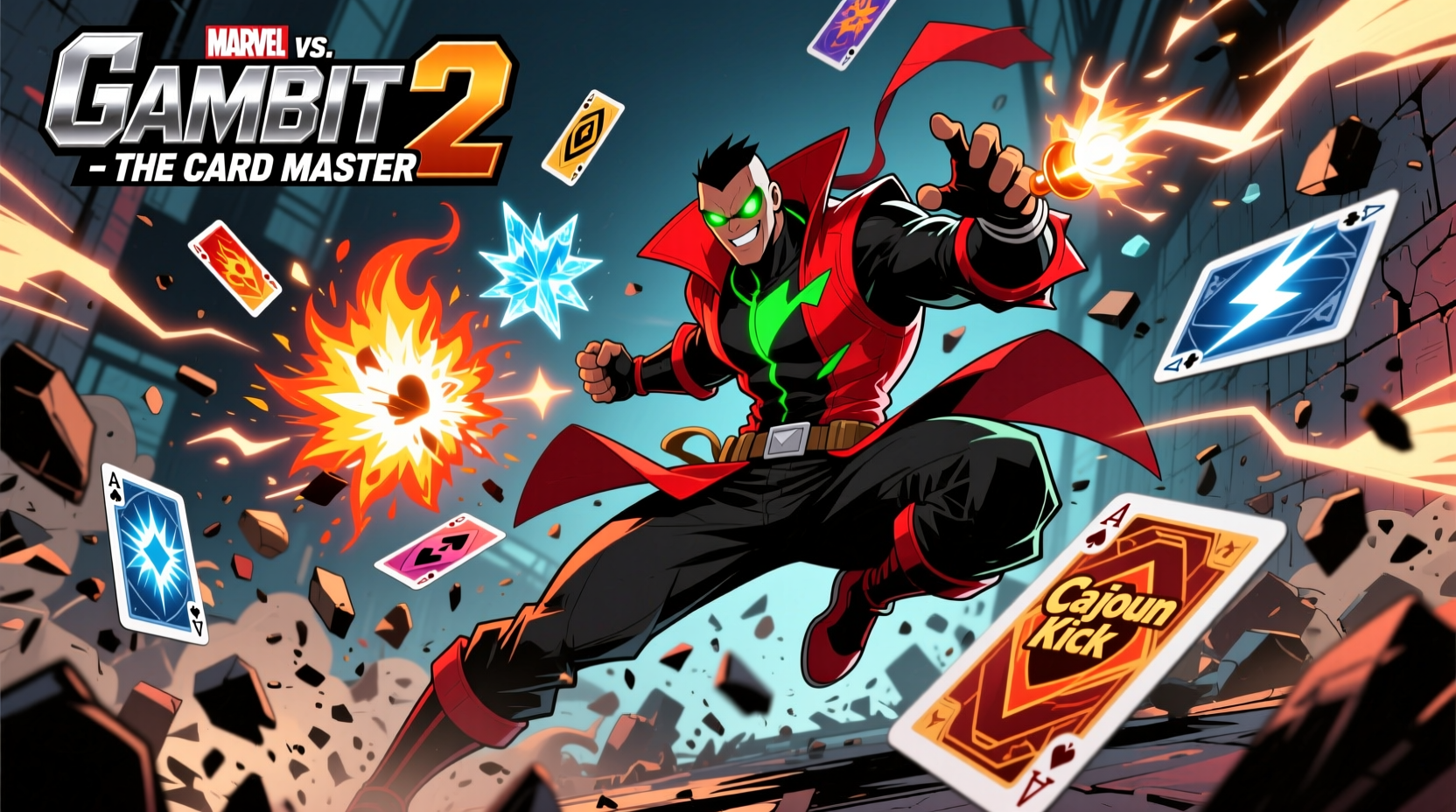
Gambit's mobility is one of his defining strengths. With access to a fast dash, quick crouching movement, and a unique forward + jump that covers significant horizontal distance, he can close gaps efficiently without committing to risky jumps. This allows him to maintain constant pressure while minimizing exposure to anti-air counters.
His standard attacks are deceptively effective. The Baton Sweep (forward + medium kick) is a standout move—fast, low-hitting, and safe on block. It keeps opponents guessing and sets up mix-ups with throws or overheads. Unlike many rushdown characters who must risk whiffing or being punished, Gambit can chip away at health with minimal downside.
Card-Based Zoning and Frame Traps
Gambit’s signature weapon—the kinetic-charged playing cards—gives him unparalleled zoning control. His Level 1 Hyper Combo, High Card, fires a card that sticks in the air and explodes after a delay. This creates persistent screen presence, forcing opponents to either block, jump (risking anti-air), or burn meter to burst through. When combined with ground pressure, High Card becomes a psychological tool as much as a physical one.
More importantly, Gambit excels at frame traps—sequences where each attack ends just before the opponent can act, leaving them trapped in blockstun. For example, a crouching light kick into a delayed High Card drop can prevent the opponent from dashing out safely. These subtle but devastating setups make him a master of tempo control.
“Gambit doesn’t win by overwhelming damage alone—he wins by controlling when you get to press a button.” — Jason “Paragon” Lee, MvC2 Tournament Commentator
Devastating Combos and Meter Efficiency
Gambit’s combo potential is both accessible and deeply rewarding. He can link simple strings into long, damaging sequences using assists and hyper cancels. A basic bread-and-butter combo like c.LK > c.MK > Launcher > j.HK > HK Cajun Strike deals significant damage and is easy to execute even under pressure.
But his real power shines in hyper combos. Cajun Strike (Level 1) is one of the most reliable midscreen and corner damage tools in the game. When canceled into from a launcher, it launches the opponent into a juggle state, allowing follow-ups. Even better, it can be hyper-canceled mid-combo into Royal Flush (Level 3), maximizing damage output with proper timing.
What sets Gambit apart is meter efficiency. While some characters require full bars for modest damage, Gambit can extract high returns from partial meters. This allows him to maintain offensive momentum without going broke resource-wise.
Sample Damage Output Comparison (Average Per Combo)
| Character | Basic Combo | Hyper-Canceled Combo | Meter Cost |
|---|---|---|---|
| Gambit | ~35% (Cajun Strike) | ~65% (into Royal Flush) | 1.5 bars |
| Storm | ~30% (Plasma Field) | ~55% (Double Typhoon cancel) | 2 bars |
| Rocket Raccoon | ~28% | ~50% | 2 bars |
| Chun-Li | ~32% | ~60% (Kikoken cancel) | 2 bars |
As shown, Gambit achieves top-tier damage with less meter investment, making him more sustainable over the course of a match.
The Assist Synergy Advantage
In team-based gameplay, synergy determines dominance. Gambit thrives with a wide variety of assists, allowing players to tailor teams to their style. Popular choices include:
- Beam Assists (e.g., Sentinel, Mega Man X): Push opponents into the corner, enabling extended combos.
- Anti-Air Assists (e.g., Strider Hiryu, Doctor Doom): Cover his approach and punish jump-ins.
- Ground Stunners (e.g., Cable, Wolverine): Lock down opponents after a knockdown for reset pressure.
This flexibility means Gambit can adapt to nearly any matchup. Whether facing a zoner, grappler, or another rushdown character, there’s an assist setup that gives him the edge.
Mini Case Study: The 2007 Evolution Championship
At Evo 2007, player Christopher \"NYChrisG\" Gonzalez reached the Grand Finals using a Gambit/Rouge/Blackheart lineup. What made his run remarkable wasn’t just his execution—it was his strategic use of spacing and resets. In a pivotal match against a top-tier Magneto player, Chris used repeated Baton Sweeps followed by timed High Cards to limit Magneto’s teleport options. Once cornered, he leveraged Blackheart’s unblockable beam assist to force mistakes. The result? A flawless set win that cemented Gambit’s reputation as a meta-defining character.
Step-by-Step Guide to Mastering Gambit
Becoming proficient with Gambit requires deliberate practice. Follow this progression to build mastery:
- Learn Basic Movement: Drill dash, crouch walk, and jump trajectories. Focus on staying grounded and avoiding predictable patterns.
- Master Baton Sweep Pressure: Practice linking c.LK > c.MK > Baton Sweep on block, then mix in throws every 3–4 uses.
- Practice Combo Routes: Start with midscreen: c.LK > c.MK > s.HP > Launcher > j.HK > HK Cajun Strike. Then learn corner variants.
- Integrate Assists: Test different assists in training mode. Beam assists work best for extending combos; anti-air helps with defense.
- Implement Frame Traps: Drop High Card after blocked strings to prevent dashing. Delay the drop slightly to catch backdashes.
- Optimize Meter Usage: Save one bar for escape (Snapback or Delayed Hyper Combo), and use the rest for high-damage finishers.
Common Mistakes to Avoid
Even experienced players fall into traps when playing Gambit. Recognizing these pitfalls can dramatically improve performance:
- Overusing Royal Flush: It’s flashy, but slow and punishable if blocked. Use only in combos or guaranteed situations.
- Jumping Too Much: Gambit loses his advantage when airborne. Stick to ground pressure unless setting up a cross-up.
- Neglecting Defense: Don’t get tunnel vision. Use dashes to retreat and keep space when needed.
- Ignoring Team Order: Place Gambit second or third to maximize meter gain and avoid early elimination.
Frequently Asked Questions
Is Gambit still viable in modern MvC2 play?
Absolutely. Despite the game’s age, Gambit remains a staple in high-level tournaments. His tools are timeless, and skilled players continue to dominate with him in events like Combo Breaker and EVO.
What’s the best assist for Gambit?
There’s no single “best” assist, but beam types like Sentinel or Mega Man X are highly recommended for combo extension. Anti-air assists like Strider Hiryu are excellent for defense and approach cover.
Why is Baton Sweep so important?
Baton Sweep is fast, low-hitting, and safe on block (-2). This means the opponent cannot punish it, allowing Gambit to stay aggressive without risk. It’s the foundation of his ground game.
Conclusion: Why Gambit Endures
Gambit’s strength in Marvel vs. Capcom 2 isn’t accidental—it’s the product of balanced design, deep mechanics, and exceptional flexibility. He combines the aggression of a rushdown fighter with the precision of a combo technician and the patience of a frame trap artist. Whether you're new to the game or a seasoned veteran, mastering Gambit offers a pathway to consistent success.




 浙公网安备
33010002000092号
浙公网安备
33010002000092号 浙B2-20120091-4
Comments
No comments yet. Why don't you start the discussion?