
For decades, Google has been the dominant force in online search, trusted by billions to deliver fast, accurate, and relevant results. But in recent years, a growing chorus of users, developers, and digital experts have voiced concern: Google’s search quality is deteriorating. What once felt like a seamless gateway to knowledge now often returns bloated, irrelevant, or low-quality pages filled with ads and AI-generated fluff. This shift isn’t just inconvenient—it undermines trust in one of the internet’s foundational tools.
The decline in search quality stems from multiple interrelated factors: algorithmic changes favoring commercial content, an explosion of AI-generated spam, and a shift toward closed ecosystems like apps and featured snippets that limit user exploration. As Google increasingly relies on automation and ad revenue models, the human-centric experience of discovery suffers.
Rising Frustration with Search Results
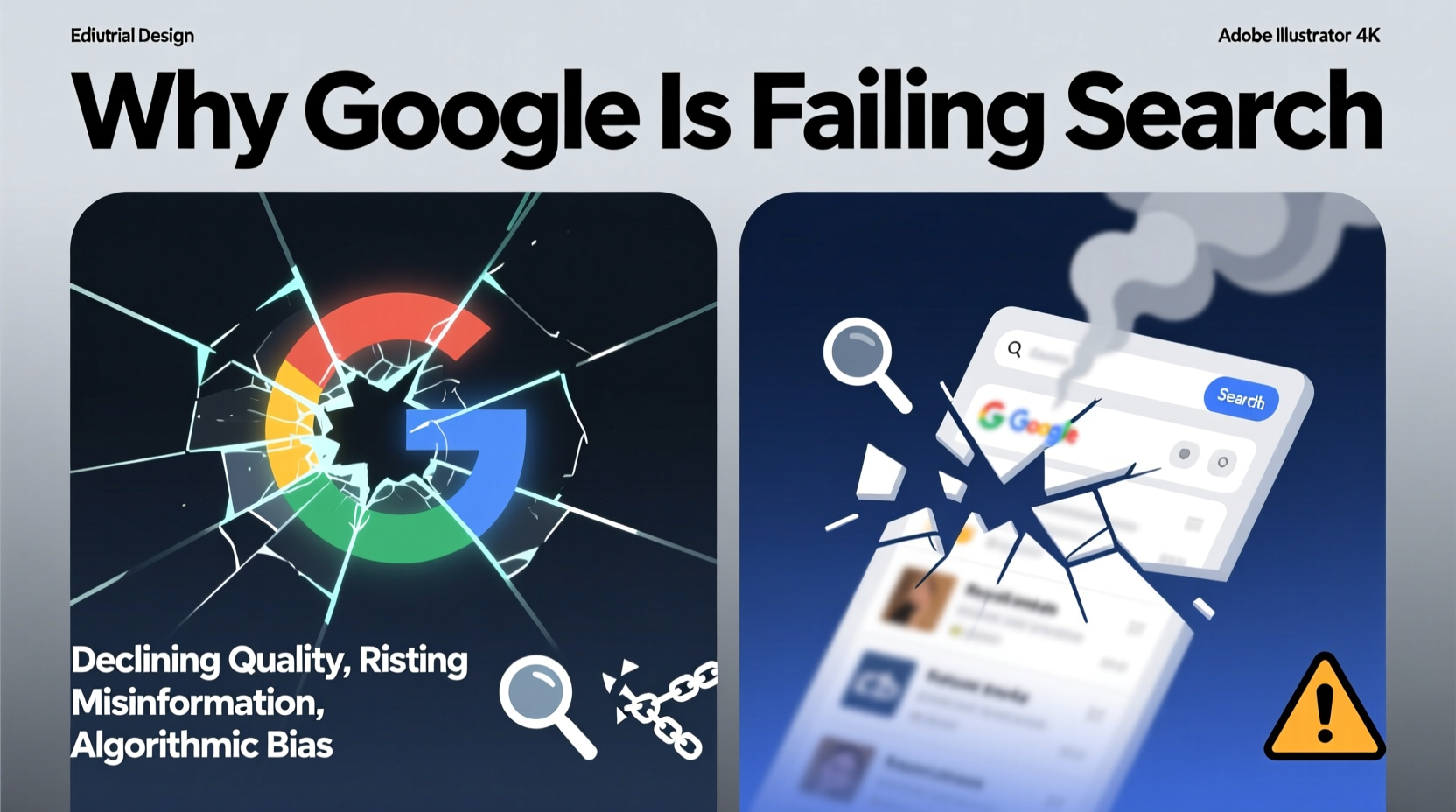
Users report that finding straightforward answers—especially for technical queries, product comparisons, or health advice—now requires sifting through layers of content farms, affiliate marketing sites, and auto-generated text. Instead of authoritative sources, Google frequently surfaces pages designed solely to game the algorithm. This phenomenon has become so widespread that “Just Google it” no longer guarantees useful information.
A 2023 survey by Pew Research found that 62% of frequent searchers believe search results have worsened over the past three years. Common complaints include:
- Top results dominated by ad-heavy websites with minimal original content
- Repetitive articles across multiple domains, clearly rewritten from the same source
- Difficulty accessing primary sources or academic research without advanced search operators
- Overuse of “People Also Ask” boxes and Knowledge Panels that obscure actual web links
site:edu or
site:gov) to bypass low-quality commercial content and reach credible sources faster.
Algorithmic Shifts Prioritizing Profit Over Precision
Google’s core mission has always been to “organize the world’s information and make it universally accessible.” However, its business model—built on advertising revenue—creates inherent tension between user needs and corporate incentives. The more time users spend navigating Google’s ecosystem, the more ad impressions are served. This dynamic encourages features like rich snippets, carousels, and instant answers that keep users within Google’s domain rather than sending them to external sites.
Critics argue this shift turns Google into a gatekeeper rather than a guide. For example, searching for “best running shoes under $100” might yield a carousel of sponsored products, followed by a vague summary written by Google’s AI Overview feature—without linking directly to reviews or retailers. Independent publishers lose traffic, while users get less transparency about where information originates.
“Google used to be a map to the web. Now it’s trying to become the entire territory.” — Anand Sharma, Digital Media Analyst
The AI Content Crisis
One of the most damaging developments in recent years is the flood of low-effort, AI-generated content optimized for search engines. Tools like ChatGPT and Gemini allow anyone to produce hundreds of articles per day, many targeting long-tail keywords with little editorial oversight. These pages often lack depth, accuracy, or real insight—but they rank well due to keyword stuffing and structural compliance with Google’s algorithms.
In response, Google has rolled out updates like the March 2024 Core Update aimed at reducing visibility for “unhelpful content.” Yet enforcement remains inconsistent. Many high-ranking pages still display symptoms of AI abuse: repetitive phrasing, factual inaccuracies, and generic advice copied across domains.
Worse, Google itself now integrates AI-generated summaries directly into search results via its AI Overview feature. While intended to provide quick answers, these summaries sometimes hallucinate facts, cite unreliable sources, or fail to attribute information correctly.
Real Example: Searching for Medical Advice
Consider someone searching for “symptoms of hypothyroidism in women.” In the past, top results would include reputable medical institutions like Mayo Clinic or WebMD. Today, the same query may return an AI-generated summary listing common symptoms—but also including unverified claims like “eating goitrogenic foods cures it naturally,” with no citation. Below, sponsored affiliate sites promote supplements with exaggerated benefits, all ranking above peer-reviewed resources.
This erosion of trust can have serious consequences when health, finance, or legal decisions rely on flawed information surfaced by Google’s systems.
What Changed? A Timeline of Decline
The degradation wasn’t sudden. It evolved over several phases driven by strategic decisions:
- 2015–2017: Introduction of RankBrain introduced machine learning to ranking, favoring engagement metrics over pure relevance.
- 2019: BERT update improved natural language understanding but also enabled better detection of SEO-optimized content, encouraging more sophisticated manipulation.
- 2021: Page Experience Update prioritized Core Web Vitals, inadvertently penalizing informative but older or simpler sites with fewer trackers and ads.
- 2023: Launch of SGE (Search Generative Experience) began replacing traditional blue links with AI-generated responses.
- 2024: AI Overviews roll out widely, increasing reliance on synthetic content without clear attribution.
Each change aimed to improve speed or personalization, but collectively they shifted power away from independent creators and toward automated, monetized experiences.
Expert Insight: Is Google Still the Best Option?
Daniel Russell, former Senior Research Scientist at Google, has publicly expressed concern about the direction of search:
“We built search to empower people to find truth. Now, too much of it feels like a recommendation engine pushing what’s profitable, not what’s true.” — Daniel Russell, Information Scientist
He warns that as Google depends more on AI synthesis and less on indexing real expertise, the risk of systemic bias and misinformation grows. Without transparency into how AI Overviews are generated, users cannot evaluate reliability.
Do’s and Don’ts of Using Modern Google Search
| Do | Don't |
|---|---|
Use advanced operators (site:, filetype:, -) to refine results |
Rely solely on the first page without checking deeper sources |
| Verify AI Overview claims with direct searches or scholarly databases | Assume featured snippets are always accurate or unbiased |
| Check publication date and author credentials before trusting advice | Click on top results just because they appear first |
| Support independent creators by visiting their sites directly | Share AI-generated summaries without verifying sources |
Alternatives and Workarounds
As dissatisfaction grows, alternative search engines are gaining traction. These platforms emphasize privacy, transparency, and higher-quality indexing:
- DuckDuckGo: Focuses on privacy and avoids personalized filtering that skews results.
- Brave Search: Uses its own index and offers “Goggles” to filter results by trusted sources.
- Startpage: Delivers Google results anonymously, stripping tracking data.
- Kagi: A paid service that prioritizes user-chosen sites and removes ads entirely.
FAQ
Is Google intentionally making search worse?
Not intentionally—but its incentives are misaligned. Revenue depends on keeping users engaged within its ecosystem, which favors AI summaries and ads over open web navigation. Quality often takes a backseat to retention metrics.
Can I disable AI Overviews in search results?
Currently, there is no official setting to turn off AI Overviews globally. However, using incognito mode or alternative search engines can reduce exposure. Some browser extensions claim to hide AI-generated sections.
Why do so many low-quality sites rank so highly?
Many use aggressive SEO tactics, such as mass-producing AI content, buying backlinks, or exploiting schema markup. Google’s algorithms sometimes reward technical compliance over substance, allowing these sites to climb rankings despite poor user value.
Conclusion: Reclaiming Better Search
The decline in Google’s search quality reflects broader challenges in balancing automation, profitability, and public good. While AI offers potential for richer answers, its current implementation risks eroding the very utility that made Google indispensable. Users shouldn’t have to become search experts just to find truthful, helpful information.
By adopting smarter search habits, supporting credible publishers, and exploring alternatives, individuals can push back against the tide of mediocrity. The future of search doesn’t have to be dominated by bots and ads—it can still prioritize clarity, depth, and authenticity.




 浙公网安备
33010002000092号
浙公网安备
33010002000092号 浙B2-20120091-4
Comments
No comments yet. Why don't you start the discussion?