
Texas Governor Greg Abbott is one of the most prominent political figures in the United States—and one of the few governors to serve while using a wheelchair. His mobility challenges are not the result of illness or aging but stem from a life-altering accident that occurred decades ago. Understanding why Greg Abbott uses a wheelchair requires a look back at a tragic event in 1984 that reshaped his personal and professional trajectory.
This article explores the details of the accident, its immediate aftermath, the long-term consequences, and how Abbott turned adversity into resilience on the path to becoming governor of Texas.
The Accident That Changed Everything
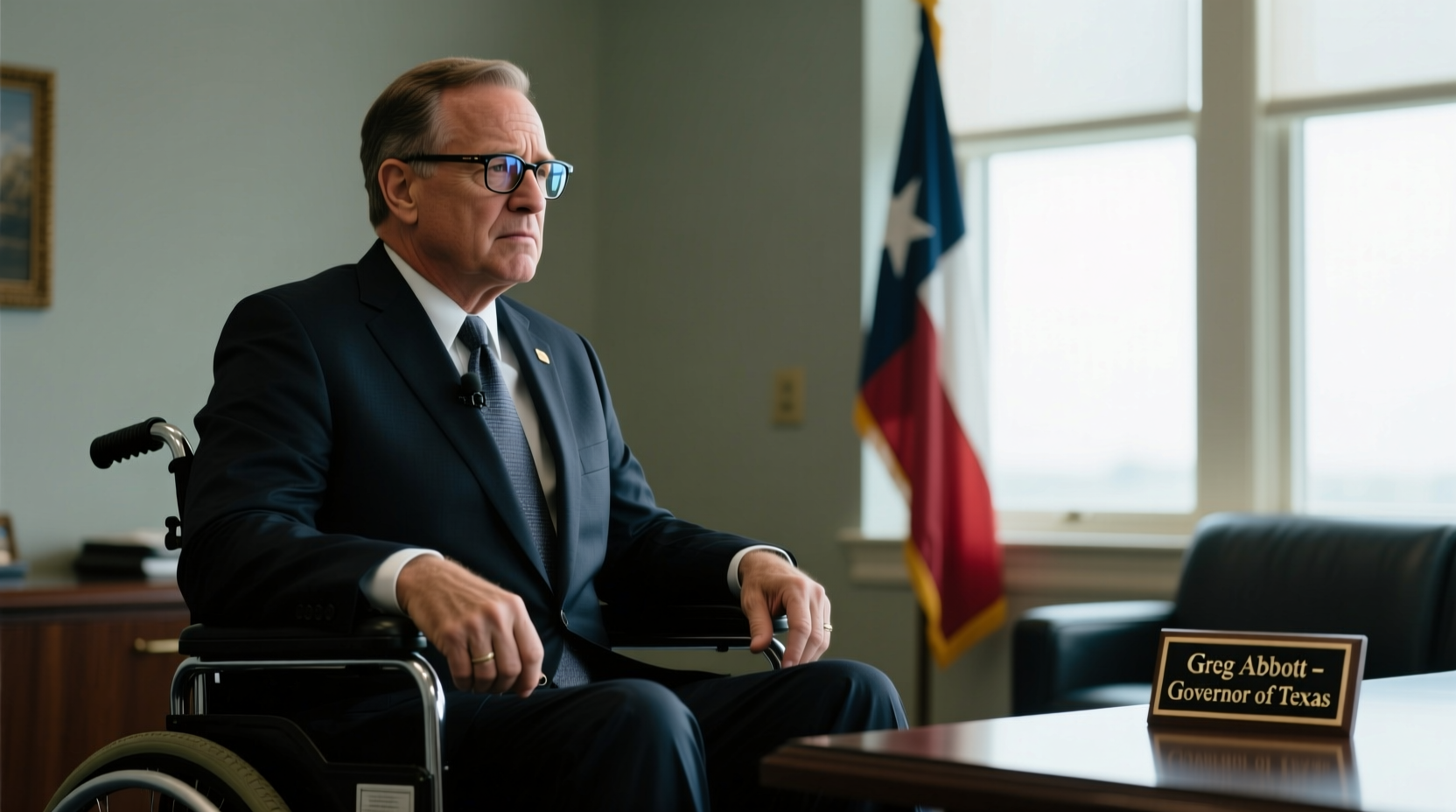
On July 14, 1984, Greg Abbott was a 26-year-old lawyer working in Houston, Texas. He had recently passed the bar exam and was beginning his legal career with promise. That afternoon, he stopped by an office supply store after work. As he exited the building, a massive oak tree—uprooted by strong winds during a thunderstorm—collapsed directly onto his car.
Abbott was pinned inside the vehicle under several tons of wood and debris. Emergency responders took over an hour to extract him. By the time he reached the hospital, he had sustained severe spinal injuries. Doctors diagnosed him with a complete spinal cord injury at the T3 (thoracic) level, resulting in paraplegia—permanent paralysis from the waist down.
The accident left him dependent on a wheelchair for mobility, a reality he has lived with for nearly four decades. At the time, Abbott later recounted, he faced a critical decision: succumb to despair or commit to rebuilding his life with purpose.
Recovery and Rehabilitation Journey
After emergency surgery and stabilization, Abbott began an intense rehabilitation process at TIRR Memorial Hermann, a leading center for spinal cord injury recovery in Houston. The first months were grueling. He had to relearn basic functions, adapt to new routines, and confront emotional challenges associated with permanent disability.
Physical therapy focused on strengthening his upper body, improving balance, and mastering wheelchair mobility. Occupational therapists helped him regain independence in daily tasks such as dressing, driving with hand controls, and navigating public spaces. Psychological support was also crucial; counselors worked with Abbott to process trauma and build long-term coping strategies.
Remarkably, within a year of the accident, Abbott returned to his legal career. He joined a private law firm and later served as a justice on the Texas Supreme Court before being elected Attorney General and eventually Governor.
“Disability is not destiny. It’s a challenge to be met with courage and determination.” — Greg Abbott, speaking at a 2015 accessibility summit
How the Accident Influenced His Career
Rather than retreat from public life, Abbott used his experience to fuel a commitment to public service. He often speaks about how the accident gave him a deeper empathy for people facing hardship. This perspective informed his legal and policy decisions, particularly around healthcare access, disability rights, and emergency preparedness.
As Texas Attorney General (2002–2015), he advocated for stronger enforcement of the Americans with Disabilities Act (ADA). During his tenure as governor, he signed legislation expanding access to assistive technologies and supported infrastructure improvements for wheelchair users in state buildings.
However, his record on disability issues has drawn mixed reactions. While some praise his personal advocacy, others point out contradictions—such as opposition to Medicaid expansion, which many disability advocates argue limits access to essential care for low-income Texans with disabilities.
Timeline of Key Events After the Accident
- July 1984: Tree falls on car, causing spinal cord injury.
- August–December 1984: Undergoes surgeries and begins rehabilitation.
- 1985: Returns to legal practice; adapts office and transportation for wheelchair use.
- 1996: Elected to Texas Supreme Court, becoming the first paralyzed justice in state history.
- 2015–Present: Serves as Governor of Texas, using a customized vehicle and accessible facilities.
Living with Paraplegia: Practical Realities
Using a wheelchair full-time involves more than mobility—it affects health, lifestyle, and access. For Abbott, this means relying on adaptive technologies, including a specially modified SUV with hand controls and ramps, and ensuring all official venues comply with ADA standards.
Long-term paraplegia also brings medical considerations: increased risk of pressure sores, urinary tract infections, and muscle atrophy. Regular checkups, proper seating systems, and consistent physical activity (such as arm cycling or resistance training) are essential to maintaining health.
Despite these challenges, Abbott maintains an active schedule. His team ensures that events, press conferences, and travel itineraries are fully accessible—a responsibility that has raised awareness about inclusion in government operations.
| Aspect | Challenge | Adaptation |
|---|---|---|
| Mobility | Inability to walk or stand unassisted | Uses manual and motorized wheelchairs; custom vehicle with hand controls |
| Health Management | Risk of pressure ulcers, infections | Regular medical monitoring, specialized cushions, hygiene routines |
| Work Environment | Need for accessible offices and equipment | ADA-compliant Capitol office; adjustable desks, ramps |
| Public Appearances | Navigating stairs, uneven terrain | Prior coordination for stage access, portable ramps |
Expert Insight on Spinal Cord Injuries
Dr. Naomi Chen, a neurologist specializing in spinal trauma at Baylor College of Medicine, explains:
“The T3 injury Greg Abbott sustained disrupts nerve signals below the mid-back. While it doesn’t affect breathing or arm function, it eliminates voluntary leg movement and sensation. With modern rehab, many individuals achieve high levels of independence—but lifelong management is required.”
She adds that advances in rehabilitation science since the 1980s have improved outcomes significantly, though a cure for paralysis remains elusive. “Patients today benefit from robotics, functional electrical stimulation, and better support systems—tools that weren’t available when Abbott was injured.”
Mini Case Study: Accessibility at State Events
In 2021, during a hurricane preparedness briefing held at a rural emergency operations center, officials realized the facility lacked a ramp for wheelchair access. Upon learning this, Abbott’s staff immediately arranged for a temporary modular ramp to be installed before his arrival. The incident prompted a statewide audit of emergency shelters’ ADA compliance.
This real-world example illustrates both the ongoing challenges of accessibility and the influence Abbott’s presence has had in enforcing inclusive standards—even in remote areas where accommodations were previously overlooked.
Frequently Asked Questions
Did Greg Abbott walk again after the accident?
No. The spinal cord injury resulted in permanent paraplegia. He has not regained the ability to walk and uses a wheelchair for all mobility.
Has Greg Abbott ever spoken publicly about his injury?
Yes. He has discussed the accident in interviews, speeches, and his book *Broken but Unbowed*. He credits the experience with shaping his resilience and compassion in leadership.
Does he use any experimental treatments or technology?
There is no public evidence that Abbott uses experimental therapies like exoskeletons or neural implants. He relies on conventional wheelchair technology and standard medical care.
Conclusion: Turning Adversity into Leadership
Greg Abbott’s use of a wheelchair is the lasting consequence of a random and devastating accident in 1984. But rather than define him, it became part of a broader narrative of perseverance. From surviving a near-fatal incident to rising through the ranks of Texas politics, Abbott’s journey underscores the power of determination and adaptation.
His experience also highlights the importance of accessibility, inclusion, and long-term support for people with disabilities—issues that remain central to public policy debates. Whether one agrees with his political stance or not, Abbott’s personal story offers a compelling reminder: disability does not disqualify ability.




 浙公网安备
33010002000092号
浙公网安备
33010002000092号 浙B2-20120091-4
Comments
No comments yet. Why don't you start the discussion?