
The Western Wall in Jerusalem stands as one of the most emotionally resonant religious sites in the world. For centuries, Jews have gathered at its ancient stones to pray, mourn, and reflect. Yet many know it not by its formal name but as the “Wailing Wall”—a term that evokes sorrow, longing, and historical pain. But why is it called that? The answer lies in a complex interplay of language, history, colonial perception, and cultural memory.
To understand the name “Wailing Wall,” we must journey through centuries of exile, Ottoman rule, European encounters with the Holy Land, and the evolving identity of Jewish mourning practices. This article unpacks the origins of the term, examines its implications, and explores how modern sensibilities are reshaping its usage.
Origins of the Term “Wailing Wall”
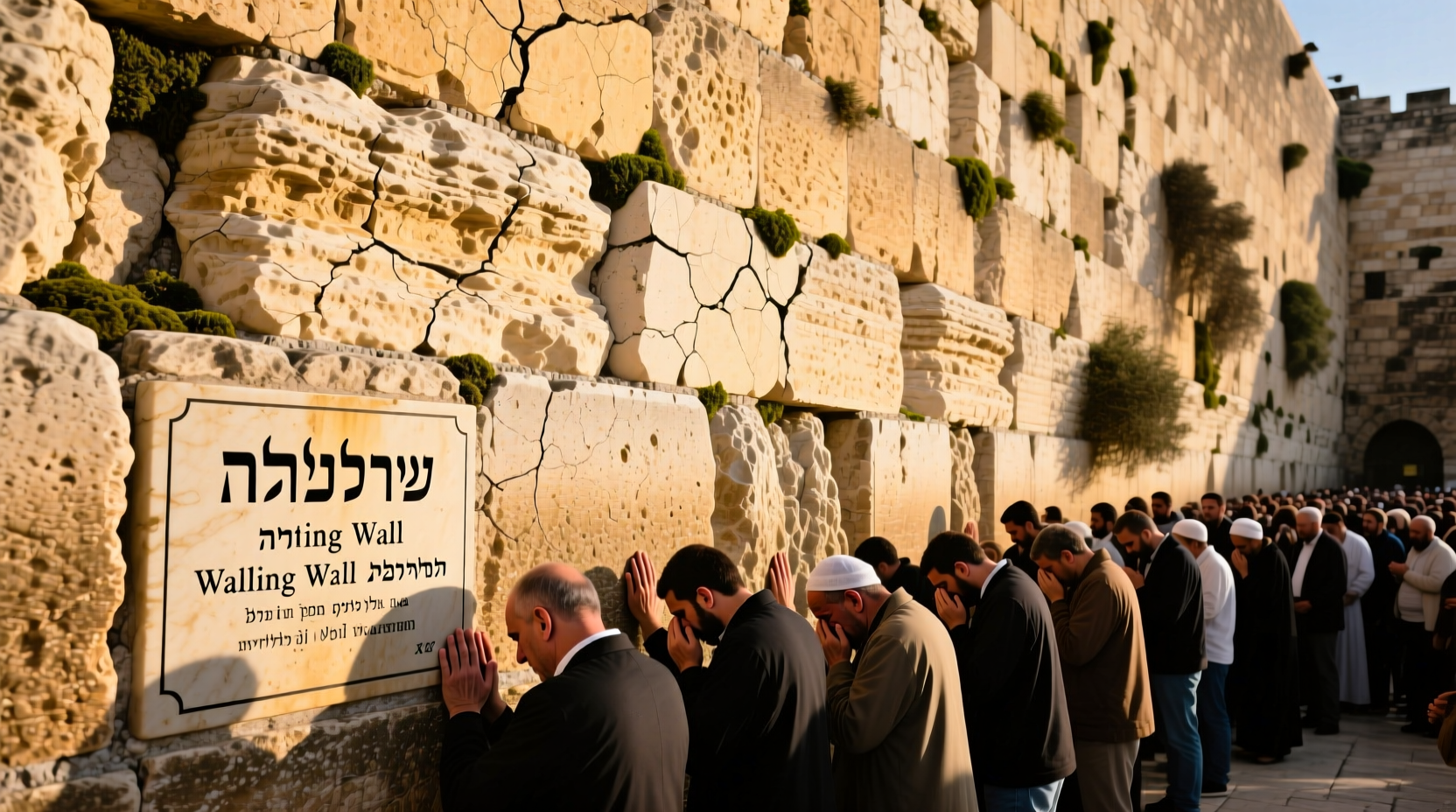
The phrase “Wailing Wall” first appeared in English travel literature during the 19th century. European Christian travelers visiting Jerusalem often described what they saw through their own cultural lens. When they encountered Jews gathered at the Western Wall, praying aloud, weeping, or beating their chests during times of mourning—particularly on Tisha B’Av, the day commemorating the destruction of the First and Second Temples—they interpreted these acts as expressions of perpetual lamentation.
The word “wailing” carries connotations of loud, public grief. To Victorian-era observers, the sight of people crying at an ancient stone wall seemed like endless mourning—hence, “the Wailing Wall.” The term was never used by Jews themselves; rather, it emerged from external interpretation, shaped by foreign expectations of Eastern melancholy and biblical nostalgia.
“Western Wall is our name. Wailing Wall is what others called us when they saw sorrow they didn’t fully understand.” — Rabbi David Meshulam, historian of Jewish liturgy
Historical Context: From Temple Destruction to Ottoman Rule
The Western Wall is the last remaining support wall of the Second Temple compound, destroyed by the Romans in 70 CE. After the destruction, Jews were exiled or dispersed, and access to Jerusalem became limited for centuries. When Jewish pilgrims eventually returned, especially under Muslim rule from the 7th century onward, they were permitted to visit the site, though not always allowed to pray freely.
Under Ottoman administration (1517–1917), the area near the wall became a narrow alleyway bordered by residential buildings. Jews were granted conditional rights to pray there, but restrictions applied—such as prohibitions on bringing benches, shade structures, or loud prayer. Despite these limitations, the site remained central to Jewish spiritual life.
Mourning rituals developed over time. Liturgical poems known as *kinot* were recited, expressing grief over the loss of the Temple and national sovereignty. These prayers, often chanted in minor keys and accompanied by tears, reinforced the perception among outsiders of continuous lamentation.
Colonial Lens and Linguistic Legacy
The spread of the term “Wailing Wall” accelerated during the British Mandate period (1920–1948). British officials, military personnel, and scholars adopted the phrase widely in official documents, maps, and correspondence. It fit neatly into a broader Orientalist narrative—one that portrayed Middle Eastern peoples as emotional, passive, and stuck in the past.
This framing ignored the theological depth of Jewish prayer at the site. What Europeans perceived as “wailing” was, in fact, structured liturgy, personal supplication, and communal remembrance. The Hebrew word *avelut*, meaning mourning, encompasses ritualized, dignified grief—not uncontrolled sobbing.
Moreover, the term obscured the site’s dual nature: it is both a place of mourning and hope. Many Jews believe the coming of the Messiah will restore the Temple, and prayers at the Wall often include petitions for redemption and peace. Reducing this complexity to “wailing” flattens a rich tradition into stereotype.
Modern Shifts: Reclaiming the Name
In contemporary Israel and global Jewish discourse, the term “Wailing Wall” has largely fallen out of favor. It is now seen by many as outdated, pejorative, or even offensive. Official institutions, media outlets, and educators prefer “Western Wall” (*HaKotel HaMa’aravi* in Hebrew) or simply “the Kotel.”
This shift reflects a broader effort to reclaim narratives and assert cultural agency. Just as Indigenous communities around the world resist externally imposed names, so too do Jews advocate for self-definition in matters of sacred space.
Today, millions visit the Western Wall annually—not only to mourn, but to celebrate weddings, bar mitzvahs, and military inductions. Joy and sorrow coexist at the site, making the singular focus on “wailing” increasingly inaccurate.
Do’s and Don’ts When Referring to the Site
| Action | Recommended? | Reason |
|---|---|---|
| Use “Western Wall” in formal writing | ✅ Yes | Neutral, accurate, widely accepted |
| Refer to it as “the Kotel” in Jewish contexts | ✅ Yes | Culturally authentic, affectionate |
| Call it the “Wailing Wall” without context | ❌ No | Can perpetuate colonial stereotypes |
| Use “Wailing Wall” when discussing historical texts | ✅ With caution | Only if explaining its origin and bias |
Mini Case Study: A Travel Writer’s Awakening
Sarah Thompson, a British travel journalist, visited Jerusalem in 2018 intending to write a piece titled “At the Wailing Wall: Where Grief Never Ends.” She planned to focus on sorrow, exile, and ancient tears. But after spending hours observing prayer services, speaking with rabbis, and reading historical sources, she changed her approach entirely.
Her final article, published in a major lifestyle magazine, was titled “The Pulse of the Kotel: Where Memory Meets Hope.” In it, she wrote: “I came looking for wailing. I found resilience. I heard whispers of loss, yes—but also laughter, song, and fierce love for a shared heritage.”
Thompson later said the experience taught her to question inherited terminology. “Names shape perception,” she noted. “Calling it the ‘Wailing Wall’ framed my expectations before I even arrived.”
Understanding the Layers: A Timeline of Key Moments
- 70 CE: Roman destruction of the Second Temple; Western Wall survives as part of the retaining structure.
- 7th Century CE: Muslim conquest of Jerusalem; Jews allowed limited access to pray near the wall.
- 16th Century: Ottoman Sultan Suleiman the Magnificent formalizes Jewish prayer rights at the site.
- 19th Century: European travelers coin “Wailing Wall” based on observed mourning rituals.
- 1929: Violent clashes erupt over access to the Wall, highlighting rising tensions under British rule.
- 1967: Six-Day War ends with Israeli control of East Jerusalem; the Western Wall comes under Israeli administration.
- 21st Century: Global shift toward using “Western Wall” or “Kotel”; decline in use of “Wailing Wall.”
Frequently Asked Questions
Is “Wailing Wall” a derogatory term?
While not inherently malicious, “Wailing Wall” is considered outdated and potentially insensitive by many Jews today. It originated from outsider perspectives that misunderstood Jewish mourning as passive despair rather than active remembrance. In respectful dialogue, “Western Wall” or “Kotel” is preferred.
Do people still cry at the Western Wall?
Yes—many visitors do shed tears, especially during moments of personal reflection, prayer, or on days of national mourning like Tisha B’Av. However, crying is just one expression among many. Prayer, dancing, singing, and celebration are equally common.
Can non-Jews visit the Western Wall?
Absolutely. The Western Wall is open to visitors of all faiths and backgrounds. Modest dress is required (covered shoulders and knees), and men are typically offered kippot (skullcaps) upon entry. Visitors are asked to respect ongoing prayer services and refrain from disruptive behavior.
Conclusion: Moving Beyond the Name
The term “Wailing Wall” may persist in some textbooks and older writings, but its time as the dominant label has passed. Understanding why it was called that requires acknowledging the power of language, the biases of history, and the importance of self-representation.
The Western Wall is not merely a monument to loss. It is a living site of connection—to God, to ancestors, to a people’s enduring story. Whether placing a written prayer in its cracks or standing silently in awe, millions find meaning there that transcends any single word.




 浙公网安备
33010002000092号
浙公网安备
33010002000092号 浙B2-20120091-4
Comments
No comments yet. Why don't you start the discussion?