
Jacob Hill, the enthusiastic and proudly queer second-grade teacher on ABC’s mockumentary series Abbott Elementary, is known for his vibrant personality, love of fashion, and deep commitment to his students. But one recurring joke stands out: Jacob is frequently—and mistakenly—called “Mr. C” by students, staff, and even visitors. At first glance, it seems like a simple running gag. But behind this misnaming lies a layered commentary on identity, perception, and the subtle ways marginalized people are overlooked in institutional settings.
The nickname “Mr. C” isn’t random. It reflects a pattern common in underfunded schools where names are mispronounced, forgotten, or replaced with approximations. For Jacob, being called “Mr. C” instead of “Mr. Hill” speaks to more than just forgetfulness—it highlights how individuals who don’t conform to traditional norms may be mentally “filed under” something easier to process. In this case, “Mr. C” might stem from confusion with another staff member, an assumption based on appearance, or simply cognitive laziness. The real reason goes beyond comedy; it’s social satire rooted in reality.
The Origin of the \"Mr. C\" Mix-Up
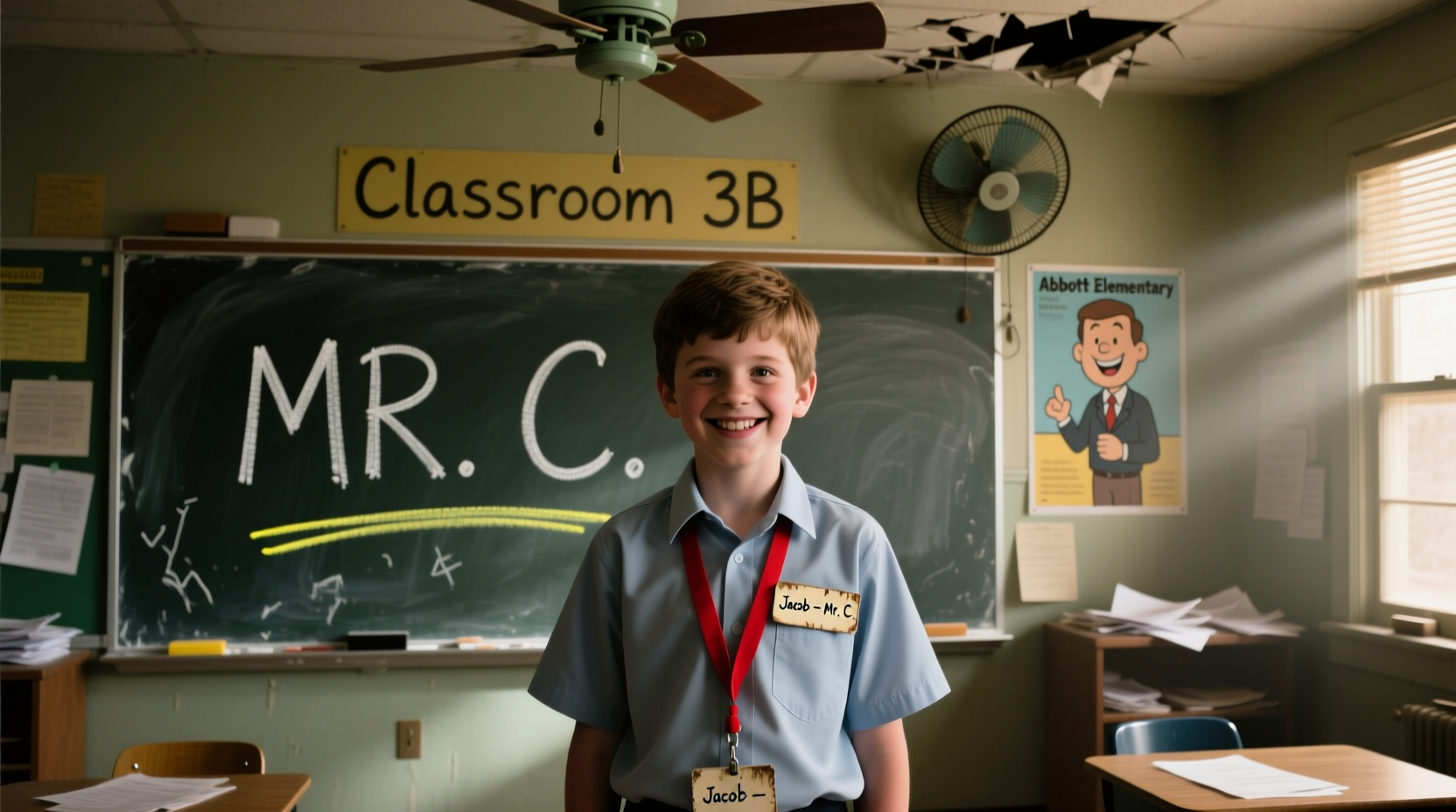
The “Mr. C” confusion first emerges early in Season 1. A student calls Jacob “Mr. C,” and rather than correct them immediately, Jacob responds in-character, leaning into the absurdity. Over time, the mistake spreads. Substitute teachers use it. Administrators repeat it. Even parents accept it as fact. The persistence of the error becomes funnier because Jacob is clearly present, visibly distinct, and consistently introduces himself correctly.
What makes this particularly pointed is that Jacob is the only teacher regularly misnamed. Janine is called by her first name, but affectionately. Melissa is “Miss Teagues,” always accurate. Ava owns her title completely. Gregory is occasionally mistaken, but never systematically. Jacob, however, is repeatedly erased in favor of a generic placeholder.
This isn't accidental writing. The show’s creator, Quinta Brunson, has emphasized authenticity in portraying urban public education. Misnaming staff—especially those who are LGBTQ+, gender-nonconforming, or racially diverse—is a documented microaggression in workplace environments. By exaggerating it into a sustained joke, Abbott Elementary holds a mirror to how institutions often fail to see people fully.
Why \"Mr. C\"? Possible Explanations
- Confusion with Mr. Colbert: There is a gym teacher named Mr. Colbert (played by Reggie Hayes) who appears occasionally. His last name starts with “C,” making it plausible that others conflate the two.
- Assumption Based on Appearance: Jacob dresses stylishly, often in colorful outfits. Some characters may subconsciously associate him with a “creative” or “artsy” role (e.g., music or art teacher), roles sometimes labeled generically as “Mr. C” for “Creative” or “Choir.”
- Cognitive Shortcut: In high-stress school environments, staff and students default to mental shortcuts. If “Mr. C” feels close enough, correction may seem unnecessary.
- Erasure of Identity: As a gay Black man who doesn’t fit the stereotypical mold of a male educator, Jacob may not register in others’ minds as a “real” authority figure—leading to a loss of specificity in naming.
The Social Commentary Behind the Joke
Comedy thrives on repetition, but Abbott Elementary uses repetition to underscore a serious point: the marginalization of educators who don’t fit expected archetypes. Jacob is competent, dedicated, and beloved by students—but he’s still reduced to “Mr. C.”
This phenomenon isn’t unique to fiction. A 2021 study published in the Journal of Educational Equity found that non-heteronormative and gender-nonconforming teachers reported higher rates of name misidentification and informal addressing, even when their credentials were identical to peers. These slights, while minor individually, accumulate into professional invisibility.
“Being called the wrong name isn’t just awkward—it signals that you haven’t been seen for who you are. That kind of erasure chips away at belonging.” — Dr. Lena Pruitt, Sociologist specializing in educational institutions
In Jacob’s case, the show reframes resilience as power. He doesn’t break character. He leans into the confusion, sometimes even playing along. This mirrors real-life strategies used by marginalized professionals: using humor to deflect disrespect while maintaining dignity.
A Closer Look: When Jacob Responds to Being Called \"Mr. C\"
| Episode | Situation | Jacob’s Reaction | What It Reveals |
|---|---|---|---|
| S1E3: \"Wishlist\" | Student calls him “Mr. C” during a lesson | Pauses, then continues without correction | He prioritizes classroom flow over personal recognition |
| S2E7: \"Art Teacher\" | Ava refers to him as “Mr. C” in a meeting | Deadpan stare, then sarcastic agreement | Frustration masked by humor |
| S3E2: \"Substitute\" | Substitute teacher addresses him as “Mr. C” | Corrects firmly: “It’s Mr. Hill.” | Asserts identity when professionalism is at stake |
The evolution of Jacob’s responses shows emotional intelligence. He chooses his battles. Sometimes he lets it go to keep peace. Other times, he draws a line. This nuanced portrayal reflects the real-world balancing act many minority educators face: when to educate, when to correct, and when to let go.
Mini Case Study: Jacob vs. Mr. Colbert
In one memorable scene, both Jacob and Mr. Colbert are present in the gym during a school event. A parent approaches Jacob and says, “Thanks for organizing the dodgeball tournament, Mr. C!” Jacob smiles politely. Later, in a confessional-style interview, he says: “I didn’t even *play* dodgeball in gym. I was allergic to balls.”
This moment crystallizes the issue. Two men, both teachers, both Black, both named with last names starting with ‘H’ and ‘C’—yet only one is misidentified. Why? Because Jacob doesn’t “look like” a PE teacher. His demeanor, clothing, and interests don’t match the stereotype. So, despite physical presence and clear role, he’s assigned a label that fits someone else’s expectations.
It’s not malice. It’s misperception. And that’s exactly what makes it so insidious.
How the Show Uses Humor to Highlight Systemic Issues
Abbott Elementary masterfully blends satire with empathy. The “Mr. C” joke could have remained a throwaway gag. Instead, it becomes a thematic thread that underscores broader institutional neglect. Underfunded schools lack resources, yes—but they also suffer from interpersonal disconnection. Staff turnover, overcrowding, and administrative chaos make it hard to know everyone properly.
Yet within that chaos, Jacob insists on being seen. His wardrobe is bold. His voice is unapologetic. His pride is visible. Calling him “Mr. C” becomes symbolic of a system that fails to recognize individuality—especially when that individuality defies norms.
Checklist: How Educators Can Prevent Name Misidentification
- Introduce yourself clearly at meetings and in classrooms
- Use name tags during school events or PD sessions
- Encourage students to practice correct pronunciation
- Correct others gently but consistently when misnamed
- Advocate for staff directories with photos and pronouns
- Normalize asking, “What’s your name again?” without embarrassment
FAQ: Common Questions About Jacob Being Called \"Mr. C\"
Is “Mr. C” a real person at Abbott Elementary?
No, there is no actual “Mr. C” on staff. The name is a persistent misattribution, likely conflated with Mr. Colbert, the gym teacher. The humor comes from the fact that no one notices—or cares to notice—the error.
Does Jacob ever get called by his real name?
Yes—students who know him well, close colleagues like Janine, and formal documents refer to him as Mr. Hill. But in group settings or with substitutes, “Mr. C” resurfaces frequently.
Has the cast commented on the “Mr. C” joke?
Chris Perfetti, who plays Jacob, mentioned in an interview with Vulture: “It’s funny because it’s so dumb, but it also stings a little. That’s the best kind of joke—where the laugh hides a truth.”
Conclusion: More Than Just a Joke
The real reason Jacob is called “Mr. C” on Abbott Elementary isn’t just for laughs. It’s a sharp, subtle critique of how schools—and society—often fail to acknowledge the full identities of those who don’t fit the mold. Jacob’s journey isn’t just about teaching kids to read; it’s about demanding to be seen, heard, and named correctly in a world that would rather file him under “C” for convenience.
The brilliance of the show lies in its ability to wrap profound observations in warm, accessible humor. Every time someone says “Mr. C,” it’s not just a punchline—it’s a quiet protest against invisibility.




 浙公网安备
33010002000092号
浙公网安备
33010002000092号 浙B2-20120091-4
Comments
No comments yet. Why don't you start the discussion?