
Public figures are often subjected to intense scrutiny, not just for their work but for their appearance. Among them, Jay-Z—iconic rapper, entrepreneur, and cultural influencer—has occasionally been labeled “ugly” in online discussions and fan debates. This label raises important questions: Is it about facial features? Cultural bias? Or a reflection of shifting beauty standards in hip-hop and media at large? The conversation around Jay-Z’s appearance isn’t merely cosmetic—it touches on identity, race, fame, and how society evaluates attractiveness.
Jay-Z, born Shawn Corey Carter, has built one of the most influential careers in music history. With over 140 million records sold, multiple Grammy Awards, and a net worth exceeding $2.5 billion, his legacy is undeniable. Yet, despite his success, some corners of the internet persistently question his looks. Understanding why requires more than a surface-level glance—it demands a deeper exploration of perception, media representation, and societal norms.
The Origins of the “Ugly” Label
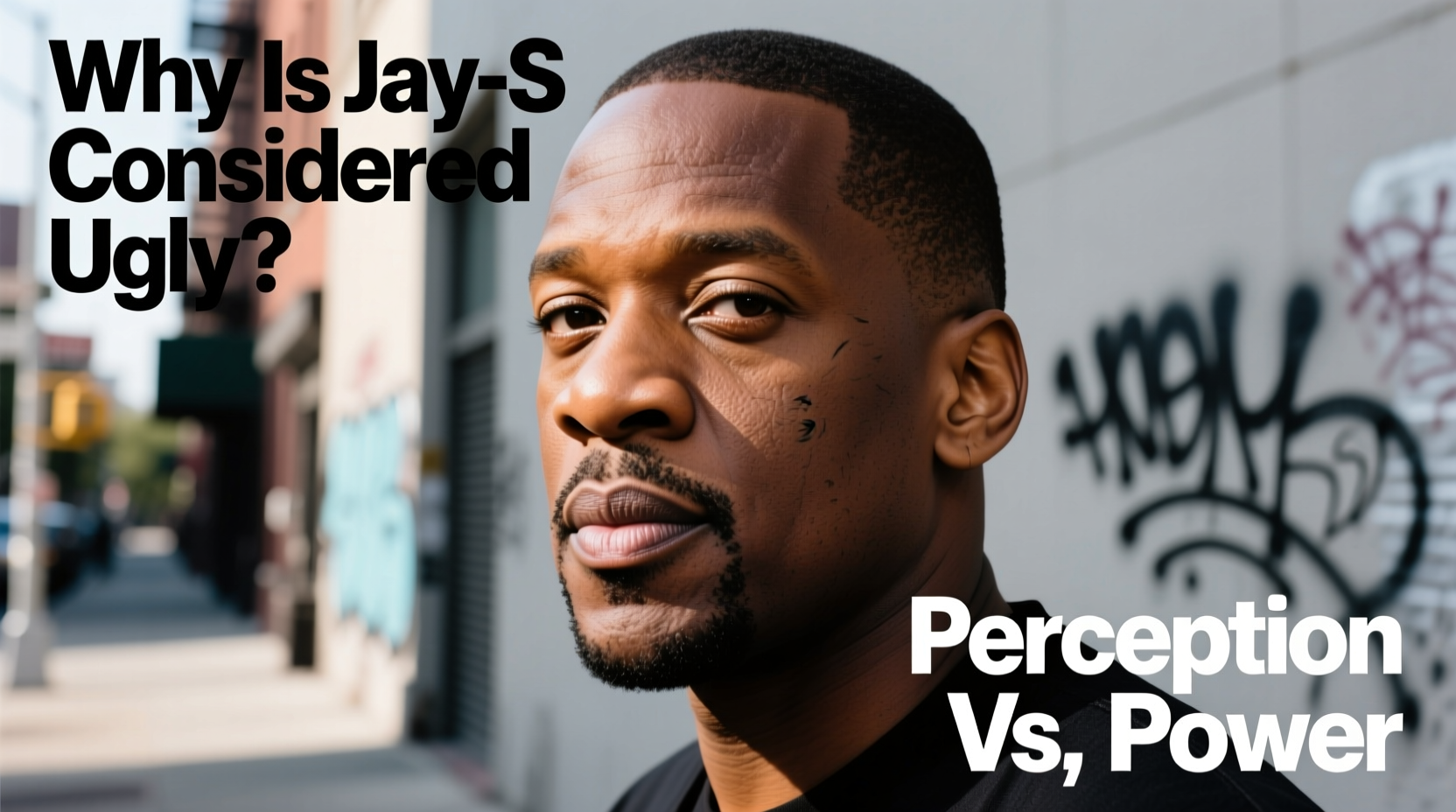
The notion that Jay-Z is “ugly” doesn’t stem from mainstream media or critical reviews but largely from informal online discourse. Forums like Reddit, Twitter threads, and YouTube comment sections have hosted debates questioning his facial symmetry, nose shape, or expressions. These critiques often appear alongside comparisons with other rappers perceived as more conventionally attractive, such as Drake or Usher.
However, labeling someone “ugly” based on subjective traits overlooks the broader context. Beauty is not universal; it is shaped by culture, era, and personal experience. What one group sees as unattractive, another may view as distinctive or even iconic. Jay-Z’s sharp jawline, penetrating gaze, and confident demeanor have long been associated with power and authority—not necessarily traditional Hollywood charm, but a different kind of appeal.
Cultural Bias and Racialized Standards of Beauty
A significant factor in the “Jay-Z is ugly” narrative lies in historically Eurocentric beauty standards. Features common among Black men—such as broader noses, fuller lips, or darker skin—are frequently underrepresented or undervalued in mainstream media. Studies show that these biases affect everything from casting decisions to social media engagement.
Jay-Z’s look challenges narrow ideals. His face carries the marks of authenticity—lines earned through struggle, resilience, and street wisdom. In hip-hop culture, where credibility matters more than glamour, this aesthetic commands respect. As cultural critic Touré noted, “In rap, realness trumps prettiness. You don’t need to be beautiful—you need to be believed.”
“Authenticity in hip-hop isn't measured by symmetry or soft features. It's measured by truth, voice, and presence.” — Dr. Melissa Harris-Perry, Professor of Politics & African American Studies
When critics call Jay-Z “ugly,” they may unknowingly apply standards rooted in exclusionary norms—one reason the label persists more in predominantly white-dominated spaces than within Black communities, where he is widely admired for his style and stature.
Media Representation and the Evolution of Image
Jay-Z’s public image has evolved dramatically over three decades. In the 1990s, he emerged as a Brooklyn street poet—hoodie up, gold chain heavy, expression guarded. There was no attempt to conform to pop-star aesthetics. By the 2000s, he refined his look: tailored suits, designer shades, a poised stage presence. Today, he embodies corporate elegance, often seen at luxury events alongside Beyoncé.
Yet, older images still circulate online, sometimes stripped of context. A grainy photo from 1996 might be reposted with captions mocking his appearance, ignoring how fashion, grooming, and self-presentation have transformed across his career. Perception lags behind reality.
| Era | Style Traits | Public Perception Shift |
|---|---|---|
| 1990s | Streetwear, chains, low-top fades | Raw, authentic, underground |
| 2000s | Suits, Rocawear branding, confident swagger | Mainstream crossover, respected mogul |
| 2010s–Present | Luxury minimalism, Tom Ford, art collector aura | Global icon, embodiment of success |
The disconnect between past visuals and present status fuels outdated judgments. People remember the early Jay-Z not as a man building an empire, but as a “rapper who doesn’t look like a movie star”—a flawed benchmark for assessing worth or attractiveness.
Charisma vs. Conventional Attractiveness
Physical appearance is only one component of allure. Charisma, confidence, intelligence, and success play equally powerful roles in how someone is perceived. Jay-Z exudes what psychologists call “status magnetism”—the ability to draw attention and admiration through presence alone.
Consider this: audiences don’t watch Jay-Z interviews to admire his cheekbones—they listen to his words. His lyrical precision, business acumen, and emotional depth (evident in albums like *4:44*) redefine what makes a man compelling. Attraction isn’t solely visual; it’s intellectual and emotional.
- He speaks multiple languages fluently.
- He’s authored a memoir (*Decoded*) praised for its literary merit.
- He’s negotiated landmark deals in music, sports, and spirits (Roc Nation, Tidal, D’Ussé).
These achievements reshape perception. To many, Jay-Z isn’t just handsome—he’s aspirational. Calling him “ugly” ignores the totality of his persona, reducing a complex figure to a single, reductive label.
Mini Case Study: The Super Bowl Halftime Show Backlash
In 2022, when Roc Nation co-produced the Super Bowl halftime show featuring Dr. Dre, Snoop Dogg, Eminem, and Kendrick Lamar, social media buzz included memes targeting the artists’ appearances. Some users described Jay-Z (who appeared briefly) as “looking old” or “not photogenic.”
But within 48 hours, articles from The Root, Vulture, and Complex pushed back, highlighting how the criticism disproportionately targeted Black male artists while overlooking their historic impact. The incident revealed a pattern: when aging Black men in hip-hop are assessed, their value is often misjudged through a lens of youth-obsessed, racially skewed beauty norms.
Reframing the Conversation: A Checklist for Critical Thinking
Before engaging in or sharing opinions about a public figure’s looks, consider the following checklist to ensure your perspective is informed and fair:
- Ask: Am I applying double standards? Would I judge a white artist the same way for similar features?
- Consider context. Is the image current, or taken out of time?
- Evaluate beyond the face. How does their voice, energy, or legacy influence your overall impression?
- Recognize cultural bias. Are you influenced by media that privileges certain looks over others?
- Reflect on intent. Are you critiquing appearance because it’s relevant—or simply repeating a meme?
Frequently Asked Questions
Has Jay-Z ever responded to being called ugly?
Not directly. However, in interviews, he has emphasized substance over image. In a 2017 GQ profile, he stated, “I never tried to be the pretty boy. I wanted to be the smartest guy in the room.” His focus has always been on craft and strategy, not cosmetic appeal.
Do fans actually think Jay-Z is ugly?
Polling data is limited, but social sentiment analysis suggests that outside niche online communities, most fans associate Jay-Z with power, sophistication, and cool—not physical unattractiveness. Within hip-hop fandom, his image remains highly respected.
How does Beyoncé’s beauty affect public perception of Jay-Z?
Some critics unfairly compare Jay-Z to Beyoncé, implying a mismatch due to her global reputation as a beauty icon. This reflects a problematic tendency to view relationships through superficial lenses rather than mutual respect, shared vision, and partnership dynamics.
Conclusion: Redefining Attractiveness in the Age of Influence
The idea that Jay-Z is “ugly” says more about societal insecurities than his actual appearance. It exposes lingering biases in how we assess Black male figures—especially those who rise from humble beginnings without conforming to traditional molds. True attractiveness extends beyond bone structure or skin tone; it resides in confidence, legacy, and impact.
Jay-Z’s face tells a story—of Brooklyn corners, boardroom victories, lyrical mastery, and cultural transformation. To call it “ugly” is to miss the narrative entirely. Instead of judging based on outdated ideals, we should celebrate the diversity of excellence. Whether in music, business, or personal evolution, Jay-Z represents a standard far more meaningful than any narrow definition of beauty.




 浙公网安备
33010002000092号
浙公网安备
33010002000092号 浙B2-20120091-4
Comments
No comments yet. Why don't you start the discussion?