
When Sonic Boom premiered in 2014, fans of the long-running Sonic franchise were met with a drastically reimagined version of their favorite characters. Among the most controversial changes was the portrayal of Knuckles the Echidna—not as the stoic guardian of the Master Emerald, but as a slow-witted, overly literal, and often comically naive figure. This shift sparked widespread debate: why is Knuckles suddenly \"dumb\" in Sonic Boom? The answer lies not in a random creative whim, but in deliberate narrative choices, comedic timing, and the show’s broader tonal direction.
The Shift from Serious to Situational Comedy
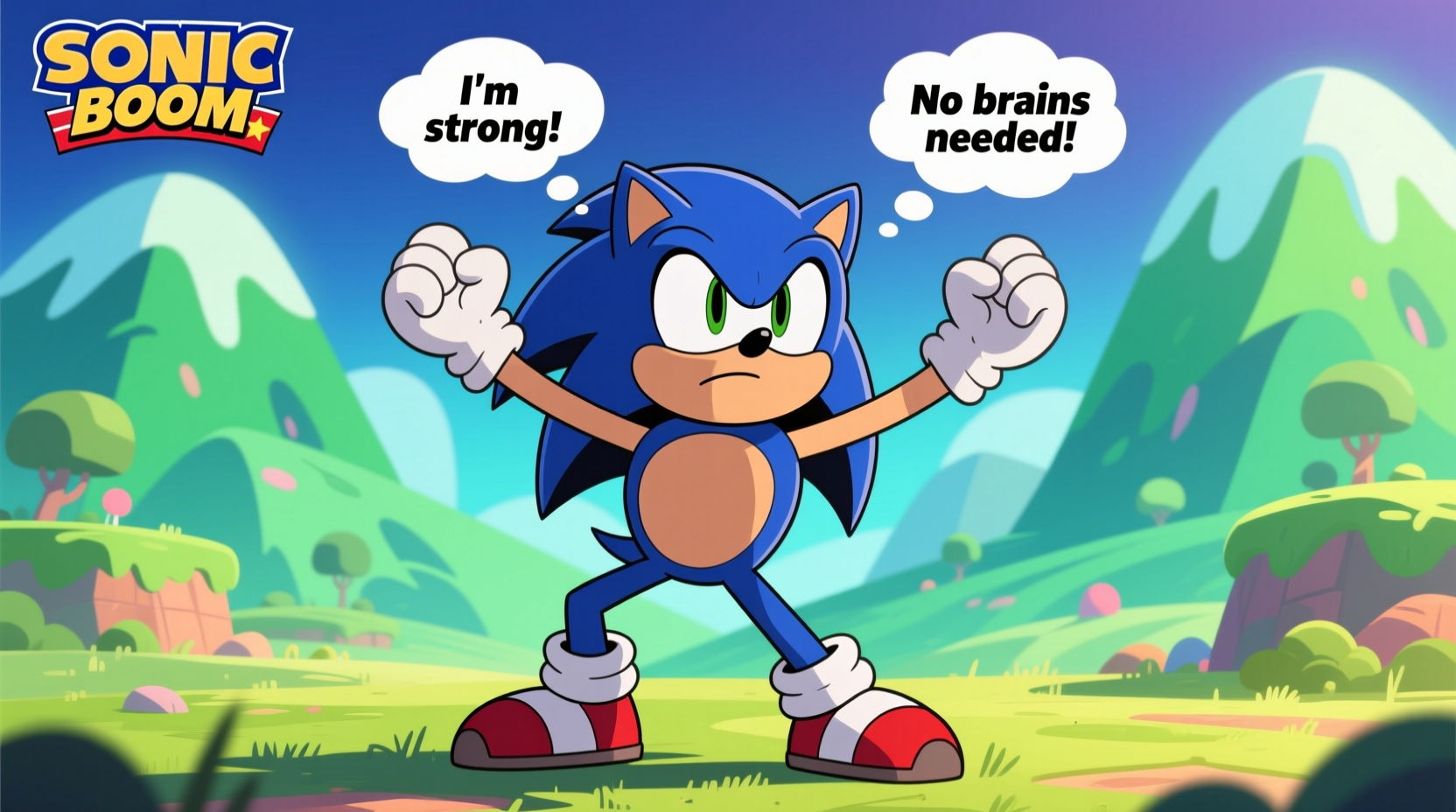
Prior to Sonic Boom, Knuckles had been portrayed across games, comics, and animated series as a serious, disciplined warrior with a strong sense of duty. His intelligence varied by medium, but he was consistently depicted as capable and focused—sometimes even philosophical. In contrast, Sonic Boom redefined him as the team’s comic relief, relying on exaggerated misunderstandings, physical gags, and low emotional intelligence for humor.
This transformation wasn't accidental. The show's creators aimed to pivot toward a more family-friendly, slapstick-driven format inspired by Western animated comedies like Phineas and Ferb or Regular Show. In such formats, character archetypes are often amplified to heighten comedic contrast. Knuckles became the “strong but simple” archetype—a trope commonly used to generate laughs through absurd logic or literal interpretations of idioms.
Creative Intent Behind the Reboot
According to Ian Flynn, longtime writer for IDW’s Sonic the Hedgehog comics and contributor to various Sonic media, the Sonic Boom series was designed as a standalone universe with its own rules. In interviews, developers from Sega and OuiDO! Productions (the French studio behind the animation) emphasized that the goal was not to replicate the game canon, but to create something fresh and accessible to younger viewers unfamiliar with decades of lore.
“We weren’t making a ‘Sonic history lesson.’ We were building a comedy where each character could be pushed to their funniest extreme.” — Anonymous Creative Lead, Interview with GameInformer (2015)
In this context, Knuckles’ reduced intellect served multiple purposes:
- It created friction with Eggman, whose complex plans are constantly undermined by Knuckles misunderstanding basic concepts.
- It allowed for visual gags, such as Knuckles trying to dig through walls indoors because he “senses evil underground.”
- It highlighted Sonic’s role as the clever leader, reinforcing group dynamics through contrast.
A Comparative Look at Knuckles Across Media
| Media | Knuckles' Intelligence Level | Key Traits | Tone |
|---|---|---|---|
| Sonic Adventure (1998) | High – strategic, independent | Loyal, proud, easily manipulated but learns | Dramatic, adventurous |
| Sonic X (2003–2006) | Moderate – serious but gullible | Strong moral code, occasionally tricked | Action-adventure with light humor |
| Sonic Boom (2014–2017) | Low – childlike, literal-minded | Frequently confused, obsessed with digging | Slapstick comedy |
| IDW Comics (2018–present) | High – wise, experienced | Veteran hero, mentor figure | Balanced action and character depth |
The table illustrates how Knuckles’ intelligence has fluctuated based on narrative needs. While his Sonic Boom version sits at the lowest end of cognitive portrayal, it fits within a spectrum of intentional reinterpretations rather than a consistent failure to represent the character accurately.
Impact on Fan Reception and Legacy
The reaction to Knuckles’ new persona was mixed. Longtime fans criticized the portrayal as a betrayal of his established identity. Online forums lit up with complaints about “dumbing down” beloved characters. Some felt that reducing Knuckles to comic fodder undermined themes of honor and strength that defined his legacy.
However, others appreciated the show’s consistency in tone. Children watching the series didn’t carry expectations from 90s video games—they responded positively to Knuckles’ antics. Ratings among preschool and early elementary audiences remained strong throughout the show’s run on Cartoon Network and online platforms.
“My kids don’t care that Knuckles used to guard an emerald. They love that he thinks clouds are made of cotton candy. That’s what matters for this show.” — Parent viewer, Reddit comment thread (2016)
Mini Case Study: “The Curse of Knuckles” Episode
In the Sonic Boom episode titled “The Curse of Knuckles,” the team discovers an ancient echidna tablet predicting doom if certain rituals aren’t followed. Knuckles takes the prophecy literally, refusing to touch doorknobs, wear shoes, or speak above a whisper—all while the real threat (a malfunctioning robot) goes ignored.
This episode exemplifies the show’s approach: Knuckles’ lack of critical thinking creates escalating chaos, while the humor arises from his unwavering commitment to absurd interpretations. From a storytelling standpoint, it works as farce. But for fans expecting mythological depth tied to the echidna civilization, it felt like a missed opportunity.
Was It Really About Being “Dumb”?
Calling Knuckles “dumb” oversimplifies the characterization. He isn’t intellectually disabled—he operates under a different logic system. He frequently displays emotional honesty, loyalty, and bursts of unexpected insight. What he lacks in deductive reasoning, he makes up for in sincerity and physical competence.
In many ways, Knuckles in Sonic Boom embodies the “noble fool” archetype—a character who sees the world plainly, unclouded by overthinking. His simplicity becomes a lens through which the show satirizes bureaucracy, technology obsession, and social pretense.
Checklist: Evaluating Character Changes in Reboots
- Identify the target audience of the new adaptation.
- Assess the genre and tone (comedy, drama, action).
- Compare core personality traits—are they distorted or exaggerated?
- Determine if the change enhances storytelling or undermines it.
- Consider whether the character still fulfills a meaningful role in the ensemble.
Frequently Asked Questions
Did the voice actor influence Knuckles’ personality?
Yes. Travis Willingham, who voiced Knuckles in Sonic Boom, brought a deep, deliberate delivery that emphasized the character’s slow processing style. His performance leaned into comedic timing, further cementing the “earnest but clueless” vibe. However, the writing came first—the vocal interpretation followed the script’s direction.
Is Knuckles still this way in current Sonic media?
No. Since the conclusion of Sonic Boom, Knuckles has returned to more traditional portrayals. In the 2020 Sonic the Hedgehog film and its sequels, he is depicted as ancient, powerful, and spiritually grounded—far removed from the cartoon’s version. Similarly, IDW’s comics restore his wisdom and leadership qualities.
Was the dumb Knuckles ever meant to be permanent?
No. Sonic Boom was always intended as a self-contained continuity. Its versions of Sonic, Tails, Amy, and Knuckles were never meant to replace the canonical iterations. Once the show ended, so did that particular interpretation.
Conclusion: Understanding, Not Judging
The question “why is Knuckles dumb in Sonic Boom?” stems from genuine attachment to a character’s legacy. But the answer reveals a deeper truth about adaptations: they evolve to meet new goals. Sonic Boom wasn’t trying to continue the saga of Mobius—it was crafting a lighthearted comedy where exaggeration fuels entertainment.
While the portrayal may not resonate with everyone, it succeeded in making Knuckles memorable in a different way—one that brought laughter to a new generation. Rather than dismissing the change, fans can appreciate it as one expression among many in a decades-spanning franchise.




 浙公网安备
33010002000092号
浙公网安备
33010002000092号 浙B2-20120091-4
Comments
No comments yet. Why don't you start the discussion?