
Life often feels like a series of unavoidable hardships—loss, illness, failure, loneliness, injustice. At times, the weight of emotional or physical pain makes it difficult to believe that anything good can come from enduring such experiences. Yet, throughout history, philosophers, psychologists, and spiritual traditions have wrestled with the same question: Why is life so painful? More importantly, they’ve asked: Can we find meaning in suffering?
The answer isn’t simple, but it’s deeply human. Pain is not an error in existence—it’s woven into the fabric of being alive. What separates mere survival from genuine growth is how we interpret and respond to suffering. Rather than seeking to eliminate all discomfort, a more sustainable path involves understanding its roots and discovering purpose within it.
The Nature of Suffering: Why Pain Is Inevitable
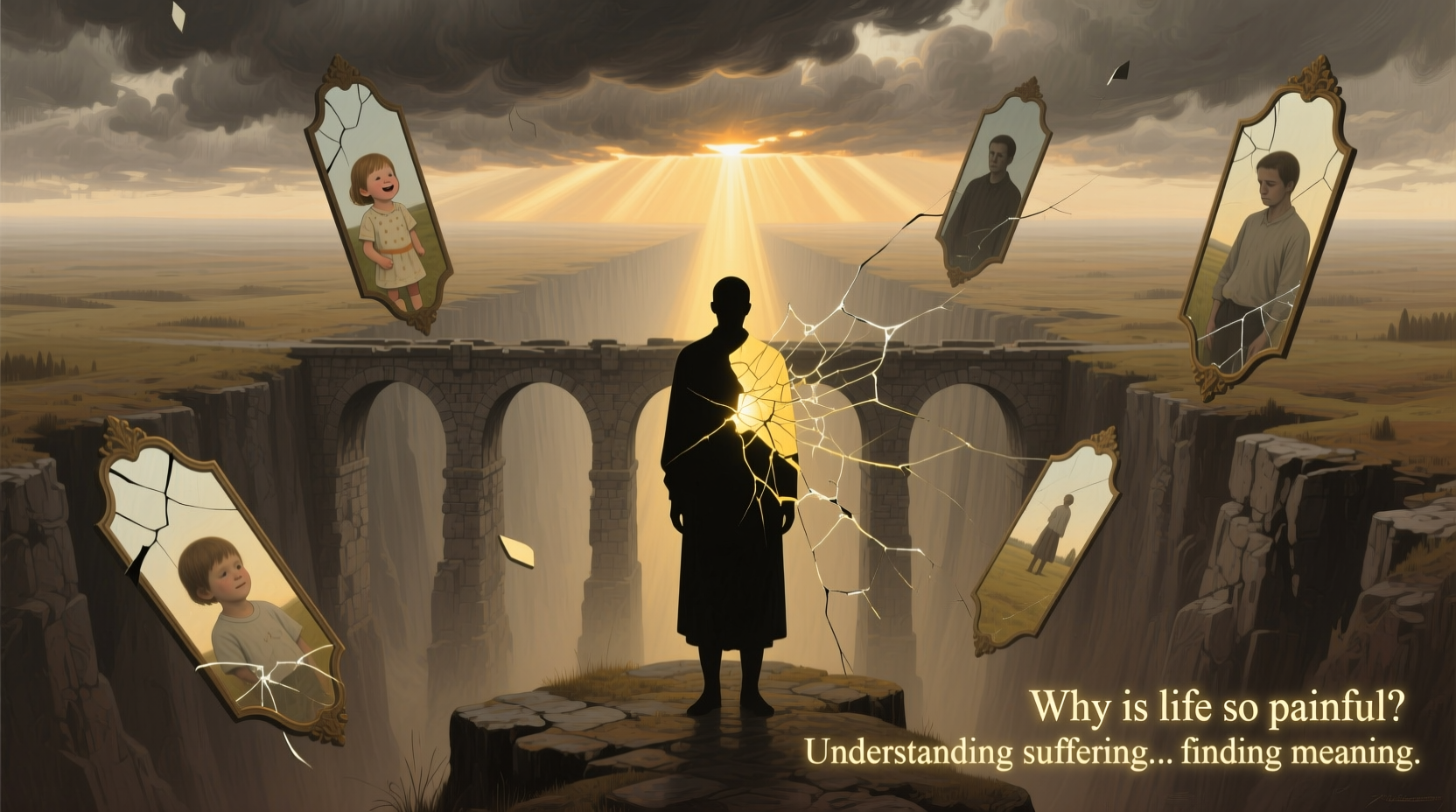
Suffering arises from both external events and internal reactions. We experience pain when our expectations clash with reality—when someone we love dies, when a career collapses, or when our health declines. But even in the absence of crisis, existential unease lingers: the fear of irrelevance, the search for identity, the awareness of mortality.
Buddhist philosophy identifies craving and attachment as primary sources of suffering. When we cling to outcomes, relationships, or identities, any disruption causes distress. Similarly, modern psychology recognizes that avoidance of discomfort often intensifies it. The attempt to suppress pain—through distraction, denial, or substance use—can prolong and deepen it.
“Pain is inevitable. Suffering is optional.” — Haruki Murakami
This distinction matters. Pain refers to the raw sensation—physical or emotional—that something is wrong. Suffering, however, emerges from our resistance to that pain, our stories about it, and our belief that it shouldn’t be happening.
Finding Meaning in the Midst of Pain
Viktor Frankl, a Holocaust survivor and psychiatrist, argued that meaning is the most powerful motivator in human life—even stronger than pleasure or comfort. In his book *Man’s Search for Meaning*, he described how prisoners who found purpose—whether caring for others, envisioning future work, or holding onto love—were far more likely to survive the camps.
Frankl developed logotherapy, a psychological approach based on the idea that the primary human drive is not pleasure (as Freud claimed) or power (as Adler suggested), but the pursuit of meaning. According to this view, suffering itself can become meaningful when it leads to personal transformation, deeper empathy, or service to others.
Three Sources of Meaning Amid Suffering
- Creative values: Contributing through work, art, or problem-solving—even in small ways—gives a sense of agency.
- Experiential values: Love, beauty, nature, and connection remind us of joy despite hardship.
- Attitudinal values: Choosing courage, dignity, or compassion in the face of unavoidable pain transforms suffering into something noble.
A Real Example: From Grief to Purpose
Consider Sarah, a teacher who lost her younger brother to addiction. For months, she was consumed by guilt and anger. She questioned whether she could have done more. Therapy helped her process the grief, but what truly shifted her perspective was volunteering at a recovery center.
She began sharing her story with families facing similar struggles. In doing so, she didn’t erase the pain—but she gave it meaning. Her loss became a bridge to help others feel less alone. Over time, her sorrow evolved into advocacy, not because the pain disappeared, but because she found a way to carry it with purpose.
This is not about “positive thinking” or toxic optimism. It’s about refusing to let suffering have the final word.
Common Misconceptions About Pain and Growth
Many well-intentioned people offer platitudes like “Everything happens for a reason” or “Time heals all wounds.” While meant to comfort, such statements can minimize real anguish. Healing isn’t linear, and not every tragedy has a silver lining. Acknowledging this is crucial.
| Misconception | Reality |
|---|---|
| Pain should be avoided at all costs. | Some forms of pain are necessary for growth; avoidance often leads to greater long-term suffering. |
| Strong people don’t show emotion. | Vulnerability and emotional expression are signs of strength and self-awareness. |
| You must “get over” your pain quickly. | Grief and trauma require time and integration, not suppression. |
| Meaning must be found immediately. | Meaning often emerges gradually, sometimes years after the event. |
Practical Steps to Navigate Suffering With Purpose
While no single method works for everyone, certain practices consistently support emotional resilience and meaning-making.
Step-by-Step Guide: Turning Pain Into Insight
- Pause and acknowledge the pain: Name what you’re feeling without judgment. “I am grieving,” “I feel betrayed,” or “I’m overwhelmed” are valid starting points.
- Allow space for emotion: Set aside time to journal, cry, or talk with a trusted person. Suppression delays healing.
- Reflect on what matters most: Ask: “What values do I want to live by, even in difficulty?” Integrity? Kindness? Courage?
- Take one small action aligned with those values: Write a letter, help someone else, create something, or simply show up for yourself.
- Reassess over time: Revisit your experience monthly. How has your understanding changed? What have you learned?
FAQ: Common Questions About Suffering and Meaning
Does every painful experience have a purpose?
No. Some tragedies are senseless and unjust. The goal isn’t to force meaning onto every event, but to ask whether meaning can still be created in response to it. Purpose doesn’t negate pain—it coexists with it.
How do I stay hopeful when everything feels dark?
Hope isn’t the belief that things will get better; it’s the choice to act as if they might. Start small: care for your body, reach out to one person, notice one beautiful thing each day. These acts keep hope alive even when feelings don’t match.
Can therapy really help with existential pain?
Yes. Therapies like Acceptance and Commitment Therapy (ACT) and logotherapy specifically address questions of meaning and suffering. A skilled therapist doesn’t provide answers but helps you explore your values and responses in depth.
Conclusion: Embracing Life Fully—Pain and All
Life is painful because it is finite, fragile, and full of uncertainty. But it is also rich, connected, and capable of profound depth. The presence of pain does not cancel out the possibility of joy, love, or purpose. In fact, they often arise together.
Understanding suffering doesn’t mean eliminating it. It means learning to walk alongside it with greater awareness, compassion, and intention. When we stop asking only “Why is this happening to me?” and begin asking “What can I do with this?” we reclaim our agency.
Meaning isn’t found in the absence of pain, but in the quality of our response to it. You don’t need to have all the answers. You only need to take one step forward—with honesty, with heart, and with the quiet courage to keep going.




 浙公网安备
33010002000092号
浙公网安备
33010002000092号 浙B2-20120091-4
Comments
No comments yet. Why don't you start the discussion?