
Waking up with a numb arm is more than just an annoyance—it’s your body’s way of signaling that something in your sleep posture may be compromising nerve function or blood flow. While occasional tingling might seem harmless, frequent episodes can point to underlying issues related to pressure on nerves, poor circulation, or spinal alignment. The good news is that most cases are preventable by adjusting your sleeping position and habits. Understanding the root causes and knowing which postures to avoid can make a significant difference in both comfort and long-term nerve health.
What Causes Arm Numbness Upon Waking?
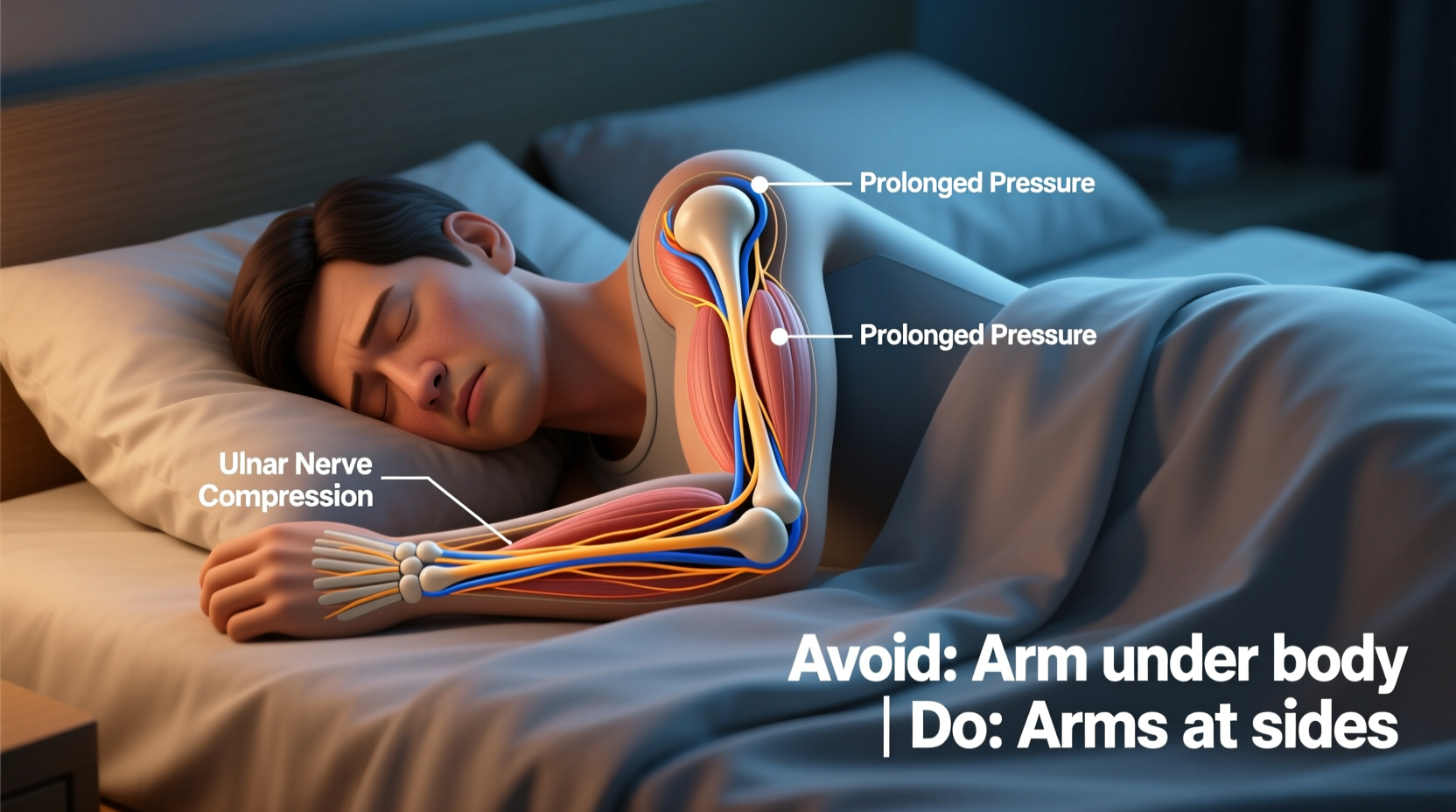
Numbness in the arm during or after sleep typically results from sustained pressure on nerves or blood vessels. The brachial plexus—a network of nerves running from the neck through the shoulders and down the arms—is especially vulnerable when compressed during sleep. Similarly, lying in a way that restricts blood flow can lead to temporary ischemia, causing that familiar \"pins and needles\" sensation.
The most common culprit is sleeping with your arm under your pillow, beneath your torso, or bent at an awkward angle for prolonged periods. This compresses nerves like the ulnar or median nerve, leading to localized numbness—often in the forearm, hand, or fingers. In some cases, cervical spine issues such as herniated discs or spinal stenosis can exacerbate these symptoms, especially if nerve roots in the neck are already irritated.
“Repeated compression of peripheral nerves during sleep can lead to chronic irritation or even permanent nerve damage over time.” — Dr. Alan Torres, Neurologist and Sleep Medicine Specialist
Common Sleeping Positions That Cause Arm Numbness
Your choice of sleep posture plays a critical role in whether you wake up refreshed or with a tingling limb. Some positions place undue stress on nerves and joints, particularly when maintained for hours. Below are the most problematic sleeping habits linked to arm numbness:
- Sleeping on your arm: Lying directly on one arm cuts off circulation and compresses nerves, often resulting in immediate numbness upon waking.
- Arm tucked under the pillow or head: This elevates the shoulder and pinches the brachial plexus, increasing risk of thoracic outlet syndrome symptoms.
- Fetal position with arms tightly curled: While comfortable for many, this pose can bend the elbows past 90 degrees, compressing the ulnar nerve (the “funny bone” nerve).
- Stomach sleeping with arms overhead: This stretches the neck and shoulders unnaturally, straining cervical nerves that innervate the arms.
- Using a pillow that’s too high or too firm: Elevating the head excessively can misalign the cervical spine, indirectly affecting nerve pathways to the arms.
Best Sleeping Positions to Prevent Arm Numbness
Adjusting your sleep position isn’t about achieving perfection—it’s about reducing repetitive strain on sensitive structures. The ideal posture supports spinal alignment while minimizing pressure on nerves and blood vessels.
1. Back Sleeping (Supine Position)
This is widely considered the best position for overall spinal and nerve health. When lying on your back, keep your arms relaxed at your sides or gently rest them on pillows beside you. Avoid folding your arms across your chest or placing them under your head.
2. Side Sleeping with Proper Arm Support
If you prefer side sleeping, ensure your top arm isn’t draped forward or trapped beneath your body. Use a supportive pillow between your knees to align the hips and reduce spinal twist. For arm comfort, place a small pillow in front of your chest to cradle the upper arm and keep the elbow flexed at a natural angle.
3. Neutral Spine Alignment Is Key
No matter your preferred position, maintaining a neutral spine—where your head, neck, and back are aligned without bending or twisting—is essential. A contoured memory foam pillow can help keep your neck in line with your spine, reducing nerve tension.
| Sleeping Position | Risk Level for Arm Numbness | Recommendations |
|---|---|---|
| Back with arms at sides | Low | Use a supportive pillow; keep shoulders relaxed |
| Side with arm elevated or supported | Low-Moderate | Use a pillow to support the top arm; align spine |
| Sleeping on arm | High | Avoid completely; reposition during sleep if needed |
| Fetal position with tight arm curl | Moderate-High | Loosen arm position; use padding for support |
| Stomach with arms overhead | High | Switch to back or side sleeping; adjust pillow height |
Step-by-Step Guide to Reducing Nighttime Arm Numbness
Changing long-standing sleep habits takes awareness and consistency. Follow this practical timeline to gradually eliminate the causes of arm numbness:
- Week 1: Monitor Your Current Habits
Before falling asleep, take note of your arm position. You can even set a reminder on your phone to check your posture halfway through the night. Awareness is the first step toward change. - Week 2: Optimize Your Sleep Setup
Replace overly firm or flat pillows with ones that support cervical alignment. Add a soft pillow beside your torso if you're a side sleeper to prevent your arm from dropping into a compressed position. - Week 3: Practice Correct Posture Before Bed
Spend 5–10 minutes lying in your target sleep position while awake. Train your body to associate comfort with healthier alignment. - Week 4: Introduce Gentle Stretches
Incorporate nightly stretches for the neck, shoulders, and arms. Focus on movements that open the chest and relieve tension in the brachial plexus. - Ongoing: Evaluate Progress Weekly
Keep a simple log: Did you wake up with numbness? How many times? Adjust your setup based on results. Most people notice improvement within 3–4 weeks.
When Numbness Signals a More Serious Condition
While positional numbness usually resolves within minutes of changing posture, persistent or worsening symptoms may indicate an underlying medical issue. Conditions such as carpal tunnel syndrome, cubital tunnel syndrome, cervical radiculopathy, or diabetes-related neuropathy can mimic or amplify sleep-related numbness.
Seek medical evaluation if you experience any of the following:
- Numbness that lasts longer than 30 minutes after waking
- Weakened grip strength or muscle atrophy in the hands
- Pain radiating from the neck down the arm
- Numbness occurring during the day, not just at night
- Burning sensations or tingling that spreads beyond the arm
“Nighttime numbness is often dismissed as normal, but when it becomes frequent or asymmetric—only affecting one arm—it warrants clinical assessment.” — Dr. Lena Patel, Physical Medicine and Rehabilitation Specialist
Mini Case Study: Recovering from Chronic Morning Numbness
Mark, a 42-year-old software developer, had been waking up with a numb left arm two to three times per week for nearly six months. He assumed it was due to stress or poor sleep until the tingling began lasting into the morning hours. After consulting a neurologist, he learned he had mild cervical disc degeneration aggravated by his sleep posture—he routinely slept on his stomach with his left arm tucked under his pillow.
Following a tailored plan, Mark transitioned to back sleeping using a cervical pillow and began daily neck and shoulder stretches. Within five weeks, his nighttime numbness decreased to once every few weeks, and daytime tingling disappeared. His case highlights how positional changes, even in the presence of structural issues, can significantly reduce symptoms.
Checklist: Prevent Arm Numbness While You Sleep
Use this actionable checklist to create a nerve-friendly sleep environment:
- ☐ Avoid sleeping directly on your arm or shoulder
- ☐ Keep arms out from under your head or pillow
- ☐ Choose a pillow that keeps your neck aligned with your spine
- ☐ Use additional pillows to support arms in side-sleeping positions
- ☐ Perform gentle shoulder rolls and neck stretches before bed
- ☐ Limit alcohol before bedtime (it increases muscle relaxation and poor positioning)
- ☐ Replace old mattresses that no longer support spinal alignment
- ☐ Consult a doctor if numbness persists despite changes
Frequently Asked Questions
Is it dangerous to wake up with a numb arm every night?
Occasional numbness is common, but nightly episodes suggest chronic nerve compression. Over time, this can lead to axonal damage or chronic pain syndromes. It's not immediately dangerous but should be addressed to prevent long-term complications.
Can anxiety cause arm numbness at night?
Anxiety itself doesn’t directly cause numbness, but heightened stress can increase muscle tension in the neck and shoulders, making nerve compression more likely. Hypervigilance may also make you more aware of minor sensations, amplifying perceived discomfort.
Will changing my pillow really make a difference?
Yes. A poorly sized pillow can tilt your head upward or sideways, straining the cervical spine and irritating nerve roots. Switching to a supportive pillow designed for your sleep position can reduce nerve tension and improve overall comfort.
Take Control of Your Sleep Health Today
Waking up with a numb arm doesn’t have to be a routine part of your mornings. By understanding how your sleeping position affects nerve function and making small, sustainable adjustments, you can restore comfort and protect your long-term health. Start tonight: reposition your arms, evaluate your pillow, and commit to one positive change. Your nervous system will thank you in the morning—and for years to come.




 浙公网安备
33010002000092号
浙公网安备
33010002000092号 浙B2-20120091-4
Comments
No comments yet. Why don't you start the discussion?