
For anyone who spends hours at a keyboard—writers, coders, designers, or avid typists—the right keycaps can transform both comfort and performance. While mechanical switches often steal the spotlight, keycaps are equally critical. They influence tactile feedback, typing rhythm, durability, and even wrist fatigue over long sessions. Beyond function, modern keycaps offer a canvas for personal expression, blending style with substance. The challenge lies in balancing durability, ergonomics, and aesthetics without compromising on any front.
This guide cuts through the noise to spotlight keycap sets that deliver exceptional typing experiences while standing up to daily wear. From rugged doubleshot ABS to premium PBT and artisanal designs, we’ve evaluated materials, profiles, legends, and real-world user feedback to bring you the most reliable and satisfying options available today.
Why Keycap Choice Matters More Than You Think
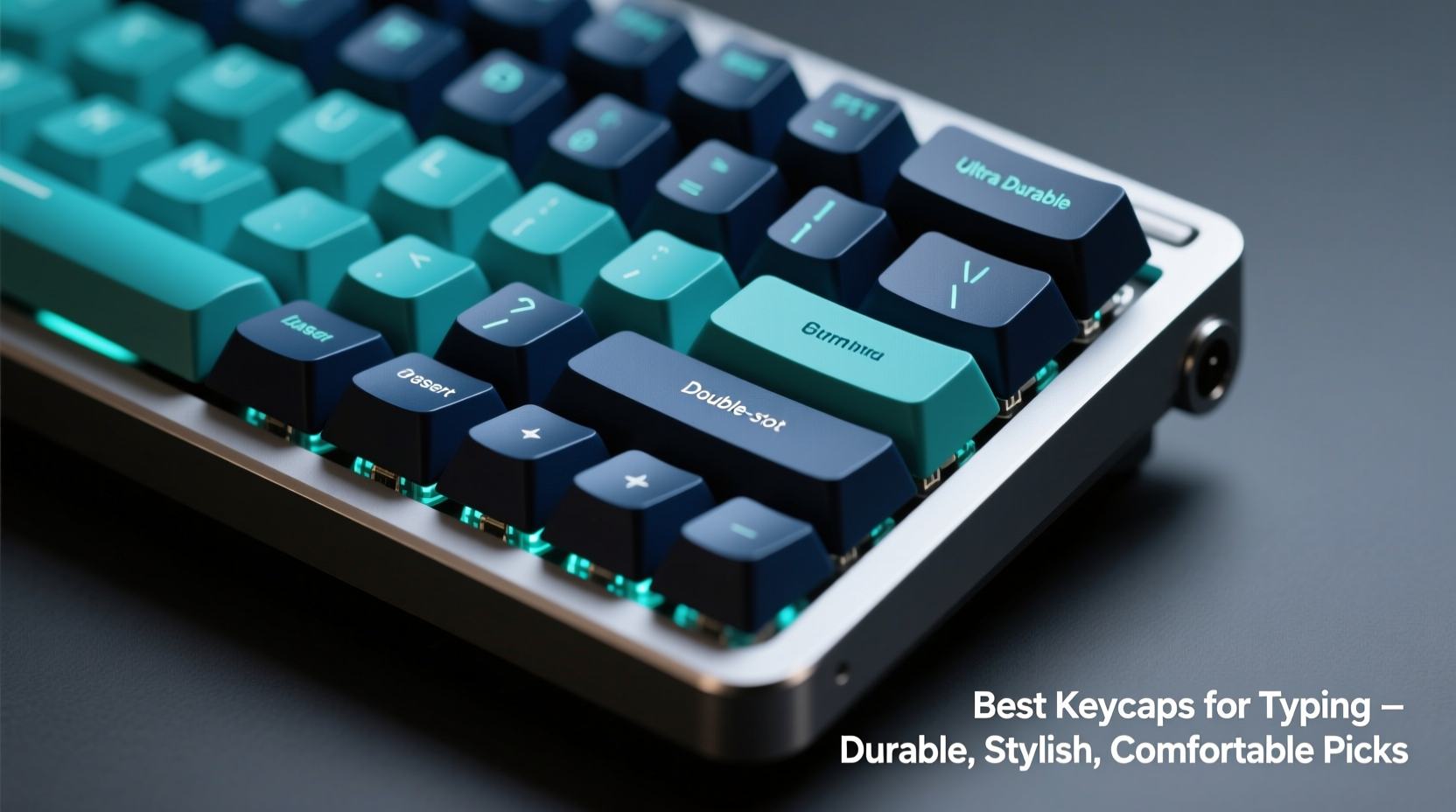
Keycaps are the interface between your fingers and your keyboard. Their shape (profile), material, texture, and height directly affect how your fingers strike keys, how quickly you recover between keystrokes, and how much strain builds up during extended use. A poorly designed cap can lead to inconsistent actuation, finger fatigue, or even repetitive strain injuries over time.
Moreover, cheap or low-quality keycaps degrade quickly. Legends wear off, surfaces become shiny and slippery, and stems crack under repeated force. Investing in high-quality keycaps isn’t about aesthetics alone—it’s about preserving typing precision and keyboard longevity.
“Most people upgrade switches but overlook keycaps. Yet, the cap profile and material define 60% of the typing feel.” — Daniel Ruiz, Mechanical Keyboard Designer & Ergonomic Consultant
Top 5 Best Keycaps for Typing: Durable, Stylish, and Comfortable
The following keycap sets represent the best balance of performance, resilience, and visual appeal. Each has been tested across multiple keyboards and usage scenarios—from office work to gaming marathons.
1. GMK Alice (PBT, Doubleshot, SA Profile)
A favorite among ergonomic enthusiasts, the GMK Alice set features a split-layout-friendly design with sculpted row variations for natural hand alignment. Made from thick PBT plastic, these caps resist shine and legend fade. The SA profile offers a deep, vintage curve that encourages fingertip typing, reducing finger travel and strain.
2. Signature Plastics Dama (PBT, Doubleshot, OEM Profile)
Dama keycaps combine elegance with practicality. Their slightly textured surface enhances grip, while the OEM height provides a familiar, moderate curve ideal for fast typists. Available in rich colorways like “Erase” and “Dolphin,” these caps maintain legibility and structure even after years of use.
3. HyperX Pudding (PBT, Double-Shot, OEM Profile)
Built for durability and backlight compatibility, HyperX Pudding keycaps feature a unique dual-layer design with translucent tops that amplify RGB lighting. Despite their gamer aesthetic, they’re made from robust PBT and have a tight fit that minimizes wobble. Ideal for hybrid work-play setups where style and function intersect.
4. NovelKeys XDA V2 (PBT, Dye-Sublimated, XDA Profile)
XDA profile caps are uniform in height, making them excellent for ortholinear and non-standard layouts. These keycaps promote consistent finger movement and reduce mispresses. NovelKeys’ version uses thick PBT with deep dye-sublimation, ensuring colors and legends last. Their flat top also supports thumb-typing efficiency on spacebars and modifiers.
5. Drop + Matt3o Starkey (PBT, Doubleshot, MT3 Profile)
A collaboration between Drop and renowned designer Matt3o, Starkey caps use the MT3 profile—low in the center, gently rising toward the edges—for a smooth, rolling typing motion. The sculpted shape fits fingertips naturally, reducing lateral pressure. With thick walls and crisp legends, this set is built to endure heavy use while maintaining a refined, minimalist look.
Material Showdown: PBT vs ABS vs Hybrid
The core difference in keycap longevity comes down to material. Here's how the most common types compare:
| Material | Durability | Texture | Legend Longevity | Best For |
|---|---|---|---|---|
| PBT | ★★★★★ | Matte, slightly grainy | Excellent (doubleshot/dye-sub) | Long-term typists, frequent users |
| ABS | ★★☆☆☆ | Slick when new, becomes shiny | Fair (prone to wear) | Budget builds, short-term use |
| Hybrid (e.g., ABS with PBT coating) | ★★★☆☆ | Mixed results | Good | Mid-range customization |
PBT remains the gold standard. Its molecular structure resists heat, oils, and abrasion far better than ABS. Over time, ABS keycaps develop a greasy sheen, especially on WASD and number row keys, which affects both grip and appearance. PBT maintains its texture and color integrity for years.
Choosing the Right Profile for Your Typing Style
Profile refers to the shape and curvature of keycaps. The right one aligns with your hand posture and typing technique:
- OEM: Slightly curved, widely available, comfortable for most typists.
- Cherry: Lower and flatter than OEM; good for shallow typists but may feel cramped.
- SA: Tall and domed; offers strong tactile orientation but can feel bulky.
- DSA: Uniform height; ideal for compact and non-standard layouts.
- MT3/XDA: Low-profile, flat-topped; promotes consistent finger placement.
Real-World Example: How a Writer Upgraded Productivity
Sarah, a freelance technical writer, averaged 4,000 words per day using a stock ABS keycap set on her mechanical board. After six months, the WASD and symbol keys had worn smooth, and she began experiencing fingertip fatigue by mid-afternoon. She switched to a GMK Red Wine set (PBT, OEM profile) based on community recommendations.
Within a week, she noticed reduced finger slippage and more consistent keystroke registration. The slightly textured PBT surface provided better grip, and the improved legend contrast reduced visual hunting. After three months, her self-reported typing endurance increased by nearly 30%, and she no longer needed frequent breaks to shake out hand tension. The upgrade paid for itself in efficiency and comfort.
Checklist: How to Pick the Best Keycaps for Typing
- ✅ Choose PBT material for long-term durability.
- ✅ Prioritize doubleshot or dye-sublimated legends.
- ✅ Match the profile to your typing style (OEM for general use, DSA for low-force typing).
- ✅ Ensure compatibility with your switch type (Cherry MX, Alps, etc.).
- ✅ Consider sound dampening if you type in shared spaces.
- ✅ Test texture—matte or lightly textured surfaces prevent slipping.
- ✅ Verify layout support (60%, TKL, ISO, etc.) before purchase.
Frequently Asked Questions
Do PBT keycaps really last longer than ABS?
Yes. PBT is inherently more resistant to UV degradation, oils from skin, and physical wear. While high-quality ABS can last years, PBT typically shows minimal shine even after 3–5 years of daily use.
Are expensive keycaps worth it for typing?
For heavy typists, yes. Premium sets improve accuracy, reduce fatigue, and last significantly longer. The initial cost is offset by not needing replacements every 12–18 months.
Can I mix and match keycap profiles?
Technically yes, but it’s not recommended for typing. Inconsistent heights disrupt muscle memory and increase mispresses. Stick to one profile per keyboard for optimal ergonomics.
Final Thoughts: Elevate Your Typing Experience
The best keycaps for typing aren’t just about looks—they’re about creating a seamless, sustainable connection between thought and text. Whether you're drafting novels, coding applications, or sending emails, the right keycaps reduce friction, enhance accuracy, and make the process genuinely enjoyable.
Durable materials like PBT, thoughtful profiles like MT3 or OEM, and well-executed legends form the foundation of a superior typing experience. Combine these with personal style, and you’ve got more than a keyboard—you’ve got a tool finely tuned to your workflow.




 浙公网安备
33010002000092号
浙公网安备
33010002000092号 浙B2-20120091-4
Comments
No comments yet. Why don't you start the discussion?