
Betta fish are known for their vibrant colors, flowing fins, and active personalities. When a once-lively betta becomes sluggish, spends most of its time at the bottom of the tank, or shows little interest in food, it’s natural to worry. Lethargy in bettas is not normal behavior—it’s a warning sign that something in their environment or health has gone awry. While many assume illness is the primary cause, the truth is that poor water conditions are responsible for the vast majority of lethargic behavior in bettas. Understanding the key water parameters and how they affect your fish is essential to restoring its energy and ensuring long-term well-being.
Common Causes of Lethargy in Betta Fish
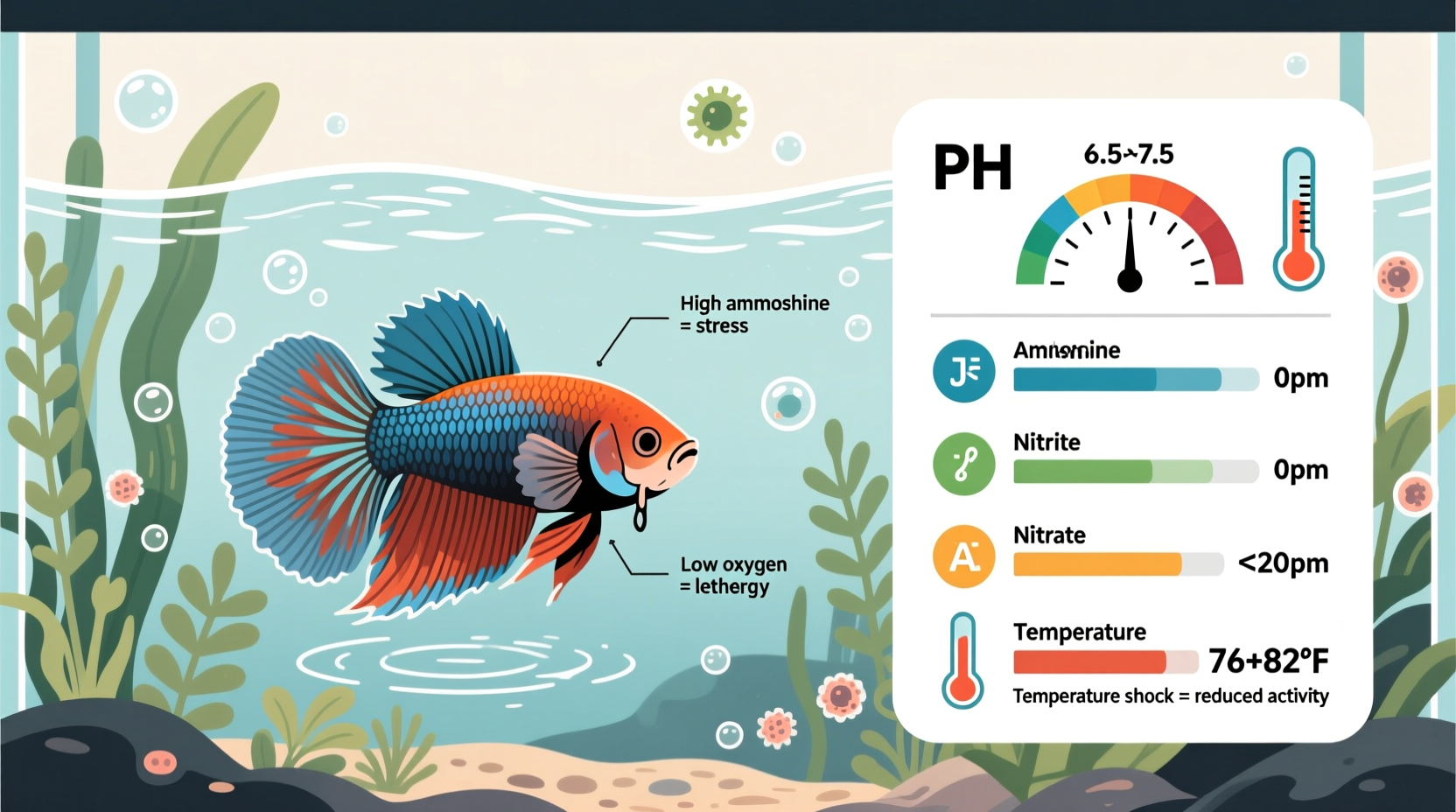
Lethargy in bettas can stem from multiple sources, but nearly all are tied to environmental stressors. The most frequent causes include:
- Poor water quality: Ammonia, nitrite, or high nitrate levels poison the fish over time.
- Incorrect temperature: Bettas are tropical fish and require stable warmth between 76°F and 80°F (24°C–27°C).
- Overcrowding or inadequate space: Small bowls restrict movement and degrade water quickly.
- Disease: Fin rot, ich, or internal infections often follow prolonged exposure to bad water.
- Dietary issues: Overfeeding leads to bloating; underfeeding results in low energy.
- Stress from tank mates or decorations: Aggressive tank mates or sharp objects can cause physical and psychological strain.
Among these, water quality stands out as the root cause in over 80% of cases. Even if your betta appears otherwise healthy, toxic compounds invisible to the naked eye can suppress immune function and disrupt metabolism.
The Most Critical Water Parameters for Betta Health
Bettas thrive only when their aquatic environment mimics their natural habitat: warm, clean, and chemically balanced. These four parameters are non-negotiable for maintaining an energetic, healthy betta.
1. Ammonia (NH₃/NH₄⁺)
Ammonia is produced from fish waste, uneaten food, and decaying plant matter. Even low levels (above 0 ppm) are extremely toxic. It burns gills, impairs oxygen uptake, and damages internal organs. A lethargic betta in ammonia-rich water may gasp at the surface or hover near filters seeking oxygen.
2. Nitrite (NO₂⁻)
Nitrite forms during the nitrogen cycle when beneficial bacteria break down ammonia. Like ammonia, it should be 0 ppm at all times. Nitrite binds to hemoglobin, preventing oxygen transport—essentially suffocating the fish internally. This directly causes fatigue and listlessness.
3. Nitrate (NO₃⁻)
Nitrate is the end product of the nitrogen cycle. While less toxic than ammonia or nitrite, levels above 40 ppm become stressful. Chronic exposure weakens immunity and reduces activity. Weekly water changes keep nitrates in check.
4. Temperature
Bettas are ectothermic—their body temperature matches their surroundings. Below 74°F (23°C), their metabolism slows dramatically. They eat less, move slower, and become vulnerable to disease. Consistent warmth is vital for digestion and energy.
“Water quality isn’t just about clarity—it’s about chemistry. A crystal-clear tank can still be toxic if ammonia or nitrite is present.” — Dr. Rebecca Tran, Aquatic Veterinarian
Water Testing: A Step-by-Step Guide
Testing your aquarium water regularly is the only way to detect invisible threats. Follow this routine to ensure optimal conditions:
- Gather a liquid test kit: Avoid cheap strips—they lack accuracy. Use a reputable brand like API Freshwater Master Test Kit.
- Test weekly: Check ammonia, nitrite, nitrate, and pH every 7 days, or more often in new tanks.
- Sample correctly: Dip the test tube into the middle of the tank, away from decorations or substrate.
- Follow instructions precisely: Add drops, shake, wait, then compare color to the chart.
- Record results: Track trends over time in a notebook or app.
- Act immediately if toxins are detected: Perform a partial water change (25–50%) with dechlorinated water matched to tank temperature.
If ammonia or nitrite registers above zero, test daily until both read 0 ppm. This indicates a cycling issue or overstocking problem.
Do’s and Don’ts of Betta Water Management
| Do’s | Don’ts |
|---|---|
| Use a heater to maintain 76–80°F (24–27°C) | Keep bettas in unheated bowls or cups |
| Perform 25% water changes weekly | Change all the water at once—this shocks the fish |
| Dechlorinate tap water before adding | Add untreated tap water directly to the tank |
| Use live plants to absorb nitrates naturally | Overclean the tank—avoid scrubbing all biofilm off surfaces |
| Feed once daily, only what the fish eats in 2 minutes | Overfeed—excess food rots and pollutes water |
Mini Case Study: Reviving a Lethargic Betta
Sarah noticed her male betta, Azure, had stopped flaring at his reflection and spent most of his time motionless near the gravel. He wasn’t eating, and his fins were clamped. Concerned, she brought him to a local aquarium store for advice. The staff tested her 3-gallon tank and found shocking results: ammonia at 1.0 ppm, nitrite at 0.5 ppm, and temperature at 70°F.
The technician explained that while the tank looked clean, it was biologically unstable. Sarah had added the betta two weeks earlier without pre-cycling the tank. Beneficial bacteria hadn’t established, so waste accumulated rapidly.
She performed a 50% water change using conditioned, heated water and installed a small heater. She also added a bacterial supplement to accelerate cycling. Within 48 hours, ammonia dropped to 0.25 ppm and continued falling with daily monitoring. By day five, Azure began swimming normally and accepted food again. After one week, all parameters stabilized, and his energy returned fully.
This case illustrates how invisible chemical imbalances can cause rapid decline—and how prompt correction leads to recovery.
Essential Checklist for Healthy Betta Water
Use this checklist weekly to prevent lethargy and maintain peak condition:
- ✅ Test ammonia – must be 0 ppm
- ✅ Test nitrite – must be 0 ppm
- ✅ Test nitrate – keep below 40 ppm
- ✅ Check temperature – maintain 76–80°F (24–27°C)
- ✅ Verify heater is functioning properly
- ✅ Inspect filter flow – gentle current only
- ✅ Remove any uneaten food after 10 minutes
- ✅ Perform 25% water change with dechlorinated water
- ✅ Clean glass and decor gently—preserve beneficial bacteria
- ✅ Observe fish behavior daily for early signs of distress
Frequently Asked Questions
Can a lethargic betta recover?
Yes, in most cases. If the cause is poor water quality or low temperature, correcting the environment often leads to full recovery within days. However, if secondary infections like fin rot or swim bladder disorder have developed, treatment may be needed alongside water corrections.
How long does it take to fix bad water parameters?
With consistent action, ammonia and nitrite can drop to safe levels within 3–7 days. This requires partial water changes, use of water conditioners (like Seachem Prime), and possibly bacterial supplements. Complete stabilization of the nitrogen cycle typically takes 4–6 weeks in a new tank.
Is a filter necessary for a betta?
Yes, especially in tanks 5 gallons or larger. Filters house beneficial bacteria and help circulate water without creating strong currents. For smaller setups, sponge filters provide gentle filtration and biological support. Never use powerful filters that create strong flow—betta fins are delicate and struggle in turbulence.
Conclusion: Act Now to Restore Your Betta’s Vitality
A lethargic betta is sending a clear message: its environment needs attention. While symptoms may resemble disease, the solution usually lies not in medication, but in meticulous water management. Monitoring ammonia, nitrite, nitrate, and temperature isn’t optional—it’s fundamental to responsible fishkeeping. With consistent testing, proper equipment, and routine maintenance, you can transform a sluggish, suffering betta into a vibrant, active companion.




 浙公网安备
33010002000092号
浙公网安备
33010002000092号 浙B2-20120091-4
Comments
No comments yet. Why don't you start the discussion?