
If you've ever brought home a new appliance only to find your cat more interested in the cardboard box than the device itself, you're not alone. Cats have an undeniable fascination with boxes—squeezing into shipping containers, curling up in shoeboxes, or claiming empty packaging as their personal throne. While this behavior may seem whimsical or even inexplicable, it's deeply rooted in feline biology, psychology, and evolutionary adaptation. Understanding why cats love boxes offers valuable insight into their mental well-being, stress responses, and instinctual needs.
This article explores the science behind the box obsession, what it reveals about how cats perceive safety and comfort, and how owners can use this knowledge to improve their pet’s quality of life.
The Science Behind the Box: Thermoregulation and Comfort
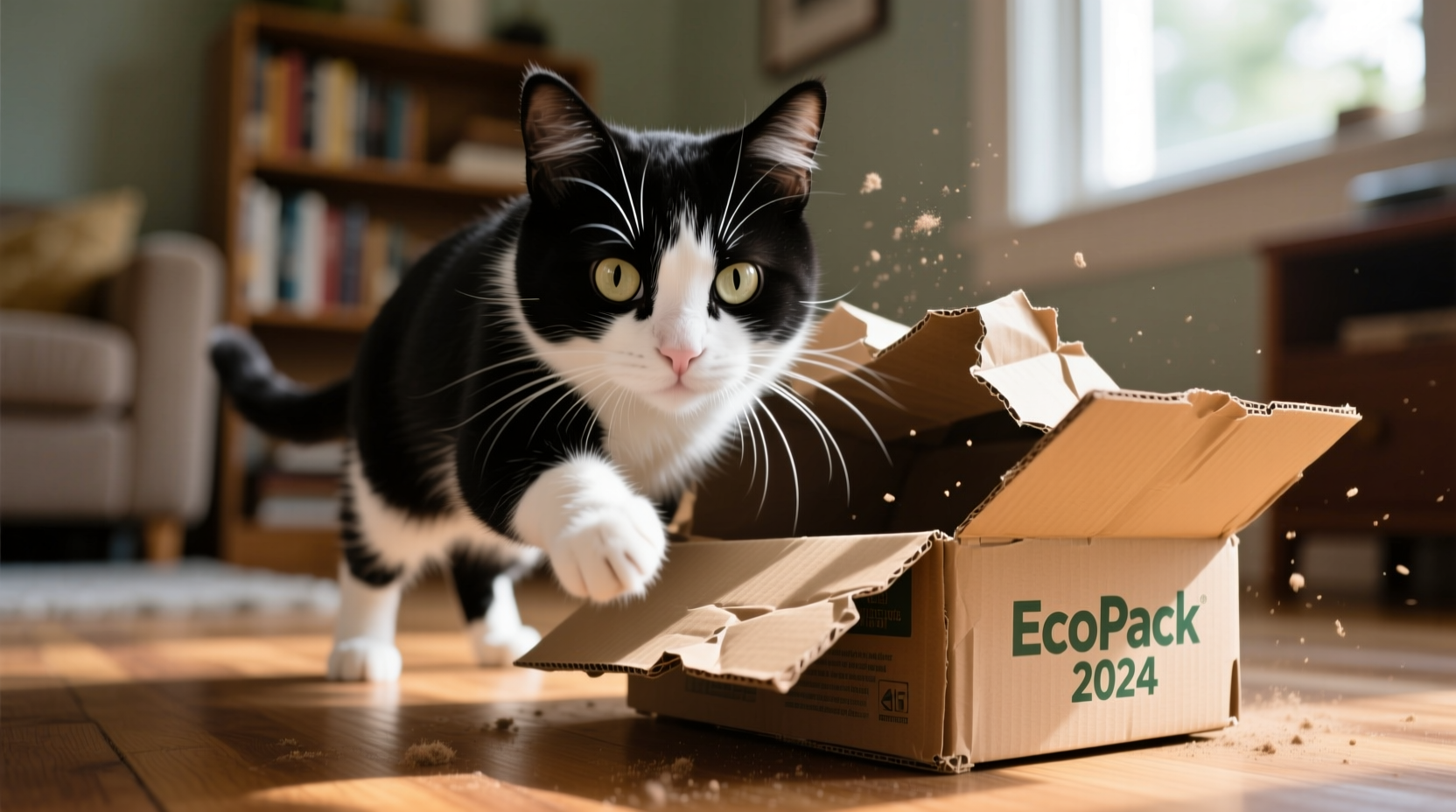
One of the most practical reasons cats are drawn to boxes lies in thermodynamics. Cats maintain a higher body temperature than humans—around 101–102.5°F (38.3–39.2°C)—and feel most comfortable in ambient temperatures between 86°F and 97°F (30–36°C). Cardboard, despite its humble appearance, is an excellent insulator. Its fibrous structure traps heat, creating a warm microenvironment ideal for conserving energy.
In a study conducted by the University of Utrecht, researchers observed that shelter cats given access to cardboard boxes exhibited significantly lower stress levels within the first few days of arrival compared to those without boxes. The study concluded that “the availability of hiding places, such as cardboard boxes, has a positive effect on the cats’ well-being.” This suggests that boxes aren’t just cozy—they’re functional tools for thermal regulation and emotional stability.
Hiding Instincts and Environmental Security
Cats are both predators and prey animals. In the wild, small felines like the African wildcat—the ancestor of the domestic cat—rely on concealment to stalk prey and avoid larger predators. Enclosed spaces provide visual cover, reduce exposure, and allow for ambush tactics. Even in safe indoor environments, these instincts remain hardwired.
A box acts as a secure den where a cat can observe its surroundings without being seen. This vantage point reduces anxiety and gives the cat control over social interactions. For shy or newly adopted cats, boxes serve as psychological sanctuaries, helping them acclimate to unfamiliar territory at their own pace.
Dr. Sarah Elliott, a veterinary ethologist, explains:
“Cats don’t just hide when they’re scared—they hide to feel empowered. A confined space gives them a sense of control, which is critical in managing stress.”
This need for environmental security extends beyond boxes. Cat caves, covered beds, and furniture with enclosed sides fulfill similar roles. However, cardboard remains uniquely appealing due to its neutral scent, ease of access, and low cost.
Stress Reduction and Behavioral Health
Modern homes can be overwhelming for cats. Loud noises, sudden movements, unfamiliar guests, or changes in routine trigger stress responses that manifest as hiding, aggression, or litter box avoidance. Boxes offer a quick, accessible refuge.
Research published in *Applied Animal Behaviour Science* found that shelter cats with consistent access to hiding spots adjusted faster, showed fewer signs of fear, and were more likely to engage positively with humans. These findings underscore the importance of providing retreat options—not as luxuries, but as essential components of feline welfare.
Even in stable households, daily stressors accumulate. A ringing doorbell, a vacuum cleaner, or a visiting dog can elevate cortisol levels. A nearby box allows immediate de-escalation. Over time, regular access to safe spaces supports long-term emotional resilience.
How Boxes Support Mental Well-Being
- Reduced cortisol levels: Hiding lowers physiological markers of stress.
- Increased confidence: From a secure base, cats explore more boldly.
- Behavioral predictability: Cats with reliable retreats are less prone to defensive reactions.
- Social buffering: A box can act as a neutral zone during multi-cat household tensions.
The Curiosity Factor: Novelty and Play
Beyond survival instincts, cats are naturally curious. A new box represents novelty—an object to investigate, manipulate, and claim. This aligns with the concept of “enrichment,” which refers to environmental stimuli that promote natural behaviors.
When a cat enters a box, it often engages in exploratory actions: pawing at edges, circling before settling, or even attacking the flaps. These behaviors satisfy hunting-related motor patterns, even if no prey is involved. The crinkle of cardboard mimics rustling leaves or scurrying rodents, triggering predatory interest.
In multi-cat homes, boxes can become social arenas. One cat may occupy the box while another watches from a distance, leading to playful chases or mock confrontations. While seemingly trivial, these interactions support cognitive development and social bonding.
Practical Applications: Using Boxes to Improve Feline Care
Understanding the significance of boxes isn’t just academic—it has real-world applications for cat owners, shelters, and veterinarians. By leveraging this knowledge, caregivers can create environments that support both physical and emotional health.
Step-by-Step: Creating a Cat-Friendly Box Environment
- Select appropriate boxes: Choose clean, undamaged cardboard containers with low entry points (e.g., 4–6 inches high).
- Modify for safety: Remove tape, staples, or loose strings. Cut ventilation holes if needed.
- Add comfort: Line the bottom with a washable fleece pad or old towel.
- Strategic placement: Position boxes in quiet areas, near windows, or beside favorite resting spots.
- Introduce gradually: Let the cat approach on their own. Avoid forcing interaction.
- Rotate regularly: Replace flattened or soiled boxes every 1–2 weeks to maintain appeal.
This simple routine enhances environmental enrichment with minimal effort and cost.
Mini Case Study: Reducing Stress in a Multi-Cat Household
Julia, a cat owner in Portland, noticed increased tension between her two cats, Luna and Milo, after moving to a new apartment. Luna began avoiding common areas, while Milo became more vocal and territorial. After consulting a feline behaviorist, Julia placed three identical boxes in separate zones of the living room—one near the window, one behind the couch, and one beside the cat tree.
Within 48 hours, both cats began using the boxes independently. Luna claimed the window-side box, while Milo rotated between the others. Over the next two weeks, aggressive encounters dropped by 70%, and both cats resumed grooming each other. The boxes didn’t eliminate competition, but they provided neutral ground and reduced perceived resource scarcity.
“It was like giving them each their own office,” Julia said. “They still interact, but now they have control over when and where.”
Do’s and Don’ts: Managing Your Cat’s Box Habits
| Do’s | Don’ts |
|---|---|
| Provide multiple boxes in different locations | Use boxes with strong chemical odors (e.g., printed ink, cleaning residue) |
| Supervise kittens to prevent suffocation risks | Place boxes in high-traffic or noisy areas without escape routes |
| Encourage use with treats or catnip | Remove a box while the cat is inside—this can increase anxiety |
| Recycle flattened boxes to stimulate shredding behavior | Assume all cats will like boxes—some prefer fabric tunnels or elevated perches |
| Combine boxes with heating pads (pet-safe models) | Use plastic storage bins without ventilation as substitutes |
Expert Insight: What Veterinarians and Ethologists Say
Dr. Karen Overall, a renowned veterinary behaviorist, emphasizes that hiding is not antisocial behavior but a coping mechanism.
“When a cat chooses a box, it’s not rejecting you—it’s practicing self-care. We should respect that choice rather than interpret it as aloofness.”
Likewise, the International Society of Feline Medicine recommends that all cats have access to at least one private, enclosed space per floor of the home. This guideline reflects growing recognition that mental health is inseparable from physical health in companion animals.
Frequently Asked Questions
Why does my cat only sit in boxes smaller than its body?
Cats often prefer tight-fitting spaces because they provide better insulation and a greater sense of enclosure. As long as the cat can enter and exit comfortably, size isn’t a concern. Squeezing into a small box may also mimic denning behavior observed in wild ancestors.
Is it safe for my cat to eat cardboard?
While occasional nibbling is usually harmless, ingesting large amounts of cardboard can cause gastrointestinal blockages. If your cat frequently eats non-food items (a condition called pica), consult your veterinarian. Underlying causes may include nutritional deficiencies, dental issues, or compulsive disorders.
Can I use alternatives to cardboard boxes?
Yes. Fabric-covered cat caves, wooden enclosures, or commercially available igloo beds can serve similar functions. However, cardboard remains popular due to its affordability, replaceability, and sound-dampening qualities. Many cats enjoy having both permanent and temporary options.
Conclusion: Respecting the Box—and the Cat Within
The humble cardboard box is far more than a quirky feline pastime. It’s a window into the complex world of cat behavior—a symbol of security, a tool for stress management, and a canvas for natural instincts. By recognizing the purpose behind the obsession, owners can move beyond amusement to genuine empathy.
Providing boxes isn’t indulgence; it’s responsible care. Whether your cat uses them for napping, hiding, or play, these simple structures fulfill deep-seated needs that modern living often overlooks. In a world designed for human convenience, a cardboard box becomes an act of species-specific kindness.




 浙公网安备
33010002000092号
浙公网安备
33010002000092号 浙B2-20120091-4
Comments
No comments yet. Why don't you start the discussion?