
Every holiday season, homes come alive with twinkling lights, festive decor, and joyful energy. But for many cat owners, this magical time brings a familiar challenge: a feline fascinated—some might say obsessed—with Christmas lights. Whether batting at dangling strands, curling up beneath glowing trees, or attempting acrobatic leaps toward wall-mounted twinkle lights, cats seem irresistibly drawn to these shimmering displays.
Their fascination isn’t just cute—it can be dangerous. Chewing on cords, knocking over trees, or suffering burns from hot bulbs are real risks. Understanding why your cat behaves this way is the first step in protecting both their safety and your holiday spirit. More importantly, knowing how to redirect their attention and modify your setup can prevent accidents before they happen.
The Science Behind the Sparkle: Why Cats Love Lights
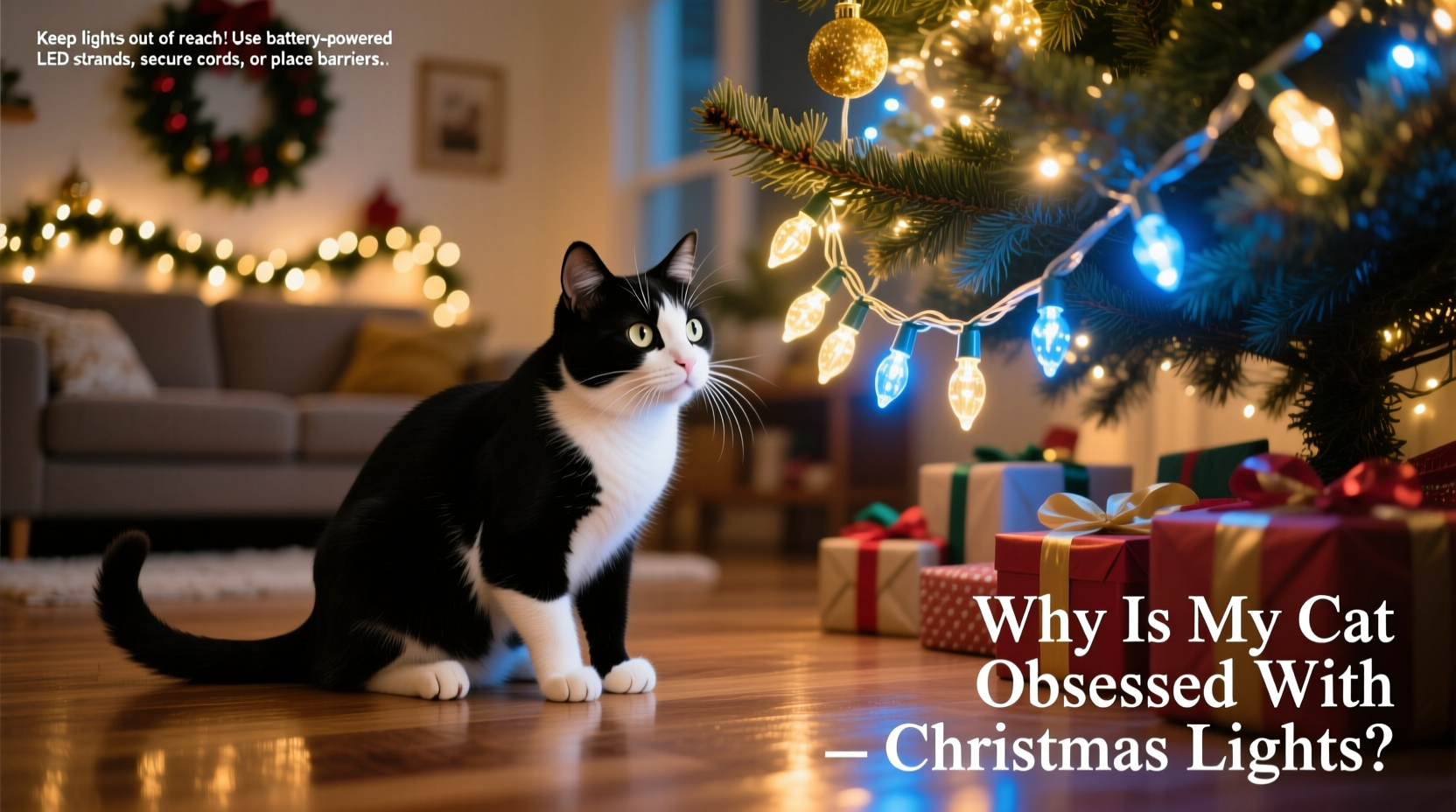
Cats are natural predators with highly tuned senses. Their eyes evolved to detect motion in low light, making flickering, blinking, or moving lights appear like prey. The erratic patterns of Christmas lights mimic the darting movements of insects or small animals, triggering instinctual hunting behaviors.
Additionally, the warmth emitted by older incandescent bulbs adds another layer of attraction. Cats seek out warm spots—sunbeams, laptops, radiators—and a cluster of glowing lights can feel like a cozy perch. Even LED lights, which run cooler, may still draw attention due to visual stimulation alone.
Dr. Sarah Thompson, a veterinary behaviorist at the Feline Wellness Institute, explains:
“Cats don’t see lights as decorations. They see them as dynamic stimuli—something to investigate, stalk, or capture. It’s not mischief; it’s biology.”
This instinct isn’t limited to kittens. Adult cats retain strong predatory drives, and even senior cats may show renewed interest when novel stimuli like holiday lights enter their environment.
Hidden Dangers: Risks of Cat-Light Interactions
While the sight of a cat pawing at a string of lights might seem harmless, the consequences can be serious. Here are the most common hazards:
- Electrical shocks: Chewing through cords exposes live wires. Even low-voltage systems can deliver enough current to cause injury or start a fire.
- Burns: Incandescent bulbs can reach temperatures over 200°F (93°C). A curious nose or paw can result in painful burns.
- Broken glass: Shattered bulbs create sharp debris that can injure paws or mouths.
- Tree collapse: Climbing or batting at a tree can destabilize it, leading to falls that risk injury to pets and people.
- Ingestion hazards: Small ornaments, tinsel, or broken plastic pieces can cause intestinal blockages if swallowed.
Step-by-Step: How to Cat-Proof Your Christmas Lights
Protecting your cat doesn’t mean sacrificing your holiday display. With thoughtful planning, you can enjoy festive lighting while minimizing risks. Follow this timeline to secure your space before the season begins.
- Assess your layout (1–2 weeks before decorating): Walk through each room and identify where lights will be placed. Avoid floor-level strings or dangling ends within paw’s reach.
- Choose safer lighting options: Opt for LED lights, which generate less heat and are more energy-efficient. Look for shatterproof bulbs and insulated wiring.
- Elevate and secure cords: Use cord covers, adhesive clips, or raceways to route wires along baseboards or behind furniture. Keep all connections off the floor.
- Anchor your tree: Secure the tree to a wall or ceiling using fishing line or a commercial stabilizer kit. This prevents tipping if your cat climbs.
- Create physical barriers: Place baby gates around the tree or use decorative fencing. Alternatively, set up a playpen-style enclosure with mesh walls.
- Use deterrents: Apply pet-safe bitter sprays to cords and tree trunks. Double-sided tape on nearby surfaces discourages jumping.
- Add distractions: Set up a cat tree or perch near—but not too close—to the lights. Rotate toys daily to maintain interest.
- Supervise initial exposure: Let your cat explore the decorated space under supervision. Redirect unwanted behavior immediately with toys or treats.
Do’s and Don’ts of Holiday Lighting with Cats
| Do | Don’t |
|---|---|
| Use LED lights with cool-to-touch bulbs | Use old incandescent strands that get hot |
| Secure cords with cord organizers or conduit | Leave loose wires lying across the floor |
| Place the tree in a corner or against a wall for added stability | Put the tree in high-traffic areas where cats dart past |
| Inspect lights daily for signs of damage or chewing | Assume everything is fine after initial setup |
| Turn off lights when leaving the house or sleeping | Leave lights on unattended for hours |
Real Example: Bella and the Twinkling Tree
Maria, a cat owner from Portland, Oregon, learned the hard way about holiday hazards. Her 3-year-old Siamese mix, Bella, had always been curious—but never destructive—until the family put up their first post-pandemic Christmas tree.
One evening, Maria noticed Bella batting at a low-hanging strand of lights near the tree base. By morning, several bulbs were cracked, and the cord showed tooth marks. Concerned, Maria unplugged the lights and called her vet. Though Bella hadn’t chewed through the wire, the vet warned that one puncture could have led to electrocution.
She took immediate action: switched to battery-operated LEDs, wrapped the trunk in double-sided tape, and installed a mesh barrier. She also added a heated cat bed nearby with a view of the tree—turning temptation into a peaceful observation post.
“It wasn’t about stopping her curiosity,” Maria said. “It was about giving her a safe way to enjoy the season too.”
Alternative Enrichment: Redirecting Your Cat’s Focus
Prevention works best when paired with positive reinforcement. Instead of simply blocking access, offer appealing alternatives that satisfy your cat’s instincts.
- Interactive light toys: Battery-powered laser toys or motion-activated projectors simulate moving lights without electrical hazards.
- Puzzle feeders with lights: Some modern feeders include gentle LED indicators that activate when touched—engaging both mind and motor skills.
- Window perches with outdoor views: If you have outdoor lighting visible from a window, position a cat shelf there. The distant sparkle satisfies visual curiosity safely.
- Daily play sessions: Use wand toys to mimic prey movement, especially before turning on holiday lights. A tired cat is less likely to seek stimulation elsewhere.
Frequently Asked Questions
Can I use essential oils or scents to deter my cat from lights?
No. Many essential oils—such as citrus, pine, and peppermint—are toxic to cats. Even diffused scents can cause respiratory distress. Stick to physical barriers and pet-safe deterrent sprays labeled non-toxic.
Are battery-operated lights safer than plug-in ones?
Yes. Battery-powered lights eliminate shock risk and allow greater placement flexibility. Just ensure batteries are securely enclosed so your cat can’t access them. Swallowed batteries can cause life-threatening internal burns.
My cat only goes after the blinking lights. Can I turn off the flash mode?
Absolutely. Steady lights are less stimulating than flashing or twinkling modes. Most multi-function strings allow you to switch patterns. Choose a constant glow to reduce predatory triggers.
Final Checklist: Cat-Safe Holiday Lighting
- ✅ Replace incandescent bulbs with LED, shatterproof versions
- ✅ Elevate or conceal all cords using clips, covers, or conduit
- ✅ Anchor the Christmas tree to a wall or ceiling
- ✅ Install a physical barrier (gate, fence, or playpen)
- ✅ Apply pet-safe deterrent spray to cords and tree trunk
- ✅ Provide an alternative perch or toy near the display
- ✅ Supervise early interactions and redirect unwanted behavior
- ✅ Turn off lights when unsupervised or overnight
- ✅ Inspect daily for damage, chewing, or overheating
- ✅ Have your vet’s emergency number accessible
Conclusion: Celebrate Safely, Together
Your cat’s obsession with Christmas lights isn’t misbehavior—it’s a reflection of their natural instincts. With empathy and preparation, you can honor both their curiosity and their safety. The goal isn’t to remove joy from the season, but to share it responsibly.
By choosing safer lighting, modifying your setup, and enriching your cat’s environment, you create a home where festivities and feline well-being coexist. These adjustments take little time but offer lasting peace of mind.




 浙公网安备
33010002000092号
浙公网安备
33010002000092号 浙B2-20120091-4
Comments
No comments yet. Why don't you start the discussion?