
When the check engine light appears on your dashboard, it’s easy to panic—or just ignore it. But understanding the difference between a flashing and a steady (solid) light can mean the difference between a minor repair and major engine damage. The check engine light isn’t just an annoyance; it’s your vehicle’s way of communicating that something is wrong. A solid light often indicates a non-critical issue, while a flashing light signals an urgent problem requiring immediate attention. Knowing how to interpret these warnings empowers you to act quickly, protect your engine, and save money in the long run.
Understanding the Check Engine Light: What It Means
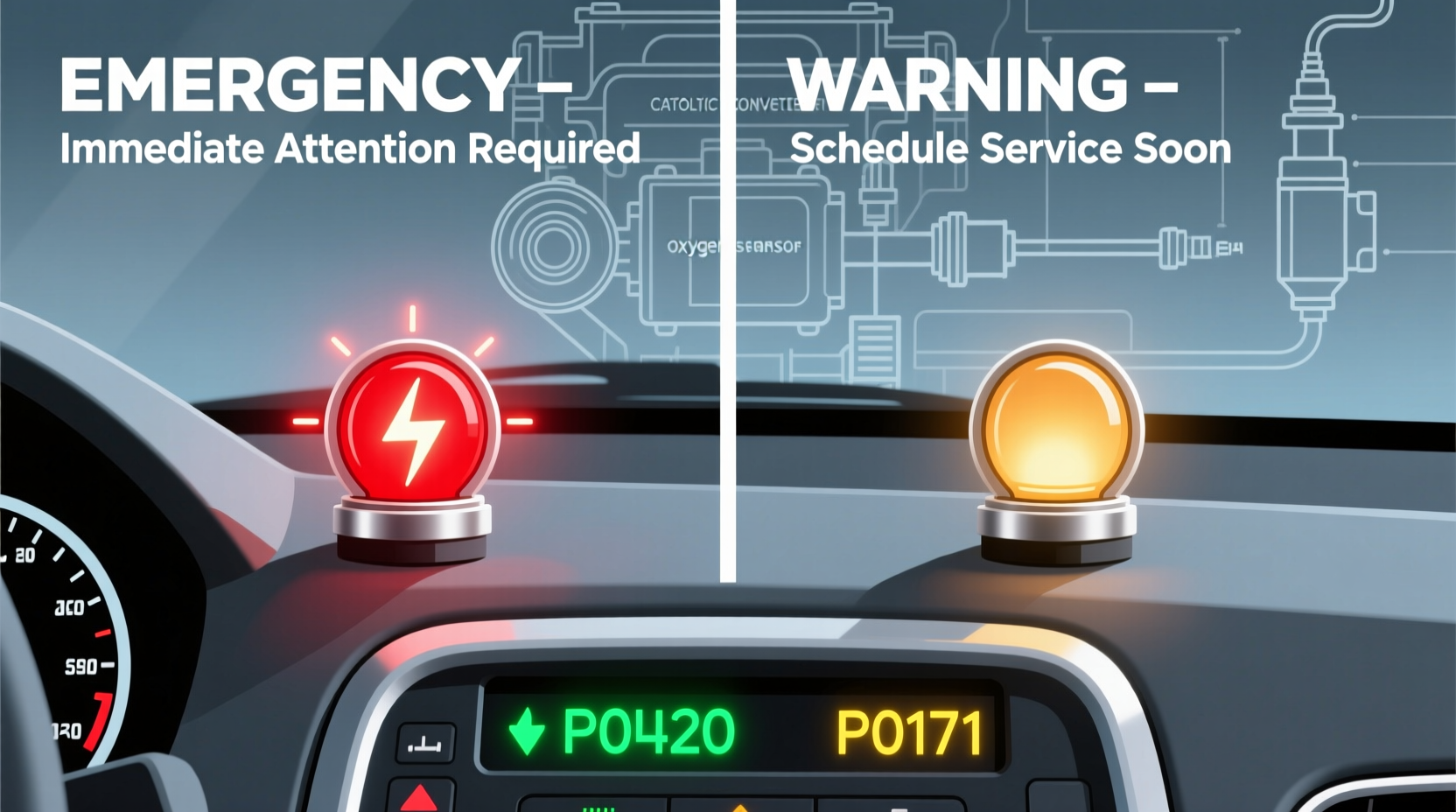
The check engine light (CEL) is part of your car’s onboard diagnostics system (OBD-II), which monitors engine performance, emissions, and critical systems. When a sensor detects an anomaly, it triggers a diagnostic trouble code (DTC) and illuminates the check engine light. However, not all alerts are equal. The behavior of the light—whether it's steady or flashing—is a key indicator of severity.
A solid check engine light usually means there’s a problem that needs attention but isn’t immediately threatening to the engine. For example, a loose gas cap or a failing oxygen sensor might trigger a steady light. These issues should be addressed promptly, but they rarely cause catastrophic damage if handled within days or weeks.
In contrast, a flashing check engine light is a red flag. It typically indicates a severe engine misfire that could damage the catalytic converter or lead to overheating. Unlike a steady light, a flashing one means you should stop driving as soon as safely possible and have the vehicle inspected immediately.
Flashing vs. Solid: Key Differences in Meaning and Urgency
The distinction between a flashing and solid check engine light lies in both frequency and consequence. Here’s a breakdown of what each signal typically represents:
| Light Behavior | Potential Cause | Urgency Level | Recommended Action |
|---|---|---|---|
| Flashing | Engine misfire, fuel mixture imbalance, ignition failure | Critical – Risk of catalytic converter damage | Stop driving; tow to mechanic |
| Solid (Steady) | Loose gas cap, faulty O2 sensor, minor emissions fault | Moderate – No immediate danger | Schedule inspection within a week |
| Intermittent | Loose connection, temperature-sensitive component failure | Variable – Monitor closely | Diagnose when reappears |
One of the most dangerous scenarios a flashing CEL warns about is an engine misfire. When one or more cylinders fail to ignite properly, unburned fuel enters the exhaust system and overheats the catalytic converter—a costly component designed to reduce emissions. Replacing a damaged catalytic converter can cost anywhere from $900 to $2,500 depending on the vehicle make and model.
“An illuminated flashing check engine light is equivalent to a fire alarm for your engine. It’s not a suggestion—it’s a command to stop driving.” — David Reynolds, ASE-Certified Master Technician
Common Causes Behind a Flashing Check Engine Light
A flashing check engine light is almost always tied to combustion problems. Below are the most frequent culprits:
- Ignition System Failure: Worn spark plugs, faulty ignition coils, or damaged plug wires can prevent proper ignition, leading to misfires.
- Fuel Delivery Issues: A clogged fuel injector, failing fuel pump, or incorrect fuel pressure can disrupt the air-fuel mixture.
- Vacuum Leaks: Cracked hoses or gaskets allow unmetered air into the engine, throwing off the fuel ratio and causing instability.
- Low Compression: Internal mechanical problems like leaking valves or worn piston rings reduce cylinder efficiency and cause misfires.
- Timing Problems: Incorrect camshaft or crankshaft timing due to a stretched timing belt or failed tensioner can throw off engine synchronization.
Modern vehicles use multiple sensors—such as the crankshaft position sensor, mass airflow sensor, and knock sensor—to detect irregularities. When these systems identify repeated misfires, especially in rapid succession, the ECU (engine control unit) initiates the flashing warning to prevent further damage.
Real-World Example: A Driver Ignored the Warning
Consider the case of Mark, a delivery driver who noticed his check engine light flashing during a midday route. Assuming it was similar to past solid-light warnings, he continued driving for two more hours. By the time he reached a repair shop, the engine was running roughly, and exhaust smoke was visible. Diagnosis revealed a failed ignition coil causing persistent misfires. The excess fuel had destroyed the catalytic converter, turning a $150 coil replacement into a $1,800 repair bill. His mechanic emphasized that pulling over after the first few flashes could have saved over $1,600.
What to Do When Your Check Engine Light Is Flashing
If your check engine light begins flashing while driving, follow this step-by-step response plan:
- Stay Calm and Assess the Situation: Note any changes in engine performance—rough idling, loss of power, or unusual noises.
- Reduce Engine Load: Ease off the accelerator. Avoid uphill climbs or towing. Keep speed low and steady.
- Find a Safe Place to Stop: Pull over at the earliest safe opportunity. Do not continue driving for more than a few miles.
- Turn Off Unnecessary Systems: Disable AC, heated seats, and other power-draining accessories to reduce electrical load.
- Call for Assistance: Arrange for a tow to a trusted repair facility. Do not attempt a long drive even if the car seems to run “okay.”
- Get a Diagnostic Scan: A professional mechanic will use an OBD-II scanner to retrieve trouble codes and pinpoint the root cause.
Attempting DIY fixes without proper tools or knowledge can worsen the issue. While consumer-grade code readers are available, interpreting the data correctly requires experience. For instance, a P0300 code indicates a random misfire, but identifying which cylinder is affected (P0301–P0308) and why requires deeper analysis.
Preventive Maintenance Checklist
Many causes of a flashing check engine light stem from neglected maintenance. Use this checklist to minimize risks:
- ✅ Replace spark plugs according to manufacturer schedule (typically every 30,000–100,000 miles depending on type).
- ✅ Inspect ignition coils and wires during routine service.
- ✅ Change fuel filter as recommended (if applicable—many modern cars have sealed tanks).
- ✅ Use the correct grade of fuel and consider periodic fuel injector cleaning.
- ✅ Check vacuum hoses for cracks or disconnections during oil changes.
- ✅ Replace air filter every 15,000–30,000 miles to maintain proper air-fuel balance.
- ✅ Follow timing belt replacement intervals strictly (usually 60,000–100,000 miles).
Regular maintenance not only prevents misfires but also keeps your emissions system healthy. Vehicles with well-maintained engines are less likely to fail emissions tests and more likely to deliver optimal fuel economy.
Frequently Asked Questions
Can I drive with a flashing check engine light?
No. A flashing check engine light indicates active engine damage is occurring. Continued driving—even short distances—can destroy the catalytic converter or lead to internal engine damage. Tow the vehicle to a repair shop.
Will the light turn off by itself if the problem resolves?
Sometimes. If the issue was temporary (e.g., a momentary misfire due to damp conditions), the light may stop flashing and go solid or turn off after several drive cycles. However, the code remains stored in the ECU. Have it checked before assuming the problem is gone.
Is a flashing check engine light always serious?
Virtually always. While rare false alarms can occur due to sensor glitches, the system is designed so that flashing lights correspond to high-risk conditions. It’s never safe to assume it’s a minor issue. Treat every flash as urgent until proven otherwise by a professional diagnosis.
Conclusion: Act Now to Save Your Engine
Your car’s check engine light is more than a dashboard icon—it’s a vital communication tool. A solid light invites timely attention; a flashing light demands immediate action. Understanding this distinction helps you avoid expensive repairs and extends the life of your vehicle. Ignoring a flashing light risks irreversible damage to critical components like the catalytic converter, engine internals, and exhaust system. By responding swiftly, scheduling regular maintenance, and respecting your car’s warning signals, you protect both your safety and your investment.




 浙公网安备
33010002000092号
浙公网安备
33010002000092号 浙B2-20120091-4
Comments
No comments yet. Why don't you start the discussion?