
Bringing home a fresh Christmas tree is one of the most cherished holiday traditions. The scent, the sparkle, and the joy it brings are unmatched. But if you've noticed that the water level in your tree stand hasn’t changed after several days, you're not alone—and you should be concerned. A tree that’s not drinking water is likely under stress, drying out faster, and becoming a fire hazard. Understanding why this happens—and how to fix it—is essential for both safety and holiday cheer.
Trees absorb water through their freshly cut base. Once that cut seals over with sap or dries out, the tree can no longer take in moisture. This article breaks down the common reasons your tree might not be drinking, offers actionable fixes, and shares expert-backed strategies to keep your tree lush and hydrated through New Year’s.
Why Freshness Matters: The Science Behind Tree Hydration
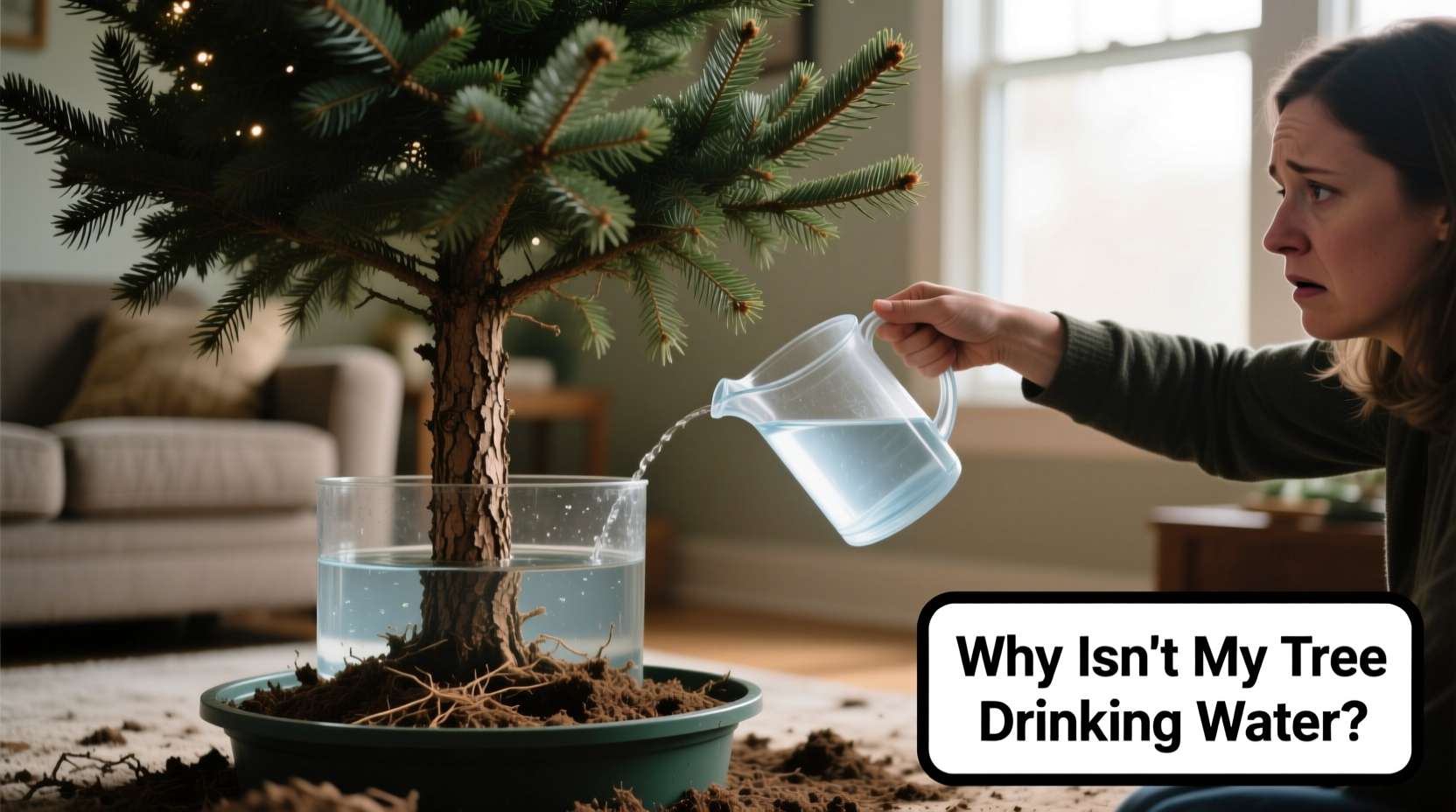
When a Christmas tree is cut, it loses its root system—the primary mechanism for drawing up water. From that moment on, the tree relies entirely on capillary action through the xylem tissue in its trunk. This process works best when the cut surface is clean, unobstructed, and submerged in water within hours of cutting.
If too much time passes between cutting and placing the tree in water, the exposed wood begins to seal over. Resins and air bubbles form embolisms—essentially blockages—that prevent water uptake. Even a few hours without water can drastically reduce a tree’s ability to rehydrate.
“Freshness is everything. A tree that sits for more than 6–8 hours after cutting without water will struggle to drink later, even if you make a new cut.” — Dr. William Powell, Forest Biologist, SUNY College of Environmental Science and Forestry
This explains why some trees placed in stands right after purchase still fail to drink—they may have been cut days earlier at the farm or during transport. Always ask when the tree was harvested and whether it has been stored in water since then.
Common Reasons Your Tree Isn’t Drinking Water
Several factors can interfere with your tree's ability to absorb water. Some are preventable; others stem from early handling mistakes. Here are the most frequent causes:
- Dried or sealed cut: If the base wasn’t recut before placing it in the stand, sap may have hardened over the pores.
- Air bubbles (embolisms) in the trunk: These form when the cut end is exposed to air for too long.
- Clogged vascular tissue: Dirt, old sap, or debris in the stand can block water absorption.
- Incorrect stand size or fit: A trunk that’s too large for the stand may be pinched, preventing proper contact with water.
- Poor water quality: Tap water with high chlorine or mineral content can inhibit uptake in sensitive species like firs.
- Low humidity and heat exposure: Indoor heating accelerates drying, increasing water demand beyond what the compromised trunk can supply.
Step-by-Step Guide to Restore Water Uptake
If your tree hasn’t drunk water in 24–48 hours, act quickly. Follow this timeline to revive its hydration capacity:
- Remove the tree from the stand (within 24 hours of noticing no water loss): Work fast to minimize further air exposure.
- Inspect the base: Look for discoloration, sap buildup, or cracking. A grayish or brown cut surface indicates drying.
- Recut the trunk: Using a handsaw or pruning saw, remove ½ inch from the base. Make a straight, horizontal cut—never angled or V-shaped, as these reduce surface area for water absorption.
- Place immediately into room-temperature water: Warm water (around 70°F / 21°C) helps dissolve resins and improves initial uptake. Avoid cold water, which can shock the cells.
- Let it soak for 2–4 hours before returning to the stand: Keep the tree in a cool, shaded area during this time.
- Refill the stand and monitor closely: Check water levels every 4–6 hours for the first two days. A healthy tree can drink over a quart per day.
After following these steps, most trees will begin drinking within 6–12 hours. If there's still no change after 24 hours post-recut, the internal vascular system may be too damaged to recover.
Do’s and Don’ts for Maximizing Water Absorption
| Do | Don’t |
|---|---|
| Make a fresh cut before placing in the stand | Wait more than 6 hours after cutting to place in water |
| Use room-temperature tap water | Add bleach, aspirin, sugar, or commercial additives (no proven benefit) |
| Check water levels daily—twice in the first 48 hours | Let the water drop below the base of the trunk |
| Keep the tree away from heat sources (vents, fireplaces, electronics) | Place near radiators or use incandescent lights that generate excess heat |
| Use a stand with adequate water capacity (1 quart per inch of trunk diameter) | Overfill the stand so water spills when the tree settles |
Mini Case Study: Reviving a “Dead” Fraser Fir
In December 2023, Sarah M. in Vermont purchased a 7-foot Fraser fir from a roadside vendor. She set it up on Friday evening, added water, and decorated it by Saturday morning. By Monday, the water level hadn’t dropped—and needles were already shedding.
Alarmed, she called her local extension office. An arborist advised her to remove the tree immediately and make a fresh cut. She followed the step-by-step guide: cut ½ inch off the base, soaked it in a bucket of warm water on her porch (kept above freezing), and returned it to the stand after three hours.
Within six hours, the water level dropped by nearly two inches. Over the next week, the tree drank an average of 1.5 quarts per day, remained vibrant, and held its needles through New Year’s Eve. The key? Acting fast and making a clean, recent cut before dehydration became irreversible.
Expert Tips for Long-Term Tree Care
Once your tree starts drinking again, maintain optimal conditions to keep it healthy. Consider these professional recommendations:
- Use LED lights: They emit less heat than traditional bulbs, reducing needle desiccation.
- Mist the tree occasionally: Lightly spraying the branches increases ambient humidity, especially in dry heated homes.
- Stabilize temperature: Avoid drastic fluctuations. Keep the tree in a consistently cool room when possible.
- Never let the stand run dry: Even a few hours without water can cause re-sealing. Set phone reminders if needed.
- Choose fresher species: Balsam fir, Fraser fir, and Douglas fir tend to retain moisture better than spruce or pine.
Checklist: Ensuring Your Tree Drinks Water
Follow this checklist to maximize hydration success:
- ☑ Ask when the tree was cut—ideally within the last 2–3 days
- ☑ Recut the base by at least ½ inch before placing in the stand
- ☑ Submerge the base in room-temperature water within 4–6 hours of cutting
- ☑ Use a stand that holds at least 1 gallon of water for a 6–7 ft tree
- ☑ Place the tree away from heat sources and direct sunlight
- ☑ Check water levels twice daily for the first 48 hours
- ☑ Refill before the water drops below the bottom of the trunk
- ☑ Monitor needle retention and flexibility weekly
Frequently Asked Questions
How much water should my Christmas tree drink per day?
A healthy tree typically drinks about 1 quart of water per inch of trunk diameter per day. For example, a tree with a 2-inch trunk may consume up to 2 quarts daily, especially in the first week. Never assume small trees need little water—initial uptake is often highest right after setup.
Can I add anything to the water to help the tree absorb it better?
No. Research from North Carolina State University and the Christmas Tree Farming Institute shows that additives like sugar, aspirin, soda, floral preservatives, or bleach do not improve water uptake and may even promote bacterial growth that clogs the trunk. Plain tap water is best.
Is it normal for a tree not to drink water the first day?
Slight delay (12–24 hours) can happen, especially if the tree was recently cut and is adjusting. However, if there’s no water loss after 48 hours—and especially if needles are browning or falling—take immediate action. Delay reduces recovery chances significantly.
Conclusion: Act Fast, Stay Consistent
A Christmas tree that isn’t drinking water is a warning sign—not just for aesthetics, but for safety. Dry trees are highly flammable and pose real risks in homes filled with lights and decorations. The good news is that most issues are preventable or reversible with prompt attention.
The key lies in timing and technique: a fresh cut, immediate water access, proper placement, and diligent monitoring. Whether you’re setting up your first tree or your fiftieth, treating it like living plant material—not just seasonal decor—makes all the difference.




 浙公网安备
33010002000092号
浙公网安备
33010002000092号 浙B2-20120091-4
Comments
No comments yet. Why don't you start the discussion?